



Radiator Core Inspection Points That Help Prevent Early Failure
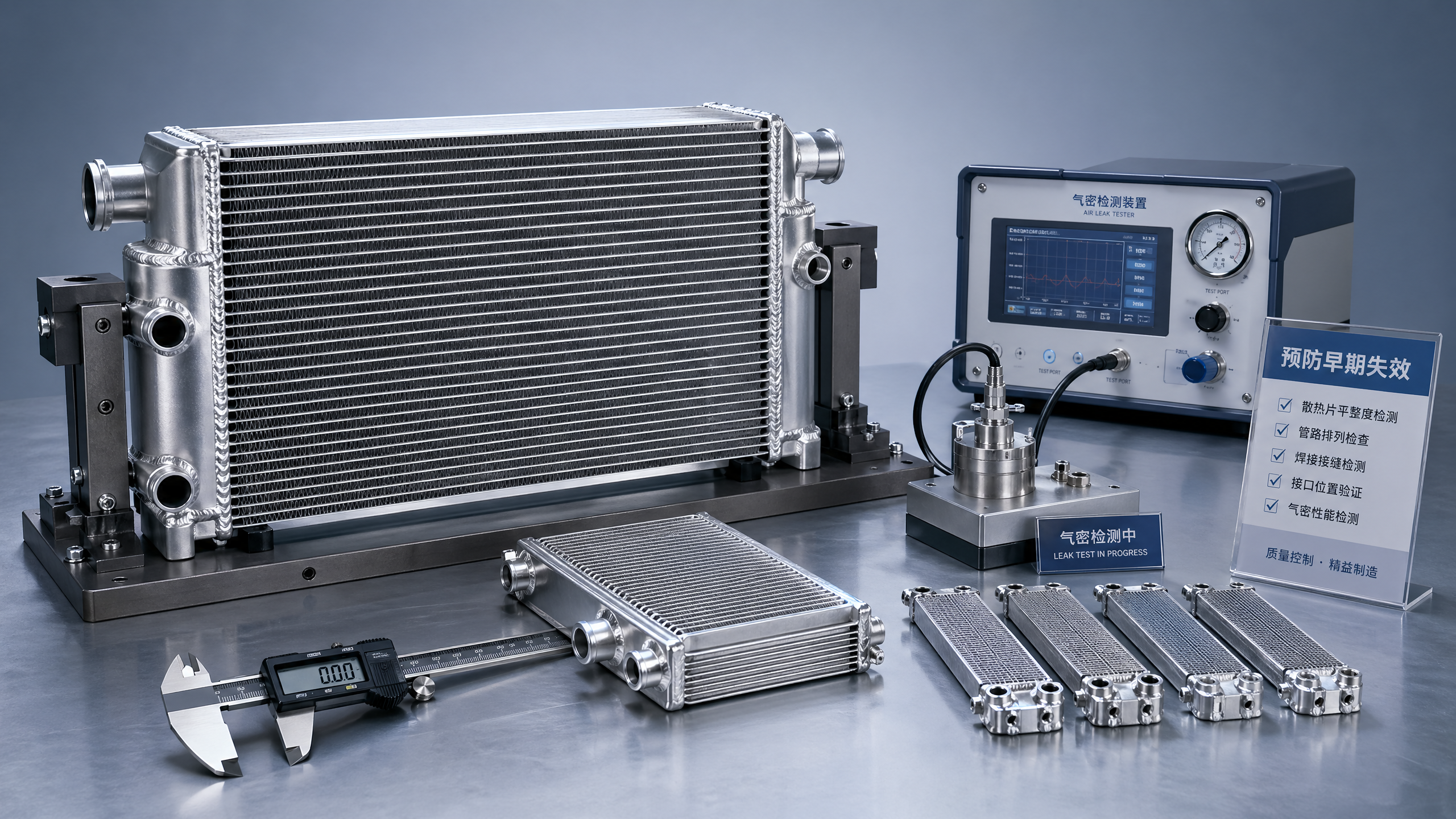
For quality control and safety teams, a reliable radiator core is critical to preventing overheating, leakage, and costly downtime. Knowing the key inspection points before installation and during routine checks can greatly reduce the risk of early failure. This guide outlines the essential areas to evaluate so you can improve equipment safety, extend service life, and maintain consistent cooling performance.
Why a checklist approach works better for radiator core inspection
For parts quality control and safety management teams, early radiator core failure rarely comes from a single obvious defect. In most cases, failure develops from small issues that pass visual acceptance: slight fin deformation, weak brazing consistency, tube wall damage, poor cleanliness, or an installation mismatch. A checklist approach helps teams verify the radiator core in a repeatable sequence, reducing dependence on individual experience and improving decision consistency across incoming inspection, storage, assembly, and field service.
This is especially important in heavy trucks, commercial vehicles, construction machinery, and new energy thermal systems, where heat loads fluctuate sharply within 10 to 30 minutes of operation. A radiator core may appear acceptable at room temperature but fail under vibration, pressure cycling, or thermal expansion after only a few hundred service hours. By using defined inspection points, teams can identify risk before the unit enters operation and avoid shutdowns that can cost far more than the core itself.
Liaocheng Xinde Auto Parts Co., Ltd., established in 2018, focuses on the research, production, and global sales of water tank radiators, intercoolers, construction machinery radiators, and related cooling components for heavy trucks and new energy radiator modules. For buyers and inspectors, this industry background matters because a dependable supplier should understand not only manufacturing, but also the inspection discipline required to support safety, cooling stability, and service life across different vehicle platforms.
What quality and safety teams should confirm first
- Whether the radiator core matches the required thermal load, pressure range, and available mounting space.
- Whether tube, fin, header, and brazed joint quality are consistent across the full core face rather than acceptable only in sample zones.
- Whether cleanliness, packaging, and storage conditions can prevent corrosion or contamination before installation.
- Whether inspection records include dimensional checks, leak checks, and traceability for lot control.
When these first-stage checks are skipped, teams often discover problems only after coolant leakage, abnormal pressure drop, or overheating events appear in use. In practical terms, a 15-minute structured check at receiving can prevent weeks of rework, replacement scheduling, and operational risk investigation.
Core inspection checklist: the points that most often prevent early failure
The most effective radiator core inspection process starts with a sequence: appearance, dimensions, material condition, joint integrity, flow path condition, and pressure resistance. Quality teams should avoid jumping directly to leak testing, because pressure results alone may not reveal weak areas that fail later under vibration or repeated thermal cycles. The checklist below can be adapted for incoming inspection, production release, or routine maintenance review.
As a practical rule, inspect 100% of critical visual items on every unit, then apply sample-based dimensional and internal verification according to the risk level of the batch. For new suppliers, changed tooling, or first three production lots, tighter inspection frequency is often justified. This approach is common in parts quality systems where the cost of field failure is significantly higher than the cost of inspection time.
The following table summarizes the primary radiator core inspection points, typical warning signs, and the reason each item matters in preventing early failure.
The most common pattern behind radiator core failure is not dramatic rupture but gradual weakness caused by stress concentration and restricted heat transfer. In other words, even a small blocked area or a slight joint defect can shorten service life if the unit operates daily in stop-and-go traffic, heavy-load transport, or dusty construction environments.
Visual and dimensional checks that deserve priority
A strong first checkpoint is flatness and dimensional conformity. Inspectors should compare overall length, height, thickness, mounting point position, and inlet-outlet alignment against approved drawings or sample standards. Even a small assembly deviation can place the radiator core under preload during installation, which increases the chance of crack formation after repeated engine vibration. For many vehicle applications, dimensional verification at 3 to 5 critical points is more useful than measuring every surface.
Surface appearance should also be judged functionally, not cosmetically. Minor finish variation may be acceptable, but dents, scratches near tube edges, loosened fins, and edge impact should trigger closer review. If fin collapse affects local airflow channels or if handling damage is visible near joints, the core should not be released simply because pressure retention is temporarily acceptable.
For storage and transport, pay attention to packaging compression. Some early radiator core problems originate before installation, especially when pallets are stacked too high, exposed to moisture for more than 48 to 72 hours, or handled without corner protection. Quality teams should document damage at receiving immediately, because packaging defects can indicate hidden internal stress.
Quick acceptance checklist for inspectors
- Confirm part number, lot identification, and traceability label match the purchase and inspection documents.
- Check fin straightness and face uniformity from multiple viewing angles under adequate light.
- Measure overall size and connection points against the approved drawing or gauge fixture.
- Review joints for incomplete bonding, discoloration, corrosion residue, or signs of thermal overprocessing.
- Verify ports and internal passages are clean, capped where required, and free from debris.
This checklist is simple, but it addresses the failure points that appear most often in service claims. For teams under production pressure, using a fixed 5-step acceptance flow can reduce missed defects and improve shift-to-shift consistency.
Performance-related checks: leakage, airflow, cleanliness, and thermal stability
A radiator core should not be judged only by whether it leaks at the time of inspection. Performance depends on the balance between coolant flow, air-side heat exchange, structural resistance, and cleanliness. A core can pass static pressure checks yet still perform poorly if fins are blocked, internal passages contain flux residue, or tube geometry creates uneven flow. For safety-sensitive operations, this means testing should reflect actual operating stresses as closely as practical.
Pressure testing remains essential, but teams should define practical ranges based on application and supplier agreement. In many standard workflows, holding pressure for 2 to 5 minutes can help identify immediate leaks, while longer observation periods are useful for investigating suspected seepage at joints. For repeated field failures, adding thermal cycling review or vibration-related evaluation often reveals issues that a single room-temperature leak test will not capture.
Cleanliness is another overlooked factor. Small particles left in a radiator core can reduce coolant distribution, damage seals, or combine with old coolant contamination to accelerate corrosion. Internal cleanliness verification is especially important after rework, machining, or packaging changes. Even in routine supply programs, periodic cleanliness checks every batch or every defined lot interval can reduce hidden risk.
Recommended evaluation criteria by risk area
The table below helps quality and safety teams prioritize which radiator core checks should be treated as release-critical, conditionally acceptable, or observation-only items. The exact standard should be set by the customer, internal quality plan, and the duty cycle of the vehicle or machine.
Using a priority table helps teams avoid wasting time on low-risk cosmetic variation while still controlling the radiator core characteristics that directly affect service life. It also creates a clearer basis for supplier communication, containment actions, and documented release decisions.
Application differences that change inspection focus
Not every radiator core works under the same conditions. Heavy trucks often face high vibration and long operating hours, construction machinery sees dust and shock loading, and passenger vehicles may demand tight fitment and thermal balance in compact engine bays. New energy systems add thermal management requirements where heat exchange stability can affect more than engine temperature alone.
For example, in Mercedes-Benz passenger cars and commercial vehicle applications, inspectors may need to pay closer attention to packaging dimensions, port alignment, and stable cooling performance under urban and highway cycling. In such scenarios, a verified product such as Radiator for Benz should be checked not only for outward fit but also for application-specific details such as OE reference consistency, interface protection, and transport handling condition before release.
Where the model range includes W124 E-Class, W206 C-Class, or W242 Electric Drive series, the radiator core review should consider whether the supplied unit matches the intended thermal management role, engine cooling layout, and service environment. If the part is supplied with CE marking, a 1-year warranty reference, OE NO. 2025005203 / 202 500 52 03, or compact dimensions such as 20X15X10 cm in a specified package format, inspectors should still verify that these details align with the actual procurement and installation requirement rather than assuming cross-compatibility.
Commonly missed issues that shorten radiator core life
Many early radiator core failures are traced back to issues that were visible but not treated as significant at the time of inspection. This usually happens when teams focus only on obvious leakage or external appearance. In reality, the failure chain often starts with mounting stress, mixed-material corrosion conditions, trapped contamination, or local heat concentration caused by airflow restriction.
Another common mistake is approving a core after repair without updating inspection depth. Reworked units may require stricter confirmation of joint condition, pressure holding, and internal cleanliness. If rework history exists, quality teams should treat those units as higher risk for at least one verification cycle. For critical fleets, a shortened first maintenance interval, such as 30 to 60 days after installation, can help catch issues before they become operational failures.
Storage handling should also be reviewed as part of failure prevention. Radiator core assemblies left uncovered in humid areas, stored near aggressive chemicals, or moved repeatedly without protective separation can develop damage before they ever reach the line. Safety managers should coordinate with warehouse teams so that packaging integrity becomes part of the cooling system quality plan rather than a separate logistics concern.
High-risk oversights to include in every audit
- Ignoring slight mount misalignment that transfers installation force directly into the radiator core frame.
- Accepting blocked or crushed fin zones because the damaged area appears small from one angle only.
- Skipping internal cleanliness checks after supplier process changes, rework, or packaging modification.
- Using an incorrect coolant or poor maintenance fluid that accelerates internal corrosion after installation.
- Failing to isolate field failures by lot, date code, or production batch, which delays root cause analysis.
These oversights are practical risks, not theoretical ones. When repeated across dozens or hundreds of units, they can turn a manageable parts issue into a fleet-level safety and downtime problem.
Execution advice: how to build a usable radiator core control routine
A strong radiator core inspection routine should be easy to execute under real production conditions. That means the checklist must be short enough to use, detailed enough to control risk, and linked to clear accept-reject decisions. For most teams, the best practice is to divide control into four stages: incoming inspection, pre-installation confirmation, post-installation leak review, and scheduled service follow-up. This creates multiple opportunities to catch different failure triggers.
Incoming inspection should focus on visible defects, dimensions, traceability, and packaging condition. Pre-installation checks should verify mounting alignment, cleanliness, and interface readiness. Post-installation review should confirm there is no stress-induced distortion, leakage, or hose misfit after assembly. Follow-up service checks, often after the first 100 to 300 operating hours in demanding applications, are useful for identifying vibration-related loosening or gradual seepage.
Supplier communication is equally important. If your radiator core program includes custom dimensions, vehicle-specific interfaces, or demanding thermal loads, send clear technical files before production release. This is where a manufacturer with experience in water tank radiators, intercoolers, construction machinery radiators, and new energy radiator modules can support not only production but also preventive quality planning. If required, teams evaluating Radiator for Benz or similar applications should align on model, usage scenario, warranty expectation, and inspection standard before shipment.
A practical four-stage control sequence
- Incoming stage: verify part identity, core appearance, dimensions, joints, and package protection within 24 hours of receipt.
- Pre-installation stage: confirm cleanliness, mounting fit, hose or port alignment, and no storage damage before assembly.
- Release stage: perform leak and condition review after assembly, especially if the radiator core was handled multiple times.
- Field monitoring stage: check for seepage, vibration effects, and cooling deviation during the first operating interval.
This sequence gives quality control and safety teams a clear framework that can be documented, audited, and improved over time. It also supports better feedback to procurement and suppliers when repeated issues appear.
Why choose us for radiator and cooling component support
For buyers, inspectors, and safety managers, choosing a cooling component supplier is not only about price. It is about whether the supplier understands the real inspection points that affect service life, thermal stability, and operational safety. Liaocheng Xinde Auto Parts Co., Ltd. specializes in radiators, intercoolers, construction machinery radiators, and related cooling products for heavy trucks and new energy applications, with a business focus that matches the needs of professional parts sourcing and quality review.
If you are evaluating a radiator core program, we can support discussion around parameter confirmation, application matching, model selection, delivery cycle expectations, inspection priorities, and sample arrangements. This is especially useful when your team must compare universal and vehicle-specific options, clarify OE references, or review suitability for passenger cars, commercial vehicles, or equipment with demanding thermal conditions.
Contact us to discuss radiator core specifications, cooling performance priorities, product selection, sample support, lead time planning, certification-related questions, or quotation details. A clear technical conversation at the start can reduce quality risk later and help your team make faster, safer purchasing and release decisions.