



Radiator Core Cost Differences Explained
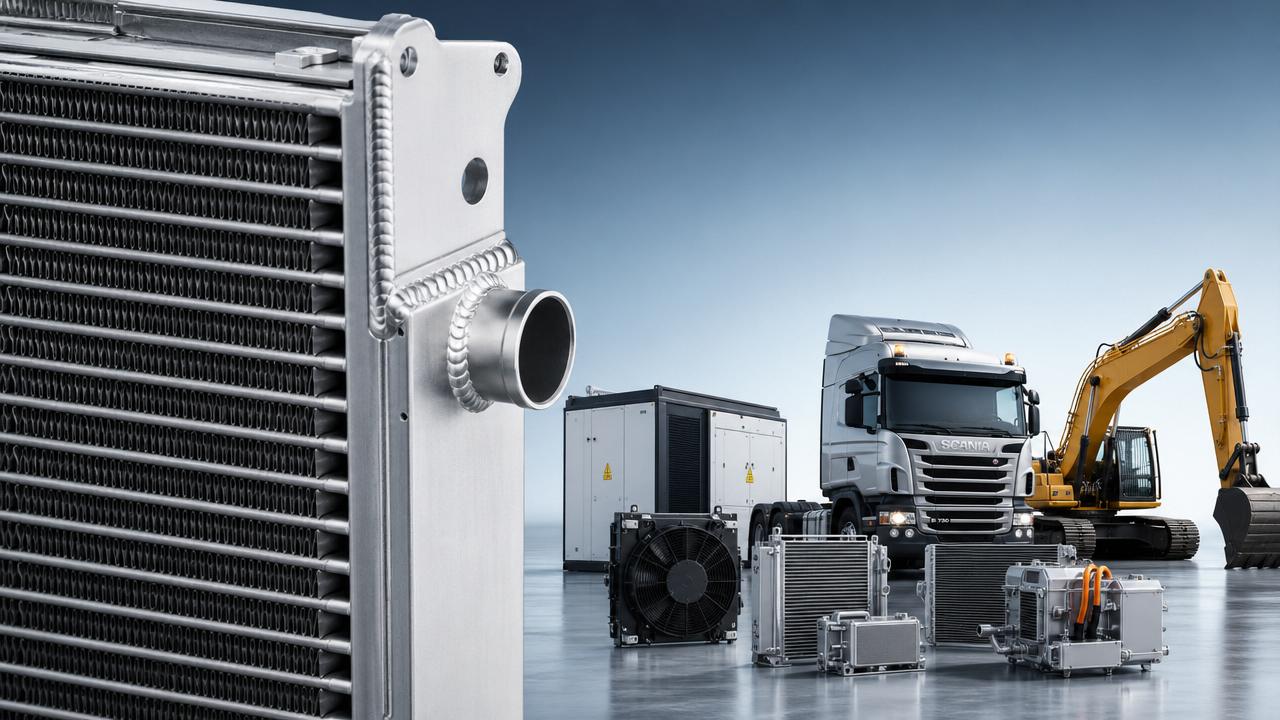
Understanding radiator core cost differences is essential when purchase price, lifecycle value, and operational risk must be balanced.
In heavy trucks, construction machinery, and new energy cooling systems, every radiator core affects durability, uptime, and thermal stability.
The lowest quotation is not always the lowest cost. Material quality, manufacturing precision, heat-transfer capacity, and supplier reliability shape real value.
Radiator Core Cost Starts With the Working Scenario
A radiator core is not priced only by size. It is priced by the stress it must survive.
Highway trucks need stable cooling across long distances. Construction machines face dust, vibration, and frequent load spikes.
New energy platforms may require compact radiator core structures with precise temperature control and integrated module compatibility.
These scenarios demand different material grades, fin designs, tube structures, brazing control, and testing requirements.
A suitable radiator core reduces overheating risk. An underspecified unit can raise fuel use, downtime, and replacement frequency.
Heavy Truck Scenarios: Cost Is Driven by Endurance
Heavy trucks often run for long hours under changing road, load, and climate conditions.
For this scenario, radiator core cost is closely linked to heat rejection capacity and mechanical strength.
A thicker core may improve cooling reserves. However, it can also increase weight, airflow resistance, and material cost.
The best choice depends on engine output, fan performance, coolant flow, and installation space.
For Mercedes-Benz applications, options such as xd81208 radiator for mercedes-benz can be evaluated by model fitment, including 730679581 and ND420001 references.
In this setting, a radiator core should be judged by thermal margin, sealing quality, and resistance to vibration fatigue.
Construction Machinery Scenarios: Cost Reflects Harsh Environment Protection
Construction machinery works in dust, mud, debris, and unstable load conditions.
A radiator core for excavators, loaders, or cranes often needs stronger anti-clogging performance.
Fin spacing, tube design, and core protection influence cost because they affect cleaning ease and cooling consistency.
Cheaper fin structures may save money at purchase. They may also clog faster and increase maintenance interruptions.
In off-road applications, the radiator core must also resist impact, frame distortion, and thermal cycling.
Cost should therefore include field service access, repair difficulty, and downtime exposure during peak operating periods.
New Energy Cooling Scenarios: Precision Raises the Value Standard
New energy vehicles and equipment use cooling systems differently from traditional diesel platforms.
Battery packs, motors, controllers, and power electronics require stable temperature windows.
A radiator core in this scenario may need compact size, controlled flow distribution, and module-level compatibility.
Cost increases when tolerances are tighter, leakage standards are stricter, and integration requirements are more complex.
The key decision is not simply cooling power. It is temperature stability under repeatable operating cycles.
For electrified platforms, radiator core selection should consider coolant chemistry, corrosion behavior, and long-term sealing stability.
What Creates Price Differences Between Radiator Core Options?
Material grade and metal thickness
Aluminum quality, tube thickness, fin material, and header strength directly affect radiator core cost.
Higher-grade materials improve corrosion resistance and structural life. They also increase raw material investment.
Heat-transfer design
Tube shape, fin density, louver angle, and flow path influence heat rejection performance.
A high-performance radiator core may cost more because it requires refined tooling and tighter process control.
Manufacturing precision
Brazing temperature, joint consistency, flatness, and pressure testing all affect reliability.
A low-cost radiator core can become expensive if leakage, poor fitment, or weak joints appear in service.
Order scale and customization
Standardized parts usually cost less because production setup is simpler.
Customized radiator core projects may need design validation, sample testing, special packaging, or dedicated fixtures.
Scenario-Based Cost Comparison
How to Match Radiator Core Cost to Real Need
A practical evaluation should connect the radiator core to the machine, duty cycle, and operating environment.
- Confirm engine power, coolant flow, and original cooling system layout.
- Check installation dimensions, mounting points, and hose connection positions.
- Review operating temperature, ambient climate, and dust exposure.
- Compare radiator core material, fin design, and pressure test standards.
- Evaluate supplier capability, delivery stability, and after-sales response.
This method prevents a narrow focus on unit price. It also reduces the chance of hidden operating losses.
Supplier Capability Changes the True Cost
Radiator core cost is influenced by production management as much as by material consumption.
Stable suppliers can reduce quality variation, claim frequency, and urgent replacement pressure.
Liaocheng Xinde Auto Parts Co., Ltd. was established in 2018 with registered capital of 5 million RMB.
The company has made a total investment of 50 million RMB into professional auto parts manufacturing.
Its business covers water tank radiators, intercoolers, construction machinery radiators, and new energy radiator modules.
Rapid development and honors such as High-tech Enterprise reflect ongoing attention to process capability and market trust.
For a radiator core, supplier strength supports repeatable quality, technical response, and dependable global sales service.
Common Misjudgments That Increase Radiator Core Cost
Judging only by purchase price
A cheaper radiator core can cost more if overheating stops equipment during critical operating periods.
Replacement labor, transport delays, coolant loss, and customer complaints should be included in total cost.
Ignoring application environment
A highway vehicle and a quarry loader do not need the same radiator core priorities.
Dust, vibration, and cleaning frequency can change the best technical specification.
Overlooking fitment details
Small deviations in bracket position, hose angle, or core thickness may delay installation.
Correct model matching protects installation efficiency and reduces return risk.
Missing test documentation
Pressure testing, leakage inspection, and visual checks help verify radiator core reliability before shipment.
Without clear checks, hidden defects may appear only after operation begins.
Practical Selection Framework for Better Cost Control
A radiator core should be evaluated through a structured decision path.
- Define the machine type, load profile, and expected service life.
- Confirm original equipment specifications and acceptable replacement references.
- Compare heat-transfer capacity against real working temperature conditions.
- Review material grade, brazing consistency, and sealing performance.
- Balance unit cost with downtime risk and maintenance frequency.
- Select a supplier able to support stable quality and future demand.
This framework turns radiator core cost from a simple quote comparison into a lifecycle investment decision.
When a Higher Radiator Core Price Is Reasonable
A higher price may be justified when the application carries high downtime risk.
It is also reasonable when thermal load is high, operating conditions are harsh, or access for repair is difficult.
Better materials, stronger joints, and consistent testing can extend service intervals.
In long-cycle equipment, this may reduce total ownership cost despite a higher starting price.
The core question is whether the radiator core supports stable operation under the actual scenario.
Action Guide: Turn Cost Differences Into Better Decisions
Before confirming an order, collect the equipment model, application environment, dimensions, part references, and expected operating intensity.
Then compare radiator core options by thermal performance, structural reliability, fitment accuracy, and supplier verification.
For heavy trucks, construction machinery, or new energy modules, the right choice should protect uptime and long-term value.
Radiator core cost differences are easier to control when technical requirements are matched to real working scenarios.
Share model information and operating conditions to receive a more accurate radiator core recommendation and cost evaluation.