



New Radiator for Commercial Vehicles Seen at Transport Expo
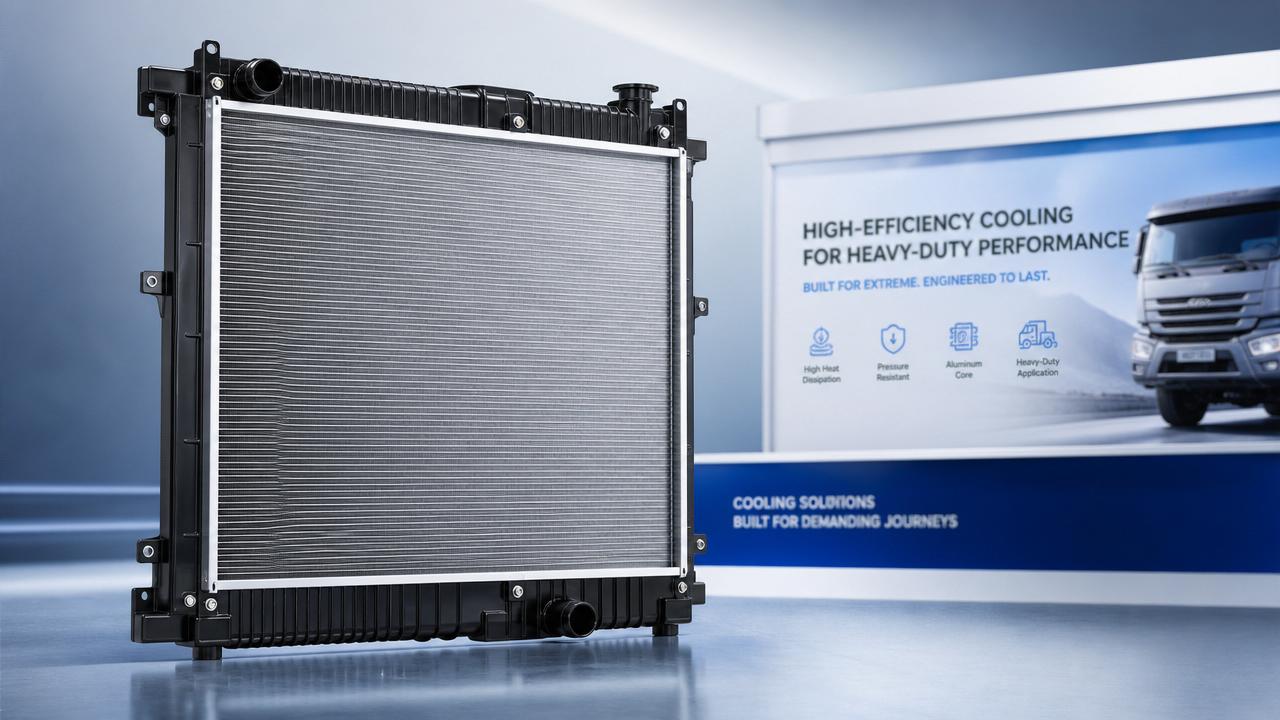
At the latest transport expo, a new radiator for commercial vehicles drew strong attention from distributors, agents, and parts buyers seeking reliable cooling solutions.
Backed by Liaocheng Xinde Auto Parts Co., Ltd.’s expertise, the launch highlighted practical cooling performance, durability, and compatibility for demanding road and construction applications.
Founded in 2018, the company focuses on water tank radiators, intercoolers, construction machinery radiators, and new energy radiator modules for global markets.
Its rapid growth, technical investment, and recognized quality standards make this radiator for commercial vehicles especially relevant in today’s competitive parts sector.
What made this radiator for commercial vehicles stand out at the expo?
The strongest reason was performance visibility.
Visitors were not only looking at appearance.
They wanted evidence of heat dissipation efficiency, stable structure, and long service life under heavy operating pressure.
A radiator for commercial vehicles must handle long-distance transport, urban stop-start cycles, steep gradients, and variable weather without frequent failure.
That need has become sharper as engines run hotter and vehicle uptime becomes more valuable.
The new unit attracted attention because it reflected these market realities.
Its design focus appeared centered on efficient airflow, core strength, leak resistance, and fit for heavy truck cooling systems.
Expo interest also came from trust in the supplier behind it.
Liaocheng Xinde Auto Parts Co., Ltd. has expanded quickly in China and built a reputation through heavy truck radiator production and related cooling components.
That background matters when evaluating a radiator for commercial vehicles, because buyers often judge both the product and the manufacturing system behind it.
How should a radiator for commercial vehicles be understood in practical use?
It is more than a heat exchanger.
It is a stability component that protects engine temperature balance and supports continuous vehicle operation.
When the cooling system performs poorly, the risk extends beyond overheating.
Fuel efficiency may drop.
Maintenance intervals may shorten.
Unexpected downtime may increase.
For that reason, a radiator for commercial vehicles should be evaluated as part of total operating reliability.
Good thermal management depends on several linked factors:
- Core design and material quality
- Tube and fin efficiency
- Pressure resistance and sealing reliability
- Fitment precision within the cooling assembly
- Compatibility with engine load and climate conditions
This is why experienced users compare actual operating conditions rather than relying only on size or price.
A heavy truck on mountain routes needs different cooling margins than a city delivery vehicle.
Construction-related transport may also expose the radiator to dust, vibration, and impact stress.
Which applications benefit most from this radiator for commercial vehicles?
The broad answer is heavy-duty use.
Still, some applications depend on radiator quality more heavily than others.
Long-haul transport is a major example.
Vehicles in this category operate for extended hours and often carry high loads across changing environments.
Stable cooling helps prevent temperature spikes during sustained running.
Regional freight and urban logistics also benefit.
Frequent idling and repeated acceleration can challenge airflow and raise thermal stress in traffic-heavy conditions.
Another important area is construction-linked vehicle operation.
Dust, debris, and vibration can shorten the life of weaker assemblies.
That is why companies with experience in construction machinery radiators often bring valuable engineering insight to truck cooling products.
In some discussions at the expo, product compatibility also extended to model-specific solutions, including radiator for man options for certain fleet requirements.
The key point is application matching.
A radiator for commercial vehicles delivers the best value when its design aligns with route intensity, engine configuration, and environmental stress.
How can quality be judged before choosing a radiator for commercial vehicles?
Selection should start with evidence, not claims.
At the expo, many conversations centered on how to separate durable products from short-life alternatives.
Several checkpoints help simplify that process.
Key signs worth checking
- Consistency of welding and assembly finish
- Material selection for tanks, tubes, and fins
- Testing records for pressure, leakage, and durability
- Production capacity and batch stability
- Technical support for drawings or sample confirmation
A radiator for commercial vehicles should also be reviewed for dimensional accuracy.
Even a strong core becomes a problem if fitment causes installation delays or airflow mismatch.
Supplier capability is another quality signal.
Liaocheng Xinde Auto Parts Co., Ltd. has built its business around research, production, and global sales in the cooling parts field.
Its honors, including High-tech Enterprise recognition, suggest organized development rather than short-term assembly activity.
That matters because repeatable quality often depends on process control, not only on design drawings.
What common mistakes increase risk when buying a radiator for commercial vehicles?
The first mistake is choosing on price alone.
A cheaper part may look acceptable initially, yet create higher lifetime cost through failure, replacement labor, or engine-related stress.
The second mistake is ignoring usage conditions.
A radiator for commercial vehicles should match real working load, not just nominal vehicle type.
The third mistake is overlooking supplier communication.
Without clear confirmation of dimensions, connection points, and cooling expectations, avoidable errors become common.
Another risk is assuming all heavy truck radiators perform similarly.
Differences in brazing quality, fin density, structural support, and raw materials can produce large results in the field.
Some also forget after-sales practicality.
Reliable documentation, stable supply, and responsive technical feedback reduce long-term uncertainty.
What do cost, delivery, and long-term value mean for this cooling solution?
Cost should be measured across operating life.
The purchase price is only one part of the decision.
A radiator for commercial vehicles affects maintenance frequency, downtime exposure, and replacement planning.
Delivery timing matters too.
In the parts business, delayed supply can be as costly as weak quality.
Manufacturers with organized production systems usually handle volume and repeat orders more effectively.
Long-term value also comes from product range.
A company already producing intercoolers, construction machinery radiators, and new energy cooling modules can often support broader platform requirements.
That flexibility is useful when cooling needs evolve across different vehicle programs.
Quick FAQ comparison table
Conclusion: what is the next practical step?
The expo response showed that the market wants a radiator for commercial vehicles that combines efficiency, durability, and dependable supply.
That demand is no longer limited to basic replacement needs.
It now includes performance validation, application matching, and long-term operating value.
Liaocheng Xinde Auto Parts Co., Ltd. enters this discussion with proven specialization, fast development, and a broad cooling product foundation.
When reviewing any radiator for commercial vehicles, start with route conditions, heat load, and fitment requirements.
Then compare testing standards, supplier strength, and delivery reliability.
For model-based evaluation, related options such as radiator for man can also be reviewed within the same quality framework.
A better cooling choice starts with clear technical questions and verified answers.