



Radiator for Commercial Vehicles: Sizing Mistakes to Avoid
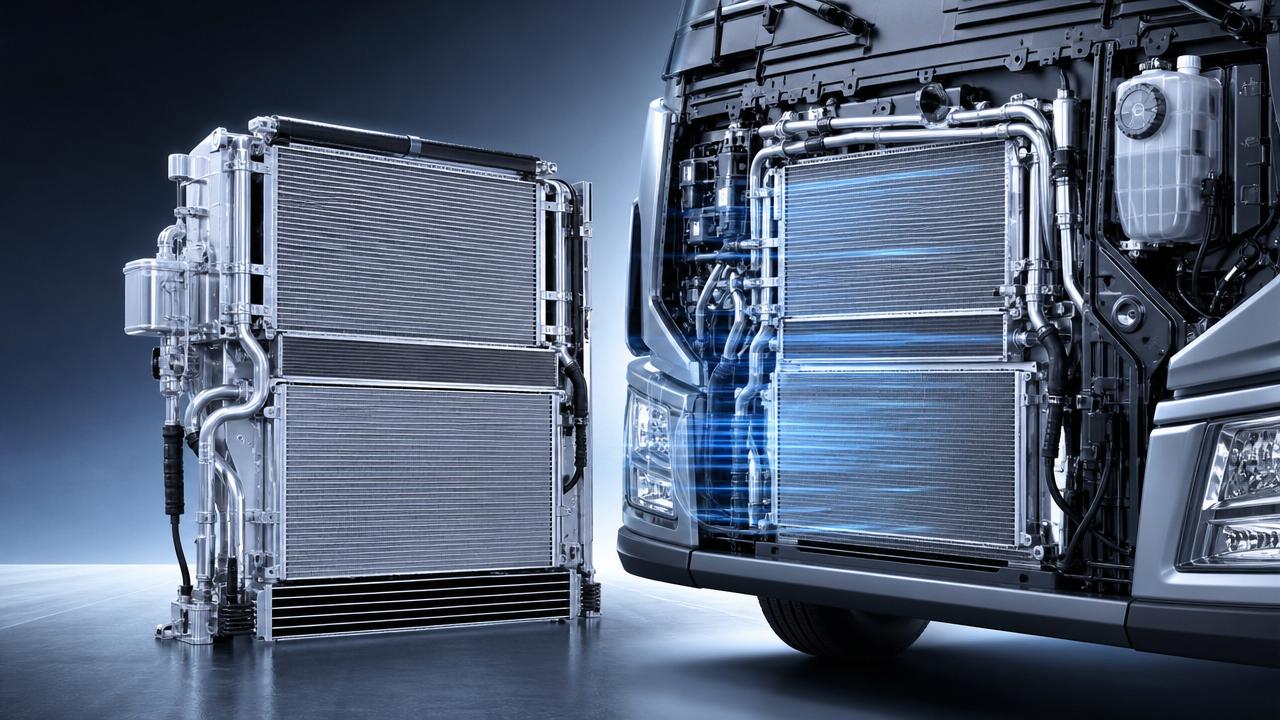
Choosing the right radiator for commercial vehicles is more than a fitment decision. It affects cooling stability, uptime, fuel efficiency, and maintenance cost across demanding operating cycles.
When radiator sizing is wrong, the result is rarely a simple temperature rise. It often creates airflow imbalance, thermal stress, and faster wear in nearby cooling components.
For heavy trucks, construction equipment carriers, and specialized transport platforms, a radiator for commercial vehicles must match heat load, packaging limits, and duty profile together.
Liaocheng Xinde Auto Parts Co., Ltd., founded in 2018, focuses on water tank radiators, intercoolers, construction machinery radiators, and new energy radiator modules.
Its rapid development and technical recognition reflect a wider market shift. Buyers now evaluate cooling systems with greater attention to sizing accuracy and lifecycle reliability.
Understanding radiator sizing in commercial vehicle applications
A radiator for commercial vehicles is sized by thermal performance, not only by external dimensions. Core area, thickness, tube layout, fin density, and coolant path all matter.
Many fitment problems begin when selection focuses on width and height alone. A unit may physically install, yet fail under full load, steep grades, or hot ambient conditions.
Correct sizing starts with the engine’s heat rejection requirement. That value must be balanced against fan capacity, airflow path, coolant pump flow, and grille restriction.
Duty cycle is equally important. Long-haul highway trucks and stop-start municipal vehicles create very different cooling demands, even with similar engine displacement.
Key sizing variables
- Core frontal area available for heat exchange
- Core thickness and internal coolant passage design
- Fin density versus airflow resistance
- Coolant volume and flow rate under operating pressure
- Vehicle speed profile and fan shroud effectiveness
- Stacking interaction with intercoolers and condensers
Common sizing mistakes that reduce cooling efficiency
The most common mistake is undersizing based on nominal engine power only. Real thermal demand depends on payload, terrain, idling time, and auxiliary loads.
Another mistake is assuming a thicker core always performs better. Extra thickness can increase pressure drop and reduce useful airflow through the rear rows.
Overly dense fins are also risky. They may improve heat transfer in theory, but dust, mud, and debris quickly reduce airflow in real road conditions.
Ignoring the full cooling pack is equally damaging. A radiator for commercial vehicles rarely works alone. Intercoolers, oil coolers, and AC condensers change inlet air temperature.
Poor tank design causes hidden issues. Uneven coolant distribution can leave parts of the core underused, lowering performance despite acceptable overall dimensions.
Material mismatch is another issue. Core design, brazing quality, and vibration resistance must align with the vehicle’s route condition and chassis behavior.
Frequent specification errors
Industry considerations shaping radiator selection
The cooling market for heavy-duty parts has changed. Emissions systems, compact engine bays, and new energy platforms have raised the thermal burden per installation space.
At the same time, fleets expect longer service intervals. That makes radiator sizing for commercial vehicles a reliability issue, not just a replacement part choice.
In severe service, low-speed airflow is often the main design challenge. Vehicles may idle for long periods while auxiliary systems continue adding heat.
Global sourcing also affects evaluation. Buyers compare dimensions, but stronger decisions come from matching performance data with actual operating profiles.
Current market signals
- Higher demand for durable aluminum radiator assemblies
- More attention to vibration resistance in rough-duty vehicles
- Stronger focus on thermal validation before replacement
- Growing need for radiator modules in new energy applications
Business value of accurate radiator sizing
A correctly sized radiator for commercial vehicles protects more than the engine. It supports stable charge-air cooling, preserves lubricant condition, and reduces unplanned downtime.
Accurate sizing also improves lifecycle economics. Fewer overheating events mean fewer roadside stops, lower maintenance disruption, and better component service life.
This is especially important in industries where route consistency matters. A small cooling shortfall may only appear during summer peaks, but its cost can be significant.
A well-matched radiator assembly can also reduce overdependence on fan speed. That helps manage parasitic load and supports more balanced system efficiency.
Typical application scenarios and sizing priorities
Different vehicles need different cooling priorities. The same radiator for commercial vehicles may not suit all duty patterns, even within one brand family.
In some replacement programs, matching exact platform geometry is crucial. For example, RADIATOR FOR VOLVO XD029 is associated with models 100314589, 21649619, 100316845, and 65624.
Its listed size, 945*728*48, shows why dimensions still matter. However, dimensions should be checked alongside flow path, mounting interface, and duty requirement.
How to assess radiator sizing more accurately
A better method begins with operating data. Review coolant temperature trends, ambient conditions, route profile, payload variation, and fan engagement behavior.
Then examine the whole cooling pack. The radiator for commercial vehicles should be evaluated with the intercooler, condenser, and shroud in their real installed positions.
Practical evaluation checklist
- Confirm OEM reference numbers and mounting points.
- Compare core dimensions, not tank size alone.
- Check tube count, fin structure, and core thickness.
- Review airflow restrictions across the cooling stack.
- Consider contamination risk from operating environment.
- Validate pressure rating and material durability.
- Use field temperature feedback whenever available.
If repeated overheating occurs only at low speed, a larger radiator may not solve the issue. Fan performance or shroud sealing could be the actual limit.
If temperatures rise mainly at high load and highway speed, core capacity and coolant distribution deserve closer attention.
Implementation guidance for replacement and sourcing
When sourcing a radiator for commercial vehicles, align technical data with the actual use case. Replacement should preserve both fitment and thermal margin.
Documentation should include reference numbers, size, core structure, and compatible application notes. This reduces mismatch risk during maintenance planning.
Supplier capability matters too. Producers with experience in heavy truck radiators, intercoolers, and construction machinery cooling parts often understand pack-level requirements better.
That background supports more reliable interpretation of whether a certain radiator design fits the thermal reality, not only the installation envelope.
In projects requiring platform-specific verification, a product such as RADIATOR FOR VOLVO XD029 should be checked against reference models and operating conditions before final selection.
Next-step focus for better cooling decisions
Sizing mistakes are avoidable when evaluation goes beyond basic dimensions. The best radiator for commercial vehicles is the one matched to thermal load, airflow, and service environment.
Start with reference numbers, then validate core design, airflow path, and cooling stack interaction. That process leads to stronger performance and fewer costly surprises.
For future replacement planning, organize temperature data, vehicle duty records, and current part specifications together. This creates a practical basis for more accurate radiator selection.