



New Energy Vehicle Radiator Supplier Lead Times Explained
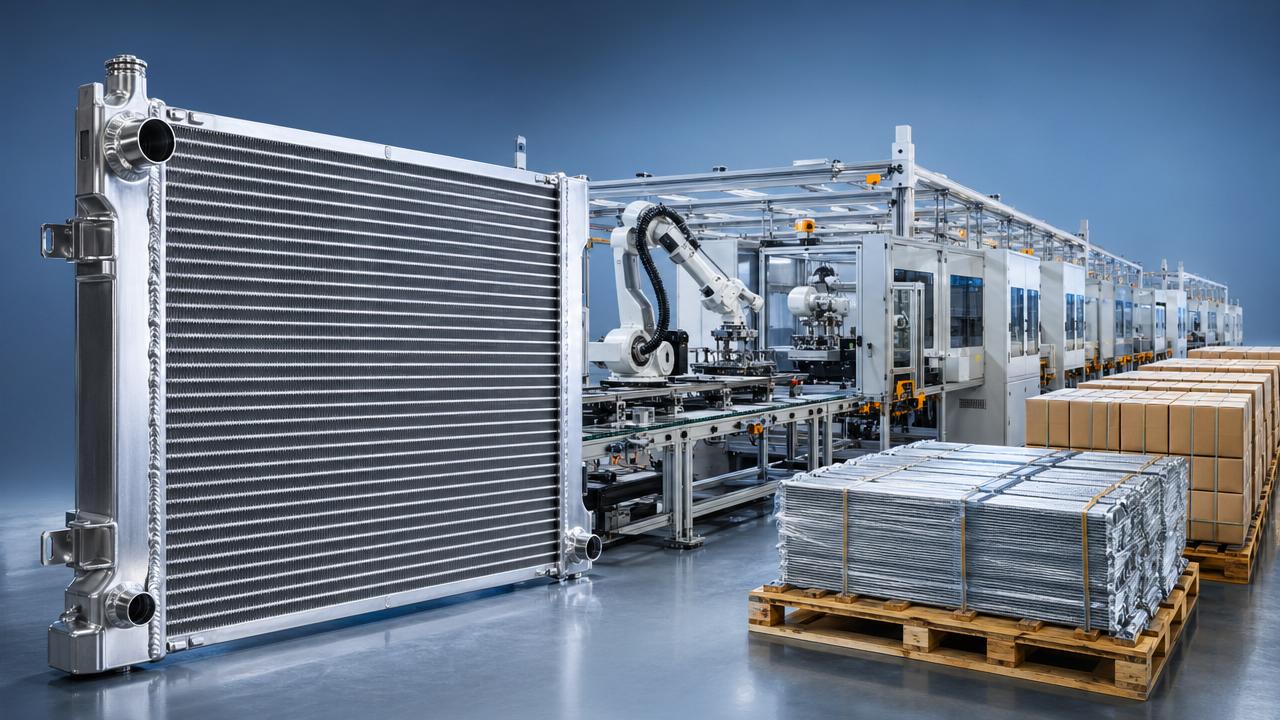
Choosing the right New Energy Vehicle Radiator supplier starts with understanding lead times, production capacity, and delivery reliability. For procurement teams, delays can disrupt schedules, raise costs, and affect customer commitments. This guide explains what influences supplier lead times, how to evaluate manufacturing strength, and why experienced radiator manufacturers with stable output and global supply capabilities can help buyers secure consistent, on-time sourcing.
Why do lead times matter so much when choosing a New Energy Vehicle Radiator supplier?
For procurement professionals, lead time is not just a shipping detail. It is a planning variable that affects production scheduling, warehouse turnover, aftersales support, and customer satisfaction. A dependable New Energy Vehicle Radiator supplier helps buyers avoid line stoppages, emergency air freight, and hidden coordination costs that often appear when supply timing is unstable.
In the new energy vehicle parts sector, radiator modules must meet thermal performance, dimensional consistency, and material quality requirements while also arriving on time. This is especially important for buyers serving OEM programs, regional distributors, and replacement markets where model compatibility and service commitments are tightly controlled.
A long lead time is not always a problem if it is accurate and stable. The real risk comes from uncertainty. When a New Energy Vehicle Radiator supplier gives a short quote but frequently misses delivery windows, procurement teams face greater operational pressure than they would with a longer but predictable schedule.
What does lead time usually include?
Lead time often combines several stages: order confirmation, raw material preparation, tooling or sample verification, production scheduling, brazing and assembly, quality inspection, packaging, and export arrangement. Buyers should ask suppliers to separate these steps instead of offering only one total number. That makes risk points easier to identify.
- Sample lead time for first approval
- Mass production lead time after deposit or PO confirmation
- Packaging and loading preparation time
- Transit time by sea, rail, truck, or air
When discussing timelines with a New Energy Vehicle Radiator supplier, the procurement team should always distinguish manufacturing lead time from logistics lead time. Many misunderstandings happen because these two are quoted together without clarification.
What factors most often affect a supplier’s radiator lead time?
Lead time in the auto parts industry is shaped by both internal manufacturing capability and external supply chain conditions. For radiator products, core materials such as aluminum, tubes, fins, tanks, and brazing-related inputs can all influence scheduling. If a supplier depends heavily on outside processing for key stages, timing becomes more fragile.
Product complexity also matters. A standard aftermarket radiator may move faster than a customized thermal module designed for a specific EV platform. Technical drawings, fitment confirmation, leak testing standards, and packaging requirements can all extend the order cycle when not finalized early.
The most reliable New Energy Vehicle Radiator supplier is usually the one with clear process control, established sourcing channels, and experience in balancing custom orders with repeat production. Buyers should look beyond the quoted day count and study how the supplier maintains consistency under demand changes.
Which operational factors should procurement teams verify?
This kind of breakdown helps procurement teams compare one New Energy Vehicle Radiator supplier with another using operational facts instead of sales promises.
How can seasonality change the schedule?
Seasonality affects lead times more than many buyers expect. Export peaks, holiday shutdowns, and sudden project launches can compress available capacity. A capable supplier will warn customers early, recommend booking windows, and offer realistic shipment plans rather than overcommitting.
This is one reason experienced manufacturers in China remain attractive to global buyers. Companies with organized expansion, mature production management, and export familiarity are generally better equipped to handle fluctuating schedules without losing delivery discipline.
How can buyers evaluate whether a New Energy Vehicle Radiator supplier really has enough production capacity?
Capacity evaluation should be practical, not theoretical. A supplier may claim high output, but buyers need to know whether that capacity applies to comparable radiator products, material specifications, and process routes. Procurement teams should ask for evidence tied to similar models and volumes.
Liaocheng Xinde Auto Parts Co., Ltd., established in 2018, has grown rapidly in China’s radiator manufacturing field with a registered capital of 5 million RMB and total investment of 50 million RMB. The company focuses on water tank radiators, intercoolers, construction machinery radiators, and new energy radiator modules for global markets. Its provincial and municipal honors, including High-tech Enterprise and Consumer Trust recognitions, signal not only business growth but also process maturity and market credibility.
For procurement teams, these background indicators matter because they often reflect stronger technical management, better internal systems, and more stable supply support. A New Energy Vehicle Radiator supplier with sustained investment is generally better positioned to maintain quality and output during changing order cycles.
What proof points should be requested before placing volume orders?
- Monthly and peak-season output data for similar radiator categories
- Sample production records and mass order delivery history
- In-house testing capabilities for leakage, brazing integrity, and fitment
- Photos or audit access for workshop lines and packaging flow
- Export experience with destination markets and packaging standards
A useful sign of technical readiness is how a supplier presents product details. For example, a model such as Radiator for Lynk with model 2069525700, aluminum construction, brazing design, and fitment for Link 06 / binyue shows the kind of application-specific specification clarity that procurement teams need. When a supplier can state dimensions, warranty terms, and cooling function clearly, it often indicates better documentation and order control.
Still, buyers should verify whether this documentation discipline extends across the entire product range. One well-documented SKU is encouraging, but procurement decisions should be based on systemic capability rather than a single catalog example.
What are the most common mistakes when comparing New Energy Vehicle Radiator suppliers?
One common mistake is choosing only by unit price. A lower quote may look attractive at first, but if the supplier lacks process stability, the real cost rises through missed deadlines, urgent logistics, claim handling, and planning disruptions. For buyers, total landed reliability often matters more than nominal piece price.
Another mistake is assuming that all radiators with similar dimensions are equivalent. In new energy vehicle applications, thermal efficiency, brazing quality, corrosion resistance, pressure performance, and fitment precision can vary substantially. Procurement teams should make sure technical comparison standards are consistent before judging suppliers.
A third mistake is failing to distinguish between a trader and a manufacturer. Traders can add convenience in some sourcing situations, but if delivery control and engineering feedback are priorities, direct access to the New Energy Vehicle Radiator supplier’s production team is often more valuable.
Which red flags deserve extra attention?
- Lead times change repeatedly without explanation
- No clear answer on raw material sourcing or safety stock
- Testing standards are vague or undocumented
- Product data sheets lack model-specific detail
- Shipment terms and packaging plans are incomplete
How should buyers compare quotes more accurately?
A practical approach is to compare suppliers using a scorecard. Review quoted lead time, lead time accuracy, quality records, communication speed, technical response, warranty support, packaging quality, and export readiness. This helps procurement teams reduce subjective decisions and build a more defensible sourcing process.
How can procurement teams reduce lead time risk before placing an order?
The best way to reduce risk is to align specifications, schedules, and commercial terms before production begins. Buyers should not wait until after the purchase order to clarify packaging details, label requirements, inspection rules, or model fitment references. Every unresolved point can become a delay later.
It is also wise to create a rolling forecast, especially when working with a New Energy Vehicle Radiator supplier on recurring programs. Even if final releases remain flexible, visibility into expected demand helps the manufacturer reserve materials and plan line loading more effectively.
For strategic parts, buyers may also consider phased cooperation: sample approval, small pilot order, then scheduled batch orders. This creates real performance data before high-volume commitments and gives both sides time to refine communication and packaging routines.
What should be confirmed in advance?
- Exact OE or reference model numbers and application scope
- Material, dimensions, and key thermal or structural requirements
- Sample validation process and approval responsibility
- Mass production lead time and acceptable delivery tolerance
- Inspection standards, warranty terms, and claim process
- Packaging, labeling, palletization, and shipping method
When these points are managed early, the procurement team gains a more accurate picture of whether the supplier can support both immediate orders and future scaling needs.
What final questions should buyers ask before selecting a long-term New Energy Vehicle Radiator supplier?
Before making a long-term decision, procurement teams should move beyond catalog and quotation discussions. They should ask how the supplier handles demand spikes, quality exceptions, engineering changes, and destination-specific packaging requirements. The goal is to understand how the relationship will function under pressure, not only in ideal conditions.
It is also helpful to examine whether the supplier combines technical specialization with business continuity. A company focused on radiator systems for heavy trucks, construction machinery, and new energy modules may have broader process knowledge and stronger manufacturing discipline than a supplier with a scattered or unstable product strategy.
In the end, the best New Energy Vehicle Radiator supplier is not simply the one with the shortest quoted lead time. It is the supplier that can explain its schedule, prove its capability, communicate quickly, and deliver repeatedly with stable quality.
Quick FAQ summary for procurement review
If you need to confirm a specific sourcing plan, radiator parameters, forecast arrangement, delivery cycle, quotation basis, or cooperation method, the best next step is to discuss model scope, expected order volume, target market, testing requirements, and shipment schedule in detail before finalizing supplier selection.