



Excavator Radiator Repair or Replacement? A Cost-Based View
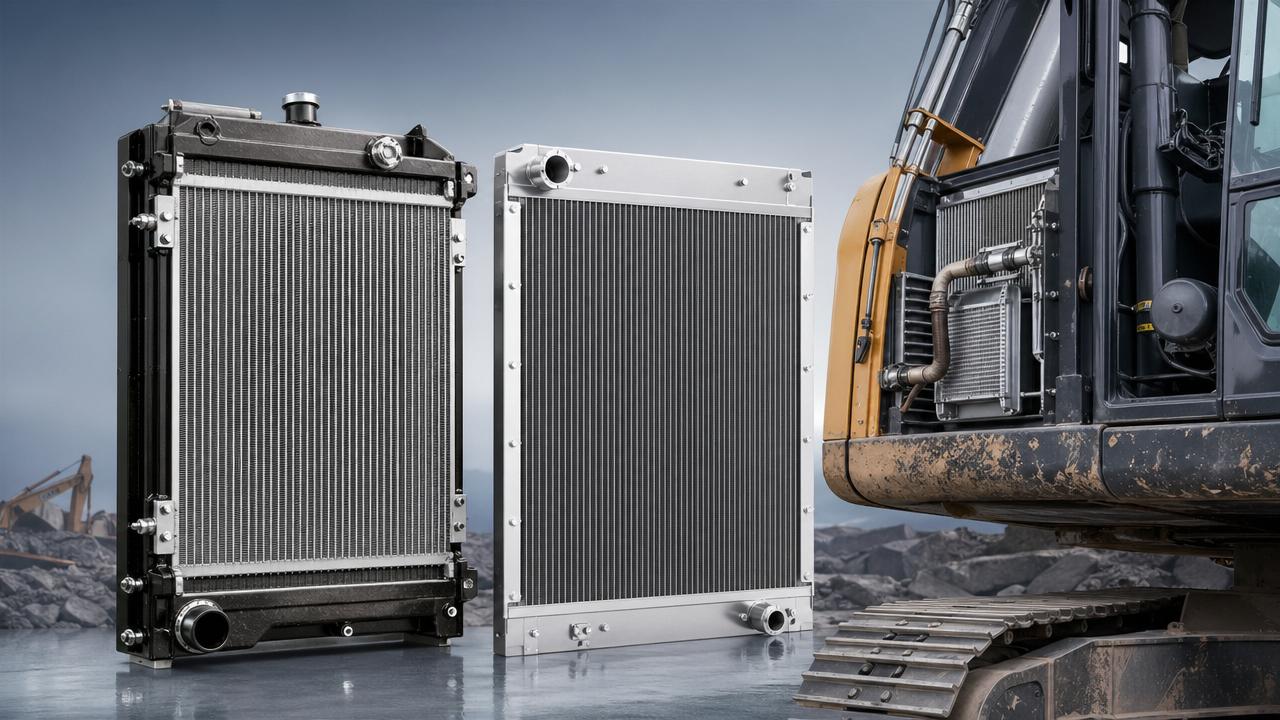
When downtime and repair budgets collide, the decision between excavator radiator repair and full replacement becomes a critical business choice. For fleet owners and procurement leaders, the right option depends on damage severity, operating conditions, and long-term cost control. This cost-based view helps decision-makers evaluate Excavator radiator repair with a practical focus on reliability, productivity, and total ownership value.
How should decision-makers assess excavator radiator repair first?
In the parts industry, the repair-versus-replace decision is rarely technical alone. It is a business judgment shaped by machine utilization, maintenance cycles, parts availability, and the cost of unplanned stoppage. For an excavator working 8–12 hours per day, even a 1–2 day delay can affect project milestones, operator scheduling, and fuel efficiency across the fleet.
Excavator radiator repair is usually considered when the core structure is still recoverable. Typical triggers include minor external fin damage, limited leakage, blocked channels, or damaged joints that can be cleaned, pressure-tested, and restored. If the failure is localized and the surrounding metal condition remains stable, repair may protect short-term cash flow without compromising immediate operations.
However, procurement leaders should avoid viewing repair as the lower-cost choice in every case. A repaired radiator that fails again during peak work periods can turn a small service invoice into a larger operational loss. In construction machinery, total cost includes not only the component itself but also transport, installation labor, coolant replacement, machine idle time, and possible overheating damage to adjacent systems.
Liaocheng Xinde Auto Parts Co., Ltd., established in 2018 with a registered capital of 5 million RMB and a total investment of 50 million RMB, focuses on the research, production, and global sales of water tank radiators, intercoolers, construction machinery radiators, and related thermal components for heavy trucks and new energy radiator modules. This manufacturing focus matters to buyers because supplier capability directly affects fit accuracy, thermal stability, and replacement lead time.
Three questions to ask before approving a repair order
- Is the damage limited to a repairable zone, or does it affect the wider core, tank, or mounting structure?
- Will the machine return to high-load work such as quarrying, mining support, or continuous earthmoving within the next 7–30 days?
- Does the current radiator already show age-related corrosion, repeated clogging, or vibration fatigue that suggests a short remaining service window?
Repair or replacement: which option lowers total operating cost?
A useful way to compare Excavator radiator repair and replacement is to separate direct cost from downstream cost. Direct cost includes inspection, removal, cleaning, repair work, pressure testing, and reinstalling. Downstream cost includes repeat downtime, overheating risk, lost production, and emergency sourcing if the first solution fails sooner than planned.
In many field situations, repair makes sense when the radiator is relatively new, damage is isolated, and machine duty is moderate. Replacement becomes more attractive when the excavator operates in dusty environments, sustained high ambient temperatures, or demanding duty cycles where cooling performance needs to remain consistent for long daily shifts. Decision-makers should also consider whether the unit has already been repaired once or twice before.
The table below gives a practical framework for cost-based comparison. It does not use universal pricing because actual cost varies by model, region, freight, and service conditions. Instead, it highlights the decision variables that usually matter most in B2B fleet maintenance.
The key takeaway is simple: a lower invoice today does not always mean a lower total cost over the next 3–12 months. For high-utilization equipment, a reliable replacement can protect budget discipline better than repeated repair events. For mixed fleets, some units justify repair while mission-critical machines should move directly to replacement.
A practical threshold for business decisions
If repair addresses only the visible symptom while the radiator already shows broad wear, internal contamination, or weak mounting integrity, replacement deserves stronger consideration. This is especially true when the excavator supports revenue-generating operations where a single overheating incident can affect several linked processes on site.
What technical signs indicate Excavator radiator repair may no longer be enough?
From a thermal management perspective, not every radiator problem is visible from the outside. Some failures begin as internal flow restriction, weakened brazed joints, or vibration-induced fatigue around mounting points. A machine may still run, but coolant temperatures become less stable during climbing, digging under load, or prolonged idling in hot weather.
Decision-makers should ask service teams for evidence from at least 4 checkpoints: pressure condition, internal blockage level, fin condition, and tank or seam integrity. These checkpoints help separate cosmetic damage from a real thermal performance issue. In B2B maintenance, a good technical diagnosis prevents paying twice—first for repair, then for replacement after another stoppage.
The next table can support purchasing, maintenance, and operations teams during evaluation. It translates workshop findings into practical procurement meaning, which is often the missing link in excavator radiator repair decisions.
A sound technical review should also consider the operating environment. Excavators in mining support, demolition, and dusty aggregate handling usually need stronger thermal consistency than units in lighter municipal jobs. If your machine works in repeated high-dust cycles and maintenance cleaning is only monthly rather than weekly, replacement often delivers better lifecycle economics.
Why manufacturer capability matters
Buyers should not treat a radiator as a generic commodity. Fitment accuracy, material consistency, and heat-exchange design affect installation efficiency and operational reliability. A specialist manufacturer such as Liaocheng Xinde Auto Parts Co., Ltd. brings value through focused production in construction machinery radiators, heavy truck cooling parts, and new energy radiator modules, which helps buyers align replacement parts with real working conditions rather than catalog assumptions.
A brief cross-industry example
Thermal management principles apply across equipment categories. In new energy vehicle applications, precision cooling is equally critical, which is why products such as Radiator for BYD are engineered for battery packs, drive motors, and power electronics, with a design focus on fit and heat exchange efficiency. While this product serves new energy vehicles rather than excavators, it illustrates how modern radiator sourcing increasingly prioritizes application-specific design over simple price comparison.
How can procurement teams choose the right replacement strategy?
When Excavator radiator repair is no longer the best path, the next challenge is selecting a replacement strategy that fits uptime targets and purchasing controls. In practice, buyers usually compare at least 3 dimensions: technical fit, supply responsiveness, and supplier support. A low-priced part with poor installation match or unstable cooling performance can create extra labor cost within the first service cycle.
For B2B purchasing, a structured checklist can shorten internal approvals. Maintenance teams focus on compatibility and cooling stability. Procurement teams focus on lead time, price discipline, and supplier communication. Management focuses on how the decision affects machine availability over the next quarter or project cycle. Aligning these views before ordering reduces rework and emergency buying.
The list below is useful for evaluating replacement radiators for construction machinery, especially when equipment works in variable climates or remote sites where a second intervention is costly.
Five checks before placing an order
- Confirm the excavator model, mounting points, inlet and outlet positions, and surrounding installation space to avoid fitment delays.
- Ask about material and manufacturing consistency, especially for core assembly, tanks, and vibration-sensitive areas.
- Review expected lead time, which in many export or custom supply cases may fall within 2–4 weeks depending on order volume and specification complexity.
- Check whether the supplier can support sample confirmation, drawing review, or technical clarification before mass procurement.
- Evaluate communication speed for after-sales questions, because delayed problem solving increases total service cost more than many buyers expect.
Liaocheng Xinde Auto Parts Co., Ltd. has expanded rapidly since its founding and has received honors such as High-tech Enterprise, Civilized and Honest Enterprise, and Trustworthy Unit for Consumers at provincial and municipal levels. For buyers, this background is relevant not as marketing language alone, but as a signal that the company operates with sustained manufacturing investment and organized development in radiator-related product lines.
Where supplier specialization creates value
A supplier focused on radiators, intercoolers, and construction machinery cooling components can usually respond more effectively to fitment checks, thermal questions, and product adaptation requests. That matters when procurement must balance cost with service life. It is also useful when a fleet includes both conventional machinery and newer thermal systems, where the same sourcing partner may support broader cooling product needs, including Radiator for BYD for new energy vehicle applications.
What mistakes increase long-term cost after excavator radiator repair?
One common mistake is approving repair without defining the machine’s future workload. A radiator that performs adequately in light use may fail under continuous heavy digging or high ambient heat. Another mistake is focusing only on purchase cost while ignoring secondary items such as coolant replacement, labor hours, inspection time, and the effect on adjacent engine cooling components.
A third mistake is using broad assumptions such as “the leak is small, so repair is enough.” Leak size does not always reflect internal condition. If the radiator has already experienced corrosion, contamination, or weak joints, a visible leak may simply be the first external sign of wider aging. In those cases, Excavator radiator repair can postpone but not solve the underlying problem.
For procurement and maintenance teams, preventive discipline matters. Weekly cleaning in dusty work zones, monthly condition checks, and quarterly review of cooling performance trends can help identify whether repair remains reasonable or replacement planning should begin. This approach is often more cost-effective than waiting for an emergency stop.
Common misconceptions
- “Repair is always cheaper.” It may be cheaper upfront, but repeat downtime can make it more expensive over a 3–6 month window.
- “Any replacement radiator will do.” Poor fit or insufficient heat exchange can increase installation time and operating temperature fluctuation.
- “Visible condition tells the whole story.” Internal blockage and thermal inefficiency often require deeper inspection before a sound decision can be made.
FAQ for procurement leaders
How many repairs are too many?
There is no universal number, but if the same radiator has required repeated intervention within 6–12 months, management should reassess whether repair is extending life or merely extending risk. The answer depends on workload, environment, and the nature of previous failures.
What should be confirmed before requesting a quote?
At minimum, confirm the excavator model, radiator dimensions if available, connection layout, application conditions, and whether the requirement is for standard replacement or customized adaptation. These details reduce quotation errors and support faster delivery planning.
Is faster delivery always the best choice?
Not necessarily. Fast delivery matters when downtime is severe, but technical mismatch creates larger problems later. The best option is a balanced one: acceptable lead time, correct fit, and dependable cooling performance under your actual duty cycle.
Why choose a specialized radiator manufacturer for your next order?
For enterprise buyers, the value of a supplier is measured not only by unit price but by how well that supplier reduces uncertainty. Liaocheng Xinde Auto Parts Co., Ltd. specializes in the research, production, and global sales of radiators, intercoolers, construction machinery radiators, and related components. That specialization supports more informed communication on application fit, thermal requirements, and replacement planning.
If you are weighing Excavator radiator repair against replacement, a supplier with focused manufacturing capability can help you compare service life expectations, identify whether damage is localized or systemic, and clarify practical options for standard or custom parts. This is especially important when procurement must coordinate with maintenance, operations, and finance under a tight project schedule.
Buyers can also benefit from a more complete discussion before ordering. A productive inquiry usually covers 6 items: model confirmation, application environment, working hours per day, current failure mode, expected lead time, and sample or drawing needs. These inputs make quotations more useful and reduce avoidable back-and-forth.
What you can discuss with us
- Parameter confirmation for excavator radiator replacement and compatibility review.
- Selection advice based on workload, climate, maintenance frequency, and cost target.
- Lead time discussion for sample support, regular orders, or project-based procurement.
- Custom solution communication for specific mounting, heat exchange, or application requirements.
- Quotation support for fleet maintenance planning, replacement budgeting, and long-term sourcing.
If your team is comparing short-term Excavator radiator repair with a more durable replacement path, contact us with your model details and operating conditions. We can help you review fitment, discuss cooling component options, estimate delivery timing, and support a sourcing decision that protects uptime as well as budget control.