



Heavy Truck Cooling System Innovations Expected at This Year’s Expo
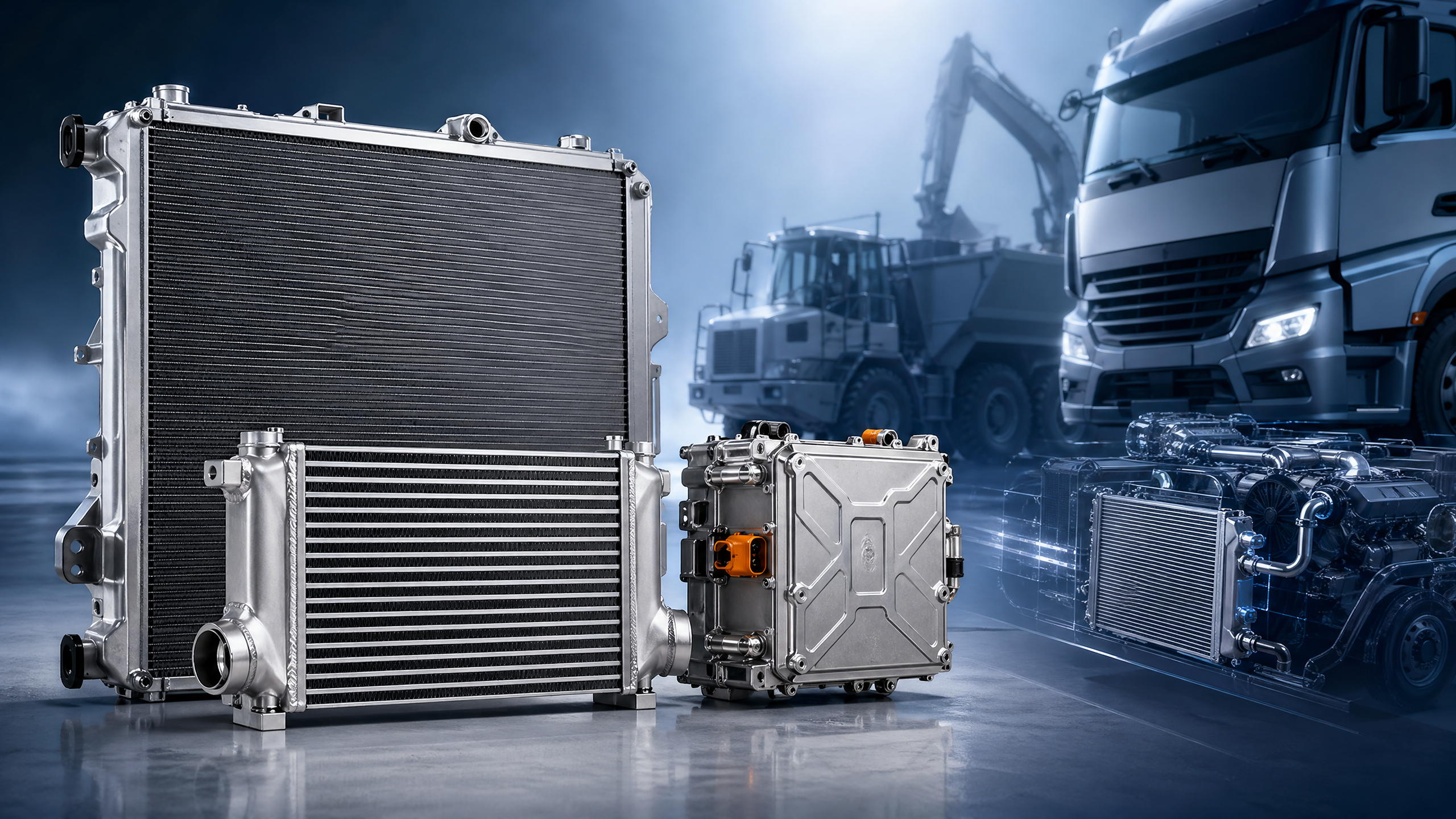
This year’s expo is set to spotlight the latest heavy truck cooling system innovations, giving business evaluators a clearer view of performance, durability and long-term cost efficiency. From advanced radiators and intercoolers to new energy cooling modules, the event will reveal how leading manufacturers are responding to stricter operating demands and global market expectations.
Why Scenario Differences Matter in Heavy Truck Cooling System Evaluation
For business evaluators in the auto parts sector, a heavy truck cooling system should never be judged in isolation. The same radiator core, intercooler structure, or module layout can perform very differently depending on whether the vehicle runs long-haul freight, urban stop-and-go delivery, mining support, or public fleet service. At this year’s expo, the most useful insight will come from comparing innovations against real operating scenarios rather than simply reviewing technical brochures.
This matters because heat load, airflow stability, dust exposure, idling frequency, and maintenance intervals vary widely from one application to another. A line-haul truck may operate 8 to 14 hours per day at sustained speed, while a municipal or urban platform may face repeated acceleration, low-speed airflow limitations, and more frequent thermal cycling. Evaluators who map product capability to actual usage conditions can reduce procurement mistakes and improve total lifecycle value.
Liaocheng Xinde Auto Parts Co., Ltd., established in 2018 with a registered capital of 5 million RMB and total investment of 50 million RMB, has focused on the research, production, and global sales of water tank radiators, intercoolers, construction machinery radiators, and new energy radiator modules. For buyers reviewing expo launches, that combination of manufacturing specialization and application range is especially relevant because component design decisions are increasingly tied to end-use environment, not just nominal engine size.
What evaluators should compare first
Before discussing any heavy truck cooling system innovation, evaluators should define a shortlist of operational variables. In practice, 5 factors often shape the real purchase outcome: ambient temperature range, route type, engine or motor heat density, cleaning frequency, and target service interval. If one of these is overlooked during supplier discussions, the result may be a technically acceptable part that is commercially inefficient after 12 to 24 months of use.
- Route and duty cycle: highway, mixed road, construction zone, mountain grade, or urban circulation.
- Thermal profile: diesel engine cooling, charge air cooling, hydraulic heat rejection, or new energy battery and electronics cooling.
- Maintenance practicality: cleaning access, fin density suitability, and replacement lead time.
- Cost horizon: initial purchase price versus downtime cost over 1 to 3 operating years.
A scenario-first buying mindset
The expo will likely feature multiple heavy truck cooling system upgrades that sound similar on paper: improved brazing processes, aluminum optimization, modular integration, and better thermal efficiency. The key question is not which innovation is newest, but which one matches the customer’s operating pattern. In heavy-duty parts sourcing, an extra 10% to 15% durability margin can be more valuable than a small gain in laboratory cooling efficiency if the fleet runs in high-dust or vibration-intensive conditions.
Three High-Value Application Scenarios to Watch at the Expo
Most heavy truck cooling system discussions become more practical when broken into scenarios. For business evaluators, three application groups deserve close attention this year: long-haul freight fleets, construction and off-road equipment support vehicles, and public transportation or mixed-energy fleet platforms. Each group has distinct cooling priorities, replacement cycles, and cost-risk thresholds.
The following comparison helps identify where innovations are likely to deliver measurable operational value. Rather than comparing components only by material or dimensions, it links cooling system design to working conditions, maintenance pressure, and business consequences.
This comparison shows why one heavy truck cooling system solution rarely fits every platform equally well. For example, a design optimized for constant-speed road freight may not handle low-speed contamination exposure effectively, while a highly integrated new energy module may offer limited value to a conventional diesel fleet with simple maintenance requirements. Scenario-fit remains the most reliable decision lens.
Scenario 1: Long-haul freight fleets
In long-haul transport, cooling system performance is judged by stability over long duty cycles. The vehicle may operate across seasonal ambient ranges from below 0°C to above 35°C, often with heavy payload and extended climbing sections. In these cases, business evaluators should look for efficient core design, reliable joining quality, and resistance to fatigue over repeated thermal expansion cycles.
A supplier discussion should cover not only radiator capacity, but also intercooler compatibility, airflow path design, and expected maintenance intervals. If cleaning or inspection is only practical every 20,000 to 30,000 km, then fouling resistance and stable heat rejection become major procurement factors, especially for export fleets or cross-regional operators.
For this scenario, innovations such as improved aluminum construction and better brazed connections can support longer service life. Evaluators should ask suppliers for application references by duty cycle type, not only by vehicle category, because continuous operation exposes different weaknesses than intermittent use.
Scenario 2: Construction-linked and off-road support vehicles
This is one of the harshest environments for a heavy truck cooling system. Vehicles servicing construction sites, quarries, or infrastructure projects often face high dust density, repeated shocks, and lower average road speed. Airflow can be inconsistent, and surface contamination can reduce thermal efficiency much faster than in highway use. In some settings, visual cleaning may be needed weekly rather than monthly.
For this scenario, structural ruggedness matters as much as thermal performance. Evaluators should review fin configuration, tube strength, vibration tolerance, and maintenance access. A strong cooling result in a controlled test environment does not automatically translate into reliability when debris accumulation and frame movement are constant realities.
Manufacturers with experience in construction machinery radiators may offer useful design logic here, especially where cooling modules must withstand both temperature cycling and mechanical stress. That experience can be relevant for buyers managing mixed fleets that include heavy trucks and site-support equipment.
Scenario 3: Public transportation and new energy transition fleets
Public transportation applications involve a different thermal profile. Frequent stops, passenger load variation, urban traffic, and stricter uptime expectations make downtime a major cost factor. In this context, a heavy truck cooling system discussion often expands to bus and fleet thermal management more broadly, especially where operators are managing both diesel and electric platforms during a transition period.
An example worth attention is Radiator for Ankai, developed for public transportation use. Built with premium-grade aluminum and advanced brazing technology, it is intended to support optimal thermal management for both traditional diesel and new energy electric buses while helping minimize downtime and maximize engine life. For evaluators responsible for municipal or institutional fleet planning, this kind of cross-platform thermal approach can simplify sourcing decisions.
The broader lesson is that cooling innovation is no longer limited to engine heat rejection alone. In urban and mixed-energy operations, procurement teams may need to consider integrated radiator modules, electronics cooling logic, packaging efficiency, and service continuity over 12-month maintenance planning cycles.
How Demand Differs by Fleet Type, Route Pattern, and Maintenance Model
The same heavy truck cooling system can be judged very differently depending on who is buying it. A private freight operator may focus on fuel-related thermal stability and replacement cost. A project contractor may prioritize contamination resistance. A public fleet manager may place the highest value on uptime, supplier responsiveness, and modular consistency across vehicle groups. Understanding these demand layers is essential when reviewing expo offerings.
For evaluators, the most practical approach is to align product review criteria with operational ownership models. In-house maintenance teams can handle more complex service routines if component access is good. Outsourced maintenance environments may require simpler replacement logic, faster spare part availability, and stronger consistency between production batches.
The table below highlights how purchasing priorities shift across business models. This is particularly helpful when comparing suppliers that all claim good thermal performance but differ in manufacturing focus and service support.
What this means in practice is that thermal performance alone is not a complete buying standard. A competitive heavy truck cooling system must also fit the buyer’s maintenance capacity, route profile, and spare parts expectations. Evaluators should therefore ask not only “How well does it cool?” but also “How well does it work in our service model over the next 12 to 36 months?”
Signs a solution may be well-matched
- The supplier can explain the product by application scenario, not only by catalog number.
- Material choice, joining process, and module layout are linked to real operating conditions.
- Lead time, replacement planning, and customization options are discussed early in evaluation.
- The heavy truck cooling system can be paired logically with intercoolers or new energy modules when needed.
Where Liaocheng Xinde is relevant
Because the company’s business scope covers water tank radiators, intercoolers, construction machinery radiators, and new energy radiator modules, evaluators can use that breadth as a starting point when screening for scenario adaptability. A supplier serving only one narrow category may still be suitable, but a broader manufacturing base can be helpful when a buyer needs consistent thermal solutions across several vehicle or equipment types.
Common Misjudgments When Reviewing Heavy Truck Cooling System Innovations
Expo environments are useful, but they can also encourage quick conclusions. For business evaluators, one common error is overvaluing peak technical claims while undervaluing scenario durability. Another is assuming that a lighter or more integrated design automatically reduces cost. In reality, maintenance complexity, contamination sensitivity, and route-specific stress can offset those benefits within the first operating year.
A second mistake is evaluating the radiator without considering the full thermal package. A heavy truck cooling system often interacts with the intercooler, fan strategy, packaging geometry, and vehicle operating load. If one component is upgraded without checking the rest of the thermal chain, expected gains may not appear in real service. This is especially true in fleets with mixed vehicle ages or modified operating conditions.
A third issue is underestimating lead time and replacement continuity. Even if the thermal design is appropriate, a mismatch in supply responsiveness can create costly downtime. Evaluators should ask about sample support, production consistency, and whether the supplier can discuss adaptation for export, municipal, or project-based procurement cycles that typically run 4 to 12 weeks.
Checklist for avoiding poor-fit decisions
- Confirm the actual operating scenario before comparing specifications.
- Ask how the heavy truck cooling system behaves under dust, vibration, or low-speed airflow conditions.
- Review whether maintenance intervals match your service capacity and route intensity.
- Check if the supplier can support customization, sample review, and stable delivery planning.
- Evaluate total cost across procurement, maintenance, and downtime rather than unit price only.
A practical evaluation question set
Useful supplier discussions usually include 6 to 8 direct questions: What ambient range is typical? What contamination level is expected? What service interval is targeted? Is the application diesel, electric, or mixed? How accessible is the core for cleaning? What are the normal lead times? Can dimensions or fittings be adjusted? Answers to these questions often reveal more than a generic product presentation.
How to Turn Expo Findings Into a Better Sourcing Decision
After the expo, the most effective next step is to group suppliers by scenario suitability rather than by marketing visibility. For example, one supplier may be best for construction-duty radiators, another for fleet-standard intercoolers, and another for integrated new energy modules. Business evaluators should score each heavy truck cooling system against route fit, durability expectations, maintenance practicality, and supply coordination.
A structured sourcing review usually works best when reduced to a short matrix. In many procurement teams, 4 dimensions are enough to narrow choices: thermal suitability, structural reliability, delivery confidence, and customization capability. A component that ranks slightly lower on one technical metric may still be the better commercial option if it reduces downtime risk or aligns better with fleet servicing reality.
This is where application-driven manufacturers can stand out. When a supplier can discuss heavy truck, construction machinery, and new energy radiator modules within one technical conversation, it becomes easier for buyers to build a future-ready sourcing plan rather than a single-project purchase list.
Why choose us
Liaocheng Xinde Auto Parts Co., Ltd. focuses on the parts categories that matter most in thermal management: water tank radiators, intercoolers, construction machinery radiators, and new energy radiator modules. Since 2018, the company has developed rapidly in China’s industry environment, combining manufacturing specialization with an application range that is relevant to freight vehicles, construction-linked use, and public transport platforms.
For business evaluators reviewing heavy truck cooling system opportunities, we can support practical discussions on parameter confirmation, product selection, delivery cycle expectations, and scenario-based customization direction. If your project involves public transportation applications, you can also review solutions such as the Radiator for Ankai as part of a broader thermal management sourcing conversation.
Contact us to discuss core dimensions, material preferences, route conditions, maintenance targets, sample support, quotation planning, or requirements related to diesel, construction machinery, and new energy cooling applications. A clearer application profile usually leads to a more suitable cooling solution, faster technical alignment, and better long-term purchasing confidence.