



New Energy Vehicle Radiator Manufacturer Trends to Watch in 2026
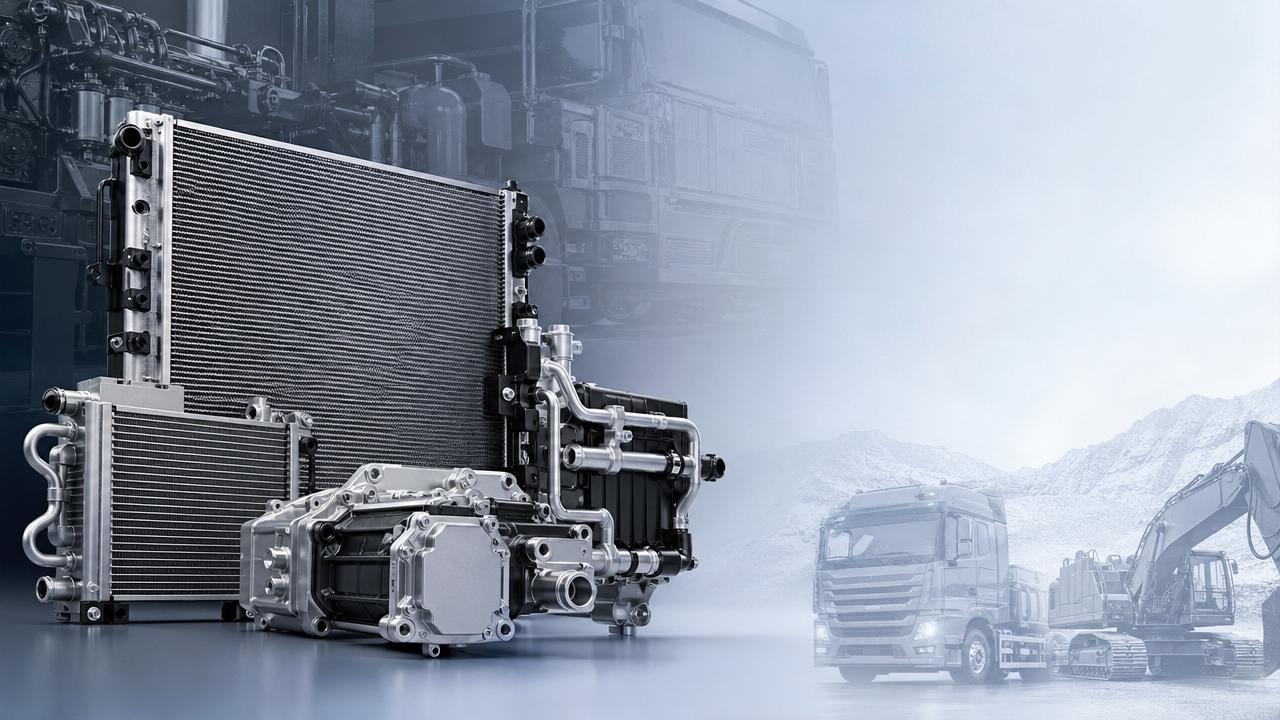
As the electric mobility market matures, every New Energy Vehicle Radiator manufacturer must adapt to rising demands for thermal efficiency, lightweight design, and intelligent system integration. In 2026, buyers, engineers, and sourcing professionals will closely watch how manufacturers respond to stricter performance standards, global supply chain shifts, and the growing need for reliable cooling solutions in heavy-duty and new energy applications.
For information researchers in the auto parts sector, radiator sourcing is no longer limited to checking dimensions and price. The real questions are more strategic: Which manufacturer can support stable thermal performance across different duty cycles? Who can manage material consistency, production scalability, and export delivery without creating hidden quality risks? In 2026, the answers will shape supplier shortlists across electric trucks, hybrid commercial vehicles, construction equipment, and related cooling modules.
This is where the profile of a capable New Energy Vehicle Radiator manufacturer becomes more important. Liaocheng Xinde Auto Parts Co., Ltd., established in 2018 with a registered capital of 5 million RMB and a total investment of 50 million RMB, focuses on water tank radiators, intercoolers, construction machinery radiators, and new energy radiator modules. For procurement teams evaluating the China supply base, the key value lies not only in manufacturing capacity, but also in engineering responsiveness, product range, and long-term delivery reliability.
Why 2026 Will Be a Turning Point for New Energy Vehicle Radiator Manufacturers
The cooling requirements of new energy vehicles are becoming more demanding because electric platforms generate concentrated thermal loads in batteries, motors, controllers, and onboard charging systems. In commercial-duty use, the radiator module must work under wider temperature swings, frequent stop-start conditions, and higher vibration exposure than many passenger applications. For that reason, a New Energy Vehicle Radiator manufacturer in 2026 will be evaluated by system performance rather than by component price alone.
Another major shift is the move from single-function heat exchangers to integrated thermal assemblies. Buyers increasingly expect radiator suppliers to understand module-level packaging, airflow path optimization, and compatibility with fan systems, reservoirs, and electronic controls. A supplier that can support 2 to 4 thermal interfaces in one project often reduces coordination costs for OEMs and aftermarket distributors.
Regulatory pressure is also changing supplier evaluation. Even when exact standards differ by destination market, buyers are asking for clearer process traceability, dimensional tolerance control, and consistency across production batches. In export-oriented sourcing, a deviation of even ±1.0 mm in key mounting positions can create assembly issues, while unstable weld quality may shorten product life in heavy-truck or new energy fleet service.
Core market signals buyers should monitor
The following table shows the practical trend areas that purchasing teams, product managers, and engineers are comparing when reviewing a New Energy Vehicle Radiator manufacturer for 2026 programs.
The key takeaway is that the market is rewarding suppliers who combine manufacturing discipline with application understanding. In practical terms, that means stronger interest in suppliers with broad radiator experience across heavy trucks, construction machinery, and new energy platforms, because these applications often share durability and thermal-management challenges.
What this means for supplier screening
- Request at least 3 categories of technical information: dimensions, material structure, and application scope.
- Compare sample lead times, which commonly range from 7 to 21 days depending on tooling readiness.
- Check whether the supplier can discuss both conventional truck radiators and new energy radiator modules with equal clarity.
- Review whether the manufacturer can support batch consistency over multiple orders, not only one successful sample.
Key Technical Trends Shaping Product Development
In 2026, the technical direction of the industry will center on three linked goals: better heat dissipation, lower weight, and better packaging efficiency. For any New Energy Vehicle Radiator manufacturer, this means balancing core thickness, fin density, coolant flow path, and pressure stability. Increasing one performance factor without controlling the others can create trade-offs in durability, airflow resistance, or manufacturing cost.
Material and structural decisions matter more in commercial applications than many buyers expect. In heavy-truck and equipment use, radiators face road shock, dust loading, and long operating hours. A design that performs acceptably in a lab may still fail earlier in the field if header strength, brazing consistency, or mounting point rigidity are not properly matched to the vehicle platform.
This is one reason manufacturers with experience in both traditional heavy-duty radiators and new energy modules can offer stronger design judgment. Liaocheng Xinde Auto Parts Co., Ltd. has developed around water tank radiators, intercoolers, construction machinery radiators, and related parts, which is relevant because many thermal design principles overlap across diesel, hybrid, and electric duty environments.
Technical factors that deserve closer review
Before finalizing a supplier list, technical teams should compare not just catalog specifications, but also the engineering assumptions behind them. The table below highlights practical specification areas that often influence long-term performance.
The broader lesson is simple: the best supplier conversations happen when drawings, operating conditions, and installation limits are discussed together. A radiator that looks cost-effective on paper may become expensive if it causes fan inefficiency, difficult installation, or repeated service claims after 6 to 12 months of operation.
A practical reference point from heavy-duty applications
Researchers comparing suppliers often benefit from reviewing crossover products that serve demanding truck environments. For example, XD045 MAN F2000 19.603 is a truck radiator application with dimensions of 1065*688*48, associated with models F2000, 19.603, and 81061016421. While this is not a new energy unit, it illustrates how dimensional precision, structural packaging, and platform-specific matching remain critical across both conventional and electrified cooling systems.
- Evaluate whether the supplier can explain how dimensions interact with airflow and mounting points.
- Ask for application logic, not just model matching, especially when projects involve platform adaptation.
- Use heavy-duty references to judge whether the manufacturer understands vibration, endurance, and field maintenance realities.
How Buyers Should Evaluate a New Energy Vehicle Radiator Manufacturer
For information researchers, the most useful evaluation method is a layered screening process. Start with product fit, move to manufacturing capability, then verify communication efficiency and delivery control. This 3-step approach helps reduce the risk of selecting a supplier that appears competitive on price but struggles with engineering follow-up or export execution.
The first checkpoint is product scope. A qualified New Energy Vehicle Radiator manufacturer should be able to discuss water tank radiators, intercoolers, radiator modules, and related heavy-duty cooling components in one coherent system language. That usually indicates broader engineering familiarity than a supplier focused only on catalog trading.
The second checkpoint is production discipline. Buyers should ask about sample preparation time, tooling coordination, in-process inspection frequency, and batch traceability. Common export programs expect sample confirmation within 1 to 3 rounds, and mass-production schedules often need to stay within a 20 to 45 day planning window after order confirmation, depending on volume and complexity.
Recommended procurement checklist
- Confirm exact application scenario: electric truck, hybrid vehicle, construction machinery, or aftermarket heavy-truck replacement.
- Review key parameters: size, mounting layout, core thickness, inlet and outlet position, and expected thermal load.
- Check development responsiveness: Can the team answer technical questions within 24 to 72 hours?
- Assess production reliability: Ask how dimensional checks and leak inspections are managed during batch production.
- Verify export support: packaging method, labeling accuracy, and document coordination for global shipments.
The third checkpoint is supplier credibility in context. Liaocheng Xinde Auto Parts Co., Ltd. was established in 2018 and has expanded rapidly in China’s auto parts market. Its focus on research, production, and global sales is relevant for buyers that need more than local fulfillment. Honors such as High-tech Enterprise, Civilized and Honest Enterprise, and Trustworthy Unit for Consumers can serve as supporting context, but procurement decisions should still prioritize product fit, process control, and communication quality.
Common sourcing mistakes in 2026
- Choosing by unit price only, without considering rework cost, slower assembly, or warranty exposure.
- Requesting a quote before sharing complete technical drawings or operating conditions.
- Ignoring heavy-duty application experience when evaluating suppliers for commercial new energy vehicles.
- Approving samples too quickly without checking packaging, labeling, and repeatability across multiple pieces.
Supply Chain, Lead Time, and Quality Control Trends to Watch
In 2026, lead time discipline will remain a major differentiator. Buyers increasingly want visibility into raw material planning, production sequencing, and inspection timing rather than receiving a single final delivery promise. A dependable New Energy Vehicle Radiator manufacturer should explain what happens in each stage, from drawing review to sample signoff and batch packing.
Supply chain resilience matters because radiator manufacturing depends on material consistency, brazing quality, and stable component sourcing. If one upstream link changes unexpectedly, downstream quality can be affected. That is why buyers should ask how often materials are verified, how non-conforming products are isolated, and whether critical dimensions are checked during production instead of only at final inspection.
For exporters serving trucks and new energy cooling applications, packaging and logistics also deserve attention. Large-format radiators can be damaged by vibration, stacking pressure, or moisture exposure during long-distance shipping. A strong supplier should be able to describe carton or pallet logic, part separation methods, and the document flow needed to avoid dispatch delays of 3 to 7 days.
Typical project flow from inquiry to shipment
The table below outlines a practical B2B workflow that researchers can use to compare one supplier against another. The exact timing varies, but the structure should remain clear and controlled.
A structured process reduces the chance of mismatch between sales commitments and factory output. For buyers comparing China-based suppliers, process transparency can be as valuable as the quote itself, especially when the end market requires predictable replenishment and low return rates.
Questions worth asking before placing an order
- How are key dimensions checked during production, and how often are those checks recorded?
- What is the expected response time if a packaging or fitment issue appears after shipment?
- Can the supplier support mixed orders across truck radiators, intercoolers, and related cooling parts?
- What conditions typically extend lead time beyond the original plan?
Application Scenarios, FAQ, and What to Do Next
Not every radiator project has the same performance target. Some buyers are sourcing for OEM development, others for aftermarket distribution, and others for mixed fleets that include diesel trucks, hybrid units, and electric commercial vehicles. This is why a New Energy Vehicle Radiator manufacturer should be judged by application relevance, not only by whether the product line includes the words “new energy.”
Manufacturers with experience in heavy trucks and construction machinery often bring useful advantages to new energy programs because those sectors demand strong durability, serviceability, and cooling stability. A product such as XD045 MAN F2000 19.603 reflects the kind of platform-specific matching and dimensional control that serious B2B buyers also look for when transitioning to electrified cooling assemblies.
For sourcing researchers, the next step is usually to build a shortlist of 2 to 4 suppliers, compare their engineering communication, and request targeted technical data instead of broad marketing brochures. That approach reveals who can truly support a project from concept review through repeat orders.
FAQ: What information researchers ask most often
How do I choose the right New Energy Vehicle Radiator manufacturer?
Focus on 4 areas: application experience, dimensional accuracy, response speed, and batch delivery control. Ask for product details, development workflow, and examples of how the supplier handles changes in size, interface layout, or cooling requirements.
What lead time is normal for sample and batch orders?
A typical sample cycle is 7 to 21 days, while batch production often falls between 20 and 45 days. Projects requiring new tooling, non-standard packaging, or multiple design revisions may take longer, so confirmation of milestones is essential.
What parameters should be checked first?
Start with overall dimensions, core thickness, inlet and outlet positions, mounting structure, and target application. If the radiator is for commercial-duty service, also review vibration resistance, packaging method, and service accessibility in the vehicle layout.
Why is heavy-duty experience useful for new energy projects?
Heavy-duty radiator production develops practical strengths in durability, thermal stability, and field-oriented design. These strengths are highly relevant when cooling systems must perform reliably over long operating hours and under fluctuating environmental conditions.
In 2026, the strongest suppliers will be those that combine technical understanding, disciplined production, and dependable communication. Liaocheng Xinde Auto Parts Co., Ltd. stands out through its focus on radiators, intercoolers, construction machinery cooling products, and new energy radiator modules, supported by ongoing growth in China’s auto parts industry. If you are evaluating a New Energy Vehicle Radiator manufacturer for heavy-duty or electrified applications, now is the right time to compare technical capabilities, review product details, and move from general research to supplier qualification. Contact us now to get tailored product information, discuss application needs, and learn more solutions for your cooling system projects.