



Radiator Module Design Changes to Watch at 2026 Industry Exhibitions
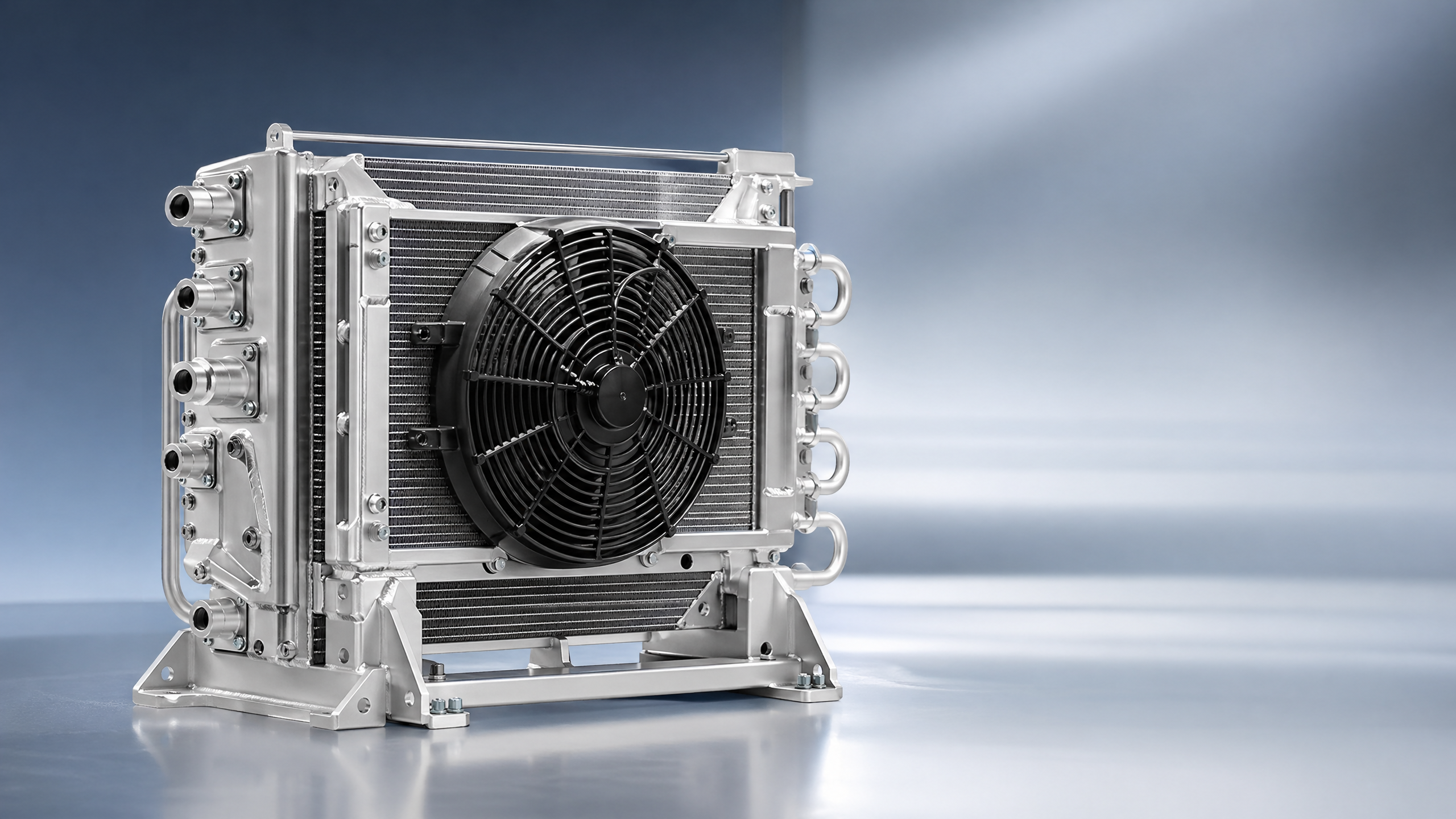
At 2026 industry exhibitions, radiator module innovation will be a key focus for technical evaluators tracking performance, integration, and durability trends. From new energy cooling architectures to heavy-duty truck and construction machinery applications, the latest radiator module design changes may directly affect thermal efficiency, packaging flexibility, and long-term reliability. This preview highlights the developments worth watching before making sourcing or engineering assessment decisions.
What a radiator module means in current parts engineering
In the auto parts sector, a radiator module is no longer viewed as a single heat exchanger. For technical evaluators, it increasingly refers to an integrated thermal assembly that may combine a radiator core, fan shroud, mounting structure, condenser interface, intercooler arrangement, hoses, tanks, sensors, and airflow management features. This broader definition matters because exhibition-ready designs in 2026 are expected to show not just component updates, but system-level packaging changes that influence vehicle architecture.
That shift is driven by at least three industry pressures. First, higher power density in engines and electric drive systems requires more stable thermal control across wider operating windows, often from -30°C winter start-up conditions to over 45°C high-load ambient operation. Second, OEMs are under constant pressure to reduce weight, improve serviceability, and use available front-end space more efficiently. Third, durability expectations remain high, especially in heavy trucks and machinery where vibration cycles can exceed several hundred thousand road-equivalent events during service life.
For a company such as Liaocheng Xinde Auto Parts Co., Ltd., established in 2018 and focused on radiators, intercoolers, construction machinery radiators, and new energy radiator modules, these trends are highly relevant. Technical buyers increasingly want manufacturers that understand both traditional water tank radiators and the newer module-level demands coming from electrified platforms, heavy-duty logistics fleets, and off-highway equipment.
Why this topic is attracting more attention before 2026 shows
The coming exhibition cycle will likely highlight radiator module changes because thermal management is moving closer to the center of vehicle performance decisions. Over the last 5 to 8 years, many vehicle programs have shifted from isolated cooling part validation to platform-level thermal strategy reviews. This means technical evaluators are not only checking core dimensions and brazing quality, but also asking whether a module can support battery cooling loops, EGR cooling interfaces, charge-air paths, or dual-circuit layouts.
Another reason is the increasing overlap between passenger vehicle expectations and commercial duty requirements. Noise control, compact design, lower coolant loss, and improved corrosion resistance are now discussed across segments. A radiator module that once needed only acceptable heat rejection may now be judged on assembly simplicity, sensor integration, and maintainability over a 12- to 24-month operating review period.
As a result, exhibitions become practical checkpoints. They allow evaluators to compare module design logic, fin geometry direction, tank structure, sealing concepts, and production consistency in one place before sample request or bench testing begins.
Key baseline points to keep in mind
- A radiator module should be assessed as a thermal system, not only as a core assembly.
- 2026 design changes will likely reflect packaging, durability, and integration needs as much as raw cooling capacity.
- Technical evaluation should connect exhibition observations with later testing steps such as pressure cycling, vibration checks, and airflow validation.
Industry background shaping radiator module development
The radiator module is changing because the vehicles around it are changing. Heavy trucks need stable thermal performance during long-haul climbing, idling, and stop-start urban routes. Construction machinery requires resistance to dust loading, impact vibration, and variable engine speed. New energy platforms add cooling demands for batteries, motors, power electronics, and cabin systems. In all three cases, the module must do more work inside tighter space envelopes.
This is also where manufacturing capability becomes important. Aluminum remains a preferred material in many applications because it supports weight control, heat transfer, and scalable brazing production. However, the value is not only in material selection. Tube design, fin pitch, header structure, and joining consistency often determine whether a radiator module delivers stable field performance over 50,000 to 150,000 km equivalent use in vehicle service or prolonged duty cycles in off-road equipment.
For evaluators, exhibition trends should therefore be read in context. A compact module may look advanced, but if its airflow path creates cleaning difficulty in dusty construction use, the practical value may be limited. Conversely, a slightly larger module with stronger side support and easier maintenance access may provide better lifecycle value, especially in fleet and industrial settings.
Main forces pushing redesign priorities
Several technical and commercial drivers are influencing the radiator module roadmap. These are the areas that are likely to be visible at 2026 exhibitions, either in complete module displays or in discussions about future vehicle programs.
The following overview can help evaluators quickly connect observed design changes to the underlying business and engineering logic.
This table shows why the radiator module discussion is expanding from heat rejection alone to a broader reliability and integration review. A module that performs well in one isolated metric may still create risk if assembly tolerances are narrow, if fan matching is weak, or if field cleaning becomes difficult after 6 to 12 months of use.
What technical evaluators should observe on the show floor
When reviewing supplier displays, start with architecture. Is the radiator module positioned as a stand-alone cooling part, or as a platform-ready subsystem for multi-application use? Suppliers that can explain mounting philosophy, coolant routing logic, and airflow strategy often reveal stronger engineering maturity than those presenting only visual upgrades.
Next, check joining and construction detail. Brazing quality, header-to-tube transitions, tank sealing areas, and bracket reinforcement should be reviewed closely. Many failures do not begin with insufficient thermal capacity; they begin with local fatigue, repeated thermal expansion, or stress concentration near supports. In practical programs, those weaknesses often appear after 200 to 500 hours of vibration-related exposure or repeated pressure pulse cycles.
Finally, ask about production repeatability. A good radiator module design should be manufacturable at stable quality across sample, pilot, and batch phases. That includes fixture control, brazing atmosphere consistency, leakage testing process, and dimensional inspection points.
Design changes likely to define 2026 radiator module exhibits
The most meaningful radiator module changes to watch in 2026 are likely to be structural rather than cosmetic. Technical evaluators should expect to see more modules designed around integration efficiency, reduced mass, and application flexibility. In many cases, the value will come from combining several moderate improvements rather than from one dramatic innovation.
A common trend will be the move toward smarter use of aluminum structures. Instead of simply enlarging the core, suppliers are refining internal flow distribution, fin style, and side support strength to extract better thermal stability from limited volume. This approach is especially relevant where front-end packaging depth may be restricted to a narrow range, such as 80 to 140 mm in some compact layouts or tightly packaged machinery bays.
Another trend will be modular compatibility across adjacent vehicle families. Technical teams increasingly prefer parts that can be adapted through bracket, inlet, or shroud variation without changing the complete thermal concept. That can reduce development lead time and simplify spare parts planning.
Five changes worth close evaluation
- Integrated mounting and structural simplification to reduce part count and assembly steps.
- Improved airflow control through shroud design, fin arrangement, and sealing interfaces.
- Multi-circuit thermal architecture for hybrid and new energy applications.
- Higher durability focus at welds, joints, and vibration-sensitive corners.
- Easier service access for heavy-duty and machinery operating conditions.
A practical example of product-level relevance
Even in passenger-oriented applications, the same evaluation logic applies. For example, Radiator for Lynk uses aluminum construction and a brazing radiator format for the Link 06 / binyue automotive cooling system. With model 2069525700, a single-item size of 83X14X58 cm, and a stated 12-month warranty, it reflects how compact packaging, material choice, and thermal stability targets must work together rather than independently.
For a technical evaluator, the interest is not only the catalog fitment. It is whether the design supports stable temperature control under demanding driving conditions and whether manufacturing execution aligns with claims such as advanced thermal technology and engineering-oriented integration. These same questions scale upward into commercial vehicle and machinery module assessment.
This is why 2026 exhibitions matter: they give buyers a chance to examine whether design evolution is translating into real application value, not just a new product description.
Application value across heavy trucks, new energy systems, and machinery
The radiator module does not create the same value in every segment. In heavy trucks, long-haul reliability and sustained heat rejection are often the main concerns. In new energy systems, compact integration and thermal balance across multiple circuits may take priority. In construction machinery, anti-clogging design, mechanical robustness, and maintainability can be more important than peak laboratory efficiency.
Technical evaluators should therefore compare module design changes against the real duty profile. A cooling package that works well for steady highway airflow may not perform equally well in low-speed, high-dust operation. Likewise, a module optimized for a narrow passenger vehicle engine bay may not translate directly to high-vibration equipment or battery-assisted truck platforms.
The best review method is to connect application, thermal load, service environment, and maintenance interval. In practice, typical inspection periods may range from every 250 operating hours in some machinery uses to every 10,000 to 20,000 km in vehicle service, so design priorities should follow field reality.
Common application categories and what changes matter most
The table below summarizes how radiator module priorities often differ by application type. It can help evaluators screen exhibition products more efficiently and ask better technical questions.
This comparison shows that the radiator module should always be assessed relative to its operating context. The same core technology can create very different value depending on duty cycle, contamination risk, available space, and service expectations. That is why application-specific questioning remains more useful than relying on general marketing claims.
Business significance for technical evaluation teams
For evaluation teams, better radiator module design can influence several downstream outcomes. It may reduce redesign loops during vehicle integration, lower field leakage risk, simplify installation, and support broader platform reuse. Even a small gain in thermal consistency can matter if it prevents repeated temperature excursions during high-load conditions.
In sourcing terms, improved module design can also shorten decision cycles. If a supplier can clearly explain materials, joining method, test logic, and application limits within an early 2- to 4-week review phase, engineering and procurement teams can move to sampling with more confidence.
This is especially relevant when working with specialized manufacturers that combine research, production, and global sales capability in radiator-related components. A supplier with broad exposure across water tank radiators, intercoolers, machinery radiators, and new energy cooling assemblies is often better positioned to discuss trade-offs between performance, manufacturability, and field use.
Practical evaluation advice before and during 2026 exhibitions
A strong exhibition review process starts before the event. Technical evaluators should define the application boundary first: thermal load range, target installation envelope, coolant type, expected vibration severity, maintenance interval, and any known pressure-drop limits. Without those inputs, it becomes difficult to judge whether a radiator module innovation is relevant or simply interesting.
During discussions with suppliers, focus on verifiable engineering details. Ask how the module handles thermal expansion, what the intended airflow path is, which material grades are used in the main structure, and how leak resistance is controlled in production. A useful answer should include ranges, methods, or design logic rather than only general statements.
After the exhibition, convert observations into a shortlist matrix. That matrix should compare at least 6 to 8 items, such as module depth, material structure, joining type, estimated serviceability, application fit, sampling lead time, and test readiness. This step helps prevent attractive display design from outweighing practical engineering suitability.
Checklist for a more effective radiator module review
- Confirm whether the radiator module is designed for a single duty profile or adaptable to multiple vehicle and equipment platforms.
- Review aluminum core construction, brazing approach, and support structure in relation to vibration and pressure cycling demands.
- Check whether airflow sealing, fan interface, and surrounding package design are treated as part of the thermal solution.
- Ask for expected sample timing, such as 2 to 6 weeks for standard items or longer for custom module development.
- Clarify support for parameter confirmation, drawing review, custom bracket design, and pilot validation planning.
Why these steps improve decision quality
This process reduces two common risks. The first is overvaluing peak thermal claims without understanding installation and fatigue implications. The second is underestimating manufacturability and serviceability, which often determine long-term parts performance. In radiator module assessment, the best result usually comes from balancing heat exchange performance with durability, package fit, and stable production execution.
It also creates a better basis for supplier communication. Instead of asking broad questions, evaluators can discuss measurable factors such as core thickness range, mounting load path, maintenance clearance, or expected validation sequence. That improves technical alignment and makes quotation review more meaningful later.
As 2026 exhibitions approach, teams that prepare in this structured way will be more likely to identify radiator module solutions that fit real operating needs rather than temporary trend language.
Why choose us for radiator module development support
Liaocheng Xinde Auto Parts Co., Ltd. focuses on the research, production, and global sales of water tank radiators, intercoolers, construction machinery radiators, and new energy radiator modules. Since 2018, the company has developed around core thermal parts for heavy trucks, machinery, and vehicle cooling applications, building practical understanding of how radiator module design must balance thermal efficiency, structural reliability, and manufacturing consistency.
For technical evaluators, this means support can go beyond a simple product offer. Discussions can begin with parameter confirmation, application matching, and model selection, then extend into custom solution review based on material preference, package dimensions, cooling targets, and usage environment. Whether the project is for conventional vehicle cooling or a new energy radiator module, early technical clarification helps reduce later revision cost.
If you are preparing for 2026 exhibition sourcing or engineering assessment, contact us to discuss radiator module selection, drawing review, sample support, expected delivery cycle, customization options, and quotation details. Clear communication at the beginning of the process makes it easier to identify the right thermal solution for heavy-duty, passenger, or off-highway applications.