



Mercedes Radiator Standards: What to Check for Pressure, Welding, and Leak Testing
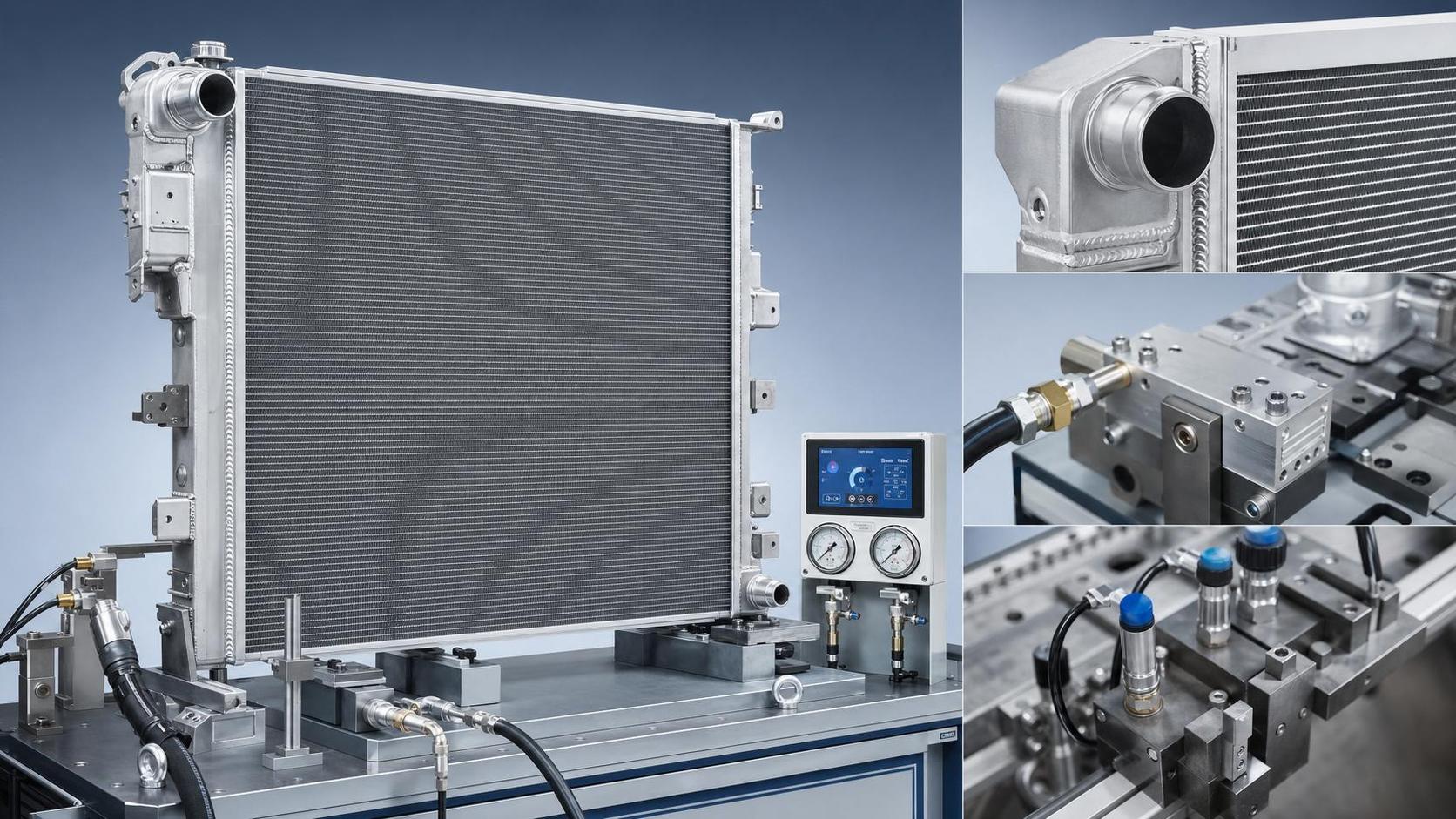
A Mercedes radiator is judged by far more than dimensions, mounting points, or surface finish. In demanding truck, commercial, and heavy-duty cooling systems, pressure resistance, weld consistency, and leak tightness determine whether the part will remain stable under heat cycles, vibration, and continuous load. For parts operations that care about reliability, these checks are not secondary details. They are the basis for cooling performance, operating safety, and service life.
That matters even more in a parts market where radiators must support stricter durability targets and wider vehicle applications. A supplier with broad manufacturing experience, such as Liaocheng Xinde Auto Parts Co., Ltd., reflects this shift. Established in 2018 with 5 million RMB in registered capital and 50 million RMB in total investment, the company focuses on water tank radiators, intercoolers, construction machinery radiators, and related modules for heavy trucks and new energy systems. Its fast growth and provincial honors point to an industry reality: radiator quality is now measured through process control as much as through product coverage.
Why Mercedes radiator standards deserve close attention
A Mercedes radiator works inside a thermal system that leaves little room for weak process control. Coolant pressure rises and falls with operating temperature. Road shock transfers stress into tanks, tubes, headers, and joints. Minor defects can stay hidden at delivery, then appear after repeated thermal cycling.
In practical terms, one failed weld or an incomplete leak test can lead to coolant loss, poor heat rejection, overheating, corrosion acceleration, and unplanned downtime. Safety risk is not limited to sudden failure. Slow leakage can also reduce cooling margin and weaken long-term system stability.
This is why inspection standards for a Mercedes radiator should be understood as process checkpoints. They help confirm that the radiator can survive real use, not just pass a visual inspection at the end of production.
The core inspection logic behind pressure, welding, and leak control
Three areas usually shape the quality judgment of a Mercedes radiator. They are related, but they are not interchangeable.
- Pressure testing checks structural resistance under defined internal load.
- Welding inspection checks whether joints were formed consistently and cleanly.
- Leak testing checks whether the completed assembly remains sealed under test conditions.
A radiator may look acceptable and still fail one of these three areas. That is why robust quality systems treat them as separate verification steps.
What to check in pressure resistance testing
Pressure testing for a Mercedes radiator should confirm both holding capacity and deformation behavior. The goal is not only to avoid burst failure. The radiator must also maintain dimensional and sealing stability after the test.
Key points during pressure checks
- Use a defined test pressure based on the radiator design and application class.
- Control pressurization speed to avoid misleading shock effects.
- Record pressure holding time, not just peak value.
- Observe permanent deformation at tanks, headers, seams, and tube zones.
- Check whether joints remain stable after pressure release.
Usually, the most useful result is not simply pass or fail. A pressure test should also show where the design or manufacturing process is approaching its limit. Repeated borderline performance often points to fixture inconsistency, material variation, or weld heat imbalance.
How welding quality influences radiator reliability
For a Mercedes radiator, welding quality is often the most sensitive indicator of manufacturing discipline. Good welding is not only about a neat bead. It reflects correct material preparation, heat input, alignment, cleanliness, and process repeatability.
Radiators usually fail at transitions, corners, tank connections, or areas with combined thermal and mechanical stress. These are the places where visual inspection alone is least reliable.
Practical welding checkpoints
- Uniform bead appearance without excessive buildup or underfill.
- No visible cracks, pinholes, burns, or incomplete fusion.
- Stable joint geometry at tank-to-core interfaces.
- Clean surfaces before welding to reduce contamination risk.
- Traceable process parameters for repeat production lots.
More importantly, welding results should be linked to process records. If leak failures appear in the same location across batches, the problem is rarely random. It usually comes from fixture wear, operator variation, filler inconsistency, or thermal control drift.
This cross-checking approach is useful across product lines. A company producing different cooling components, including heavy-duty modules and even references such as Radiator for Ford , benefits from comparing weld defect patterns across platforms. The geometry changes, but the process discipline behind strong radiator joints remains similar.
Leak testing is more than a final formality
Leak testing is often treated as the final gate for a Mercedes radiator, but that view is too narrow. In reality, leak test results are one of the clearest signals of upstream process quality.
A failed leak test may come from poor welding, distorted sealing surfaces, damaged tubes, handling impact, or improper assembly pressure. So the value of the test depends on how well the failure mode is identified and fed back into process control.
What makes leak testing useful
- Consistent medium and test conditions across batches.
- Clear leak rate threshold, not subjective judgment.
- Defined retest rules for suspicious parts.
- Accurate fault location recording.
- Separation between repairable and non-repairable defects.
In actual operations, slow leaks deserve special attention. They may pass rough inspection but still create field complaints after thermal cycling. A dependable Mercedes radiator should remain sealed not only at shipment, but after realistic stress exposure.
Typical risk areas during incoming or in-process inspection
Inspection becomes more effective when teams know where failures usually begin. The highest-risk areas on a Mercedes radiator are often concentrated rather than evenly distributed.
This type of location-based review helps prioritize inspection time. It also makes supplier communication more specific. Instead of reporting a general leak problem, the issue can be linked to a process stage and a repeat failure zone.
What strong radiator quality management looks like in practice
The strongest Mercedes radiator programs combine product inspection with process evidence. That means test records, welding traceability, fixture maintenance logs, material consistency checks, and failure trend analysis should support each shipment lot.
In a mature parts environment, quality review also compares radiator families instead of treating every model as isolated. A supplier producing heavy truck radiators, intercoolers, construction machinery cooling products, and references like Radiator for Ford can use broader production data to identify repeat causes faster.
That broader view matters because cooling modules now serve harsher working conditions and longer operating expectations. A Mercedes radiator that passes basic checks but lacks process stability will eventually create avoidable field risk.
A practical way to move from inspection to better decisions
When reviewing a Mercedes radiator standard, the most useful next step is to build a simple evaluation framework. Start with required pressure levels, weld acceptance criteria, leak test method, fault recording rules, and traceability expectations. Then compare actual batch evidence against those items.
This approach makes discussions clearer, especially when selecting suppliers, approving samples, or investigating recurring failures. It also helps separate cosmetic concerns from reliability-critical defects.
A dependable Mercedes radiator is the result of controlled manufacturing, not inspection luck. Pressure resistance, welding integrity, and leak testing should be read together. Once those checkpoints are tied to real process records, the basis for quality judgment becomes much stronger and easier to apply in daily parts decisions.