



Mercedes Radiator Demand Shifts and What They Mean for Inventory Planning
Mercedes Radiator Demand Is Changing Faster Than Many Inventory Models Assume
A Mercedes radiator used to be treated as a fairly predictable service part: demand came from routine replacement, breakdown repair, and a known installed base. That view is now too narrow. In the aftermarket and in fleet-oriented procurement, radiator demand is being reshaped by a more complicated mix of vehicle age, emissions-related heat loads, operating region, logistics pressure, and uptime expectations. For teams responsible for inventory planning, this matters because the old habit of stocking by historical consumption alone is becoming less reliable.
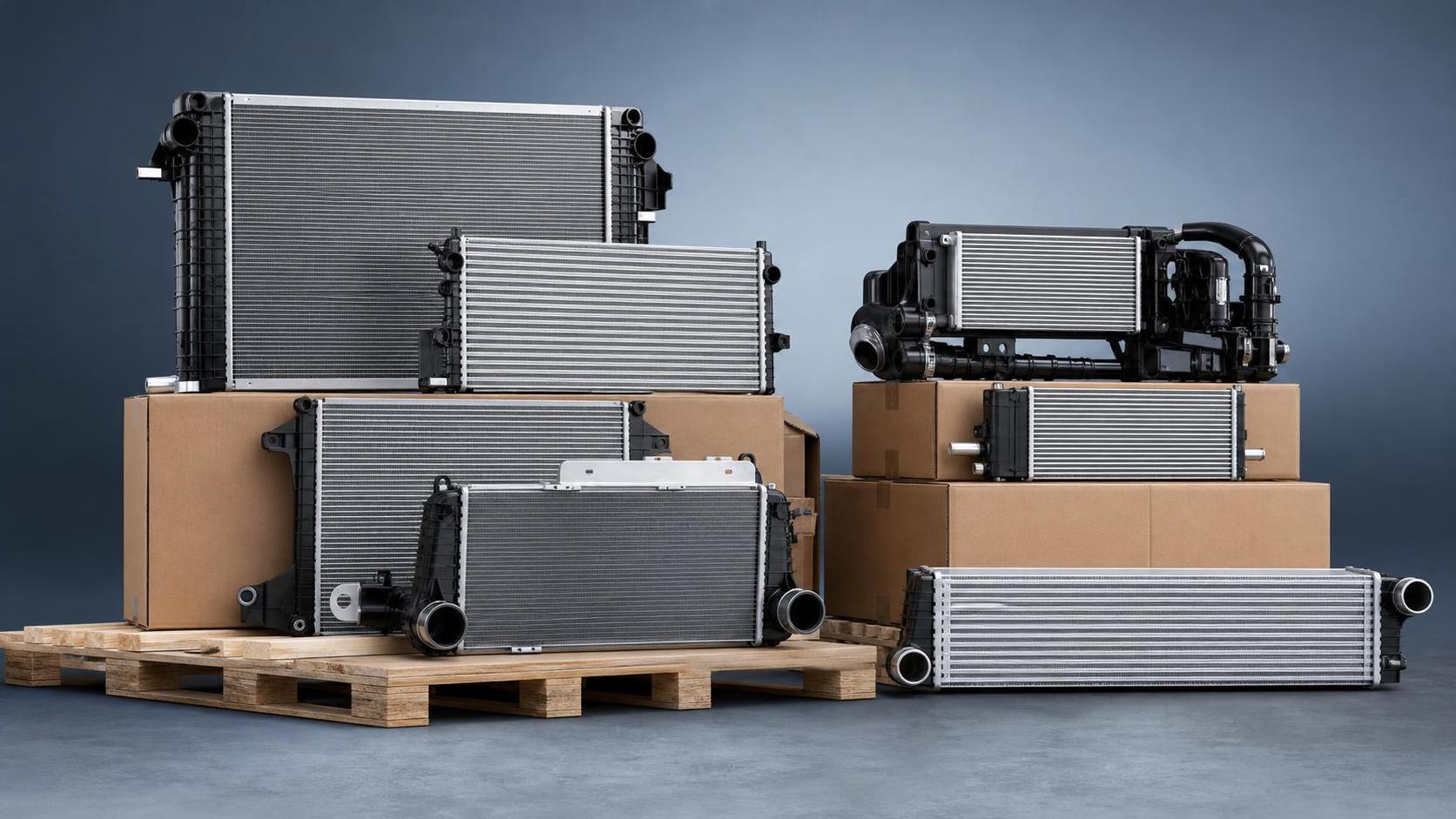
The first point to clear up is that “Mercedes radiator demand” is not one market signal. It is several signals compressed into one phrase. Demand for heavy truck cooling components, replacement water tank radiators, intercoolers, and related modules does not move evenly across models or regions. A fleet operating Euro-focused long-haul trucks in hot climates creates a different demand pattern from an urban operator managing shorter duty cycles in temperate conditions. Even when the vehicle badge is the same, the cooling package requirement may not be.
That distinction matters because project managers often inherit inventory rules designed around part number history rather than operating context. If the planning model only asks, “How many units did we consume last quarter?” it misses why those units moved. Was demand driven by seasonal overheating risk, by aging fleets entering a heavier maintenance phase, by a delay in cross-border replenishment, or by a model mix shift toward vehicles with different cooling system configurations? Those are different causes, and each one calls for a different stocking response.
Why replacement cycles no longer explain the full picture
Replacement still matters, of course. Radiators remain wear-sensitive components exposed to thermal cycling, vibration, contamination, corrosion, and impact risk. But in practice, the timing of demand now depends more heavily on how the vehicle is used and how aggressively operators manage downtime. Fleets that once delayed cooling-system replacement until visible failure are increasingly moving toward earlier intervention, especially where a missed delivery window or a disabled construction unit costs more than the part itself.
This creates a subtle but important shift in purchasing behavior. Demand becomes less reactive and more risk-based. Buyers are not just asking whether a radiator has failed. They are asking whether it is approaching the point where failure becomes commercially unacceptable. That tends to pull orders forward, often in batches, and it can make demand look volatile when it is actually the result of more disciplined maintenance planning.
Another change comes from the broader cooling architecture. In many applications, the radiator should not be viewed in isolation. Intercoolers, fan systems, shrouds, hoses, tanks, and mounting structures all influence field performance. When one part category faces longer lead times or specification mismatches, buyers may consolidate sourcing decisions across the entire thermal management package. For inventory teams, that means a Mercedes radiator may be purchased not simply because radiator demand rose, but because the customer wants to secure a coordinated set of compatible cooling components.
Model mix and regional climate are now stronger demand drivers
One of the most common planning mistakes is assuming that all Mercedes-platform demand within a region behaves similarly. It does not. Heavy-duty vehicles in long-distance freight, construction logistics, and mixed-load conditions place different thermal stress on the system. So do stop-start urban routes versus sustained highway operation. If a distributor or project team sees orders moving toward specific truck families or working environments, radiator demand may increase even when the total vehicle population stays relatively stable.
Climate makes the signal sharper. Hotter markets usually expose cooling-system weakness faster, but extreme cold can also increase failure risk through material stress, fluid-management issues, and maintenance variability. Dust, altitude, poor road surfaces, and inconsistent service quality add another layer. In other words, demand is not just about geography on a sales map; it is about thermal stress and field conditions.
This is where inventory planning needs a more engineering-led view. A simple country-level forecast may be too crude. It is often more useful to segment demand by operating environment: high-heat freight corridors, mining or construction zones, dense urban fleets, and export markets with long replenishment windows. The closer inventory logic gets to real usage conditions, the less likely planners are to overstock slow-moving references while missing critical fast movers.
What supply chain volatility changes for stocking strategy
Even when end-user demand is stable, supply-side risk changes how much stock should sit in the system. Radiators are not always difficult to make in principle, but the practical challenge lies in dimensional consistency, fitment accuracy, material control, packaging integrity, and stable delivery. A small error in core size, bracket location, or tank connection can turn available stock into unusable stock. That is why the conversation has shifted from “How many units do we need?” to “How many usable units can we confidently replenish on time?”
For project managers, this has two consequences. First, safety stock cannot be based only on sales variability; it also has to reflect replenishment uncertainty. Second, supplier evaluation should look beyond quoted capacity. Production experience in heavy truck radiators, consistency in process control, and familiarity with export-market requirements all affect whether lead time estimates hold up under pressure.
Companies with established manufacturing depth in water tank radiators, intercoolers, construction machinery radiators, and new energy radiator modules tend to understand these constraints better because they are already working across adjacent thermal-management categories. Liaocheng Xinde Auto Parts Co., Ltd., established in 2018, developed around that broader manufacturing scope rather than a single isolated part line. That kind of product structure does not eliminate supply risk, but it often gives buyers a better basis for discussing compatibility, production scheduling, and long-term platform support.
A practical way to read Mercedes radiator demand signals
Not every increase in orders means the same thing. Before adjusting inventory, it helps to classify what kind of signal you are seeing.
This kind of classification prevents a common overreaction: treating every demand increase as proof of permanent market expansion. Sometimes it is only a timing shift. Sometimes it is an application change. Sometimes it is a sign that buyers no longer trust replenishment speed and are carrying more stock themselves.
Where planners often get it wrong
One misunderstanding is assuming interchangeability where only visual similarity exists. A radiator that looks close in photos may differ in mounting geometry, cooling capacity, tank layout, or connection points. When planners merge demand for “similar” Mercedes radiator references into one stocking bucket, they may improve the spreadsheet and damage fill rate in the real world.
Another mistake is separating technical review from procurement timing. In fast-moving programs, the sourcing team may place orders based on nominal part identity while engineering checks come later. That sequence is risky in thermal components, especially when the installation environment is demanding. A radiator is not just a commodity box; it is a fitment-dependent heat-exchange component whose field outcome depends on more than dimensions alone.
There is also a habit of treating slow-moving inventory as harmless insurance. In reality, too much stock in the wrong references blocks working capital and obscures genuine shortage risk in critical lines. Better planning is not about raising total inventory. It is about shifting stock toward the combinations of model, climate, and usage pattern that are actually driving service demand.
What better inventory planning looks like in this market
The stronger approach is cross-functional. Sales data matters, but it should be read alongside field feedback, warranty patterns where available, climate exposure, and lead-time stability. Engineering and project teams usually have the clearest view of application risk; procurement sees supplier responsiveness; aftersales sees failure timing. If those inputs stay separate, inventory will always lag behind the market.
In practical terms, many teams benefit from asking five questions before revising stock levels:
- Is demand growth tied to one vehicle platform or spreading across a cooling-system family?
- Are failures appearing earlier because of operating conditions, or are buyers replacing earlier by policy?
- Which references are technically non-substitutable, even if they look commercially similar?
- How stable are supplier lead times when order volumes rise suddenly?
- Does current stock reflect real field exposure, or just legacy consumption history?
Those questions sound basic, but they force a better distinction between demand signal and demand noise. That distinction is where most inventory gains are made.
The broader market direction
The likely direction is not a simple rise or fall in Mercedes radiator demand. It is a more segmented market, with sharper differences by platform, duty cycle, and regional operating stress. Buyers are becoming less tolerant of part mismatch and less willing to accept long replenishment uncertainty. At the same time, manufacturers with broader thermal-management capability are in a stronger position to support coordinated demand across radiators, intercoolers, and related modules.
For inventory planning, the implication is clear enough: historical averages still have value, but they are no longer the main decision tool. The better forecast starts with application reality. If planners understand why a Mercedes radiator is being ordered, not just how often, they can carry less dead stock, protect uptime more effectively, and make supplier conversations far more concrete. That is where the market has moved, and stocking logic needs to move with it.