



Mack Radiator Selection Guide: Which Specs Matter Most for Fleet Reliability?
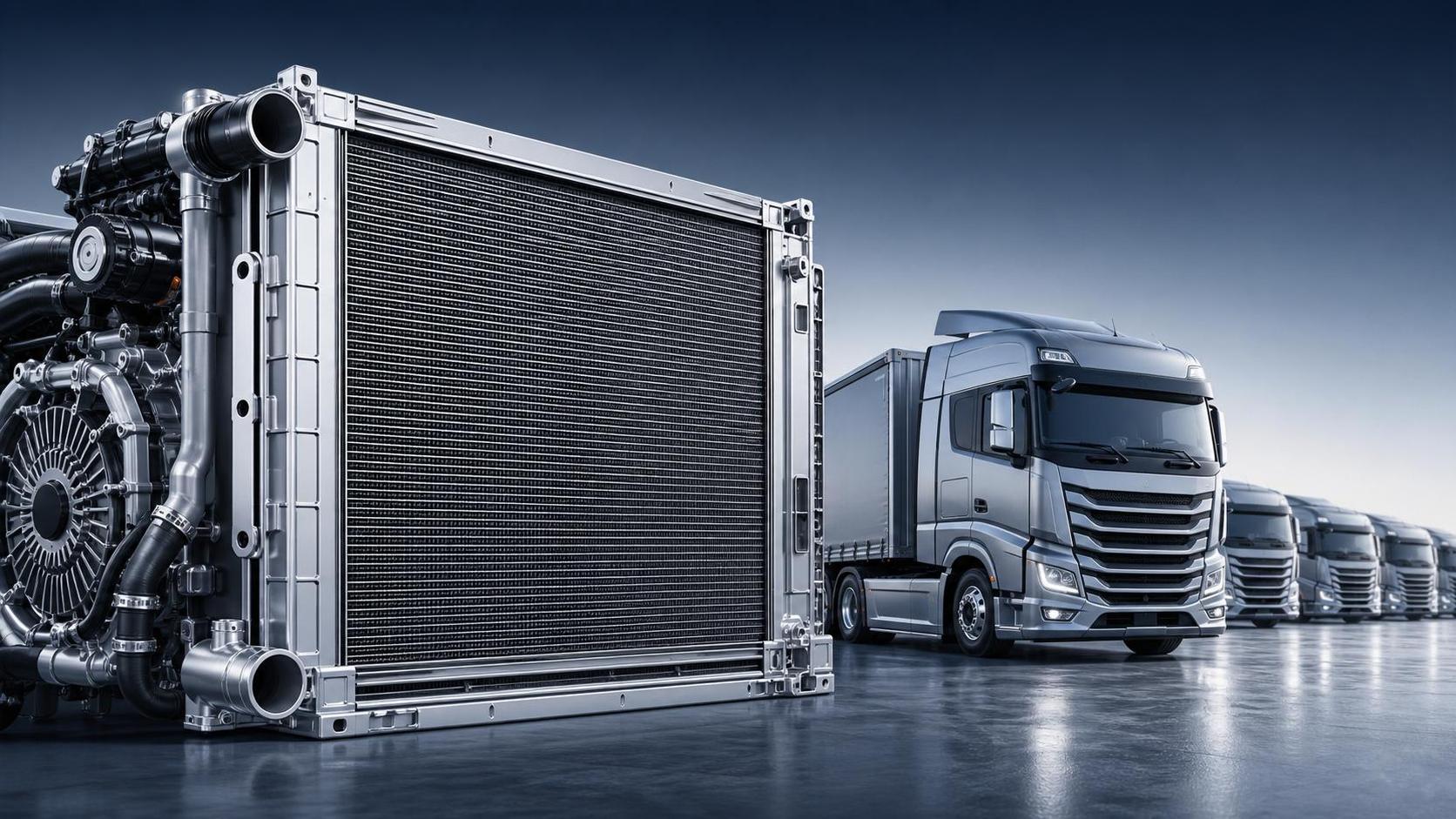
Mack Radiator Selection Guide: Which Specs Matter Most for Fleet Reliability?
Choosing the right Mack Radiator is not just a maintenance decision. It shapes uptime, cooling stability, and long-term operating cost.
In demanding truck applications, radiator selection affects far more than engine temperature. It also influences service intervals, parts planning, and roadside failure risk.
That is why spec review should go beyond a simple part number match. A reliable Mack Radiator must fit the duty cycle, ambient load, and service environment.
This guide focuses on the specifications that matter most when comparing replacement or upgrade options for Mack trucks in real fleet conditions.
Start With Duty Cycle, Not Just Vehicle Model
Many buying errors happen early. Teams match a Mack Radiator to a truck model, but ignore how the truck actually works each day.
A highway tractor, a construction support truck, and a stop-start municipal unit can share a platform. Their cooling demand is still very different.
Look first at operating load. Consider payload, average speed, idle time, grade climbing, seasonal heat, and dust exposure.
A Mack Radiator that performs well in light regional hauling may struggle in harsh off-road logistics or heavy summer linehaul routes.
- High idle hours raise heat soak risk.
- Steep grades increase thermal stress.
- Dust and debris reduce airflow over time.
- Urban stop-start cycles punish marginal cooling capacity.
This is the practical starting point for radiator selection. Spec decisions only make sense when tied to actual field conditions.
Core Size and Cooling Capacity Come First
When comparing a Mack Radiator, core dimensions deserve immediate attention. Core height, width, and thickness directly affect heat rejection capacity.
A thicker core can improve cooling, but only if airflow remains efficient. More material does not always mean better fleet reliability.
Tube spacing and fin density also matter. A very dense core may cool well in clean conditions, yet clog faster in dusty routes.
For procurement review, ask three basic questions before approval:
- Does the core size match the original thermal requirement?
- Is airflow performance proven under similar route conditions?
- Will the design resist clogging during long maintenance intervals?
Even in other heavy-duty applications, core sizing remains a key benchmark. For example, XD80804 RADIATOR FOR EUROCARGO NOVO uses a 670*568*48MM core, showing how exact dimensions support fit and cooling consistency.
Material Quality Affects Service Life More Than Expected
A Mack Radiator is often judged by price and lead time. In practice, material quality has a deeper impact on reliability.
Poor-grade aluminum, weak brazing, or inconsistent tank materials can shorten service life under vibration and thermal cycling.
Heavy trucks generate constant stress. That means the radiator must handle pressure variation, frame movement, and repeated temperature swings.
Review these material checkpoints during supplier evaluation:
- Aluminum grade and corrosion resistance.
- Brazing consistency across the core.
- Tank strength under vibration.
- Seal durability at connection points.
A lower upfront price can become expensive fast when coolant leaks, cracked tanks, or premature failure create downtime across multiple units.
Fitment Accuracy Reduces Hidden Installation Costs
A Mack Radiator can meet thermal specs and still create trouble if fitment is inconsistent. This is a common but avoidable sourcing problem.
Mounting points, hose neck positions, inlet and outlet sizes, and shroud compatibility all need confirmation before purchase.
Minor dimensional variation can increase labor time, create sealing issues, or force field modification. None of that helps fleet reliability.
In real operations, hidden installation cost often comes from avoidable mismatch. The wrong radiator may fit physically, but still disrupt airflow or hose routing.
Pressure Rating and Flow Design Should Not Be Overlooked
Another critical Mack Radiator consideration is pressure tolerance. Modern cooling systems rely on stable pressure to manage temperature and coolant efficiency.
If the radiator cannot hold expected pressure, boiling margin drops and leakage risk rises. That becomes more serious during high-load operation.
Flow design matters too. Internal restriction, uneven distribution, or poor tube layout can limit heat transfer even when the radiator looks correct externally.
A solid selection process should request pressure test data, flow performance information, and evidence of consistent manufacturing control.
This is especially relevant when fleets are extending service intervals. A marginal design may pass installation, then fail under sustained operating pressure months later.
Environmental Conditions Change the Best Mack Radiator Choice
There is no single best Mack Radiator for every fleet. The right choice changes with climate, terrain, and contamination exposure.
Hot regions need stronger thermal reserve. Cold regions need dependable sealing and stable warm-up behavior. Mining and construction routes need better anti-clog performance.
Where roads are rough, vibration resistance becomes a deciding factor. Where air is dirty, fin design and cleanout access become more valuable.
This is where experienced manufacturers add value. Liaocheng Xinde Auto Parts Co., Ltd., established in 2018, focuses on water tank radiators, intercoolers, construction machinery radiators, and heavy truck cooling components for global markets.
Its production growth and industry recognition reflect a practical point: reliable cooling parts come from process control, not from generic catalog claims.
Supplier Validation Is Part of Mack Radiator Selection
A Mack Radiator decision should include supplier capability, not only product dimensions. Supply stability matters when fleets cannot tolerate long repair delays.
Ask for production consistency, inspection standards, warranty terms, and export experience. These points help separate a dependable source from a trading-only offer.
It is also useful to review whether the supplier serves heavy trucks, construction machinery, or new energy cooling modules. Broader technical exposure often improves problem solving.
A product example such as XD80804 RADIATOR FOR EUROCARGO NOVO shows how application data, model reference, and core size should appear clearly in supplier materials.
A Practical Evaluation Checklist for Better Decisions
To compare options more efficiently, use a short decision checklist. It keeps Mack Radiator selection tied to reliability outcomes.
- Confirm actual operating duty and thermal load.
- Verify core dimensions and cooling capacity.
- Check material quality and brazing standard.
- Review mounting, ports, and clearance details.
- Request pressure and flow performance data.
- Match design to climate and contamination level.
- Validate supplier quality control and delivery reliability.
This approach improves consistency across procurement cycles. It also reduces the chance of buying a radiator that looks acceptable but performs poorly in service.
Conclusion
The best Mack Radiator choice comes from disciplined spec review. Core size, material quality, fitment, pressure performance, and environmental suitability all matter.
When these factors are checked together, cooling reliability improves and downtime risk drops. That leads to stronger fleet performance over the full service cycle.
Before the next replacement cycle, use this guide as a working filter. A better Mack Radiator decision is usually the result of better questions asked early.