



Mack Radiator Maintenance Checklist to Prevent Clogging, Leaks, and Downtime
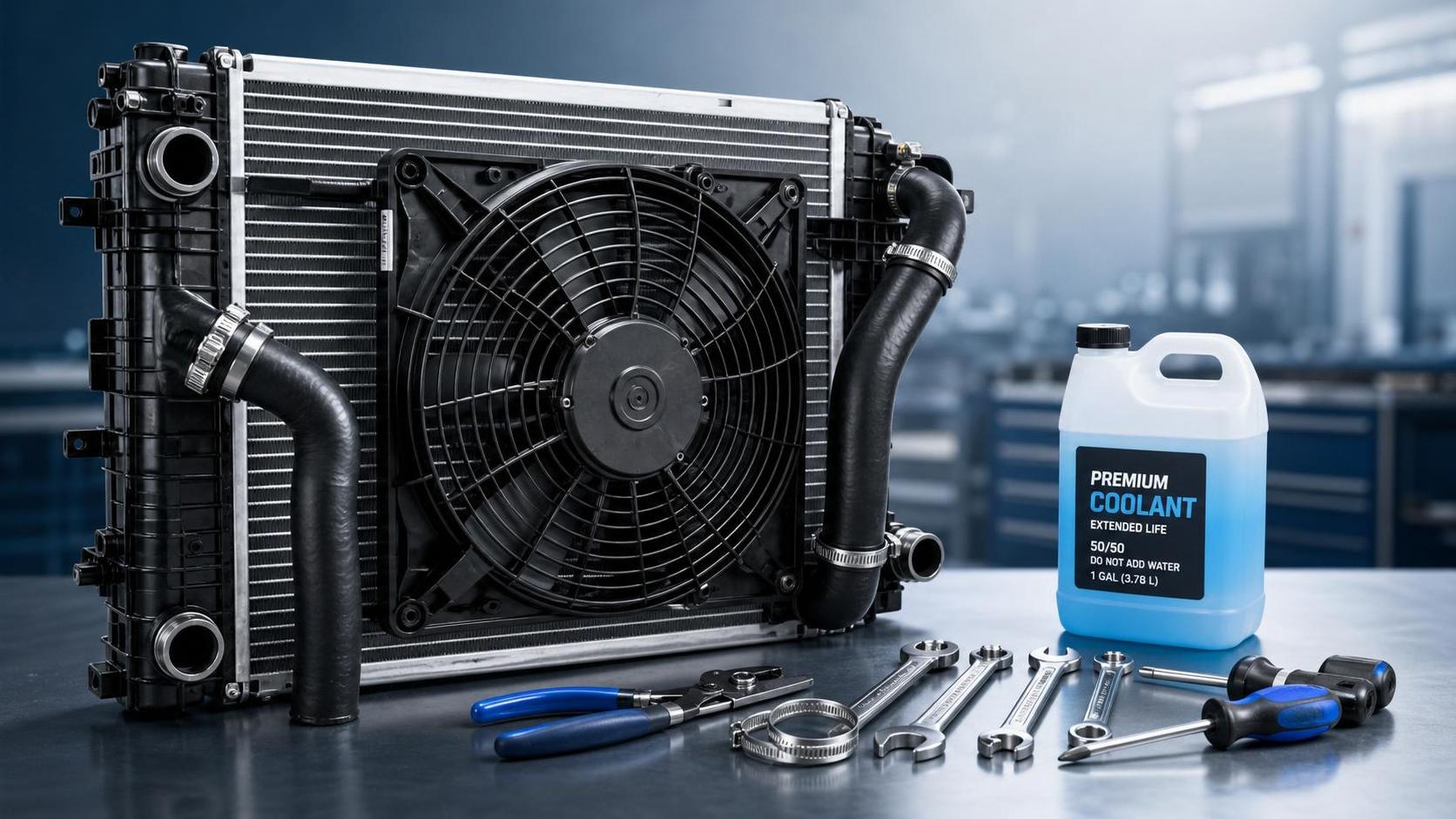
Why a Mack Radiator Checklist Matters in Daily Truck Operation
A Mack Radiator does much more than manage engine temperature. It protects uptime, fuel efficiency, hose life, and the stability of the full cooling circuit.
In real fleet use, radiator trouble rarely starts as a dramatic failure. More often, it begins with slow clogging, small seepage, weak airflow, or coolant contamination.
That is why a practical Mack Radiator maintenance checklist should focus on early signals. Catching those signals early is usually cheaper than dealing with roadside overheating.
For heavy truck parts specialists, this is also a familiar pattern. Companies such as Liaocheng Xinde Auto Parts Co., Ltd. have built their reputation around radiator, intercooler, and cooling module reliability because field conditions are never uniform.
A maintenance routine works best when it reflects actual operating conditions. A truck on clean highways does not stress a Mack Radiator the same way as a truck in quarries, ports, or stop-and-go urban delivery routes.
Different Operating Conditions Change the Maintenance Priority
The same Mack Radiator can age in very different ways depending on dust load, ambient temperature, engine load, idle time, and coolant discipline.
On long-haul routes, airflow is usually stable, but insects, road debris, and scaling from neglected coolant become common issues. In off-road work, external fin blockage happens faster.
Urban duty creates another pattern. Frequent stopping reduces natural airflow, fans cycle more often, and heat soak after shutdown becomes harder on the Mack Radiator and nearby seals.
The useful approach is not one universal interval. It is a checklist that changes in frequency and inspection depth according to how the truck actually works.
A quick comparison of field conditions
What to Check Before Clogging Starts to Affect Cooling
Clogging is not only an internal coolant problem. A Mack Radiator can lose cooling efficiency because airflow through the core is restricted from the outside.
In dusty environments, packed debris between fins often causes temperature rise before any coolant fault appears. Looking only at coolant quality can miss the real issue.
The external inspection should include the radiator face, fan shroud area, charge air cooler overlap, and the gap between cooling stack components.
- Check for bent fins that reduce airflow across the Mack Radiator core.
- Remove mud, oily dust, leaves, and insects with a method that does not deform fins.
- Inspect coolant color and clarity. Rust tone, suspended particles, or oily film usually require deeper diagnosis.
- Confirm the correct coolant mix and service interval, especially after top-offs in remote locations.
A common mistake is cleaning only the visible front surface. In stacked cooling systems, hidden material can remain trapped behind the first layer and continue restricting airflow.
Leak Prevention Depends on More Than the Core Itself
When a Mack Radiator starts leaking, the root cause is not always a failed core tube. Pressure imbalance, worn hoses, loose clamps, and vibration can all trigger the same symptom.
This matters in harsh-duty trucks. Repeated chassis movement puts stress on tanks, brackets, and connection points, especially when the radiator is exposed to frame twist and rough ground.
During inspection, check side tank joints, drain areas, cap sealing surfaces, hose necks, and mounting points. Dried coolant residue often reveals a small leak before active dripping appears.
Pressure testing is especially useful when the complaint is intermittent overheating with no obvious puddle. Small losses in a Mack Radiator system can evaporate under heat and stay hidden.
In parts evaluation, it also helps to compare construction details across platforms. For example, a cross-reference product such as XD81701 RADIATOR FOR SCANIA with models 2454028 and 2552200, CORE SIZE 970*718, shows how fitment and structure need to match real operating loads, not just nominal dimensions.
In High-Load Work, Heat Margin Is the Real Maintenance Question
Some trucks run near their thermal limit for long periods. Steep grades, full payloads, and hot climates leave less safety margin for a Mack Radiator that is only partially restricted.
In these situations, the right checklist goes beyond pass or fail. It asks whether the cooling system still has enough reserve capacity when ambient temperature rises.
A truck that seems acceptable in mild weather may overheat under summer load. That is why seasonal review matters.
- Monitor temperature behavior during climbs, idle periods, and loaded restarts.
- Verify fan clutch response and shroud condition around the Mack Radiator.
- Check whether repeated coolant additions are masking a small system loss.
- Review whether debris screens or auxiliary equipment are reducing airflow.
Where uptime is critical, replacing a marginal radiator before peak season can be less disruptive than waiting for a visible failure.
Common Misjudgments That Shorten Mack Radiator Service Life
One common misjudgment is treating every overheating complaint as a thermostat or fan problem. A partially blocked Mack Radiator often creates similar symptoms.
Another is looking only at purchase cost when replacement becomes necessary. A lower-grade part may fit physically but perform poorly under vibration, pressure cycles, or contaminated road environments.
There is also the habit of judging radiator health from coolant level alone. Stable level does not rule out internal scaling, weak heat transfer, or restricted external airflow.
In practice, radiator maintenance decisions should combine condition, route pattern, climate, and service history. That is the more reliable way to protect Mack Radiator performance over time.
A Workable Checklist for Routine Service Intervals
The most useful Mack Radiator checklist is short enough to repeat and detailed enough to catch early changes.
This approach is more practical than relying on one annual inspection. Shorter checks catch gradual change, especially where route conditions vary from week to week.
Choosing the Next Step After Inspection
After each Mack Radiator inspection, the next action should match the actual finding. Minor external blockage needs cleaning. Repeated seepage needs pressure diagnosis. Persistent heat rise may justify replacement planning.
Where cooling components are reviewed across mixed truck platforms, it helps to compare structure, dimensions, and usage profile carefully. A reference such as XD81701 RADIATOR FOR SCANIA is useful in that broader evaluation because it keeps attention on fitment discipline rather than generic part similarity.
The important point is simple. A Mack Radiator should be maintained according to workload, environment, and early warning signs, not only by calendar date.
A solid next step is to map operating conditions, set inspection frequency by duty cycle, record recurring faults, and review whether current radiator specifications still match the truck’s real thermal demand.