



Is New Energy Vehicle Radiator OEM Better for Custom Projects
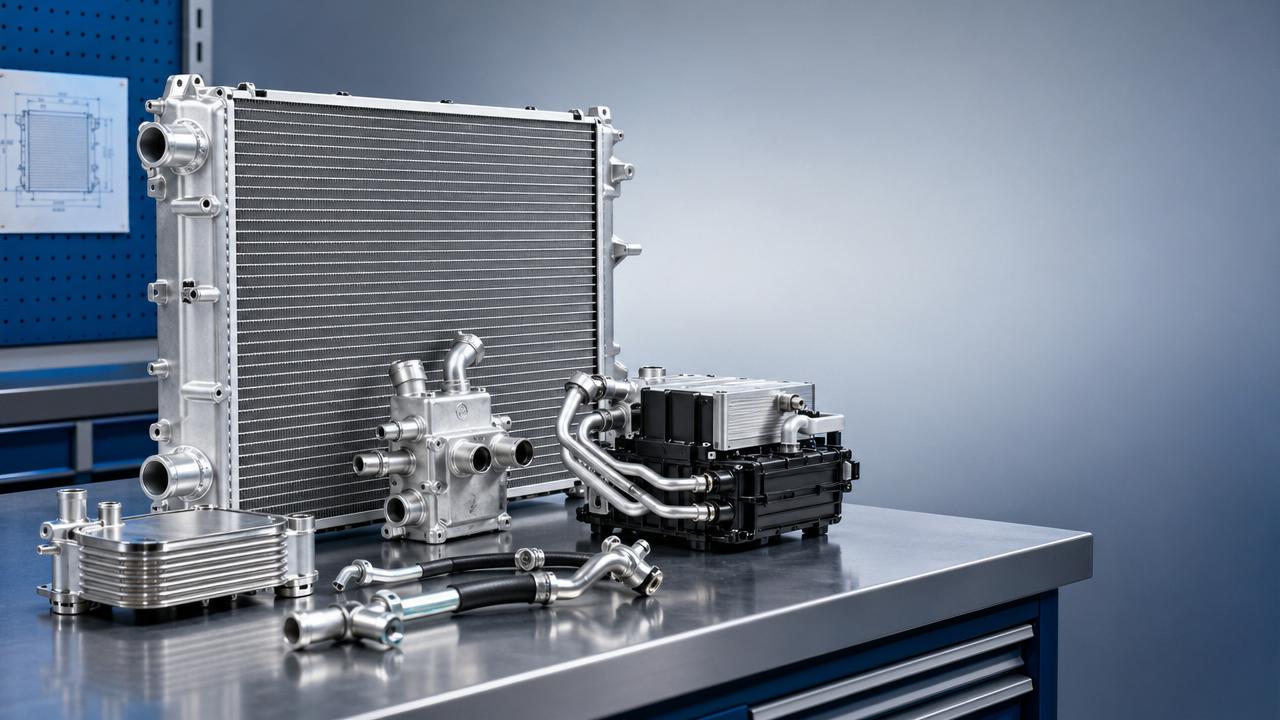
For project managers and engineering leads, the short answer is often yes: New Energy Vehicle Radiator OEM is usually the better option for custom projects when performance targets, integration accuracy, launch timing, and lifecycle reliability matter more than the lowest unit price. In custom EV and hybrid programs, cooling systems are not simple commodity parts. They are tightly connected to battery safety, motor efficiency, inverter stability, packaging constraints, and long-term service performance. That makes supplier capability far more important than it may be in standard replacement-part sourcing.
The real decision is not OEM versus non-OEM in theory. It is whether your project needs design collaboration, thermal validation, material control, and scalable manufacturing consistency. If the answer is yes, then an OEM-focused partner can reduce engineering risk, shorten the iteration loop, and improve the chance of meeting launch targets without costly redesigns. For engineering-driven procurement, that is often the deciding factor.
For readers managing development schedules and cross-functional delivery, this article focuses on the questions that matter most: when New Energy Vehicle Radiator OEM makes business sense, what technical and commercial advantages it offers, what risks to watch for, and how to evaluate a supplier for a custom project instead of choosing on price alone.
Why custom new energy vehicle projects raise the bar for radiator sourcing
In conventional vehicle programs, many cooling components can be selected from mature platforms or adapted from existing solutions. In new energy vehicle development, that approach is less reliable. Thermal requirements vary significantly depending on battery chemistry, power density, motor layout, charging strategy, and vehicle duty cycle. A radiator module may need to support not only cooling capacity, but also weight reduction, corrosion resistance, compact installation, and compatibility with a broader thermal management architecture.
For project managers, this means radiator sourcing affects more than one subsystem. A poor fit can trigger changes in brackets, airflow paths, pipe routing, fan strategy, and even software calibration for thermal controls. When a part does not align well with the system design, the cost shows up in delays, repeated validation, and avoidable engineering hours. That is why custom projects need suppliers that can respond at the development stage, not just at the production stage.
New Energy Vehicle Radiator OEM becomes especially valuable when your project includes tight packaging envelopes, mixed urban and high-load operating conditions, export-market quality expectations, or phased production growth. In these cases, the supplier is not simply making parts. The supplier is helping stabilize your project execution model.
Is New Energy Vehicle Radiator OEM better? The practical answer for project leaders
For custom projects, New Energy Vehicle Radiator OEM is generally better when your team needs controlled specifications, engineering support, and production repeatability. OEM-oriented manufacturers are structured to work from drawings, vehicle-level requirements, and validation expectations. That usually leads to better alignment on dimensions, heat exchange performance, mounting points, and material selection from the beginning.
This matters because project risk rarely comes from one obvious failure. It comes from accumulated small mismatches: a tolerance issue that complicates assembly, a core design that underperforms under peak load, a brazing inconsistency that impacts durability, or an unclear change-control process that causes version confusion between sample and mass production. An OEM-capable supplier is more likely to have disciplined processes to prevent these issues before they reach your vehicle build.
That said, OEM is not automatically the best choice for every case. If your project is low-volume, non-critical, and based on a proven architecture with minimal customization, a standard aftermarket solution may be enough. But once thermal management is strategic to vehicle performance or launch timing, the value of OEM support usually outweighs the higher initial coordination effort.
What project managers care about most: cost, timing, quality, and risk
Most engineering leads do not ask whether OEM sounds more professional. They ask whether it improves delivery outcomes. The first concern is total project cost. A lower quoted unit price can be misleading if it causes rework, extended testing, line-side fitment issues, or warranty exposure. OEM solutions often cost more upfront than generic supply, but they can lower total program cost by reducing corrective cycles and failure risk.
The second concern is timeline control. In a custom vehicle program, the cooling supplier must support design reviews, prototype iterations, trial builds, and production ramp-up. Delayed technical feedback from a supplier can push multiple downstream tasks. A capable OEM manufacturer helps compress the decision cycle by validating drawings quickly, proposing manufacturable improvements, and preparing sample production with clearer milestones.
The third concern is quality stability over time. A prototype that works once is not enough. Project teams need confidence that pilot and mass-production parts will maintain the same thermal and structural performance. OEM-focused suppliers are usually better prepared for process consistency, traceability, inspection standards, and controlled materials. This is particularly important in export or fleet applications where reliability data and aftersales support influence commercial success.
Where OEM creates the most value in custom radiator development
The strongest advantage of New Energy Vehicle Radiator OEM is early-stage engineering alignment. Instead of trying to force a catalog product into a new platform, your team can define the heat rejection target, pressure limits, mounting interface, space constraints, and environmental requirements from the start. That creates a better foundation for thermal performance and installation efficiency.
Another major benefit is application-specific optimization. In custom EV and hybrid programs, radiators may need different fin densities, tube structures, tank configurations, material combinations, or anti-corrosion treatments based on operating conditions. OEM collaboration makes these choices deliberate rather than accidental. As a result, you get a component designed for your use case instead of a compromise driven by available inventory.
OEM also supports scale readiness. Many custom projects begin with modest volumes, but successful programs need expansion capacity. A supplier with mature production planning, fixture capability, and quality systems can move from sampling to batch delivery more smoothly. For project managers, that transition is often where hidden risk appears, so choosing a supplier prepared for growth is a strategic safeguard.
How OEM supports thermal performance and system integration
Thermal management in new energy vehicles is a system-level discipline. The radiator does not work alone. It interacts with pumps, fans, electronic controls, coolant circuits, battery cooling loops, condensers, and packaging airflow. A custom project often succeeds or fails based on how well these elements are integrated. OEM suppliers are more likely to understand that the radiator must perform in context, not just in isolation.
This system perspective is important during design review. Engineers may need guidance on airflow resistance, pressure drop, heat exchange tradeoffs, or mounting changes that improve serviceability without sacrificing performance. A supplier experienced in OEM development can contribute practical recommendations drawn from manufacturing and field application experience. That support can prevent avoidable design conflicts before tooling and testing consume more budget.
For example, companies with a background in water tank radiators, intercoolers, construction machinery radiators, and heavy-truck thermal modules often bring broader insight into demanding operating environments. Liaocheng Xinde Auto Parts Co., Ltd., established in 2018, has built its business around research, production, and global sales of these categories, including new energy radiator modules. For project teams, that kind of product breadth can be useful when a custom program requires both engineering responsiveness and an understanding of durability under real load conditions.
What to evaluate when selecting a New Energy Vehicle Radiator OEM supplier
Start with engineering communication capability. Can the supplier discuss drawings, tolerances, materials, core structures, and application conditions clearly? Can they respond to requirement changes with technical reasoning instead of generic sales language? In custom projects, weak communication is often an early warning sign of future delays.
Next, check manufacturing and validation readiness. You should understand whether the supplier has stable production processes, fixture control, leak testing methods, and inspection routines. Ask how they manage prototype-to-production consistency, process changes, and quality records. If your project includes aggressive deadlines, also verify sample lead times and whether production planning can support phased ramp-up without sacrificing quality.
It is also wise to examine industry credibility and organizational maturity. Honors such as high-tech enterprise recognition or consumer trust awards do not replace technical due diligence, but they can indicate management discipline and market reputation. More importantly, ask for evidence of experience in similar thermal products, export supply, and customer-specific development. A supplier should be able to demonstrate not only what it manufactures, but how it supports project execution.
Common concerns about OEM solutions and how to think about them
One common concern is that OEM sourcing may increase cost. That can be true at the quotation stage, especially when engineering support, tooling, and validation work are included. However, project leaders should compare lifecycle cost rather than purchase price alone. A component that reduces test failures, installation issues, and warranty claims may create much stronger financial value over the full program.
Another concern is flexibility. Some buyers assume OEM suppliers are rigid or only suited for large-volume customers. In practice, many specialized manufacturers support custom projects with phased development, iterative samples, and moderate launch volumes. The key is to clarify expected annual demand, technical revision frequency, and change-control rules early. Good OEM suppliers can often be more adaptable than generic manufacturers because they already work within development frameworks.
There is also the question of product range overlap. Some custom programs involve mixed fleets or platform families where both conventional and electrified vehicles are relevant. In such situations, it can help to work with a supplier that understands cross-application cooling needs. As an example of broad-fit thermal products, Radiator for Benz covers models such as W124 E-Class, W206 C-Class, and W242 Electric Drive series, with engine cooling and thermal management functions, CE certification, and a design intended to meet or exceed OEM specifications. While this is a separate application example, it illustrates the kind of specification discipline project teams should look for in a custom supplier.
How to decide if OEM is right for your project
A practical decision framework starts with three questions. First, is thermal performance critical to safety, efficiency, or brand reputation in your application? Second, does the radiator need to fit a custom architecture with meaningful packaging or interface constraints? Third, will delays or part inconsistency create large downstream costs across validation, assembly, or aftersales? If the answer to two or more of these is yes, New Energy Vehicle Radiator OEM is likely the stronger route.
You should also consider your internal resource model. If your engineering team is lean and your launch schedule is compressed, external technical support from an OEM supplier becomes even more valuable. A capable partner can reduce the burden on your team by offering design-for-manufacture feedback, sample coordination, and clearer quality control planning. That support is often underestimated until a project enters the late prototype stage and time pressure increases.
Finally, align the sourcing decision with your long-term program goals. If the vehicle platform may expand into variants, export markets, or higher production volumes, choosing a supplier only for short-term price advantage can limit future execution. OEM collaboration is often not just a part purchase. It is an investment in a more stable development path.
Conclusion: OEM is usually the better choice when the project is truly custom
For project managers and engineering leads, the value of New Energy Vehicle Radiator OEM lies in reducing uncertainty. It improves the chance that the radiator will match the vehicle architecture, achieve the required thermal performance, and remain consistent from prototype through mass production. In custom new energy vehicle projects, that reliability can protect both schedule and budget.
The best choice, however, depends on project complexity. If your application is standard and low-risk, a non-OEM option may be sufficient. But if your program involves unique thermal loads, demanding packaging, quality-sensitive customers, or planned production growth, OEM sourcing is usually the more strategic decision. It gives your team better technical alignment, stronger quality confidence, and a clearer path to launch.
In short, when custom development matters, the right OEM partner is not just a supplier. It is part of your project delivery capability. Choosing carefully at the start can save far more than it costs later.