



How to Screen an Excavator Radiator Supplier for Stable Quality
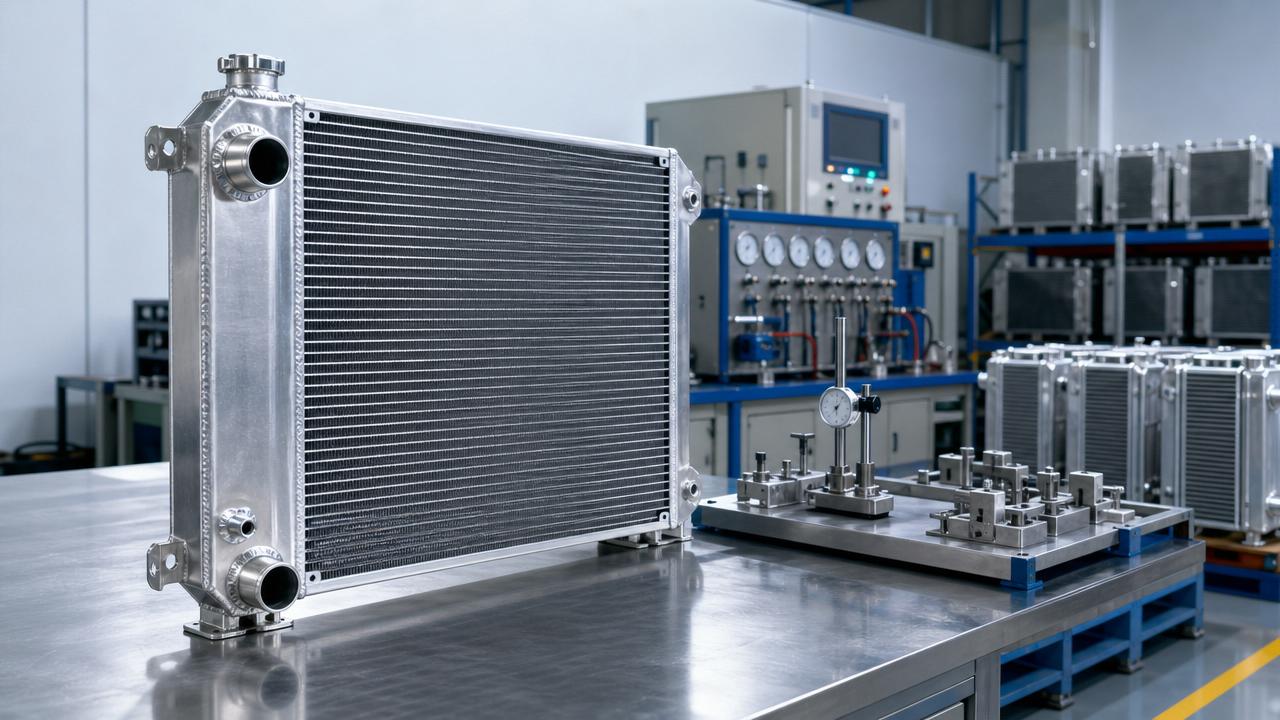
Choosing the right Excavator radiator supplier is critical for procurement teams that need stable quality, on-time delivery, and long-term cost control. A reliable supplier should offer proven manufacturing strength, strict quality inspection, and consistent product performance across different working conditions. This article explains the key factors buyers should evaluate to reduce sourcing risks and build a dependable supply chain.
Understanding What Stable Quality Means in Excavator Radiator Supply
For procurement professionals, stable quality is not simply about receiving a radiator that looks acceptable on arrival. In the heavy equipment parts industry, stable quality means repeatable performance across batches, dependable material consistency, accurate fitment, and resistance to vibration, heat cycling, pressure fluctuation, dust, and corrosion. When screening an Excavator radiator supplier, buyers should define quality in operational terms rather than only visual inspection standards.
Excavators operate in demanding environments such as mining sites, construction projects, quarrying areas, and municipal earthmoving jobs. In these conditions, a radiator failure can lead to overheating, machine downtime, delayed project schedules, and avoidable maintenance costs. That is why a qualified Excavator radiator supplier must demonstrate not only product capability but also process stability and long-term supply reliability.
Stable quality also includes the supplier’s ability to maintain the same standards when order volumes increase, models change, or raw material prices fluctuate. A procurement team should therefore assess the supplier as a manufacturing system, not just as a part seller. This broader view helps reduce hidden sourcing risks.
Core dimensions of quality stability
- Material consistency in tubes, fins, tanks, and weld areas
- Reliable cooling efficiency under different workloads
- Leak resistance after pressure and vibration testing
- Dimensional accuracy for easy installation
- Batch-to-batch traceability and defect control
Why the Industry Pays Close Attention to Supplier Screening
The construction machinery aftermarket has become more competitive, while end users increasingly expect longer service life and lower total ownership cost. As a result, procurement teams can no longer rely only on price comparisons. A low-cost source that produces inconsistent radiators often creates larger costs later through field failures, warranty claims, emergency replacement freight, and damaged customer trust.
Another reason supplier screening matters is product complexity. Excavator cooling systems must match engine output, airflow design, mounting structure, and jobsite conditions. Even a small deviation in core thickness, fin density, brazing integrity, or inlet and outlet dimensions can affect thermal performance or installation compatibility. A dependable Excavator radiator supplier should understand these engineering details and control them carefully during production.
Manufacturers with a strong technical base are better positioned to support global buyers. For example, Liaocheng Xinde Auto Parts Co., Ltd., established in 2018 with registered capital of 5 million RMB and total investment of 50 million RMB, focuses on water tank radiators, intercoolers, construction machinery radiators, heavy truck cooling parts, and new energy radiator modules. Its rapid development and recognition as a high-tech and trustworthy enterprise reflect the kind of industrial foundation that procurement teams often look for when evaluating long-term partners.
Industry screening priorities at a glance
Key Capabilities to Check When Evaluating an Excavator Radiator Supplier
A practical screening process should focus on verifiable capabilities. Procurement teams should request evidence, records, and samples instead of relying on sales claims alone. The best Excavator radiator supplier will usually be transparent about production methods, testing standards, and corrective actions for nonconforming products.
The first checkpoint is manufacturing strength. This includes brazing technology, tooling precision, production equipment, labor skill, and process discipline. In radiator manufacturing, poor brazing or weak joining quality often leads to leakage and reduced durability. Buyers should ask whether the supplier uses standardized operating procedures and whether key production stages are monitored and documented.
The second checkpoint is quality management. A serious Excavator radiator supplier should be able to explain incoming raw material inspection, in-process checks, final pressure testing, and shipment verification. Traceability is especially important. If a problem occurs, the supplier must quickly identify the affected lot, root cause, and corrective action.
Manufacturing and quality indicators
Production process control
Look for documented standards in core assembly, brazing temperature control, leak testing, and dimensional inspection. Process consistency matters more than one-time sample quality.
Material selection
High-quality aluminum, compatible seals, and durable structural components affect heat transfer and service life. Ask for material specifications and supplier sourcing standards.
Testing capability
A reliable Excavator radiator supplier should perform pressure testing, vibration simulation when possible, and thermal validation for representative applications.
- Check if samples match drawings and actual machine installation points
- Review defect rate trends over at least several batches
- Confirm whether inspection records are available before shipment
- Ask how field complaints are handled and closed
How Product Range and Technical Breadth Reflect Supplier Reliability
A supplier’s product portfolio can reveal a lot about its engineering maturity. Companies that serve only a very narrow low-end segment may have limited testing and development resources. By contrast, manufacturers capable of producing radiators for construction machinery, heavy trucks, intercoolers, and new energy cooling modules often have deeper thermal management knowledge and broader process experience.
This does not mean buyers should choose the biggest catalog automatically. The key is whether the supplier can convert its product breadth into better manufacturing discipline, stronger tooling management, and more accurate application adaptation. For procurement teams, this matters when sourcing different excavator models or when planning future platform expansion.
A good illustration of technical breadth in cooling solutions can be seen in products designed for public transportation and demanding duty cycles, such as Radiator for Ankai. Built with premium-grade aluminum and advanced brazing technology, such solutions highlight how thermal management expertise can support both traditional diesel and new energy applications while minimizing downtime and maximizing equipment life. For buyers, this kind of cross-sector know-how can be a positive signal when evaluating an Excavator radiator supplier.
Application categories that show technical depth
Practical Screening Methods for Procurement Teams
The most effective way to screen an Excavator radiator supplier is to combine document review, sample testing, factory verification, and trial orders. This approach gives a more complete picture than price negotiation alone. Procurement teams should build a scorecard that balances quality, delivery, responsiveness, engineering support, and total cost.
Start with qualification review. Examine company history, investment scale, product categories, export experience, and production certifications if available. Then move to technical review. Compare drawings, material specifications, test methods, and packaging standards. Finally, validate everything through real samples and small-batch trial orders before larger commitments.
Communication quality is another critical indicator. A professional Excavator radiator supplier usually responds clearly to technical questions, confirms tolerances, and flags potential application issues early. Weak communication often leads to delayed corrections and repeated quality disputes.
Recommended screening checklist
- Review company background, investment level, and market focus
- Request product drawings, material details, and test records
- Inspect sample fitment, pressure performance, and finish consistency
- Audit production flow and quality checkpoints if possible
- Place a trial order and track on-time delivery and defect rate
- Evaluate after-sales response and problem-solving speed
Questions worth asking during evaluation
Ask what the supplier does when raw material batches vary, how leak failures are analyzed, which dimensions are defined as critical, and how often process parameters are verified. These questions help reveal whether the Excavator radiator supplier operates proactively or reactively.
Building a Stable Long-Term Supply Relationship
Once a supplier passes initial screening, the next goal is to maintain stable quality over time. Procurement teams should not assume that one successful order guarantees future consistency. Ongoing supplier management is necessary, especially in industries where metal pricing, labor conditions, and demand volumes can change quickly.
A structured partnership should include clear quality agreements, approved drawings, packaging standards, inspection plans, and communication procedures for any engineering change. Buyers should also track key performance indicators such as defect rate, lead time accuracy, complaint closure speed, and replacement frequency in the field. This data-based approach makes supplier development more objective.
In many cases, the best Excavator radiator supplier is not simply the one with the lowest initial quote, but the one that can support stable operations year after year. Consistent product performance, predictable lead times, and technical cooperation usually create stronger total value than short-term savings.
Long-term control points
- Lock key specifications and sample approval standards
- Review supplier performance regularly using measurable KPIs
- Require notice before any process or material change
- Keep backup communication paths for urgent issues
- Develop forecast sharing to improve production planning
Final Considerations for Confident Sourcing Decisions
Screening an Excavator radiator supplier should begin with a clear understanding of stable quality and continue through industry context, technical assessment, application capability review, and practical validation. Buyers who evaluate only price expose themselves to unnecessary quality and delivery risks. Buyers who evaluate systems, processes, and technical depth are more likely to secure dependable long-term supply.
For procurement teams in the parts industry, the most valuable suppliers are those that combine manufacturing strength, strict inspection, responsive communication, and the ability to deliver consistent performance across working conditions. That combination helps reduce downtime, protect customer satisfaction, and improve total cost control.
If you are currently comparing sources, use a structured scorecard, verify quality with evidence, and treat supplier selection as a long-term operational decision rather than a one-time purchase. With the right evaluation method, choosing the right Excavator radiator supplier becomes a strategic advantage instead of a sourcing gamble.