



Agricultural Radiator Replacement Mistakes That Raise Downtime
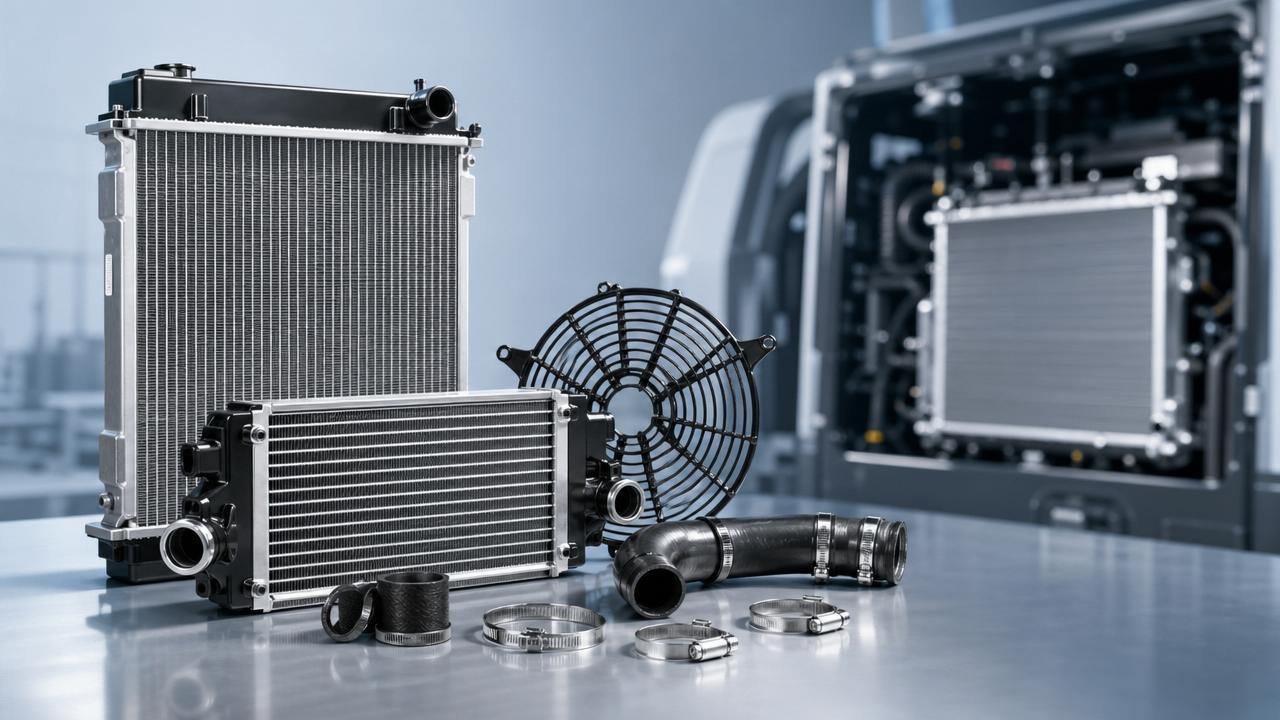
Agricultural radiator replacement seems straightforward, but common installation mistakes can quickly increase machine downtime, repair costs, and field delays. For after-sales maintenance teams, understanding these errors is essential to protecting cooling performance and extending equipment life. This article highlights the most frequent replacement issues and offers practical guidance to help you improve service efficiency and reduce repeat failures.
Why does Agricultural radiator replacement so often lead to repeat downtime?
In the parts industry, Agricultural radiator replacement is rarely just a remove-and-install task. Field machines work under dust, vibration, variable load, and long operating hours. When after-sales maintenance personnel replace a radiator without checking fitment, coolant path condition, mounting stress, and airflow conditions, the new part may fail early even if the core itself is well manufactured.
The most common pattern is simple: the machine returns to work, runs normally for 2–8 hours, then starts showing rising coolant temperature, pressure fluctuation, or overflow. In many service cases across heavy-duty cooling systems, the radiator is blamed first, but the root cause often sits in surrounding components such as the fan shroud, hoses, clamps, thermostat, water pump, or contaminated coolant circuit.
For after-sales teams, the cost of a bad Agricultural radiator replacement goes beyond one spare part. It creates a second service visit, extra labor, machine idling during peak field work, and possible damage to adjacent parts. A single overheating event can also shorten hose life, harden seals, and stress the cylinder head area. That is why replacement quality must be controlled in 3 stages: pre-check, installation, and post-start inspection.
Liaocheng Xinde Auto Parts Co., Ltd., established in 2018 with a registered capital of 5 million RMB and a total investment of 50 million RMB, focuses on water tank radiators, intercoolers, construction machinery radiators, heavy truck cooling products, and new energy radiator modules. For maintenance teams, working with a manufacturer that understands global cooling applications helps reduce mismatch risk, especially when delivery time, dimensional accuracy, and stable production quality all matter.
The 4 service realities that increase failure risk
- Machines often arrive after overheating, so the radiator is replaced before the true cause is fully diagnosed.
- Parts procurement may prioritize speed over exact dimensional and mounting confirmation.
- Installation teams may have only a narrow 4–12 hour service window during busy agricultural seasons.
- Post-install testing is sometimes too short, with no load simulation or coolant pressure recheck.
These realities explain why Agricultural radiator replacement should be treated as a system service procedure rather than a single-part exchange. Once that mindset changes, downtime usually drops because recurring causes become easier to identify and control.
Which installation mistakes create the biggest cooling problems?
The highest-risk mistakes in Agricultural radiator replacement are usually not dramatic. They are small errors that compound under heat and vibration. A slightly twisted mount, an old hose reused under pressure, or trapped air left in the system can all produce overheating complaints within 1–3 operating days. Maintenance teams need a checklist that targets failure causes, not just assembly completion.
One frequent mistake is ignoring dimensional fit and bracket alignment. Even a radiator with the right general application can create stress if core thickness, tank position, outlet orientation, or mounting hole spacing differs from the original setup. In heavy-duty applications, dimensional details matter because vibration transfers directly into soldered or brazed joints and can reduce service life.
Another common error is failing to flush the cooling system. During Agricultural radiator replacement, old scale, rust particles, gasket debris, and degraded coolant residue may remain in the engine block or hoses. Once circulation resumes, those contaminants can restrict passages, contaminate the new core, and weaken heat exchange performance within the first maintenance cycle.
Air management is also often overlooked. If the fan shroud is missing, cracked, or installed with an excessive gap, airflow becomes uneven. That reduces cooling efficiency at low travel speed, which is exactly where many agricultural machines operate. In this situation, the new radiator is not the problem; poor air routing is.
Most frequent Agricultural radiator replacement mistakes
The table below helps after-sales teams identify where replacement jobs typically go wrong and what result each mistake produces in actual service conditions.
This comparison shows that most failures are procedural, not just product-related. For Agricultural radiator replacement, better diagnostics and installation discipline usually deliver more value than simply ordering another unit after a complaint.
A practical 5-point installation check
- Confirm core size, tank position, inlet and outlet orientation, and mounting points before installation starts.
- Inspect fan shroud, isolators, rubber mounts, and nearby brackets for cracks or misalignment.
- Flush the system until coolant discharge is visibly clean and free of loose particles.
- Fill with the correct coolant mixture and bleed air according to engine-side service procedure.
- Run a hot test, allow cool-down, then recheck level, clamp condition, and any seepage points.
For after-sales maintenance personnel, this 5-point routine can prevent a large share of repeat callouts without increasing service complexity too much. It is especially useful when agricultural machines must return to work the same day.
How should after-sales teams verify fitment before buying a replacement radiator?
Procurement errors are one of the most expensive causes of downtime because they waste both service labor and logistics time. Before placing an order for Agricultural radiator replacement, maintenance buyers should compare at least 5 fitment factors: overall size, core thickness, inlet and outlet direction, mounting structure, and application environment. If any one of these points is unclear, the risk of rework rises sharply.
This is where manufacturer support becomes valuable. A supplier focused on radiators, intercoolers, construction machinery cooling systems, and heavy truck thermal modules can help verify application details faster than a general trader. Liaocheng Xinde Auto Parts Co., Ltd. serves global markets and has built its growth around product development and production capability, which is important when buyers need responsive dimensional confirmation and stable supply.
Even though the title topic is Agricultural radiator replacement, many maintenance teams also handle mixed fleets that include trucks and machinery. In those situations, keeping reference models on file helps standardize checks across equipment categories. For example, a unit such as XD045 MAN F2000 19.603 with size 1065*688*48 and model references including F2000, 19.603, and 81061016421 illustrates how exact dimensional and application data support correct selection.
The key lesson is that fitment data should be reviewed before shipment, not after installation begins. In busy service operations, avoiding one mismatch can save 2–7 days of unnecessary delay depending on stock location and transport schedule.
Selection checklist for replacement procurement
To make Agricultural radiator replacement more predictable, buyers can use the following procurement matrix when comparing available parts and suppliers.
A structured selection method is especially useful when maintenance staff must compare aftermarket options quickly. It turns Agricultural radiator replacement from a rushed purchase into a controlled service decision.
What documents should be prepared before ordering?
- Part number, machine model, and clear photos of front, rear, and side mounting areas.
- Measured dimensions in millimeters, including core, total height, total width, and thickness.
- Notes on inlet and outlet diameter, thread type if applicable, and hose routing direction.
- A short failure description, such as leak point, overheating pattern, or collision damage.
Preparing these details can shorten confirmation time from several rounds of messages to a much faster first-pass review. In urgent cases, that time difference can determine whether a machine returns to the field within 24–48 hours or misses a key work window.
What service process reduces errors during Agricultural radiator replacement?
A strong replacement process is one of the most effective ways to lower repeat failures. After-sales teams do not always need more labor; they need clearer process control. For Agricultural radiator replacement, a 6-step service workflow helps standardize inspection, improve accountability, and reduce the chance that a hidden cooling-system fault will be missed.
The first step is fault confirmation. Before removing the old unit, record symptoms such as coolant loss, external leak area, fan condition, gauge behavior, contamination level, and any abnormal noise from the water pump. This matters because post-repair results are easier to judge when baseline findings were documented properly.
The second and third steps are fitment verification and system cleaning. Compare the new radiator with the removed one side by side, then inspect all connected components. A replacement job should also include checks for cap condition, hose aging, and visible belt or fan issues. In practical service work, these surrounding checks often prevent the second visit more than the new radiator itself.
The final steps are controlled filling, thermal test, and handover review. A proper hot test should not end at idle only. If possible, observe temperature behavior through warm-up, load variation, and cool-down. A 20–30 minute evaluation is often more meaningful than a 5-minute quick run.
Recommended 6-step workflow
- Record fault symptoms and inspect external damage before disassembly.
- Verify replacement dimensions, ports, and mounting structure against the old part.
- Flush the cooling circuit and inspect hoses, clamps, cap, and fan shroud.
- Install with correct alignment and avoid forcing brackets or hose connections.
- Fill coolant, bleed air, and run a thermal cycle under controlled observation.
- Recheck after cool-down and document final condition for service records.
This workflow supports both quality control and communication. When customers ask why a machine still overheated after a previous Agricultural radiator replacement, a documented process helps the service team explain what was inspected, what was replaced, and what secondary risks remain.
Where do reliable suppliers help the most?
Reliable radiator manufacturers help before and after the sale. Before ordering, they support model and dimension confirmation. During supply, they help manage delivery timing and specification consistency. After delivery, they make it easier for maintenance teams to compare application data, especially in mixed fleets or export-oriented parts channels.
Liaocheng Xinde Auto Parts Co., Ltd. has built its business around professional research, production, and global sales of radiators, intercoolers, construction machinery radiators, and related heavy-duty cooling components. The company’s fast growth and honors such as High-tech Enterprise, Civilized and Honest Enterprise, and Trustworthy Unit for Consumers indicate a structured development path that many B2B buyers value when they assess supply stability and manufacturing focus.
For service teams, this translates into a practical benefit: easier communication around specifications, applications, and replacement planning. That reduces the risk that Agricultural radiator replacement becomes a chain of repeated delays caused by incomplete technical confirmation.
FAQ: what do maintenance teams ask most about Agricultural radiator replacement?
Because after-sales personnel work under time pressure, the same questions come up repeatedly. The FAQ below focuses on service decisions that directly affect downtime, cost, and replacement success.
How do I know whether the radiator is truly the root cause?
Start with 3 checks: external leakage, internal blockage signs, and operating-temperature behavior. If the radiator leaks physically, replacement is usually clear. If there is no leak, check fan airflow, thermostat action, water pump condition, coolant contamination, and hose collapse under suction. In many overheating complaints, the radiator is only one part of a larger cooling problem.
Should hoses and clamps be replaced at the same time?
If rubber parts show aging, swelling, hardening, or surface cracks, replacing them during Agricultural radiator replacement is usually the safer choice. The added parts cost is often far lower than the cost of a return visit. A simple rule for service teams is to inspect every connection point and treat suspect hose sets as a bundled maintenance item.
What lead time should buyers expect for replacement radiators?
Lead time depends on stock status, application complexity, and destination. For common models, procurement may be relatively fast. For special dimensions, mixed-fleet orders, or confirmation-heavy projects, time can extend from several days to 2–4 weeks. That is why sending complete dimension and application data at the start is so important.
Can a truck radiator reference help agricultural service teams?
Yes, especially for mixed-service operations. Standardized product references improve internal communication about dimensions, fitment logic, and procurement records. For example, when teams review cooling components like XD045 MAN F2000 19.603, they reinforce the discipline of checking model numbers, size data, and application categories before ordering any replacement part.
Why choose us for radiator selection, confirmation, and supply support?
If your team handles Agricultural radiator replacement under tight deadlines, the right supplier should do more than ship a part number. You need support with parameter confirmation, application matching, delivery timing, and replacement planning. That is especially important when your technicians must reduce repeat downtime and avoid uncertain aftermarket fitment.
Liaocheng Xinde Auto Parts Co., Ltd. focuses on radiator and cooling-component manufacturing for heavy trucks, construction machinery, water tank radiators, intercoolers, and new energy radiator modules. This specialization helps maintenance buyers and service managers communicate more efficiently about dimensions, application scenarios, and replacement priorities rather than starting from generic product descriptions.
You can contact us for 6 practical topics: radiator parameter confirmation, product selection by model or drawing, lead time discussion, customized solution evaluation, sample support, and quotation communication. If your current challenge is frequent overheating returns, uncertain fitment, or procurement delays, sharing your part number, dimensions, photos, and application details is the fastest way to move the project forward.
For after-sales maintenance teams, better Agricultural radiator replacement results usually begin with better technical confirmation. When the supplier understands cooling systems, production consistency, and B2B service requirements, your machine can return to work faster and with less risk of repeat failure.