



How to choose a radiator for commercial vehicles
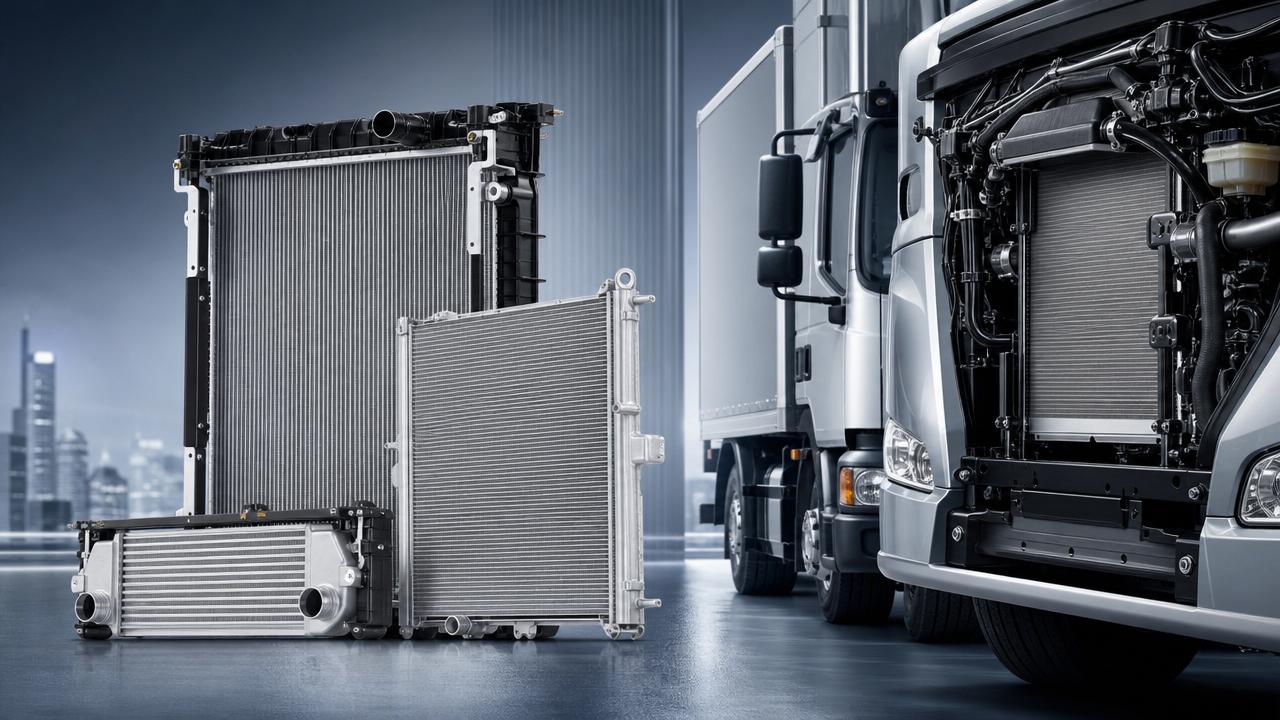
Choosing the right radiator for commercial vehicles directly affects engine cooling, operating costs, and fleet reliability. For procurement professionals, key factors go beyond price to include material quality, heat dissipation performance, vehicle compatibility, and supplier stability. This guide explains how to evaluate radiator options efficiently and select products that meet demanding commercial transport and heavy-duty application needs.
Why radiator selection matters in commercial vehicle procurement
A radiator for commercial vehicles is not a simple replacement part. It is a thermal management component that protects engine efficiency, extends service life, and reduces unplanned downtime. For buyers managing truck fleets, construction equipment, or distribution vehicles, a poor radiator choice can quickly lead to overheating, higher fuel consumption, and costly maintenance events.
Unlike passenger vehicle parts, commercial vehicle radiators often work under long operating hours, variable loads, dust exposure, vibration, and high ambient temperatures. That is why procurement teams need a structured evaluation method. The real question is not only “What is the unit price?” but also “What is the total operating value over time?”
- Stable cooling performance helps engines maintain safe operating temperature during long-haul transport and stop-and-go logistics work.
- Reliable material and brazing quality reduce leakage risk and improve service life under vibration.
- Correct fitment lowers installation errors, workshop time, and return rates.
- A dependable supplier supports planning, repeat orders, and technical confirmation.
How to define the right radiator for commercial vehicles by operating scenario
The same radiator for commercial vehicles will not perform equally well in every application. Procurement decisions should begin with the vehicle’s workload, route profile, engine heat load, and maintenance environment. A city delivery truck and a heavy-duty construction vehicle may require very different cooling priorities even if they appear similar on paper.
Before comparing suppliers, buyers should map the operating scenario clearly. This reduces the risk of ordering a radiator that fits physically but underperforms in actual use.
The table below helps procurement teams match common application conditions with key radiator selection priorities.
This comparison shows why operating context should come first. A purchasing decision based only on external size or price often overlooks airflow conditions, contamination exposure, and duty cycle severity. Those hidden variables usually determine actual radiator lifespan.
Questions buyers should ask before issuing an RFQ
- What is the normal engine load and peak temperature environment?
- Is the vehicle used on highways, urban routes, mines, ports, or mixed roads?
- How often are radiators cleaned, inspected, or replaced in current maintenance cycles?
- Are there any fleet-specific installation limits, bracket variations, or hose layout requirements?
What technical factors should buyers check first?
When evaluating a radiator for commercial vehicles, procurement teams should review technical details in a practical order. Start with compatibility, then thermal performance, then durability, then manufacturing consistency. This sequence prevents common sourcing errors such as buying a low-cost unit that fits but fails under real operating stress.
1. Material and core structure
Material choice affects heat transfer, weight, corrosion resistance, and production consistency. In heavy-duty applications, the radiator core, fin density, tube design, and tank quality should all be reviewed together. Procurement teams should ask for clear specifications rather than broad claims about “premium material.”
2. Heat dissipation performance
Cooling performance depends on more than frontal size. Tube arrangement, airflow path, fin shape, coolant flow design, and the balance between heat rejection and pressure drop all matter. A larger radiator is not automatically better if packaging constraints or airflow management reduce real efficiency.
3. Fitment and interchangeability
Many procurement delays come from incomplete fitment verification. Buyers should confirm mounting points, inlet and outlet positions, hose diameter, transmission oil cooler integration if required, and surrounding space in the engine bay. This is especially important when sourcing for mixed fleets or replacement programs.
4. Durability under vibration and contamination
Commercial vehicles often operate on uneven roads, crowded logistics routes, or dusty construction sites. That means the radiator must tolerate vibration, debris, and repeated thermal cycles. Weak seams or inconsistent brazing can lead to leaks long before the expected replacement interval.
For procurement review, the following table summarizes the most useful technical checkpoints for a radiator for commercial vehicles.
Using a checklist like this helps buyers compare quotations on substance rather than marketing language. It also creates a clearer internal approval process when engineering, maintenance, and purchasing teams need to align.
How to compare suppliers beyond unit price
For many procurement professionals, the biggest challenge is not finding a radiator supplier. It is choosing one that can deliver consistent quality, documentation support, and stable lead times. In the commercial parts sector, supply risk can be as costly as product failure. A delayed shipment can stop maintenance planning across an entire fleet.
A practical supplier comparison should include manufacturing capability, product range, communication efficiency, and experience in heavy truck or thermal management parts. Liaocheng Xinde Auto Parts Co., Ltd., established in 2018 with registered capital of 5 million RMB and total investment of 50 million RMB, focuses on the research, production, and global sales of water tank radiators, intercoolers, construction machinery radiators, and related cooling components for heavy trucks and new energy radiator modules.
For buyers, that specialization matters. A supplier deeply involved in thermal management components is usually better prepared to discuss fitment, heat exchange requirements, and application differences than a general trading source. The company’s rapid development and provincial and municipal honors, including High-tech Enterprise, Civilized and Honest Enterprise, and Trustworthy Unit for Consumers, also indicate a structured growth path and market credibility within its operating environment.
Supplier evaluation checklist
- Can the supplier confirm drawings, dimensions, and application details before order release?
- Does the supplier understand heavy truck, construction machinery, and new energy cooling system differences?
- Can they support repeat orders with consistent specifications and batch traceability?
- Are they responsive on samples, quotation updates, packaging, and export communication?
Cost control: how to balance budget, lifespan, and downtime risk
A cheaper radiator for commercial vehicles may reduce purchase cost on paper, but it can increase total ownership cost if it fails early or cools inefficiently. Procurement decisions should compare not only piece price, but also service interval, labor cost, replacement frequency, vehicle downtime, and potential engine overheating risk.
This is especially important for fleet buyers. One early failure repeated across many units becomes a major operating issue. In contrast, a well-matched radiator with stable supply may lower annual maintenance cost even if the initial unit price is higher.
The following table shows a practical way to compare sourcing options for a radiator for commercial vehicles from a cost perspective.
For procurement managers, the best decision is usually the one that supports predictable performance and supply continuity. That approach protects the maintenance budget better than chasing the lowest quote each cycle.
What certifications and compliance points should buyers review?
In the auto parts industry, compliance review is often part of supplier qualification. Even when a project does not require brand-specific certification, buyers should still verify product documentation, material consistency, packaging control, and quality communication procedures. For export-oriented purchasing, labeling, dimensional accuracy, and shipment protection are also relevant.
Instead of asking only for broad quality claims, buyers should request practical support materials. These may include dimensional confirmation, application matching, inspection records, and packaging details that reduce transit damage. This is especially useful when sourcing radiators for international resale, aftermarket distribution, or scheduled fleet maintenance.
- Confirm part number mapping and vehicle application before purchase order approval.
- Check whether packaging is suitable for long-distance transport and warehouse handling.
- Ask for inspection communication on dimensions, visible finish, and connection points.
- Review after-sales response process in case of installation mismatch or field feedback.
Common mistakes when buying a radiator for commercial vehicles
Many purchasing problems come from assumptions that seem reasonable at first. In practice, several common mistakes lead to poor cooling performance, returns, or repeat sourcing work.
Mistake 1: Choosing by dimensions only
External size matters, but it does not guarantee the right thermal capacity or connection layout. Core design and flow configuration are equally important.
Mistake 2: Ignoring duty cycle severity
A radiator suitable for moderate road use may not survive dusty sites, steep gradients, or overloaded operation. Buyers should always match the part to actual usage conditions.
Mistake 3: Underestimating supplier communication quality
Fast and accurate technical confirmation saves time across purchasing, warehouse, and service teams. Weak communication often creates hidden costs that are larger than the original price difference.
Mistake 4: Treating cooling parts as isolated items
In many heavy-duty systems, radiator, intercooler, and surrounding thermal components influence each other. Buyers sourcing broader cooling assemblies should think in system terms, not just single-part terms. For example, in some Benz-related applications, a matching air cooling component such as intercooler for benz xd330 may be reviewed alongside radiator procurement to improve overall thermal management coordination.
FAQ for procurement teams sourcing commercial vehicle radiators
How do I choose a radiator for commercial vehicles when vehicle data is incomplete?
Start with available part numbers, installation photos, core dimensions, inlet and outlet positions, and vehicle application details. If the original reference is unclear, ask the supplier to support dimensional and structure confirmation before quotation finalization. This reduces mismatch risk significantly.
What matters more: aluminum material or radiator size?
Neither should be judged alone. Material quality affects corrosion resistance and heat transfer, while size affects available cooling area. But the real performance result depends on the full design, including tubes, fins, airflow, mounting environment, and operating load.
Is the lowest quotation ever the best choice for fleet purchasing?
Usually not. Fleet purchasing should focus on total cost over time. A low initial quote may lead to more failures, higher labor cost, more service interruptions, and slower replenishment. Buyers should compare expected reliability and supply consistency together with price.
Can one supplier support both radiator and related cooling component sourcing?
That is often a strong advantage. A specialist in radiators, intercoolers, and construction machinery cooling components can better support application matching, sourcing efficiency, and communication. In some projects, detailed product references such as OEM 9405010301, 97024, or size 630*892*68 for Benz applications may become relevant during technical comparison of related cooling parts.
Why choose us for radiator sourcing and project support
For procurement professionals, the value of a supplier lies in more than manufacturing. It lies in whether the supplier can help confirm parameters, reduce sourcing errors, and support stable repeat purchasing. Liaocheng Xinde Auto Parts Co., Ltd. focuses on radiators, intercoolers, construction machinery radiators, and related cooling products for heavy trucks and new energy radiator modules, which allows discussions to stay close to real application needs rather than generic catalog selling.
If you are selecting a radiator for commercial vehicles, you can consult on key details such as dimension confirmation, vehicle compatibility, product selection by operating scenario, delivery lead time, sample arrangements, packaging expectations, and quotation planning for recurring orders. This is especially useful for buyers handling mixed fleets, aftermarket distribution, or projects with strict maintenance schedules.
A productive inquiry should include available part numbers, application brand or model, photos, dimensions, annual demand, and target delivery timing. With clearer input, product selection becomes faster, technical communication becomes more accurate, and procurement risk becomes easier to control.