



Can a heavy truck cooling system cut fuel losses
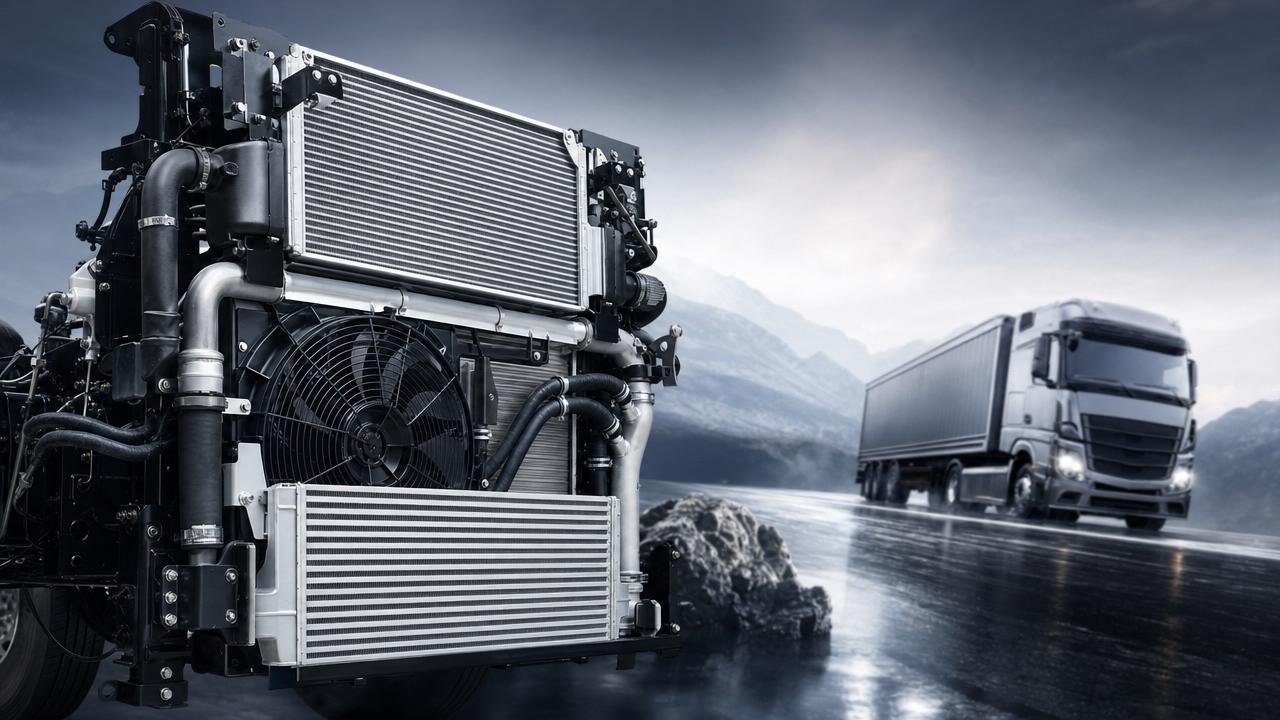
Can a heavy truck cooling system really reduce fuel losses and improve fleet efficiency? For business evaluators, the answer lies in thermal performance, durability, and lifecycle cost. A well-designed heavy truck cooling system helps stabilize engine temperature, reduce energy waste, and support reliable operation under demanding conditions, making it a critical factor when assessing parts suppliers and long-term investment value.
Why does a heavy truck cooling system matter in fuel-loss analysis?
Fuel loss in commercial transport is not only about combustion efficiency. It is also tied to heat management, airflow resistance, coolant circulation, fan load, and engine stability. When the heavy truck cooling system performs poorly, the engine may run hotter than intended, the fan may operate longer, and the powertrain may consume more energy to protect itself.
For business evaluators in the parts industry, this means the cooling package should be treated as an operating-cost component, not just a replacement part. A radiator, intercooler, shroud, tank structure, and core design can influence maintenance frequency, vehicle uptime, and fuel spending across the service life of a truck.
This is especially relevant in long-haul transport, mining logistics, construction fleets, and regional freight operations where vehicles run under heavy loads, variable ambient temperatures, and stop-start duty cycles. In these conditions, the heavy truck cooling system becomes a measurable contributor to cost control.
- It helps keep the engine in its intended thermal window, reducing wasted energy from overheating or unstable cooling.
- It lowers the risk of fan overuse, which can increase parasitic load and fuel consumption.
- It supports reliable turbocharging and charge-air cooling, which affects air density and combustion quality.
- It can reduce unplanned downtime caused by leaks, clogging, corrosion, or thermal stress.
What business evaluators should ask first
The first question is not simply whether a supplier offers a heavy truck cooling system. The better question is whether the system design can maintain thermal balance under the fleet’s real operating profile. That includes route grade, engine displacement, gross vehicle weight, ambient dust, and service intervals.
Which performance indicators show whether a heavy truck cooling system can cut losses?
To judge value, procurement teams need visible engineering indicators. These indicators should connect component quality with operating outcomes. The table below summarizes practical evaluation dimensions for a heavy truck cooling system in commercial purchasing.
These metrics help evaluators compare suppliers on more than unit price. A low-cost radiator with weak sealing or poor airflow performance may increase total expense through fuel loss, maintenance disruption, and shorter service intervals.
How temperature stability translates into lower operating cost
When coolant temperature fluctuates too much, the engine control strategy may compensate by increasing fan use or reducing efficiency under load. In practical terms, the heavy truck cooling system affects how much energy is diverted away from propulsion. Stable thermal control also supports emission-system reliability and protects related components from heat stress.
How should procurement teams compare cooling solutions?
Selection often fails because buyers compare only dimensions and price. A better approach is to compare the heavy truck cooling system by application fit, service life expectations, supply stability, and after-sales support. This is where a specialized parts manufacturer can add real value.
Liaocheng Xinde Auto Parts Co., Ltd., established in 2018 with a registered capital of 5 million RMB and a total investment of 50 million RMB, focuses on the research, production, and global sales of water tank radiators, intercoolers, construction machinery radiators, related heavy truck components, and new energy radiator modules. For evaluators, this specialization matters because supplier focus often improves process control, technical response, and product matching accuracy.
The company has also developed rapidly and received provincial and municipal honors such as High-tech Enterprise, Civilized and Honest Enterprise, and Trustworthy Unit for Consumers. While honors should not replace technical review, they can support confidence in management discipline and business credibility during supplier screening.
The comparison table below is useful when assessing whether one heavy truck cooling system supplier is likely to deliver better long-term value than another.
For evaluators managing budget pressure, the key lesson is simple: procurement value comes from fit and durability, not just low purchase price. A better heavy truck cooling system can reduce risk exposure across maintenance, fuel waste, and fleet scheduling.
What application scenarios demand a higher-grade heavy truck cooling system?
Not every truck uses the same cooling configuration. Evaluators should map cooling requirements to actual duty cycles before requesting quotations. Heat load, contamination, vibration, and idling intensity all change the selection logic.
Typical high-demand scenarios
- Long-haul freight in hot climates, where sustained engine load requires stable heat rejection over many hours.
- Construction and off-road transport, where vibration, dust, and debris challenge both airflow and core durability.
- Urban or regional fleets with frequent idling and stop-start cycles, where airflow can be limited and fan demand increases.
- Mixed fleets using older heavy vehicles, where replacement parts must balance compatibility, cost control, and reliability.
In these scenarios, the heavy truck cooling system should be evaluated for debris resistance, cleaning convenience, mechanical strength, and compatibility with the vehicle’s fan and shroud arrangement. Procurement teams that ignore field conditions often overpay later through repeated replacement or poor operating performance.
A practical example during parts evaluation
When reviewing replacement radiators for a Volvo platform, evaluators may compare dimensional fit, tank configuration, and material quality while also checking whether the component can support the intended heat load. In some sourcing cases, a product such as radiator for volvo xd 031 can serve as a reference point for compatibility discussions and application-specific screening.
What should you review before approving a supplier?
A heavy truck cooling system purchase should move through a structured checklist. This reduces mismatch risk and shortens the time between technical review and ordering decision.
- Confirm vehicle platform, engine model, mounting points, and space limitations in the cooling package.
- Review operating environment, including high temperature, heavy dust, elevation, and route severity.
- Request material and structure details such as core type, tank construction, and joining process.
- Check leak resistance, vibration-related durability considerations, and coolant compatibility.
- Assess lead time, batch consistency, sample support, and responsiveness during problem resolution.
For business evaluators, supplier communication quality is often an early signal. A manufacturer that can answer technical questions on radiator core design, intercooler integration, and heavy-duty operating conditions is usually easier to work with during sourcing and after-sales stages.
Cost should be measured over the lifecycle
The purchase price of a heavy truck cooling system is only one line in the financial picture. The real cost includes installation fit, maintenance frequency, coolant leakage risk, downtime, and the possibility of added fuel losses when thermal control is unstable. That is why lifecycle cost should be part of every bid comparison.
What common mistakes lead to poor cooling-system ROI?
Several recurring mistakes weaken return on investment in heavy truck parts procurement. These mistakes are common because they look reasonable during early price negotiations, yet they create hidden costs later.
- Choosing by dimensions alone without reviewing airflow path, thermal capacity, or tank design strength.
- Assuming all aluminum radiators perform the same, despite differences in core engineering and joining quality.
- Ignoring the relationship between radiator performance and fan load, which can influence fuel use.
- Underestimating contamination risk in dusty or off-road environments, leading to early blockage and reduced efficiency.
- Overlooking supplier stability, which can complicate repeat orders and spare-parts continuity.
A disciplined evaluation process avoids these issues. It also creates clearer internal justification when procurement teams need to explain why one heavy truck cooling system quotation is stronger than another.
FAQ: what do business evaluators ask most about a heavy truck cooling system?
How can a heavy truck cooling system affect fuel consumption if it does not burn fuel directly?
It affects the thermal environment of the engine and the duty cycle of cooling-related components such as fans. If cooling efficiency is weak, the vehicle may spend more energy maintaining safe temperature limits. That indirect energy draw can show up as fuel loss, especially under load or in hot weather.
What matters more: radiator size or radiator design?
Both matter, but design usually decides whether the available space is used effectively. Tube layout, fin structure, airflow compatibility, and sealing quality all influence whether a heavy truck cooling system performs consistently in real service.
Is a lower-cost replacement acceptable for fleet procurement?
It may be acceptable if the supplier can demonstrate fit, durability logic, and quality consistency for the intended application. However, if the lower-cost option increases leak risk or reduces cooling stability, the resulting maintenance and fuel-related losses can outweigh the initial savings.
How should evaluators handle model-specific sourcing?
They should confirm drawing details, installation interface, cooling demand, and supply continuity. In model-specific discussions, a reference item such as radiator for volvo xd 031 may help align technical communication, but final approval should still depend on full application verification.
Why choose us for heavy truck cooling system evaluation and sourcing?
For buyers in the parts sector, the best supplier is one that supports both technical judgment and commercial execution. Liaocheng Xinde Auto Parts Co., Ltd. focuses on radiators, intercoolers, construction machinery radiators, related heavy truck components, and new energy radiator modules. This specialization can help procurement teams move faster from inquiry to technical confirmation.
If you are evaluating a heavy truck cooling system for replacement supply, distribution, fleet maintenance, or project procurement, you can discuss practical topics instead of generic sales claims. That includes parameter confirmation, product selection, lead time planning, sample support, drawing-based customization, certification-related requirements, and quotation comparison.
A productive sourcing conversation should answer clear business questions: Which core structure fits your duty cycle? What service risks should be controlled first? How should you compare total cost across competing offers? With the right technical input, cooling-system procurement becomes easier to justify and easier to manage over time.
If your team needs support on heavy truck cooling system selection, radiator matching, intercooler sourcing, or delivery planning for demanding operating conditions, reach out with your model information, application scenario, quantity forecast, and target timeline. That allows a more accurate response on configuration, sample arrangement, and commercial proposal.