



How to Tell When a Nissan Radiator Needs Repair or Replacement
How to Tell When a Nissan Radiator Needs Repair or Replacement
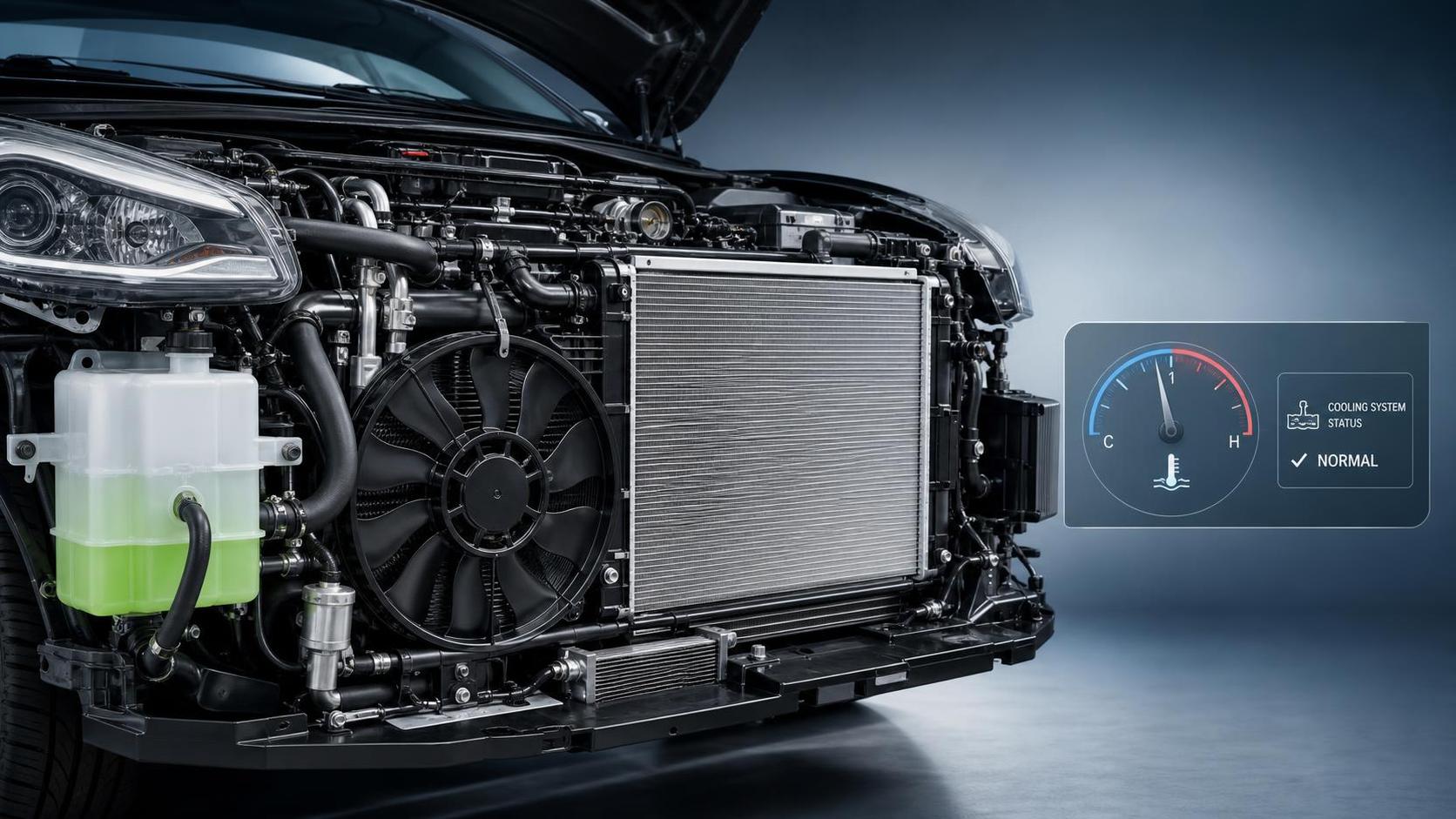
A failing nissan radiator usually does not announce itself with one dramatic event. More often, the first clues show up in the way the vehicle behaves on a normal day: the temperature needle sits slightly higher in traffic than it used to, the coolant reservoir needs topping up too often, or there is a faint sweet smell after parking. Those early signs matter because the radiator is not working in isolation. Once heat rejection becomes unstable, the cooling fan, hoses, water pump, thermostat, and even the cylinder head are all dragged into the problem. By the time an engine overheats badly, the repair decision is no longer just about the radiator.
For Nissan owners, the real question is not simply whether the radiator is “bad.” It is whether the issue is limited and repairable, or whether the unit has already reached the point where replacement is the more reliable and economical choice. That distinction depends on where the leak or restriction is, how the vehicle is used, and whether the failure is part of a wider cooling-system problem.
When a Small Problem Is Still a Repair Job
A radiator can sometimes be repaired when the damage is localized and the rest of the core remains sound. This is more common with minor external leaks, especially around hose connections, drain plugs, or a clearly identified seam. In workshop practice, a vehicle that arrives with coolant residue near the upper hose neck or a loose clamp may not need a radiator at all. It may need a pressure test, a closer look at the plastic tank area, and a check for hardened hoses that no longer seal properly.
The same applies when the complaint is “running hot at idle” but the radiator itself is not yet the root cause. A partially weak fan motor, a stuck thermostat, air trapped after recent coolant service, or contamination in the condenser and radiator fins can all mimic radiator failure. This is why experienced technicians do not jump straight from overheating to replacement. They inspect airflow, coolant circulation, and external fin condition first.
A repair is more defensible when these conditions are present:
- Coolant loss is slow and traceable to one point.
- The core is not heavily corroded or widely clogged.
- There is no sign of repeated overheating.
- The plastic tanks are not brittle from age and heat cycling.
- The vehicle’s usage is relatively moderate, such as daily commuting rather than long, high-load driving.
Even then, repair should not be treated as a default low-cost shortcut. If the unit is already old, one repaired leak can be followed by another weak point a few weeks later. That is especially true in vehicles that see frequent stop-and-go traffic, hot climates, or long idling periods with the air conditioning on.
The Situations That Usually Point to Replacement
Replacement becomes the safer decision when the radiator has lost structural integrity or cooling efficiency across a broader area. The obvious case is a cracked plastic tank or a damaged core after impact from road debris. Less obvious, but just as important, is internal blockage. A Nissan radiator can look acceptable from the outside and still fail to move enough coolant through the tubes, especially if old coolant, mixed coolant types, or neglected service intervals have allowed deposits to build up.
This is where vehicle behavior tells the story. If the engine runs acceptably at highway speed but overheats in traffic, the problem may involve airflow. If it runs hot under load, on climbs, or with the air conditioner operating, reduced heat exchange inside the radiator becomes more likely. If the upper hose is very hot and the lower hose stays unexpectedly cool after warm-up, circulation across the core may be restricted. That does not prove blockage by itself, but it is a strong reason to inspect further rather than keep adding coolant and hoping the issue settles down.
Replacement is usually the better call in these cases:
The cost argument also changes once reliability is part of the calculation. A low-cost repair that fails during summer driving or on a long-distance route can easily become more expensive than replacing the radiator once, flushing the system properly, and restoring stable cooling performance.
Usage Conditions Matter More Than Many Drivers Think
Two Nissan vehicles with similar mileage can require completely different decisions because their working conditions are different. A city-driven sedan that spends hours in congestion sees repeated heat soak and fan cycling. A pickup or SUV used for hauling, long uphill stretches, or high ambient temperature driving places more continuous demand on the radiator. In those conditions, marginal cooling performance becomes visible much sooner.
Dust and debris also change the diagnosis. In some operating environments, what looks like a coolant-side problem begins on the air side of the core. Fine dust, insects, cottonwood, oily grime, or bent fins can reduce airflow enough to raise operating temperature. This does not always mean the radiator is worn out, but it does mean a visual inspection from the grille side alone is not enough. The condenser in front of the radiator may be masking the real condition behind it.
Manufacturers and component suppliers that work across passenger vehicles, heavy trucks, and heat-exchange modules see the same principle repeatedly: thermal systems fail according to load, contamination, vibration, and maintenance quality, not just age. Companies such as Liaocheng Xinde Auto Parts, which focus on radiator and intercooler manufacturing across different vehicle classes, work in a segment where durability depends heavily on material control, brazing quality, and operating conditions. That broader industry experience is useful when judging passenger-vehicle radiators too, because the failure logic is similar even when the application is lighter.
Mistakes That Lead to the Wrong Decision
One common mistake is treating any coolant leak as radiator failure. Reservoir caps, hose joints, heater hoses, water pumps, and thermostat housings can all leave coolant traces in nearby areas. Without cleaning the system and pressure testing it, the leak path can be misread.
Another mistake is assuming stop-leak products have solved the issue. They may reduce visible leakage for a while, but they can also complicate diagnosis and potentially affect narrow coolant passages. When a Nissan radiator already has internal restriction, adding sealant can turn a manageable problem into a replacement that cannot be postponed.
There is also a tendency to judge the radiator by exterior appearance only. A clean-looking unit may still be weak inside. On the other hand, an older radiator with superficial discoloration may still cool properly if flow, pressure retention, and temperature distribution remain normal. The decision should be based on function, not cosmetics.
What to Check Before Approving the Job
Before choosing repair or replacement, a few checks make the decision much more reliable:
- Pressure-test the cooling system and inspect for fresh seepage.
- Check coolant condition for rust, oil contamination, or heavy sediment.
- Inspect fins for blockage, flattening, or corrosion.
- Confirm fan operation, thermostat behavior, and hose temperature difference after warm-up.
- Look for signs of past overheating, including coolant overflow stains or warped plastic around nearby components.
If the radiator is being replaced, the job should not end with the part swap. The system needs the correct coolant, proper bleeding, and a check of related wear items. Otherwise, the new unit may be blamed later for a problem that actually started with a weak cap, collapsing hose, failing fan, or contaminated system.
Choosing the Right Outcome
A repair makes sense when the failure is narrow, verified, and the radiator still has good overall condition. Replacement makes sense when cooling performance has become inconsistent, leakage is spreading, or the vehicle’s operating demands leave little margin for a second failure. For a commuter car, the difference may be inconvenience. For a vehicle that runs long distances, carries loads, or works through summer traffic daily, delayed replacement can expose the engine to much larger risk than the radiator cost itself.
The practical way to judge a nissan radiator is simple: do not focus only on the leak you can see. Look at how the vehicle is used, whether the unit still has full heat-transfer capacity, and whether the rest of the cooling system supports a lasting fix. That is usually where the right answer becomes clear.