



Benz Radiator Applications: Which Driving Conditions Demand a Higher-Capacity Unit?
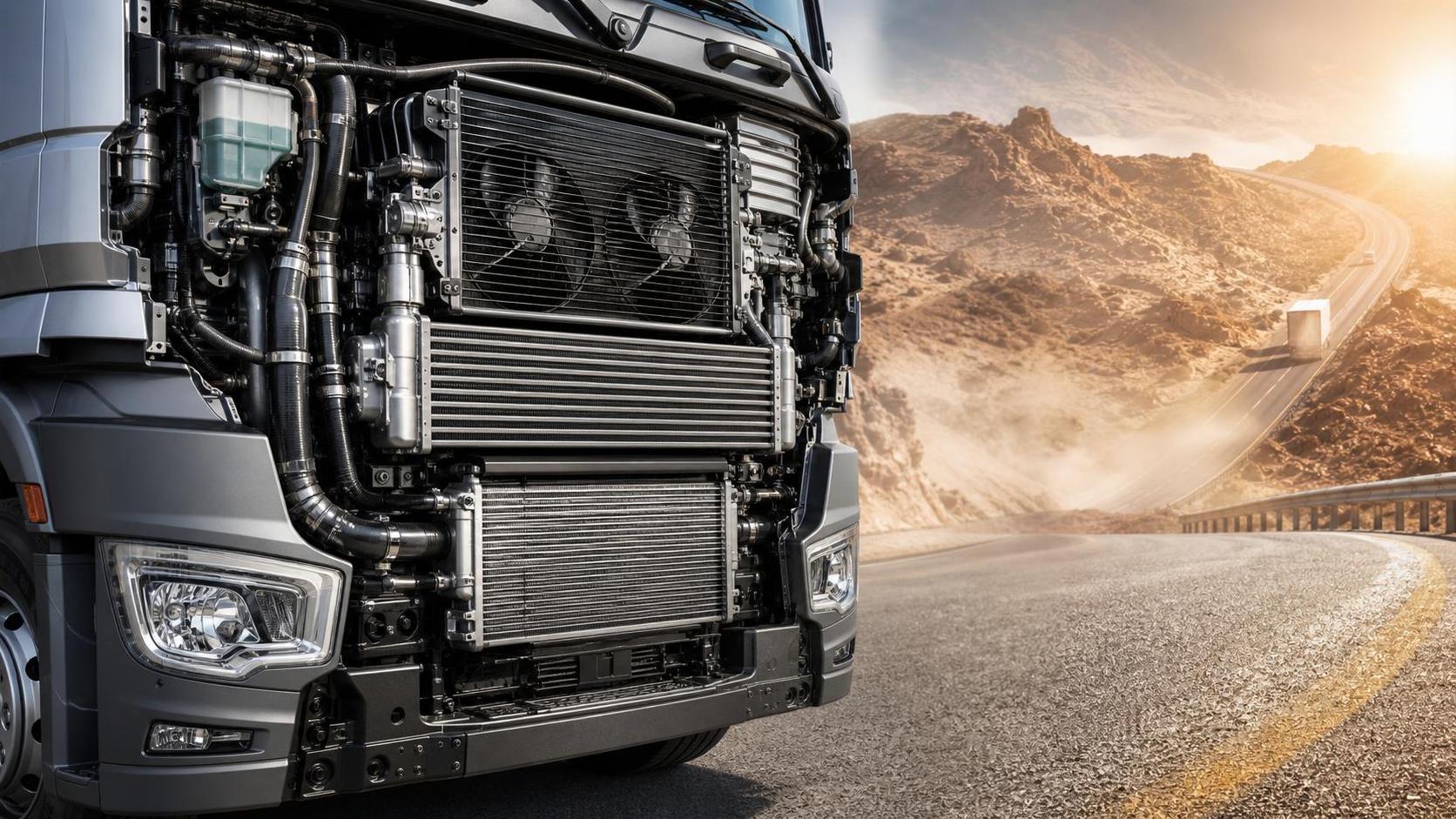
Why Benz Radiator Demand Changes With Real Driving Conditions
A Benz Radiator works well only when its cooling capacity matches the heat created on the road.
That difference becomes obvious in long-distance freight, urban delivery, mountain transport, and hot-region operation.
Under light duty, a standard unit may control coolant temperature without trouble.
Under constant strain, the same Benz Radiator can reach its limit much faster.
The issue is not only peak temperature.
Repeated thermal loading affects hose life, fan engagement frequency, coolant stability, and overall engine uptime.
In practical parts selection, cooling margin matters as much as fitment.
Liaocheng Xinde Auto Parts Co., Ltd., established in 2018, has grown around this kind of application-driven demand.
Its work across water tank radiators, intercoolers, heavy truck cooling parts, and new energy radiator modules reflects one clear market reality.
Cooling components should be chosen by operating stress, not by model name alone.
In Daily Operation, Heat Load Rarely Comes From One Factor
Many people judge a Benz Radiator by engine displacement or OEM reference only.
That is often too narrow.
A higher-capacity unit is usually considered when several stress factors overlap.
Heavy payload, slow airflow, steep gradients, high ambient temperature, and extended running hours all raise thermal demand.
Even road dust and fin blockage can shift a cooling system from acceptable to vulnerable.
What matters most is the pattern of heat generation and the system’s ability to release it consistently.
- High engine load creates more heat than occasional cruising.
- Low vehicle speed reduces ram air through the core.
- Frequent stops increase fan dependence and coolant cycling.
- Hot climates reduce the temperature difference needed for efficient heat exchange.
A Benz Radiator that looks adequate on paper may still be undersized in those combined conditions.
Long Highway Runs With Heavy Loads Usually Need More Cooling Margin
Long-haul transport appears stable because road speed is high and airflow is better.
Yet this is also where a Benz Radiator can face continuous thermal accumulation.
When the vehicle carries full weight for hours, the engine stays under sustained output.
That steady load keeps coolant temperature elevated for much longer than short regional routes.
The key judgment is not whether overheating has already happened.
It is whether the current Benz Radiator leaves enough reserve during summer climbs, headwinds, or congested toll sections.
If fan clutch engagement becomes frequent on routes that should be stable, cooling reserve may already be too tight.
What Usually Signals an Upgrade
- Coolant temperature rises gradually after several hours, not immediately after startup.
- Performance drops more in summer than expected under the same load.
- The unit stays clean, but operating temperature still runs near the upper limit.
- Auxiliary cooling parts are healthy, yet thermal margin remains small.
Steep Grades and Repeated Climbing Put a Benz Radiator Under Sharp Stress
Mountain operation changes the cooling picture quickly.
The engine produces high torque at lower speeds, while airflow through the radiator core may drop.
That combination is one of the clearest cases for a higher-capacity Benz Radiator.
The system must reject more heat when road speed gives it less help.
In actual use, grade length matters as much as slope percentage.
A short hill may not justify change.
A route with repeated climbs and slow descents often does.
This is also where core thickness, tube layout, and fin efficiency become more important than simple external dimensions.
Stop-and-Go Urban Duty Creates a Different Kind of Cooling Problem
City driving does not always look severe, but it can be hard on a Benz Radiator.
Average speeds are low, idle time is long, and airflow depends heavily on the fan system.
With repeated acceleration, the engine keeps producing heat while the radiator receives limited natural air movement.
This often leads to heat soak rather than dramatic overheating.
The temperature may stay acceptable in the morning and rise in afternoon congestion.
A larger Benz Radiator can help, but only if fan performance and shroud efficiency are also adequate.
Otherwise, the added core area may not deliver the expected gain.
Hot Regions and Dusty Roads Change the Decision Faster Than Expected
A Benz Radiator loses effective margin when ambient temperature stays high for long periods.
Heat exchange depends on temperature difference between coolant and air.
When outside air is already hot, the radiator must work harder for the same result.
Add dust, insects, or fine debris on the fin surface, and cooling efficiency drops again.
This is why vehicles in hot inland corridors, dry construction routes, or mixed paved and unpaved roads often need a closer review.
In related heavy-duty applications, manufacturers also compare different platform requirements.
For example, RADIATORS FOR SCANIA with references such as OEM 1100631 and 64072, sized 970*760*56, show how cooling packages are matched to route intensity and vehicle architecture rather than treated as universal parts.
The Wrong Upgrade Decision Usually Starts With the Wrong Comparison
A common mistake is comparing only frontal size.
Two radiator units may look similar but behave differently because tube count, material quality, fin density, and flow design are not the same.
Another mistake is blaming the Benz Radiator when the real problem sits elsewhere.
A weak fan clutch, poor shroud sealing, blocked charge air cooler, or degraded coolant can all mimic radiator undersizing.
There is also the cost trap.
Choosing the lowest-price replacement may save money once, then increase downtime through repeated temperature-related issues.
That is why serious cooling suppliers build around testing, production control, and application knowledge.
Xinde’s growth in heavy truck and radiator module manufacturing reflects this shift toward fit-for-duty selection.
Points Often Overlooked Before Replacement
- Whether overheating appears only under seasonal peaks.
- Whether airflow restriction comes from adjacent coolers.
- Whether route changes increased load compared with the original setup.
- Whether maintenance intervals are realistic for dusty or high-mileage use.
A Practical Way to Decide If a Higher-Capacity Benz Radiator Makes Sense
The best decision comes from matching thermal demand to operating pattern.
Start with route type, average load, ambient temperature range, and daily running hours.
Then confirm whether current temperature behavior is occasional or structural.
If heat rises mainly in harsh but recurring conditions, a higher-capacity Benz Radiator is usually worth evaluating.
If the issue appears in all conditions, inspect the full cooling circuit before changing core size.
- Record coolant temperature by route type, not by a single complaint event.
- Check fan, thermostat, pump, cap, and airflow path before specification change.
- Compare core design and heat rejection performance, not dimensions alone.
- Review maintenance burden, cleaning access, and replacement cycle together.
A Benz Radiator should be chosen for the hardest normal condition the vehicle actually faces.
That approach reduces thermal risk without turning the decision into unnecessary over-specification.
The next useful step is to sort routes by load, climate, speed profile, and grade intensity, then compare those conditions against the current cooling margin and maintenance history.