



How to Match a Honda Radiator to Engine Size and Driving Conditions
Start with the engine, not the core size
When a Honda radiator is being evaluated, the most common mistake is starting from outer dimensions and mounting points only. Physical fit matters, but it is not the first filter. For technical review, the radiator has to match the engine’s heat rejection profile before anything else. A small-displacement gasoline engine used for commuting places a very different demand on the cooling system than a larger engine running sustained highway speeds, mountain grades, stop-and-go delivery work, or modified output.
Begin with the exact engine code, model year, transmission type, and whether the vehicle uses any factory towing, performance, or heavy-duty cooling package. On Honda platforms, those details often matter more than people expect. Two vehicles that look interchangeable in a catalog may have different cooling loads because of transmission cooling requirements, air conditioning condenser layout, or fan strategy.
If the engine identification is not locked down first, the rest of the selection process becomes guesswork.
Build the checklist around operating conditions
A radiator that performs well in light suburban use can struggle in conditions that keep heat in the system for long periods. That is why engine size alone is not enough. In practice, the right match comes from engine demand plus duty cycle.
- Urban stop-and-go: Airflow is limited, so fan performance and fin condition become critical.
- Highway cruising: Ram air helps, but long steady loads can expose an undersized core.
- Hot climate use: Ambient temperature reduces cooling margin quickly.
- Mountain or uphill driving: Engine load rises while vehicle speed may fall, which is hard on the cooling system.
- Heavily loaded or modified vehicles: Added weight, power upgrades, or non-standard front-end airflow changes can shift the requirement beyond the original design window.
For a technical evaluator, this means the same Honda radiator should not be approved for every use case just because the mounting tabs line up. The real question is whether the radiator still holds enough thermal reserve under the vehicle’s worst expected operating condition.
Check the cooling package as a system
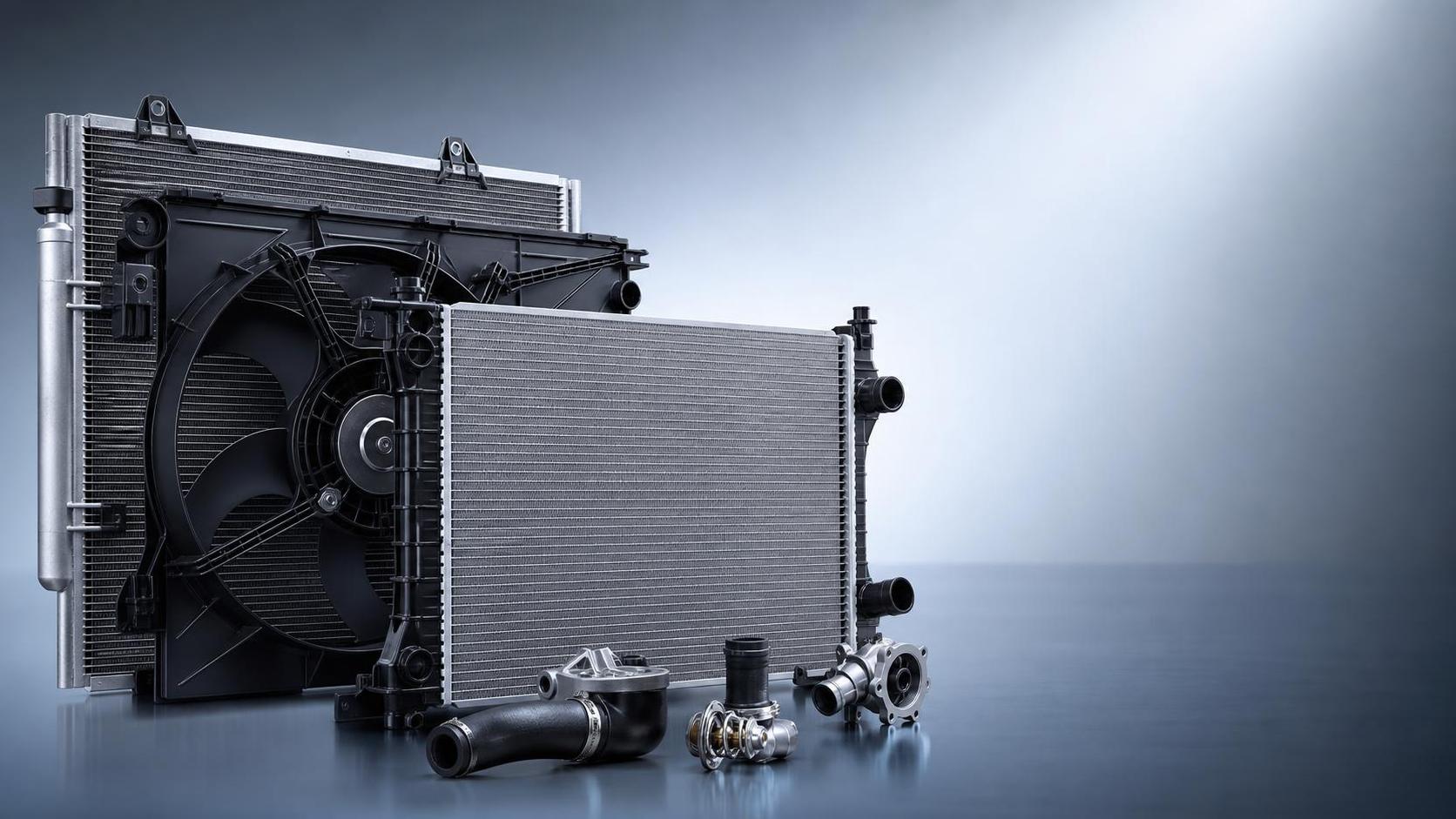
Radiator matching goes wrong when the part is assessed in isolation. On most Honda applications, cooling performance is shaped by the whole stack: radiator, fan assembly, shroud, condenser, hoses, thermostat behavior, pressure cap, and sometimes transmission-related heat exchange.
A technically correct review usually includes these questions:
- Does the radiator support the original hose routing and inlet/outlet position without forcing bends or reducers?
- Is the fan shroud coverage preserved so air is pulled through the core rather than around it?
- If the application uses an integrated transmission cooler, is the configuration correct for that vehicle?
- Will the radiator sit at the right depth relative to the condenser and fan assembly?
- Does the cap neck and pressure interface match the intended system design?
A radiator can be nominally compatible and still create service problems if these interfaces are off. Poor hose angle, fan clearance issues, or missing cooler provisions often show up after installation, not during catalog review.
Focus on heat load indicators that actually change the decision
Not every specification has equal value in selection. Some are decisive. Some are just catalog noise. For matching a Honda radiator to engine size and driving conditions, the useful indicators are the ones that affect how much heat can be transferred and how consistently airflow reaches the core.
One practical note: evaluators often overvalue thicker cores. Thickness helps only when the rest of the system can feed enough airflow through the added depth. In low-speed driving with marginal fan performance, a thicker core may not solve the overheating complaint by itself.
Separate stock replacement from upgraded duty
This step saves a lot of bad decisions. Ask whether the vehicle is staying inside the original thermal envelope or operating beyond it.
For a stock Honda used in normal commuting, the correct radiator choice usually means restoring original cooling behavior with proper dimensions, correct connections, stable pressure retention, and reliable manufacturing quality. For vehicles exposed to harsher duty, the evaluation shifts. You need to consider whether the original radiator design still has enough margin after accounting for ambient temperature, traffic profile, load, elevation, and any powertrain modifications.
Where people get into trouble is mixing those two goals. A stock replacement review should not drift into unnecessary overspecification. An upgraded-duty review should not assume OEM-equivalent capacity is enough just because the car was originally sold with it.
Watch the failure modes that point to a mismatch
If you are evaluating a replacement after repeated cooling complaints, the pattern of failure tells you whether the radiator selection is wrong or whether the issue sits elsewhere in the system.
- Runs hot mainly in traffic: Check fan, shroud seal, condenser blockage, and fin restriction before blaming core size.
- Runs hot on long climbs or highway load: Recheck core capacity, coolant flow path, and whether the installed radiator matches the engine and transmission combination.
- Coolant loss without clear overheating: Look at tank seams, neck integrity, cap seating, and pressure stability.
- Repeated replacement with the same complaint: That usually points to misapplication, restricted airflow in the front stack, or an unresolved system issue rather than a one-off defective unit.
This is where experienced assessment matters. Not every overheating event means the radiator is undersized. But when the symptoms appear only under high thermal load and the rest of the system checks out, radiator capacity or configuration moves to the top of the list.
Confirm the part against the vehicle record, not memory
Honda applications can look deceptively familiar across generations. Relying on visual similarity or past experience is how wrong radiators get approved. Use the vehicle identification data, engine designation, transmission type, and original part reference where available. Then compare that against the radiator drawing or specification sheet, not just a marketplace title.
For technical purchasing or supplier review, ask for the fields that actually resolve ambiguity: core size, inlet and outlet locations, mounting pattern, cooler provision, and application range by vehicle configuration. If those fields are vague, the listing is not strong enough for a serious evaluation.
Material quality still matters after fitment is solved
Once the radiator is technically matched, durability becomes the next screen. A Honda radiator that fits and cools on day one can still create warranty exposure if the material quality is inconsistent. Tank strength, brazing or joining quality, fin integrity, and leak resistance under pressure cycling all matter in service, especially where the vehicle sees temperature swings or rough road vibration.
For evaluators comparing suppliers, this is where a disciplined review pays off. Look for consistency in manufacturing details and whether the supplied unit appears built for repeatable thermal and mechanical performance, not just low-cost substitution. A radiator is not judged only by whether it bolts in. It has to keep doing its job after thousands of heat cycles.
Use a simple approval sequence
When time is short, keep the decision process in order:
- Lock the exact Honda application: engine, year, transmission, and cooling package.
- Define the real driving condition: commute, sustained highway, hot climate, hill use, load, or modified output.
- Check system interfaces: hose layout, fan shroud, condenser stack, cap, and integrated cooler provisions.
- Review core-related specifications that affect heat rejection and airflow.
- Separate stock replacement from higher-duty service so the radiator is judged against the right thermal target.
- Screen for build quality before approval.
That order works because it reflects how cooling problems actually show up in service. Get the vehicle record wrong and everything after it is wasted effort. Ignore the duty cycle and you risk approving a part that is technically compatible but operationally weak. Skip quality review and the part may pass selection but fail in use.
A good match is the radiator that fits the exact Honda application, supports the full cooling package, and holds temperature control under the hardest conditions the vehicle is expected to see. That is the standard worth using.