



High Efficiency Radiator Core vs Standard Core in Hot Weather
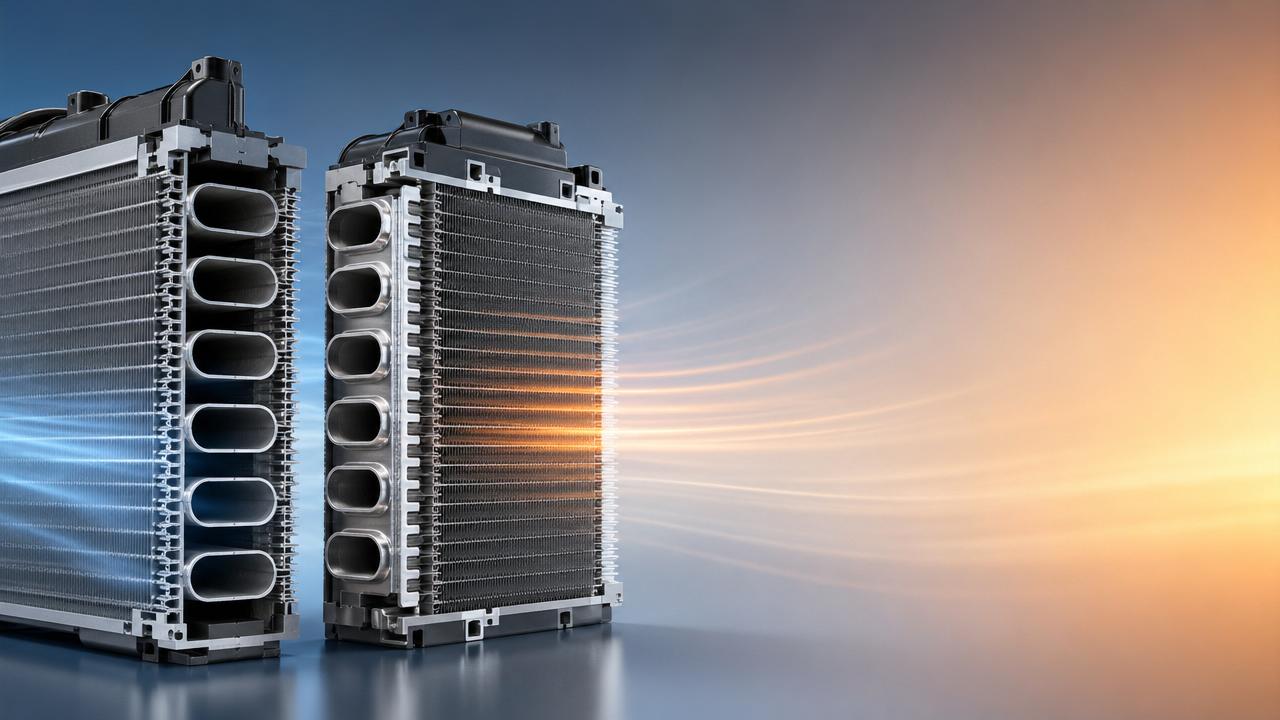
When engines face extreme temperatures, the difference between a standard core and a high efficiency radiator core can directly affect cooling stability, uptime, and operating safety. For operators working in hot weather, understanding this difference is essential for preventing overheating and maintaining reliable performance. This article explains how each core type performs and why the right radiator choice matters in demanding conditions.
Understanding the Role of the Radiator Core in Hot Weather
In heavy trucks, construction equipment, and commercial vehicles, the radiator core is the heat exchange section that removes excess engine heat from circulating coolant. When ambient temperatures rise, the cooling system has less thermal margin, which means every component must work harder. Under these conditions, the core design becomes more than a technical detail. It directly shapes temperature control, fuel efficiency, and daily operating reliability.
A standard core is typically designed to meet normal operating requirements in common road and weather conditions. It provides adequate cooling for average loads, stable airflow, and moderate temperatures. A high efficiency radiator core, by contrast, is engineered to improve heat dissipation through optimized tube layout, fin structure, material use, and airflow performance. In hot weather, these improvements can help the system respond faster to rising thermal demand.
For operators, the practical question is not only which one is better in theory, but which one is more suitable for real use. Vehicles that spend long hours in traffic, carry heavy loads, work on gradients, or operate in dusty and high-temperature regions often experience conditions that expose the limits of a standard core. In such cases, selecting a high efficiency radiator core may be a preventive decision rather than an upgrade for convenience.
Why heat control becomes critical above normal ambient levels
As outside temperatures increase, the radiator has less ability to release heat into the air because the temperature difference between coolant and ambient air becomes smaller. The fan may run more frequently, coolant temperatures may remain elevated for longer periods, and the engine may approach thermal protection limits more quickly. This is especially relevant in stop-and-go movement, off-road use, and urban logistics.
When overheating starts to build, the effects go beyond dashboard warnings. Operators may notice reduced engine response, increased fan noise, stronger heat soak after shutdown, or interruptions caused by protective derating. In heavy-duty applications, these events can reduce working hours and raise maintenance pressure.
Core design factors that influence cooling performance
- Tube density and internal flow path
- Fin spacing and fin geometry
- Material conductivity and joining quality
- Resistance to airflow blockage from dust and debris
- Structural strength under vibration and pressure cycles
Why the Industry Pays Attention to High Efficiency Radiator Core Design
Across the auto parts and heavy-duty cooling sector, thermal management is no longer viewed as a secondary issue. Higher engine outputs, tighter packaging, emissions system heat loads, and longer duty cycles have made radiator performance a strategic concern. This is one reason the high efficiency radiator core has gained attention in both replacement markets and original equipment support.
Manufacturers with a strong focus on radiator systems, intercoolers, and heavy truck cooling modules have invested heavily in core research and production. Liaocheng Xinde Auto Parts Co., Ltd., established in 2018, is one example of a company that has developed around water tank radiators, intercoolers, construction machinery radiators, and new energy radiator modules for global markets. Rapid growth in this segment reflects the practical demand for cooling systems that can handle more severe service conditions without sacrificing service life.
For users and operators, this industry focus matters because it leads to more specialized product options. Instead of treating all replacement radiators as equivalent, fleets and technicians increasingly look at thermal capacity, fitment accuracy, and material durability. In hot weather, these differences are easier to see because the cooling system is under constant stress.
Industry overview of cooling priorities
How Standard Cores and High Efficiency Cores Differ in Real Operation
The biggest operational difference between a standard core and a high efficiency radiator core appears when thermal demand rises faster than normal. In mild conditions, both may seem similar. But in hot weather, under load, or during long idle periods with limited airflow, the higher-capacity core usually maintains a more controlled coolant temperature range.
A standard core remains a practical and cost-effective solution for vehicles that run in moderate climates, carry predictable loads, and rarely operate near peak heat stress. It is appropriate when the cooling system was originally designed with enough reserve capacity. However, if operators routinely face high ambient temperatures, mountainous terrain, or cargo conditions that push the engine harder, the standard solution may offer less recovery margin once temperatures begin to rise.
A high efficiency radiator core generally offers better heat transfer per operating cycle. That can mean lower peak temperatures, faster cooldown after load spikes, and less strain on the fan and related components. These benefits become especially useful for fleets seeking uptime consistency rather than simply preventing total failure.
Performance comparison in operator-focused terms
Common signs that a standard core may be reaching its limit
- Temperature rises quickly on hills or with full loads
- Fan runs almost continuously in summer
- Coolant temperature stays high after long idle periods
- Cab warnings appear during peak daytime operation
- Cooling performance drops noticeably when the core surface gets dusty
Application Value for Trucks, Equipment, and Daily Operators
The value of a high efficiency radiator core is not identical for every machine. It depends on heat load, airflow conditions, duty cycle, and how expensive interruptions are. For truck operators, the main benefit is reduced temperature risk during long runs, congestion, and heavy hauling. For construction machinery, the benefit often includes better tolerance for dust, low-speed movement, and continuous hydraulic heat around the engine bay.
In practical terms, better cooling can protect more than the engine itself. Consistent thermal management supports coolant stability, hose life, sealing reliability, fan system efficiency, and overall mechanical confidence. In hot climates, even a small improvement in cooling reserve can help prevent cascading issues that start with elevated temperature and end with unplanned maintenance.
For example, operators managing truck applications may look for radiator solutions matched to exact dimensions and vehicle models. In one such case, XD045 MAN F2000 19.603 is a truck radiator-related product associated with models F2000, 19.603, and 81061016421, with a size of 1065*688*48. This kind of fitment-specific information is important because thermal performance depends not only on core type but also on correct application and installation compatibility.
Typical application categories
Practical Evaluation and Maintenance Considerations
Choosing between a standard core and a high efficiency radiator core should begin with operating reality. If the vehicle works in hot regions only occasionally, a standard design in good condition may be enough. If summer operation is constant, if loads are heavy, or if previous overheating symptoms already exist, then improved core efficiency deserves serious consideration. The goal is to match the radiator to the duty cycle instead of assuming that all cores will perform equally in severe weather.
Operators should also remember that no core can perform well if the rest of the cooling system is neglected. Blocked fins, weak fan performance, worn hoses, contaminated coolant, trapped air, and poor shrouding can all reduce actual heat rejection. This means radiator selection and routine maintenance must be treated as one system decision.
When evaluating replacement options, look at verified fitment, build quality, fin and tube integrity, pressure resistance, and supplier experience in heavy-duty cooling products. A part that fits correctly and maintains steady thermal performance often creates more value than one chosen only by price. For users depending on reliable summer operation, that difference can be visible within the first season of use.
Checklist before deciding on an upgrade
- Review actual operating temperatures in the hottest months.
- Check whether overheating occurs during load, idle, or climbing.
- Inspect the current radiator for internal blockage, fin damage, or leakage.
- Confirm fan, shroud, thermostat, and coolant condition.
- Match the replacement core to the exact vehicle model and size requirement.
- Consider whether the operating environment is becoming more demanding over time.
Simple maintenance habits that support radiator performance
- Clean external debris without damaging fins
- Monitor coolant level and quality regularly
- Inspect for leaks after high-load operation
- Check fan operation before peak summer periods
- Avoid delaying replacement when thermal symptoms repeat
A Practical Direction for Reliable Hot Weather Cooling
In hot weather, the difference between a standard radiator core and a high efficiency radiator core is mainly a difference in thermal reserve, stability, and operating confidence. Standard cores still have value in normal service, but once working conditions become more severe, improved core efficiency can make daily operation smoother and safer.
For operators, the best decision is based on workload, climate, and actual temperature behavior rather than on assumptions. If the engine regularly works near its thermal limit, a high efficiency radiator core is often the more practical solution for protecting uptime. If fitment-specific truck applications are involved, products such as XD045 MAN F2000 19.603 show why exact model matching also matters alongside core design.
A dependable cooling system starts with understanding the job the vehicle must do. By combining proper radiator selection, routine maintenance, and realistic evaluation of summer operating conditions, users can reduce overheating risk and maintain more consistent performance when temperatures are at their highest.