



How to Compare Mercedes Radiator Suppliers on Quality Consistency
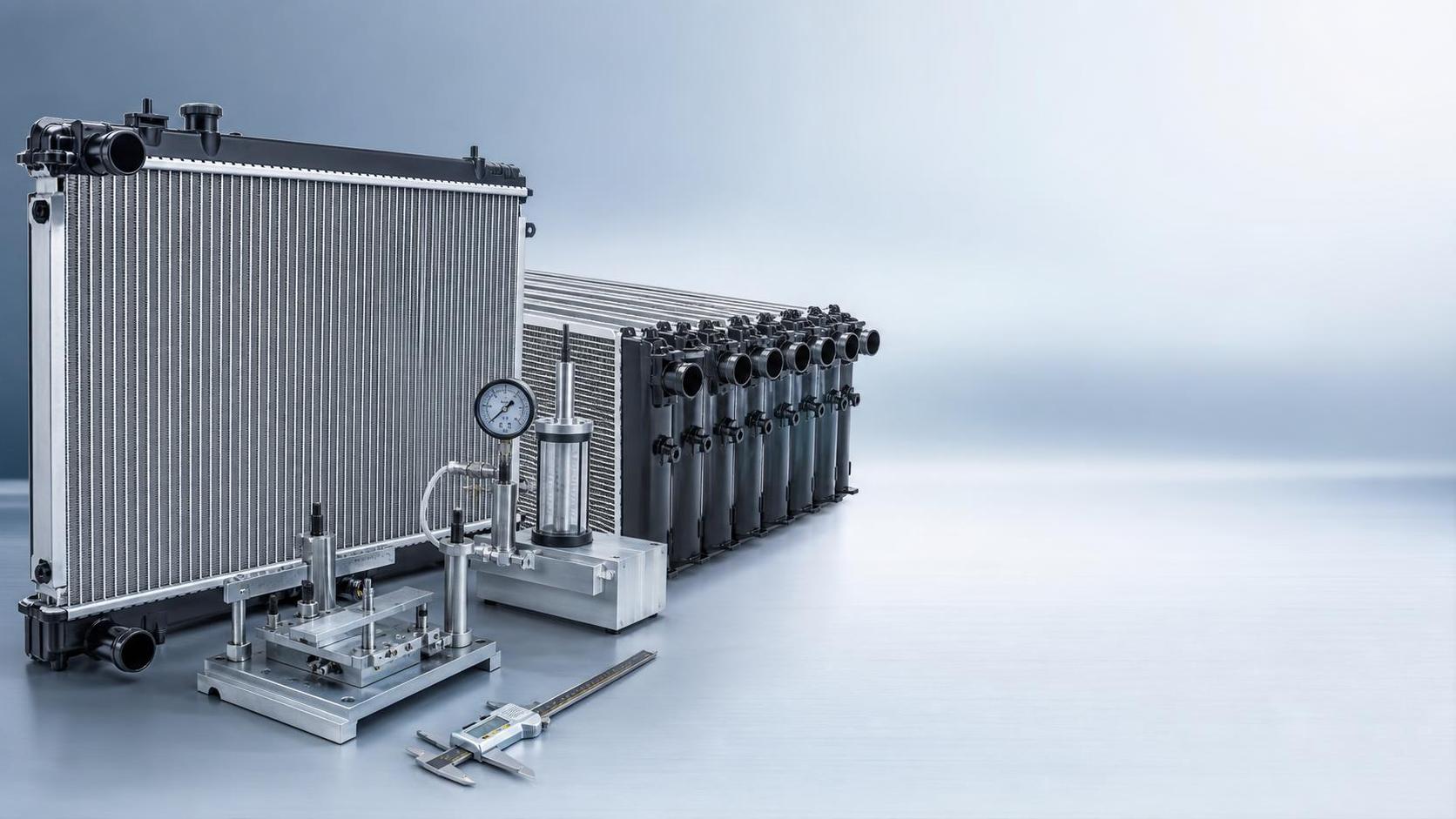
Start with consistency, not just sample quality
When you compare a Mercedes radiator supplier, the real question is not whether one sample looks good on the table. The question is whether the supplier can deliver the same cooling performance, fitment accuracy, and build quality across repeated batches without creating hidden risk for your operation. For quality control teams and safety managers, that difference matters. A radiator that passes incoming inspection once but drifts in brazing quality, tube thickness, sealing stability, or dimensional control later can turn into leakage, overheating, unplanned downtime, and difficult root-cause disputes.
That is why supplier comparison should follow a checklist built around process stability. Not marketing claims. Not price alone. And not a polished first article that the supplier may never reproduce at scale.
Check whether the supplier understands the application before talking about price
A useful early filter is simple: ask how they define the radiator you are sourcing. A capable supplier will immediately move into vehicle platform, operating conditions, cooling package layout, mounting points, pressure requirements, core structure, and replacement versus OEM-equivalent expectations. A weak one usually jumps straight to quotation.
For Mercedes radiator sourcing, application mistakes are common. Two products can look similar in photos and still differ in inlet and outlet geometry, bracket position, transmission oil cooler integration, or overall package depth. If the supplier does not control this discussion upfront, quality consistency is already in doubt because the baseline definition is loose.
- Ask for the exact drawing or controlled specification used for quotation.
- Confirm whether the supplier is pricing against OE drawing, reverse-engineered sample, or customer sample.
- Check how revision changes are tracked from RFQ to production release.
If those documents are vague, every later quality discussion becomes harder to close.
Look past raw material claims and ask how material stability is controlled
Most suppliers can tell you what materials they use. Fewer can show how they keep those materials consistent from batch to batch. For radiators, that distinction matters more than the headline material description.
What you want to see is control over the incoming side: supplier approval, incoming inspection records, traceability by lot, and a method for segregating nonconforming material. If the core tube stock, fin material, tanks, seals, or brazing-related inputs vary, field performance can shift even when the finished unit looks acceptable during visual inspection.
A practical question that often reveals the truth is this: when leakage rate or burst failures trend up, which incoming material lots do they review first, and how fast can they trace them? Teams that really manage consistency usually answer with a process. Teams that do not tend to answer with general statements about experience.
Evaluate process discipline on the shop floor
Radiator quality is heavily process-driven. Even with acceptable materials and drawings, inconsistency in core assembly, brazing, welding, crimping, or leak testing will show up sooner or later. During a supplier audit or video review, focus on process control points rather than overall factory size.
Pay attention to whether operators are working to controlled instructions, whether fixtures are clearly identified, whether key parameters are recorded, and whether nonconforming parts are physically separated from released inventory. A clean workshop is nice. A disciplined one is better.
These are the shop-floor signals that usually matter most:
- Brazing and welding parameters are documented and tied to part number.
- Fixtures prevent dimensional drift rather than relying on operator correction.
- Leak test methods are standardized, not adjusted informally by shift.
- Rework is defined, recorded, and limited.
- Finished parts remain traceable to date, line, and batch.
If a supplier cannot explain where variation is most likely to occur in their own process, they are probably not managing it well enough.
Compare testing routines by failure mode, not by how long the test list looks
A long inspection sheet can still miss the failures you care about. For Mercedes radiator evaluation, build your comparison around the actual risks: leakage, dimensional mismatch, weak joints, inadequate heat exchange performance, pressure-related failure, and packaging damage in transit.
Ask each supplier what tests are done on every unit, what tests are done by batch, and what is reserved for validation samples or engineering changes. That split tells you a lot. If critical checks only happen during development and disappear in mass production, consistency risk goes up quickly.
Do not judge a supplier only by whether they say they test. Judge them by whether the testing is tied to a control plan and whether results can be retrieved quickly when something goes wrong.
Ask for evidence of batch-to-batch stability
This is where many comparisons become more honest. A supplier may produce a good pilot run and still struggle with repeatability. To check consistency, ask for inspection records from multiple production batches of the same Mercedes radiator model, not just one report attached to the sample shipment.
You are looking for pattern, not perfection. Are the same dimensions stable over time? Do leak test failures spike on certain dates? Are corrective actions linked to recurring issues or only written after customer complaints? A supplier with mature control will usually show trend awareness. One with weaker discipline often treats every problem as isolated.
A good comparison method is to request three things for the same part number:
- First article or development inspection report.
- Recent batch inspection records from normal production.
- Any corrective action record linked to that part family.
Those documents together tell a much clearer story than a single certificate ever will.
Treat fitment control as a safety issue, not a cosmetic one
For QC and safety teams, fitment errors deserve more weight than they often get. Misalignment at mounting points, hose connections, fan clearance zones, or integrated cooler interfaces can create vibration stress, hose strain, installation delay, or damage during operation. These are not minor inconvenience issues.
When comparing suppliers, ask which dimensions are treated as functional-critical rather than just checked occasionally. A supplier that understands the product will distinguish between dimensions that affect packaging appearance and dimensions that affect sealing, mounting load, and thermal system integration.
If your team can only request a limited sample review, prioritize interface points first. That usually gives more useful risk information than broad visual review alone.
Review how the supplier handles change
Quality consistency often breaks during change, not during steady production. Tool repairs, alternate material sources, fixture replacement, packaging changes, and process adjustments can all affect a radiator without creating an obvious appearance difference.
So ask a direct question: what changes trigger internal approval, retesting, or customer notification? If the answer is unclear, you are exposed to silent drift. That matters even more in export programs or multi-site purchasing where one approved sample may be followed by production from a slightly different process path.
A disciplined supplier usually has a documented engineering change path, revision control, and a habit of linking change records to part numbers. Without that, consistency depends too much on memory.
Measure response quality during the quoting stage
One of the most practical indicators of future quality support is how the supplier responds before they win the order. Do they answer technical questions clearly? Can they explain deviations? Do they return marked drawings, inspection formats, and issue analysis in a usable way? Or do they keep replying with broad assurances?
When a field claim happens, speed alone is not enough. You need structured response: containment, traceability, probable root cause, affected batch range, and next action. Suppliers that communicate loosely during sales discussions often behave the same way during quality incidents.
Do not ignore packaging and shipment control
A stable product can still arrive as a quality problem if packaging is weak. Radiators are vulnerable to fin damage, deformation at interfaces, and handling-related leakage risk. This gets worse on long export routes, mixed loads, and warehouse rehandling.
Check whether packaging standards are linked to product geometry and transport mode. Ask for packed-condition photos, carton or rack layout, separator design, and labeling method for traceability. If packaging is generic across different radiator sizes, expect avoidable damage and disputed responsibility later.
Use a weighted comparison instead of a simple pass-fail view
For supplier selection, a flat checklist is not enough. Some gaps are tolerable early on; some are not. In practice, teams get better decisions when they weight findings by operational risk. For example, incomplete brochure material matters far less than weak traceability, unstable leak testing, or poor control over functional dimensions.
A workable approach is to score suppliers under four headings: product definition control, manufacturing process stability, verification discipline, and issue response capability. Price should still be included, but after technical risk is visible, not before. That keeps a low quote from masking a high-cost quality problem.
What to do before you approve the supplier
Before final nomination, run the decision in this order. Confirm the exact Mercedes radiator specification and revision. Review process controls for the manufacturing steps most likely to create variation. Compare test methods by failure mode. Check records from multiple batches, not just the sample lot. Then look at how the supplier handles change, traceability, and quality incidents.
If two suppliers seem close, choose the one that gives you cleaner control evidence, clearer technical communication, and better visibility into batch history. Over time, that usually matters more than a small unit-price gap. Quality consistency is not something you inspect into a Mercedes radiator after purchase. You select for it in the supplier, or you spend the rest of the program reacting to variation.