



Honda Radiator Price Factors: What Changes the Final Cost Most
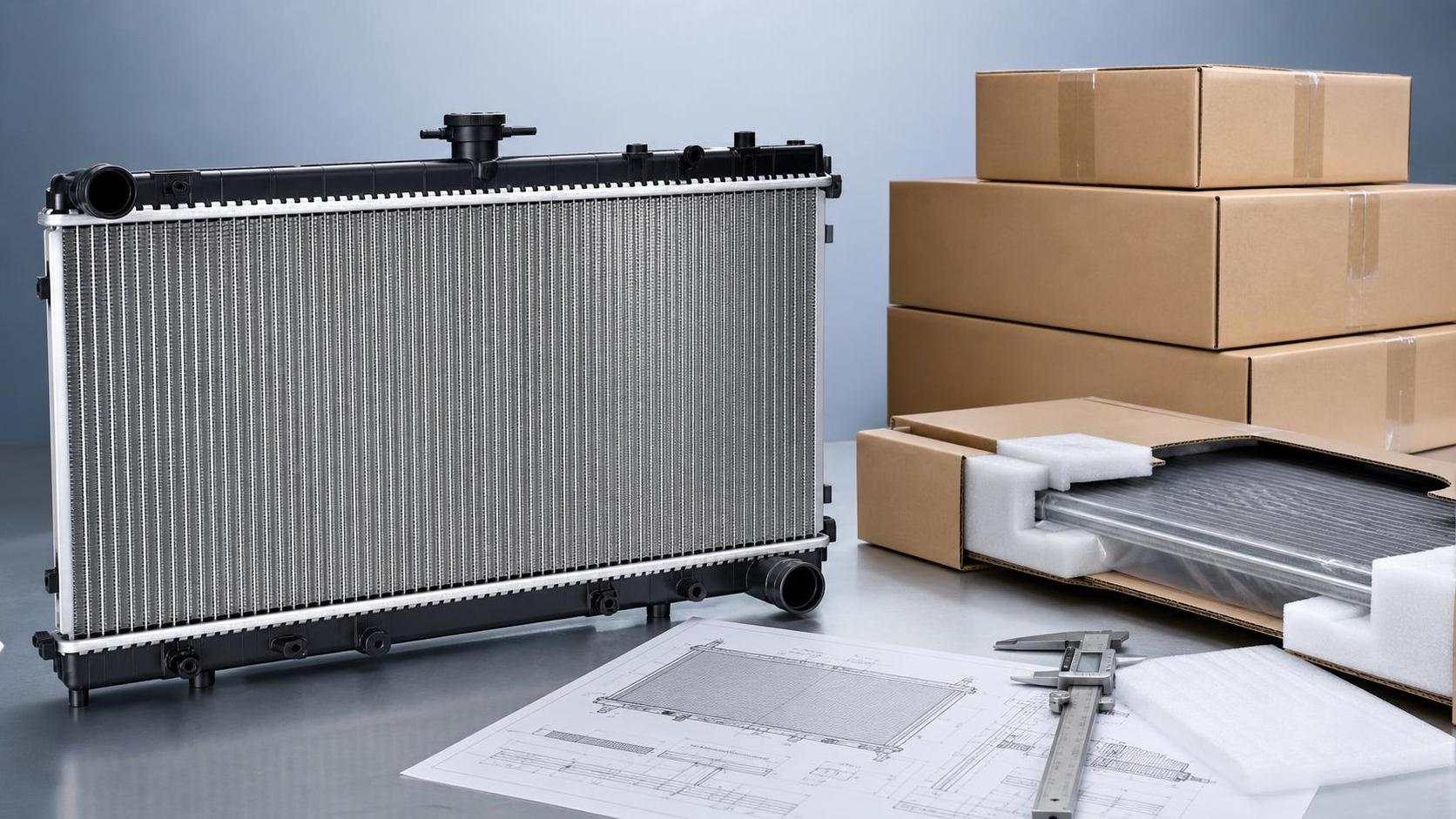
Start with the quote structure, not the unit price
When buyers compare honda radiator offers, the first mistake is treating every quoted price as if it covers the same thing. It rarely does. One supplier may be quoting the radiator only. Another may include cap, fittings, mounting points, packaging, or even a different core structure. So before asking why one offer is higher, check what is actually inside the quote.
A practical purchasing check is simple: request a line-by-line breakdown covering material, core type, tank type, included accessories, packaging standard, trade term, and warranty scope. If those fields are not aligned, the price comparison is not real yet.
This matters even more in replacement parts, where visually similar radiators can carry different cost drivers under the surface. The final landed cost often changes more from specification mismatch than from supplier margin.
Check the material choice before anything else
Material is usually one of the biggest price levers. In day-to-day sourcing, the question is not just aluminum versus plastic-aluminum construction. You also need to look at the grade and thickness of the material, the fin and tube design, and whether the supplier is building to a cost target or a durability target.
Lower-priced units often save money in places buyers do not see in a catalog photo: thinner tubes, lighter fins, weaker brazing consistency, or lower-strength plastic tanks. That may still be acceptable for some channels, but not if the market expects longer service life or the vehicle runs in hot climates, stop-and-go traffic, or heavy-load conditions.
- Ask whether the radiator uses full aluminum construction or a plastic tank and aluminum core combination.
- Confirm whether the quotation is built around OE-style replacement requirements or an economy aftermarket target.
- Check if the supplier can identify tube and fin configuration consistently across batches.
If the supplier avoids these details and keeps repeating only “good quality” or “factory price,” expect the low quote to move later or the delivered part to differ from the sample.
Cooling performance changes cost faster than many buyers expect
Two radiators can fit the same Honda application and still perform differently. More rows, denser fins, different core thickness, or improved heat exchange design usually push the price up. That does not automatically mean the higher-cost unit is the better buy. The point is to match performance to the actual market need.
For a buyer serving standard passenger vehicle replacement demand, overspecifying performance can tie up cost without improving sell-through. On the other hand, buying only on the lowest price can create returns if the radiator struggles in high-temperature regions or under heavy use.
A useful question in RFQ review is: what feature is making this unit more expensive? If the answer is increased cooling capacity, ask for the exact structural difference in the core, not a marketing statement.
Do not treat vehicle compatibility as a basic admin check
Compatibility errors are expensive because they create hidden cost on both ends: return freight, warehouse handling, customer complaints, and damaged confidence in the supplier. With a honda radiator, the fitment issue is often more detailed than make-model-year. Engine type, transmission configuration, inlet and outlet position, sensor ports, mounting points, and overall dimensions all affect the correct match.
This is where procurement teams save money by slowing down for one step. Ask for the technical drawing or dimensional sheet tied to the quoted part. Then check the fields that actually trigger mismatch in practice:
- Core size
- Overall length, width, and thickness
- Hose neck size and location
- Transmission oil cooler presence or absence
- Mounting bracket layout
- Sensor or switch port details
A cheap quote attached to a vague fitment description is usually not cheap in the end.
Manufacturing quality affects both price and claim rate
Procurement people usually feel this after the first few claims. The supplier with the lowest upfront number can become the most expensive source once leakage complaints, poor brazing, damaged tanks, or fitment instability start showing up. In radiator buying, manufacturing quality is not an abstract concept. It appears in leak tightness, weld consistency, assembly tolerance, packaging discipline, and batch stability.
You do not need inflated factory presentations to assess this. Ask for production inspection records tied to the part type you are discussing, and review whether the supplier can keep documentation organized by item. Also look at sample finish quality. Crooked brackets, inconsistent soldering appearance, rough edges, or weak carton protection are warning signs because they usually do not happen in isolation.
Order volume changes price, but only if the SKU is stable
Buyers often expect a large quantity discount immediately. Suppliers usually can reduce price with volume, but only when the order structure helps production. A mixed order with many low-quantity SKUs does not behave like a single large-volume run. Tooling setup, material planning, packaging variation, and stock handling all keep the cost higher.
So the better question is not “What is your best price for 1,000 pieces?” It is “How does price change by SKU quantity, packaging format, and delivery schedule?” That gives you something usable for negotiation.
Where buyers lose money is chasing a volume discount on a part they have not validated yet. If fitment or claim risk is still uncertain, it is usually smarter to stage the buy: sample approval, small trial batch, then repeat order pricing.
Packaging and freight can erase a good factory price
Radiators are vulnerable to handling damage. Thin fins bend easily, necks can crack under poor support, and corner impact can turn a usable part into scrap. That is why the cheapest ex-works quote is not always the lowest procurement cost.
Check whether the quoted packaging is suitable for your shipping route and channel. Export carton, pallet arrangement, inner support, and label control all influence landed cost. If the goods are moving through long-distance sea freight, warehouse transfer, and local redistribution, weak packaging becomes a recurring expense rather than a one-time issue.
A quick review list here includes carton compression strength, unit protection around fittings, pallet stability, and whether carton size is optimized for container loading. None of these are glamorous topics, but they change the real cost more often than buyers admit.
Warranty terms matter only when the claim process is usable
A longer warranty can justify a higher price, but only if the supplier has a workable response process. Some quotations mention warranty broadly and leave everything else unclear. That creates friction later: who reviews the failed unit, what evidence is required, whether labor is excluded, whether replacement is bundled with the next order, and how repeated batch issues are handled.
For procurement, the useful check is procedural. Ask the supplier to define the claim path in writing: failure photos, label traceability, batch identification, and replacement timing. Without that, warranty language has little pricing value.
Supplier reliability deserves a cost line of its own
There is a reason experienced buyers do not separate supplier reliability from product price. Late production, unstable quality, slow communication, and inconsistent documentation all create internal cost. Purchasing teams spend more time chasing updates, sales teams face stock pressure, and finance deals with avoidable disputes.
A supplier focused on radiator manufacturing and related thermal components may be better positioned to manage specification detail and production consistency than a trader handling many unrelated lines, but the real test is operational discipline. Review quote speed, drawing accuracy, sample consistency, response to technical questions, and whether they can keep the same specification from inquiry to shipment.
Use a simple buying sequence to control cost
If you need a practical order of checks, keep it in this sequence. Start with fitment accuracy. Then confirm material and core structure. After that, review manufacturing control, packaging, and claim handling. Only then negotiate volume and final unit price.
That order reflects how radiator costs usually go wrong in real purchasing. A low price on the wrong fitment is a loss. A low price on unstable quality becomes a return problem. A low price with poor packaging turns into transit damage. By the time those issues surface, the original quote advantage is gone.
For a honda radiator sourcing decision, the final cost is shaped most by specification clarity, material level, cooling structure, manufacturing consistency, shipment protection, and the supplier’s ability to repeat the same result order after order. Buyers who check those items in that order usually make cleaner decisions and spend less time fixing avoidable problems later.