



How to Choose a Vehicle Radiator That Matches Daily Operating Conditions
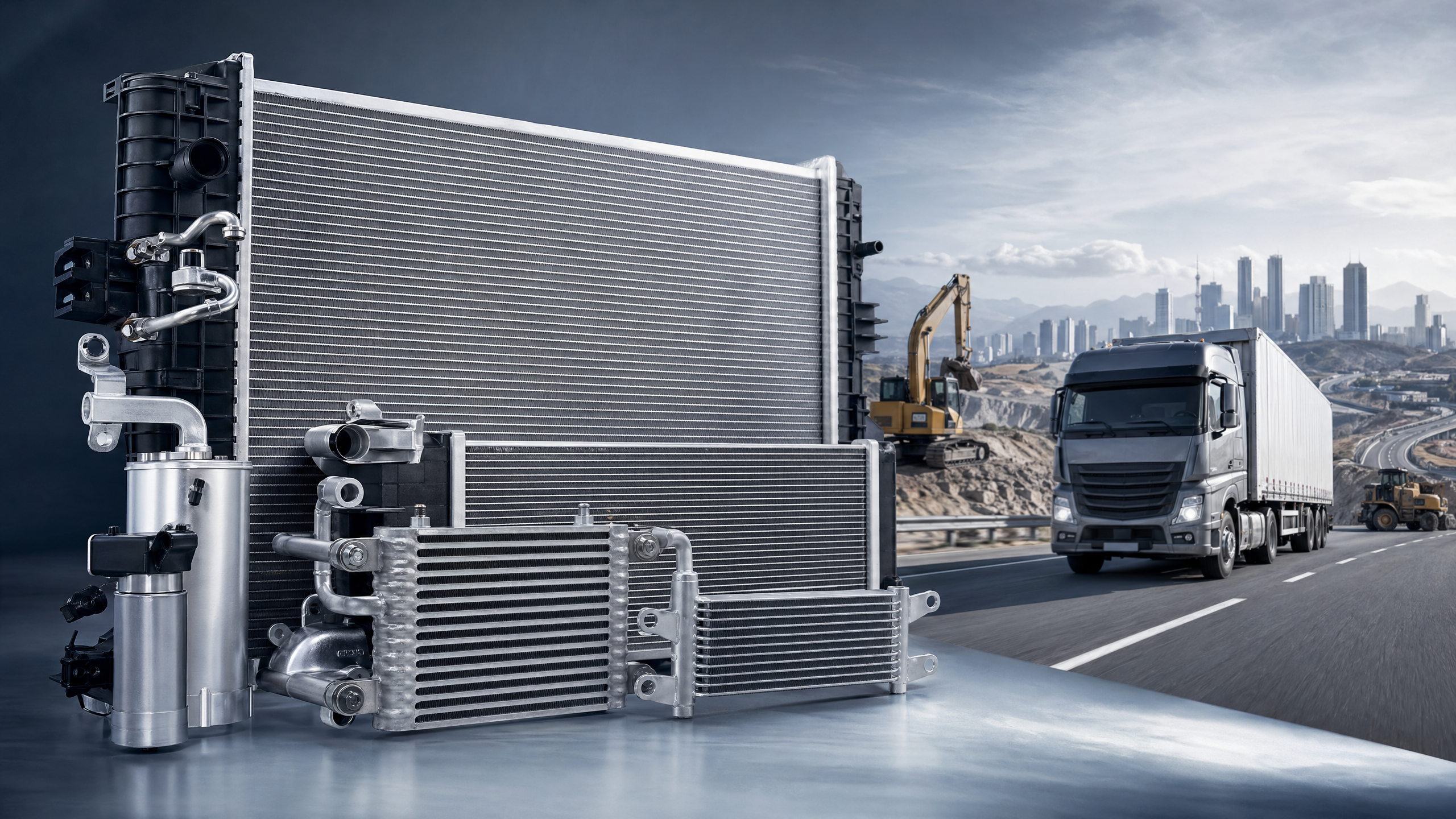
Choosing the right Vehicle radiator is essential for stable engine temperature, lower maintenance costs, and reliable daily performance. Whether your vehicle operates in city traffic, long-haul transport, construction sites, or demanding seasonal conditions, the radiator must match real operating needs. This guide will help operators understand the key factors that affect radiator selection and make a smarter, more practical choice.
For operators, a radiator is not just a replacement part. It directly affects engine heat control, downtime frequency, coolant stability, and service life under daily load. In the auto parts industry, especially for heavy trucks, passenger vehicles, construction machinery, and new energy cooling modules, selecting the right Vehicle radiator requires attention to both technical fit and real-world working conditions.
Liaocheng Xinde Auto Parts Co., Ltd., established in 2018 with a registered capital of 5 million RMB and a total investment of 50 million RMB, focuses on the research, production, and global sales of water tank radiators, intercoolers, construction machinery radiators, and related cooling components. For users and operators, that specialization matters because radiator performance depends on manufacturing consistency, thermal material quality, and application-based design rather than price alone.
Understand Daily Operating Conditions Before Choosing a Vehicle Radiator
The first step in choosing a Vehicle radiator is to define how the vehicle is used for at least 5 to 7 days in normal operation. A vehicle running 30 km per day in urban stop-and-go traffic faces very different cooling demands from one running 500 to 800 km on highways. The radiator should be selected according to heat load, airflow conditions, idle time, and typical ambient temperature range.
Operators often focus on vehicle model only, but daily duty cycle is equally important. For example, vehicles working on construction sites may experience dust exposure, repeated low-speed movement, and heavier thermal stress at lower airflow. In contrast, long-haul transport usually benefits from more stable airflow, but the engine may remain under continuous load for 8 to 12 hours, which creates a different type of cooling requirement.
Seasonal variation should also be included in the decision. In summer conditions above 35°C, cooling reserve becomes more important. In colder areas below -10°C, the radiator must still maintain coolant flow stability and resist material fatigue caused by temperature cycling. A practical selection is not based on a single peak scenario, but on the 80% to 90% conditions the vehicle actually sees every week.
Key operating variables to record
- Average daily running time, such as 4 hours, 8 hours, or 12 hours per shift
- Typical load level, including empty, partial load, or full-load operation
- Road condition, such as city traffic, mountain roads, highways, or rough site roads
- Ambient temperature range, for example -10°C to 40°C
- Dust, mud, or debris exposure that may block radiator fins within 2 to 6 weeks
When these variables are clearly defined, radiator selection becomes more accurate. This reduces the risk of buying a unit that fits physically but fails under real heat rejection demand.
The table below shows how common operating conditions influence Vehicle radiator selection priorities.
The key takeaway is simple: a Vehicle radiator should be matched to duty cycle, not selected only by appearance or price. Operators who describe use conditions clearly usually make better replacement decisions and reduce repeat failures.
Evaluate Core Technical Factors That Affect Cooling Performance
Once daily conditions are clear, the next step is to compare technical factors that influence radiator performance. A Vehicle radiator must deliver enough heat dissipation without creating installation problems or flow imbalance. Important points include core size, tube and fin structure, coolant flow path, material quality, and pressure resistance during daily use.
Core thickness should not be chosen blindly. A thicker core may improve cooling capacity, but if airflow is weak or the fan system is limited, extra thickness can reduce practical efficiency. In many common vehicle applications, the better choice is balanced design rather than maximum size. Operators should also check whether the radiator matches the original mounting points, hose layout, and fan shroud alignment within a small tolerance, often around ±1 to 3 mm in key connection areas.
Material quality affects service life as much as cooling performance. Premium thermal materials, stable welds, and well-formed fins help the radiator resist vibration, pressure fluctuation, and corrosion from long-term coolant exposure. In heavy-duty or high-vibration environments, poor-quality joints may fail in less than 6 months, while a better-built unit can operate much longer with normal maintenance.
Technical checkpoints operators should verify
- Confirm OEM or equivalent part number compatibility before purchase.
- Check inlet and outlet position, diameter, and tank shape.
- Review whether the radiator is designed for standard or high-load operating temperature.
- Inspect fin density and core structure for the intended airflow environment.
- Ask about pressure testing and leak inspection before shipment.
Why flow design matters
Advanced fluid dynamics can improve heat transfer by making coolant distribution more uniform across the core. That reduces hot spots and helps keep the system peak-performing under grueling workloads. For operators, this means more stable temperature readings during climbs, traffic congestion, or continuous transport cycles.
For passenger vehicle applications, one example is Radiator for AION, model AIONV-1301010-0030, designed for car fitment and replacement or repair needs. In applications where high-performance cooling efficiency and uncompromising stability are required, such product positioning reflects what operators should look for in a modern Vehicle radiator.
The table below summarizes the main technical elements that influence radiator selection and the operational impact of each factor.
A good Vehicle radiator is therefore a combination of thermal design, material control, and accurate fitment. Operators should judge it as a working component, not just as a spare part with the same outline.
Match the Radiator to Vehicle Type, Load, and Maintenance Reality
Different vehicle categories require different radiator priorities. A passenger car used for daily commuting may need compact fitment and stable cooling in repeated start-stop traffic. A heavy truck may need a Vehicle radiator built for longer running hours, stronger vibration resistance, and larger heat dissipation reserve. Construction machinery often adds the challenge of mud, dust, and restricted cleaning access.
Operators should also consider maintenance reality. If the radiator area can only be cleaned every 2 to 4 weeks, the fin design should tolerate debris accumulation better than systems cleaned every few days. If the vehicle operates far from workshops, priority should be given to durability and stable sealing, because roadside repairs on a leaking radiator create higher indirect cost than the part price difference.
Another practical point is whether the radiator is being selected for preventive replacement or emergency repair. In planned replacement, there is time to compare specifications, confirm dimensions, and coordinate installation. In emergency repair, operators often buy the fastest available part, which increases mismatch risk. Even in urgent cases, checking 4 to 6 basic fitment items can prevent installation failure.
Selection logic by application
- Passenger vehicles: prioritize fitment precision, stable temperature in traffic, and low-noise cooling system compatibility.
- Heavy trucks: prioritize continuous thermal capacity, strong core structure, and consistent performance over long shifts.
- Construction machinery: prioritize anti-vibration durability, debris tolerance, and easier maintenance access.
- New energy cooling modules: prioritize system integration, controlled thermal transfer, and component consistency.
Common selection mistake
A frequent mistake is assuming that “it fits the vehicle” automatically means “it fits the job.” A radiator that works well for light commuting may not handle high ambient temperatures, repeated uphill load, or dust-heavy service. This is why user-side operating data is valuable during selection.
Manufacturers with focused production experience can usually support this process more effectively. Liaocheng Xinde Auto Parts Co., Ltd. has developed around radiators, intercoolers, construction machinery radiators, and related cooling parts for global markets. For operators and buyers, that kind of application focus helps when comparing parts for heavy-duty, replacement, or platform-specific cooling needs.
How to Compare Suppliers and Avoid Procurement Risk
Choosing the right Vehicle radiator also means choosing the right supplier. Even when specifications look similar on paper, quality consistency can vary between manufacturers. For operators, fleet managers, and repair buyers, procurement risk often appears in three forms: unstable cooling performance, short service life, and poor fitment that increases installation time from 1 hour to 3 hours or more.
A reliable supplier should be able to explain product scope, application categories, testing approach, and production focus clearly. It is useful to ask whether the supplier specializes in water tank radiators, intercoolers, construction machinery radiators, or new energy cooling modules, because specialization often improves process control and model matching accuracy.
Beyond the product itself, delivery and communication matter. For a planned order, lead times may range from 7 to 15 days for standard models, while custom or less common applications may need 2 to 4 weeks depending on confirmation complexity. Operators should also check whether the supplier can provide basic technical confirmation before shipment, especially for model number, hose connection, and mounting alignment.
Supplier evaluation checklist
The following comparison table can help buyers assess suppliers more systematically instead of relying on unit price only.
The main conclusion is that a lower price does not always mean lower operating cost. One failed Vehicle radiator can create coolant loss, engine overheating, towing expense, lost work time, and repeat labor. Supplier selection should therefore combine fitment accuracy, production capability, and communication reliability.
Installation, Inspection, and Daily Maintenance for Longer Radiator Life
Even the right Vehicle radiator can fail early if installation or maintenance is poor. Before installation, operators should inspect the core for fin damage, confirm all mounting points, and compare hose port location with the old unit. During installation, avoid forcing misaligned brackets, because stress at the tank or joint area may cause early leakage after repeated vibration cycles.
After installation, the cooling system should be checked in a short 3-step process: fill coolant correctly, bleed trapped air, and observe operating temperature during idle and road test. A 15 to 30 minute verification run can reveal connection leaks, fan issues, or trapped air pockets before the vehicle returns to full duty. This small check can prevent much larger service interruptions later.
Routine maintenance should be adapted to environment. In normal road use, visual inspection every 2 to 4 weeks may be enough. In dusty or construction conditions, fin cleaning may be needed weekly. Operators should also monitor coolant level, unusual temperature fluctuation, and any residue around joints, because these signs often appear before major overheating events.
Basic maintenance routine
- Inspect the radiator surface for dirt, insects, mud, or bent fins.
- Check hoses and clamps for loosening, swelling, or seepage.
- Review coolant condition and refill only with suitable specification coolant.
- Watch the dashboard temperature trend under normal and heavy load conditions.
- Clean the surrounding airflow path, not only the core face.
FAQ for operators
How do I know if my Vehicle radiator is undersized for daily use? If temperature rises frequently during traffic, uphill driving, or full load, even after fan, coolant, and thermostat checks, the radiator may not provide enough real-world cooling capacity for the duty cycle.
Can I replace a radiator with any similar-looking model? No. Similar size does not guarantee correct flow, mounting, hose position, or cooling reserve. Always verify model compatibility and operating scenario.
How often should a radiator be inspected? For most vehicles, inspect every 2 to 4 weeks. In harsh environments, weekly checks are more practical, especially where dust loading is high.
Is replacement only necessary after leakage starts? Not always. If fins are badly blocked, joints show repeated seepage, or cooling performance drops under standard load, preventive replacement may reduce downtime.
Choosing a Vehicle radiator that matches daily operating conditions is a practical decision that combines workload analysis, technical fit, supplier evaluation, and maintenance planning. Operators who assess temperature demand, vehicle type, airflow conditions, and service environment can reduce overheating risk and improve long-term reliability.
For buyers looking for dependable cooling components in the auto parts sector, it helps to work with a manufacturer focused on radiators, intercoolers, construction machinery radiators, and new energy cooling modules. If you need support comparing specifications, confirming fitment, or selecting a replacement such as Radiator for AION, now is a good time to get a tailored recommendation.
Contact us today to discuss your operating conditions, obtain a suitable radiator solution, and learn more about reliable cooling parts for daily vehicle use.