



Why Radiator Core Quality Shows Up Late but Costs More
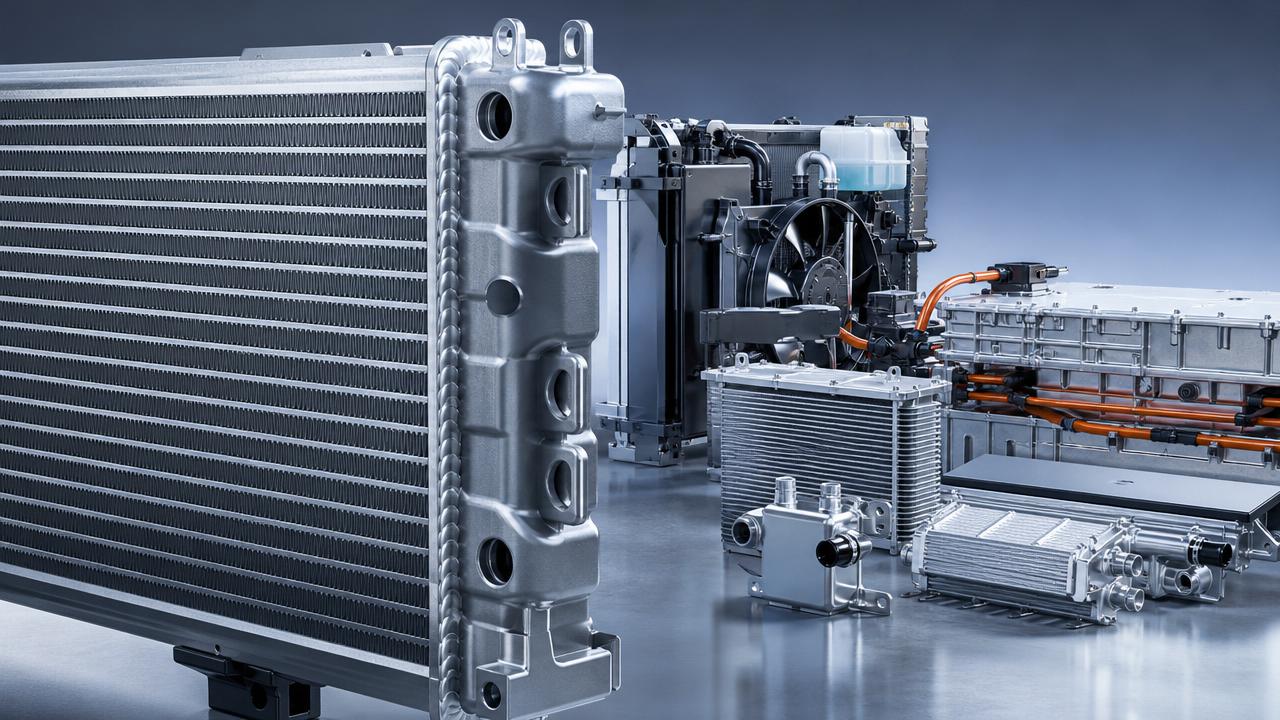
Why radiator core quality often looks fine at first
A radiator core may pass visual inspection, pressure testing, and packaging review, yet still contain weaknesses that emerge much later in service.
That delay is what makes radiator core quality such a costly issue in the auto parts sector.
Early-stage defects are often hidden inside tubes, fins, headers, and brazed joints.
They stay quiet until heat cycles, vibration, coolant chemistry, pressure pulses, and road shock expose them.
When failure appears late, root cause analysis becomes harder, warranty costs rise, and downtime spreads across fleets or service networks.
In cooling systems, a weak radiator core rarely fails at the loading dock.
It usually fails after the unit has already been installed, filled, and placed under real thermal stress.
That is why understanding delayed performance signals matters for durability, safety, and life-cycle cost control.
Scenario background: different operating conditions reveal radiator core quality differently
Not every cooling system exposes radiator core quality at the same speed.
A passenger vehicle in urban traffic stresses the core differently than a heavy truck on gradients or construction machinery in dusty sites.
New energy platforms add another layer, because thermal management requires stable flow behavior and tight dimensional consistency.
In all cases, the radiator core is not judged only by initial leak-free condition.
It is judged by how well it keeps cooling efficiency after repeated expansion, contraction, vibration, and contamination exposure.
Liaocheng Xinde Auto Parts Co., Ltd. has focused on radiators, intercoolers, and heavy-duty cooling components since 2018.
Its growth in water tank radiators and new energy radiator modules reflects how strongly long-term thermal reliability now influences product selection.
Scenario 1: urban stop-and-go driving hides problems until heat cycling builds up
In city use, the radiator core faces frequent temperature swings rather than constant high-speed airflow.
That means small brazing inconsistencies may survive initial operation but weaken over hundreds of heating and cooling cycles.
Common late signals include gradual coolant loss, rising fan activity, and unstable cabin heat behavior.
These symptoms often appear before visible external leakage is noticed.
A radiator core with uneven fin bonding may also lose heat transfer efficiency slowly, making the issue look like a thermostat or fan control problem.
Key judgment points in this scenario
- Check whether performance declines after repeated short trips, not only after long drives.
- Monitor small coolant level drops over time.
- Review brazed seam consistency and tube wall uniformity.
- Compare heat rejection under low airflow conditions.
Scenario 2: highway and heavy-load operation turn small defects into expensive failures
Highway speed and sustained engine load place the radiator core under stronger pressure and thermal demand.
In heavy trucks, long climbs, overloaded transport, and hot climates accelerate fatigue in weak joints.
A core with poor material purity or unstable brazing may hold pressure at first, then crack after vibration and expansion combine.
This is where late-stage radiator core quality problems become most expensive.
The repair cost is no longer limited to the part itself.
It includes towing, labor, coolant loss, missed schedules, overheating risk, and possible engine damage.
A delayed failure can also confuse diagnosis because field conditions seem like the immediate cause, while the actual cause started inside the radiator core.
What often gets missed
Pressure testing alone does not fully predict thermal fatigue life.
A radiator core may meet shipment standards yet still show weak resistance to cyclic load.
That is why durability validation should mirror real operating stress, not just static acceptance checks.
Scenario 3: construction machinery and harsh environments expose contamination-related weakness
Construction machinery radiators face dust, mud, vibration, and irregular cleaning practices.
Under these conditions, radiator core quality depends on both thermal design and structural endurance.
If fin geometry deforms too easily, airflow drops fast after contamination buildup.
If tube joints are weak, vibration shortens service life even when coolant quality is controlled.
Late failure here may appear as chronic overheating during peak work periods, not immediate leakage.
That makes radiator core evaluation a field-performance issue, not just a factory-inspection issue.
Useful checks for harsh-duty use
- Fin strength after cleaning cycles
- Joint stability after vibration exposure
- Airflow retention when the core surface is partially blocked
- Resistance to corrosion from mixed contaminants
Scenario 4: new energy thermal systems demand tighter radiator core consistency
New energy vehicles often have stricter thermal control windows than conventional systems.
Here, radiator core quality affects not only durability but also thermal balance, flow distribution, and system efficiency.
Small dimensional variation can change pressure drop and cooling performance across the module.
That is why hidden quality variation can show up late as reduced range stability, more frequent thermal interventions, or uneven operating temperatures.
For car fitment applications, a high-performance option such as Radiator for AION can fit situations where cooling efficiency, advanced fluid dynamics, and premium thermal materials matter.
The point is not branding alone.
It is matching radiator core design stability to real thermal management demands.
How scenario needs differ when evaluating radiator core quality
Practical adaptation advice for reducing late radiator core failures
A better radiator core decision process starts before installation.
It should connect material review, manufacturing control, and field simulation.
- Use thermal cycle testing, not only room-temperature pressure testing.
- Review alloy quality, tube thickness stability, and fin bonding behavior.
- Request vibration and corrosion validation for harsh-duty applications.
- Match radiator core structure to actual airflow and contamination conditions.
- Track warranty patterns to detect delayed quality trends early.
- Confirm fitment accuracy where module tolerances are tight.
Where replacement or repair is required, products designed for peak cooling performance under demanding workloads deserve closer review.
That principle applies whether the system serves heavy trucks, passenger vehicles, or advanced thermal modules.
Common misjudgments that make radiator core quality problems more expensive
One common mistake is assuming no leak means no defect.
A radiator core can be structurally compromised long before coolant escapes visibly.
Another mistake is treating overheating as a system-control problem first.
Sometimes the real issue is declining heat rejection inside the core itself.
A third mistake is using the same acceptance standard for every operating condition.
Different use cases expose radiator core weakness in different ways and at different speeds.
Ignoring that scenario difference creates false confidence.
Next steps for better long-term cooling reliability
If radiator core quality only gets attention after failure, cost control is already lost.
The better approach is to evaluate delayed-risk factors before parts enter service.
Start with the real scenario.
Define whether the application faces cycling, load, vibration, contamination, or precision thermal requirements.
Then align validation methods to those conditions.
A reliable radiator core protects uptime, reduces traceability disputes, and supports stable equipment performance over the long term.
In modern cooling systems, that is not a minor quality detail.
It is a decisive factor in total operating cost.