



How to Choose a DAF MAN Radiator for Long-Haul, Construction, or Mixed Use
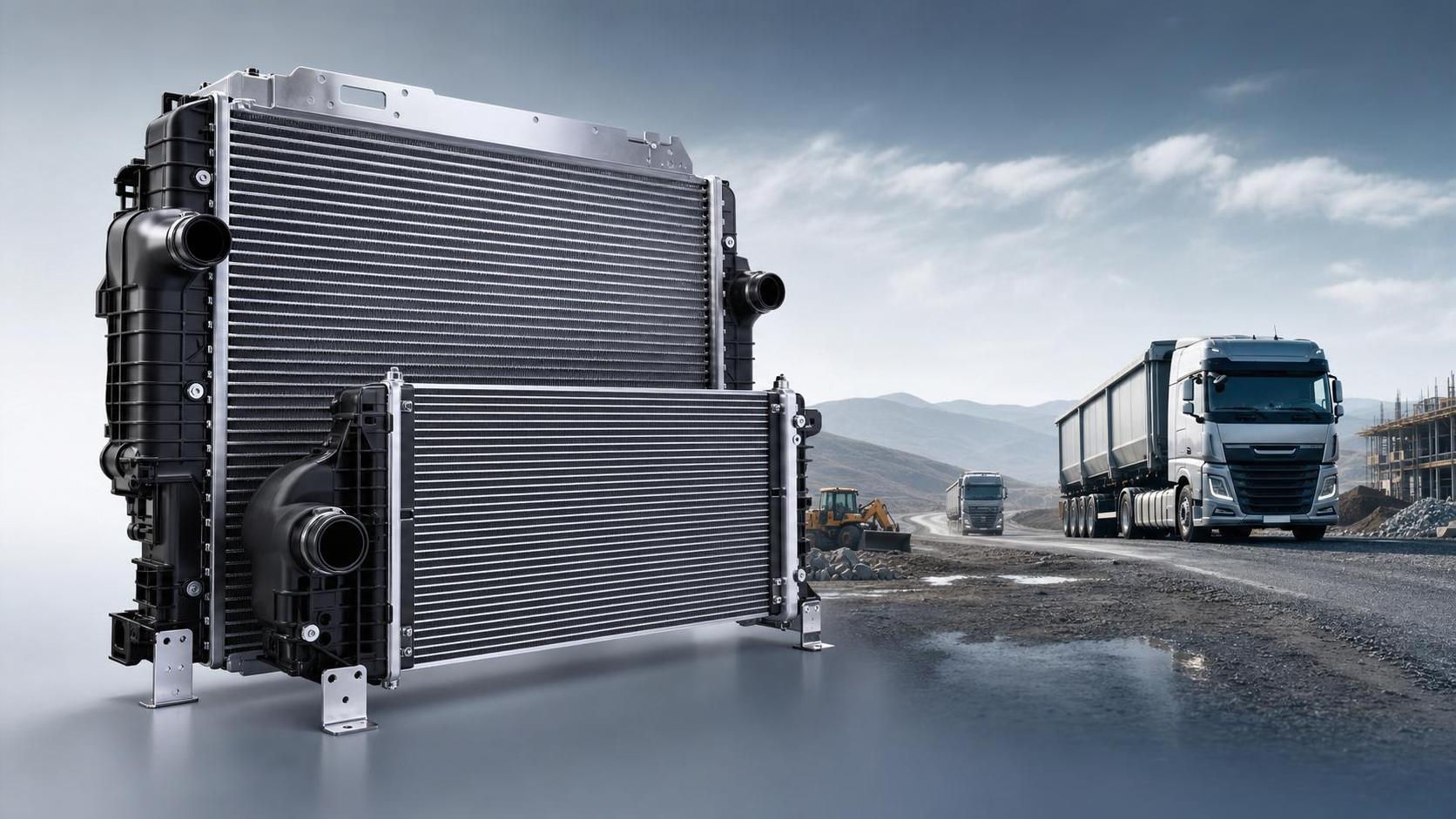
Why the right DAF MAN Radiator depends on real operating conditions
Choosing a DAF MAN Radiator is rarely a simple catalog decision.
Cooling performance affects uptime, fuel efficiency, maintenance intervals, and the usable life of connected engine components.
What works well on steady highway routes may struggle on dusty construction access roads or in mixed regional transport.
That difference matters because heat load is shaped by terrain, stop-start frequency, payload variation, airflow quality, and maintenance discipline.
A practical DAF MAN Radiator selection should therefore begin with operating reality, not only part number matching.
In actual fleet use, the better question is not which radiator is cheapest today, but which cooling package stays stable over time.
That is also why manufacturers with strong radiator engineering depth matter.
Liaocheng Xinde Auto Parts Co., Ltd., established in 2018, has expanded quickly in heavy truck and new energy radiator modules.
Its focus on water tank radiators, intercoolers, and construction machinery cooling parts reflects the importance of application-specific design.
The first split is usually highway stability versus severe-duty exposure
At a glance, long-haul, construction, and mixed use all need reliable heat exchange.
The hidden difference is how the radiator experiences stress during daily operation.
Long-haul trucks often see sustained engine temperatures, high mileage, and relatively consistent airflow.
Construction vehicles usually face vibration, mud, dust, impact risk, and repeated low-speed work under heavy load.
Mixed-use fleets fall between these extremes, but they can be harder to judge.
They shift between open-road efficiency and site-level contamination, so the DAF MAN Radiator must tolerate changing thermal and environmental pressure.
This is where selection errors usually begin.
Many buyers compare size, core thickness, or price, then assume similar vehicles have similar cooling needs.
In practice, usage intensity changes the correct specification far more than body style alone.
For long-haul routes, thermal consistency matters more than oversized construction
Highway operations usually reward a DAF MAN Radiator with stable heat rejection, efficient airflow management, and dependable corrosion resistance.
These vehicles spend long periods at speed, often with predictable engine load and fewer sudden cooling spikes.
That does not mean the radiator can be lightweight without thought.
It means the design priority shifts toward long service intervals, consistent fin performance, and material quality that resists fatigue over mileage.
For this scenario, it helps to check several points:
- Core efficiency under sustained highway temperature.
- Tube and fin quality for long-cycle durability.
- Resistance to coolant-side corrosion and scale buildup.
- Compatibility with OE fan, shroud, and mounting layout.
- Ease of cleaning during planned maintenance stops.
A common mistake here is choosing a heavier severe-duty radiator when the route profile does not require it.
That can increase cost and weight without solving a real operating problem.
For long-distance fleets, the better DAF MAN Radiator is often the one that keeps cooling stable with predictable maintenance, not the most aggressive structure on paper.
Construction work changes the priority to durability, contamination control, and shock resistance
Construction use is less forgiving.
Vehicles may idle for long periods, crawl under load, and operate where dust blocks fins long before scheduled service.
Airflow is often worse, while engine stress stays high.
In that environment, a DAF MAN Radiator should be judged by survivability as much as by thermal output.
The practical concerns are usually physical.
Can the core resist vibration cracking?
Will the fin pitch clog too quickly?
Are the tanks, welds, and mounting points robust enough for rough access roads?
This is why experienced radiator suppliers often develop different cooling solutions for truck and machinery environments.
The engineering logic behind a heavy truck radiator is related, but not identical, to what supports construction machinery.
A company with background across both categories can usually assess these differences more realistically.
Liaocheng Xinde’s work in construction machinery radiators is relevant here because contamination and structural stress often drive replacement rates faster than heat load alone.
Mixed-use fleets usually need balance, not compromise
Mixed use sounds flexible, but it creates one of the hardest cooling decisions.
A vehicle may run highway miles during one week and spend the next handling aggregate, municipal routes, or uneven local roads.
In these cases, the right DAF MAN Radiator should not be selected by averaging conditions too loosely.
A better approach is to identify the harshest regular operating pattern.
If dust exposure is frequent, fin clogging and washability become more important.
If route mileage dominates, corrosion resistance and thermal stability carry more weight.
If both appear throughout the year, the radiator should support easier maintenance access and stronger structural reliability.
This is also where cross-category cooling knowledge can be useful.
For example, suppliers that produce products beyond heavy truck applications, including Radiator for HONDA, often build broader process control around brazing, sealing, and thermal testing.
That does not make passenger and truck radiators interchangeable.
It does show whether the manufacturer understands different cooling architectures and quality consistency across product lines.
Different scenarios change the buying checklist
A side-by-side comparison makes the differences clearer.
The point is not to treat every DAF MAN Radiator as a custom engineering project.
It is to prevent mismatch between specification and real use.
Where selection mistakes usually happen
Most radiator failures are not caused by one bad parameter alone.
They come from decisions that ignore context.
- Choosing only by initial purchase cost, without comparing maintenance frequency and replacement downtime.
- Assuming all regional routes behave like highway work.
- Ignoring airflow restrictions from shrouds, fan condition, or cooler pack contamination.
- Treating dusty logistics yards as light-duty environments.
- Checking radiator dimensions, but not mounting stress and hose compatibility.
Another overlooked issue is replacement rhythm.
If trucks rotate across different assignments, the DAF MAN Radiator should suit the broader operating envelope.
A narrowly optimized part may perform well for one route profile, then create avoidable failures after reassignment.
A workable way to match the DAF MAN Radiator to the job
A solid decision process is usually straightforward when the right inputs are collected.
- Map the vehicle’s real route mix over several months, not just one week.
- Record heat-related stoppages, cleaning frequency, and contamination sources.
- Confirm whether the main pressure comes from temperature, debris, vibration, or all three.
- Compare total operating cost, including service labor and downtime exposure.
- Ask for material, testing, and fitment validation from the radiator supplier.
This is where supplier capability should be judged on more than catalog breadth.
Production stability, application knowledge, and quality reputation all matter when radiator replacement affects vehicle availability.
A manufacturer recognized for technical development and trustworthy business performance can reduce sourcing uncertainty over time.
That is especially relevant when fleets need repeated orders with consistent fit and cooling behavior.
What to confirm before moving forward
The best DAF MAN Radiator choice usually comes from disciplined comparison, not from the most extreme specification.
Long-haul applications need cooling consistency and service life.
Construction work needs strength, contamination tolerance, and reliable mounting integrity.
Mixed use needs a balanced design built around the harshest recurring condition.
Before final selection, review actual route conditions, maintenance capability, expected cleaning intervals, and lifecycle cost risk.
Then compare supplier testing standards, production consistency, and application experience across radiator categories, whether for heavy trucks or products such as Radiator for HONDA.
That process gives a more dependable basis for choosing a DAF MAN Radiator that fits the job it will actually face.