



How to Choose a Condenser: Size, Tube Design, Airflow, and Refrigerant Compatibility
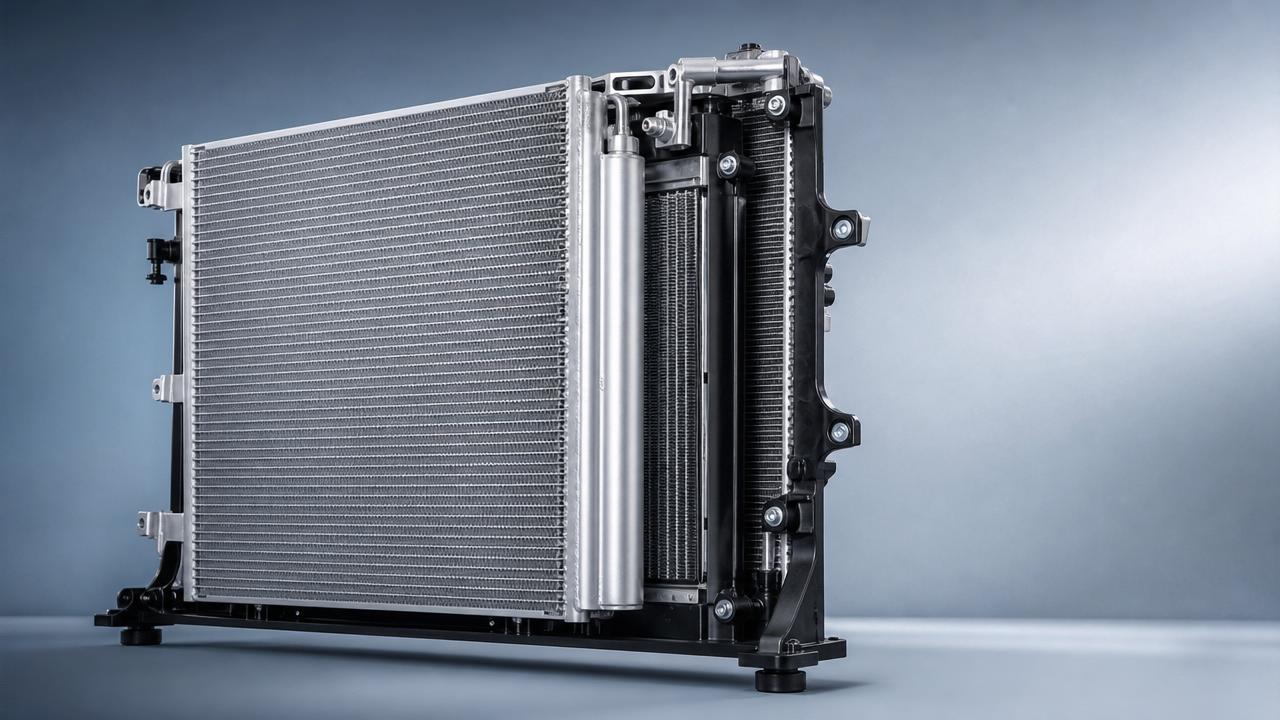
Choosing a Condenser for heavy-duty or new energy cooling systems is rarely a simple matter of matching length, height, and mounting points. Thermal load, package space, airflow behavior, refrigerant type, and service life all shape whether a unit performs well in the field or becomes a weak link in the system. In parts evaluation, a better decision usually comes from reading the Condenser as a working heat exchanger, not just a replaceable component.
Why condenser selection matters in current cooling systems
Cooling modules now operate under tighter packaging limits and broader duty cycles. Trucks, construction equipment, and electrified platforms often face higher ambient temperatures, heavier load swings, and stricter efficiency targets.
That changes the way a Condenser should be assessed. A unit that looks adequate on paper may still create high head pressure, unstable cooling, or premature fatigue when airflow is uneven or refrigerant flow is poorly distributed.
This is especially relevant in the auto parts sector, where the Condenser must fit into a larger thermal architecture that may also include radiators, intercoolers, oil coolers, and integrated fan systems.
Companies with experience across multiple heat exchange products often evaluate these interactions more effectively. Liaocheng Xinde Auto Parts Co., Ltd., established in 2018, has built its business around radiators, intercoolers, construction machinery radiators, and related cooling components for heavy trucks and new energy modules. That background reflects a practical understanding of how one heat exchanger affects the performance of the others.
Start with the real thermal duty, not only the outline size
Core size still matters, but its value lies in heat rejection capacity, not appearance. A larger Condenser usually offers more frontal area and more internal volume, yet bigger is not always better when airflow is restricted or pressure drop rises too much.
The more useful question is whether the core size matches the system load under realistic operating conditions. That includes ambient temperature, compressor output, vehicle speed, fan performance, and expected idle time.
Core size checks that deserve attention
- Frontal area available for direct airflow
- Core thickness relative to fan capacity
- Tube count and refrigerant path length
- Allowable pressure drop on both air and refrigerant sides
- Clearance to surrounding modules and structural members
In practical terms, increasing thickness without improving airflow can reduce effective heat transfer in downstream rows. In tightly stacked modules, a thinner but better-optimized Condenser may outperform a bulkier alternative.
Tube design influences both efficiency and durability
Tube design is one of the most decisive features in Condenser selection. Flat multi-port tubes, internal passage geometry, wall thickness, and brazing quality all affect how refrigerant condenses and how the unit tolerates vibration and thermal cycling.
A well-designed tube layout improves refrigerant distribution across the core. It also helps maintain stable condensing performance when load conditions change quickly, which is common in commercial and off-road applications.
What tube design changes in real use
For demanding duty cycles, the best Condenser is often the one with balanced performance rather than the most aggressive fin density or the highest theoretical capacity. Over-optimization in one area can create weakness elsewhere.
Airflow is often the hidden selection variable
Many Condenser problems are actually airflow problems. Even a high-quality core cannot reject heat efficiently if incoming air is blocked, recirculated, or diverted by poor module arrangement.
This becomes critical when the Condenser sits in front of a radiator or shares space with an intercooler. The air-side resistance of each component changes the performance of the entire stack.
In some evaluations, it helps to compare Condenser airflow behavior with adjacent products already familiar in the cooling package, such as Intercooler for Mercedes-Benz -(1). That comparison can clarify how fin density, row arrangement, and pressure loss interact across the module.
Common airflow-related risks
- Dead zones caused by shrouds, brackets, or grille geometry
- Fan mismatch at idle or low-speed operation
- Excessive fin density that raises air-side resistance
- Heat soak from nearby components in confined compartments
- Dust, mud, or debris exposure in construction machinery environments
A sound review therefore includes the installed environment, not just the standalone Condenser specification sheet.
Refrigerant compatibility is more than a materials checkbox
Refrigerant compatibility should be checked at both the chemical and operating-pressure levels. Different refrigerants bring different demands for seals, lubricants, tube strength, cleanliness, and service procedures.
A Condenser designed around one refrigerant may not deliver the same reliability or pressure margin with another. This is especially important when platforms move between legacy and newer refrigerant strategies.
Points worth confirming early
- Rated working pressure and burst pressure
- Compatibility of aluminum, coatings, seals, and joints
- Oil and refrigerant cleanliness requirements
- Port design and service connection standards
- Implications for leak testing and maintenance routines
If the application includes long operating hours, high vibration, or elevated head pressure, compatibility should be evaluated together with durability data, not in isolation.
How to compare condenser options in a practical way
A strong comparison method usually combines drawing review, thermal assumptions, manufacturing quality, and expected field conditions. Looking at only one dimension can hide important trade-offs.
Supplier capability also matters. Rapidly growing heat exchanger manufacturers with experience in global supply often provide more reliable documentation, broader test support, and better consistency across batches.
That is one reason industry buyers often look beyond a single Condenser drawing and review the full product background, including related radiator and intercooler programs.
Useful next steps before finalizing a choice
Before approving a Condenser, it helps to organize the decision around the operating envelope. Record ambient range, airflow condition, refrigerant type, installation limits, contamination exposure, and expected service interval.
Then compare candidate designs against the same checklist. If two options appear similar, focus on tube design, air-side resistance, and refrigerant-side pressure behavior rather than nominal size alone.
For projects involving integrated cooling packages, reviewing adjacent components can also sharpen the judgment. A reference such as Intercooler for Mercedes-Benz -(1) may be useful when assessing how the full module handles airflow and packaging balance.
A well-chosen Condenser is usually the result of disciplined comparison, not quick substitution. When the key parameters are mapped clearly, the next decision becomes easier: validate the thermal assumptions, confirm compatibility, and narrow the shortlist to the designs that fit the real duty cycle.