



How condenser fin damage can reduce air conditioning performance
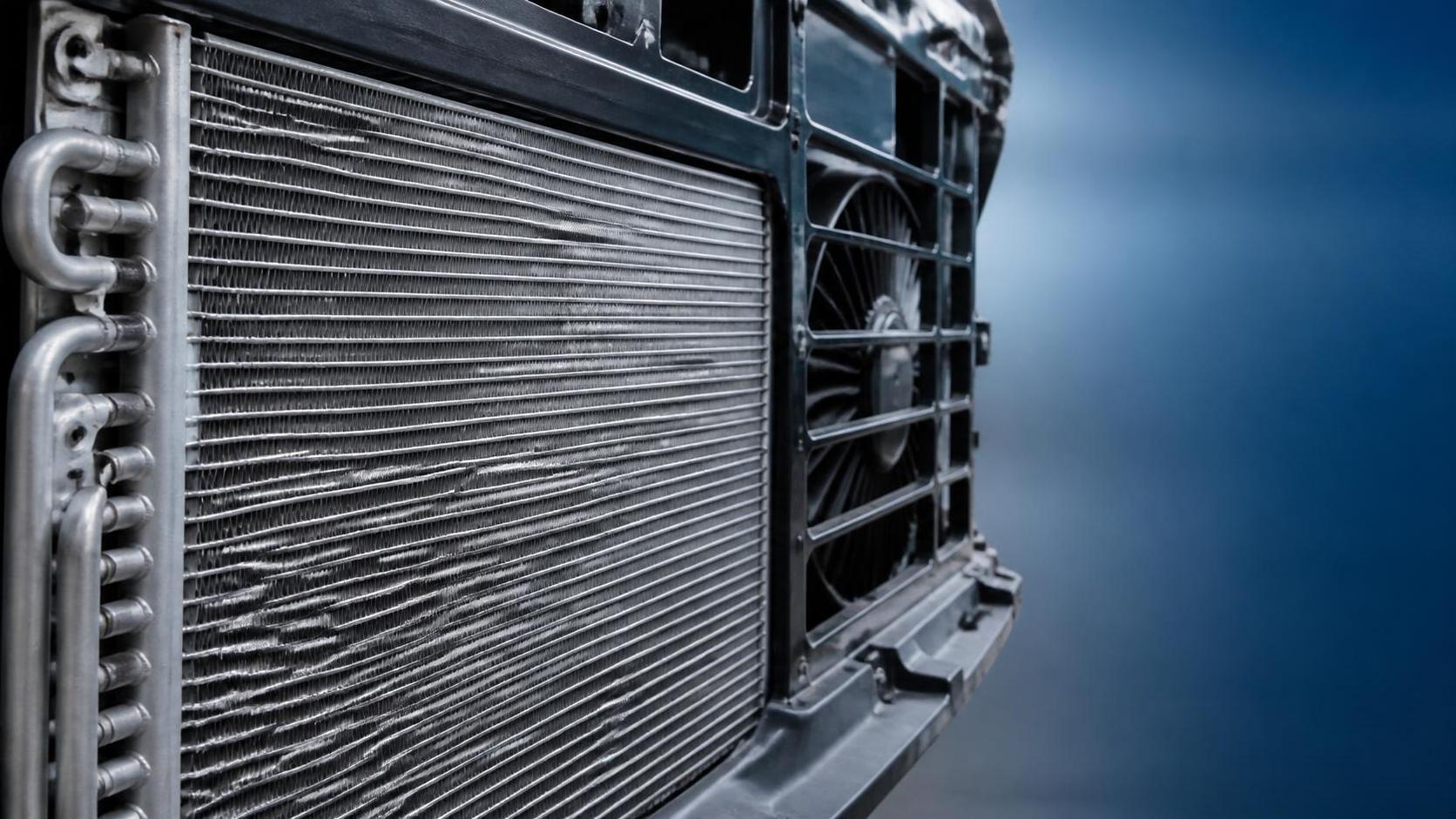
Why fin condition matters more than it appears
An air conditioning system can have the correct refrigerant charge, a functioning compressor, and no obvious leaks, yet still deliver weak cooling. In many cases, the restriction is visible from the front of the vehicle: damaged condenser fins.
The condenser is responsible for releasing heat from the refrigerant after it leaves the compressor. Its tubes carry hot, high-pressure refrigerant, while the thin fins create a large surface area for transferring that heat into passing air. When the fins are bent, packed with debris, corroded, or separated from the tubes, the condenser may still look intact at a glance. Its ability to reject heat, however, can fall enough to affect cabin comfort, engine load, fuel use, and operating reliability.
For operators of passenger vehicles, heavy trucks, agricultural machinery, construction equipment, and fleet assets, this is not merely a cosmetic issue. Condenser fin damage changes airflow and heat exchange at the same time. The result is often a gradual decline rather than a sudden failure, which makes the problem easy to postpone until high ambient temperatures or heavy-duty work expose it.
The basic mechanism: less air and less heat transfer
Condenser fins are deliberately thin and closely spaced. This design increases the effective heat-transfer area without making the assembly excessively large. The trade-off is vulnerability. Gravel, insects, crop residue, mud, road salt, pressure-washer misuse, and routine handling can all distort the fin pack.
Once the spacing between fins is reduced or blocked, air cannot move evenly through the core. Instead of crossing the full surface of the condenser, airflow is redirected around restricted areas. Heat remains in the refrigerant longer, condensing efficiency drops, and high-side system pressure can rise.
It is useful to distinguish between two forms of loss:
- Airflow loss: Bent fins, dirt, or debris reduce the volume of air moving through the condenser.
- Surface-contact loss: Flattened or corroded fins have less effective contact with passing air and may no longer transfer heat efficiently from the tubes.
A small number of damaged fins at one edge may have little practical effect. A broad blocked section, especially in the area directly exposed to fan airflow, can have a much larger impact than its visual appearance suggests. Damage concentrated in one section also creates uneven temperature distribution across the core, which can make system behavior less predictable under load.
What operators usually notice first
Fin damage rarely announces itself as “condenser damage.” The symptoms often resemble other air conditioning faults, including low refrigerant charge, a weak fan, a dirty cabin filter, an overworked compressor, or a blend-door issue. That is why inspection needs to be tied to operating conditions rather than based on one symptom alone.
Common field signs include:
- Cabin air is reasonably cool while driving at speed but becomes warm in traffic, at idle, or during loading operations.
- Cooling performance declines during high ambient temperatures, on long climbs, or when the machine is working at high hydraulic or engine load.
- The compressor cycles more frequently than expected, or appears to run for extended periods without restoring comfortable outlet temperatures.
- Cooling is inconsistent between morning and afternoon operation despite no apparent refrigerant leak.
- The engine cooling fan runs more often because the front heat-exchanger stack is retaining heat.
- High-side pressure appears elevated during diagnosis, although the exact acceptable reading depends on refrigerant type, ambient temperature, fan speed, and the vehicle manufacturer’s procedure.
The “cool while moving, weak while stationary” pattern deserves particular attention. Vehicle speed can force air through a partially restricted condenser, masking the issue. At idle, the system depends far more on fan performance and clear airflow paths. If blocked fins are combined with a weak fan clutch, failed electric fan stage, loose shroud, or debris between heat exchangers, the cooling loss becomes much more noticeable.
Damage is not always on the visible face
A front-face inspection is necessary, but it is not always sufficient. In equipment with a stacked cooling pack, the condenser may sit ahead of or behind the radiator, charge-air cooler, oil cooler, or hydraulic cooler. Dust and organic material can accumulate between cores, where it cannot be assessed accurately from the grille side.
This is especially relevant for agricultural and construction equipment. Chaff, seed fluff, soil, leaves, and oily dust can form a dense mat across the cooling package. Heavy trucks and road vehicles are more likely to encounter insects, road film, salt deposits, plastic fragments, and stone impact. The contamination pattern often reveals the operating environment, but it also helps determine whether cleaning is enough or whether the fin pack has been permanently deformed.
An operator should inspect for more than obvious crushed areas. Look for fin sections that remain wet after surrounding areas dry, unusual discoloration, white or green corrosion residue, rub marks from loose guards, fins pushed against adjacent cores, and areas where cleaning has stripped or folded the metal. These signs can indicate a longer-term airflow or service-access problem rather than a one-time impact event.
Why “just wash it” can make the condition worse
Cleaning is often the correct first response, but the method matters. A high-pressure washer applied at close range can fold fins over more tightly than dirt ever did. Excessive pressure, an incorrect spray angle, or cleaning from only the front can drive debris deeper into the core stack.
For most condenser and cooling-pack inspections, the practical approach is to remove loose material first, then use controlled low-pressure water or air in the direction that reverses normal contamination flow where access permits. The equipment manufacturer’s cleaning guidance should take priority, especially when electronic sensors, coatings, or closely packed coolers are involved.
Operators should also be cautious with aggressive chemical cleaners. Products intended for some coil applications may not be appropriate for automotive aluminum components, brazed joints, coatings, seals, or nearby painted surfaces. When a cleaner is used, compatibility with the vehicle or equipment cooling system should be confirmed rather than assumed.
A fin comb can sometimes restore airflow through localized bent sections. It is not a universal repair. If the fin material is brittle from corrosion, repeatedly flattened, detached from the tubes, or distorted over a large percentage of the core, combing may provide only a temporary visual improvement. The goal is not to make the face look uniform; it is to restore meaningful airflow without creating tube damage.
Separate a fin problem from other AC faults
A condenser with damaged fins can coexist with other faults. Replacing components without identifying the full cause can lead to repeat downtime. Before deciding on repair or replacement, maintenance teams should consider a basic diagnostic sequence.
Pressure readings should be interpreted carefully. There is no single “normal” high-side pressure that applies across all equipment. Refrigerant type, ambient temperature, condenser airflow, compressor capacity, control strategy, and measurement method all matter. Technicians working on sealed systems should follow the OEM procedure and applicable refrigerant-handling requirements.
It is also a mistake to assume that a new receiver-drier, expansion device, or compressor will solve a condenser airflow problem. These parts may be relevant in a complete repair, particularly after a system has been opened or contaminated, but they do not compensate for a restricted heat-exchange surface.
When repair is reasonable and when replacement is the better decision
The decision should be based on damage distribution, not simply on whether fins are bent. Cleaning and localized straightening may be reasonable when the core has no leaks, the damage is limited, airflow can be restored, and the equipment is operating normally after service.
Replacement becomes more credible when a large portion of the fin field is crushed, corrosion has weakened the aluminum, the core repeatedly plugs because of inaccessible debris, or the condenser has suffered tube damage. It should also be considered when the system is already being disassembled for collision repair, radiator work, fan replacement, or major front-end service. Combining necessary work can reduce repeated labor and downtime.
For fleet managers, the relevant calculation is broader than component cost. A marginal condenser can increase driver complaints, reduce defogging performance, extend idle time, place more demand on the compressor and fan system, and take a vehicle out of service during the hottest operating period. On agricultural or construction equipment, inadequate climate control can also affect operator endurance and window clearing during dusty or humid work.
The right threshold will differ by application. A lightly used vehicle in a mild climate may tolerate more fin damage than a truck operating in stop-and-go urban heat, a tractor working in crop residue, or a machine with a tightly packaged multi-core cooling stack.
Procurement questions that reduce repeat failures
When replacement is necessary, fitment should be treated as an operational requirement, not a catalog exercise. An automotive condenser supplier should be able to support identification by OE number, vehicle or equipment configuration, refrigerant connection type, mounting points, core dimensions, and, where relevant, fan or receiver-drier arrangement.
Buyers should verify the following before approving a replacement:
- Whether the condenser matches the exact model year, engine or chassis configuration, and air conditioning option.
- Connection geometry and port type, since a near-match can create installation or sealing problems.
- Mounting brackets, locating tabs, sensor provisions, and clearance to adjacent coolers.
- Core thickness and airflow characteristics where the cooling package is tightly engineered.
- Packaging protection, because unprotected fins can be damaged before installation.
- Availability of related service items, including seals, driers, brackets, or compatible cooling-pack components where required.
Cross-reference work is particularly important in mixed fleets and off-highway equipment, where a component may look similar but differ in hose routing, mounting, or core depth. A low purchase price is not a saving if the unit needs modification, cannot seal correctly, or creates insufficient clearance for vibration and thermal movement.
Cooling-system components should also be considered as a set. For example, a repair involving the radiator or front cooling package may prompt a review of related replacement parts such as XD82009 RADIATOR FOR JHON DEERE 5403/5705, identified as model DQ47659 with a listed core size of 456*528. That does not make a radiator interchangeable with a condenser; it highlights the need to verify each component’s application, dimensions, mounting arrangement, and relationship to the complete cooling stack before ordering.
Prevention is mostly about access and routine habits
Operators cannot prevent every stone strike or corrosion event, but many cases of progressive fin damage are manageable. Regular cleaning intervals should reflect the work environment rather than a fixed calendar. Equipment used around crop residue, dusty haul roads, demolition sites, or coastal roads may need more frequent inspection than highway-operated vehicles.
Protective screens can help in some applications, but they need their own maintenance. A screen that captures debris without being cleaned becomes an additional airflow restriction. Similarly, grille guards and aftermarket front accessories should be checked to ensure they do not alter airflow paths or make condenser access impractical.
Service practices deserve equal attention. Technicians should avoid leaning tools or parts against exposed fins, secure loose shrouds and guards, and inspect the cooling pack after repairs that require front-end removal. Shipping and storage controls matter as well. A replacement component can arrive with flattened corners or damaged fins, and installing it without inspection transfers that problem directly into the vehicle.
The practical operating judgment
Condenser fin damage should be treated as a performance issue when it affects airflow through a meaningful portion of the core, coincides with poor cooling under load, or appears alongside fan and cooling-package problems. It should not be dismissed simply because the system still produces cold air on a mild day.
At the same time, not every bent fin justifies immediate replacement. The useful question is whether the condenser can still reject heat consistently under the conditions the machine or vehicle actually faces. A disciplined inspection, correct cleaning method, confirmation of fan performance, and accurate fitment review will usually produce a better decision than replacing air conditioning parts based on symptoms alone.