



How Heavy Truck Cooling System Design Affects Uptime and Fuel Efficiency
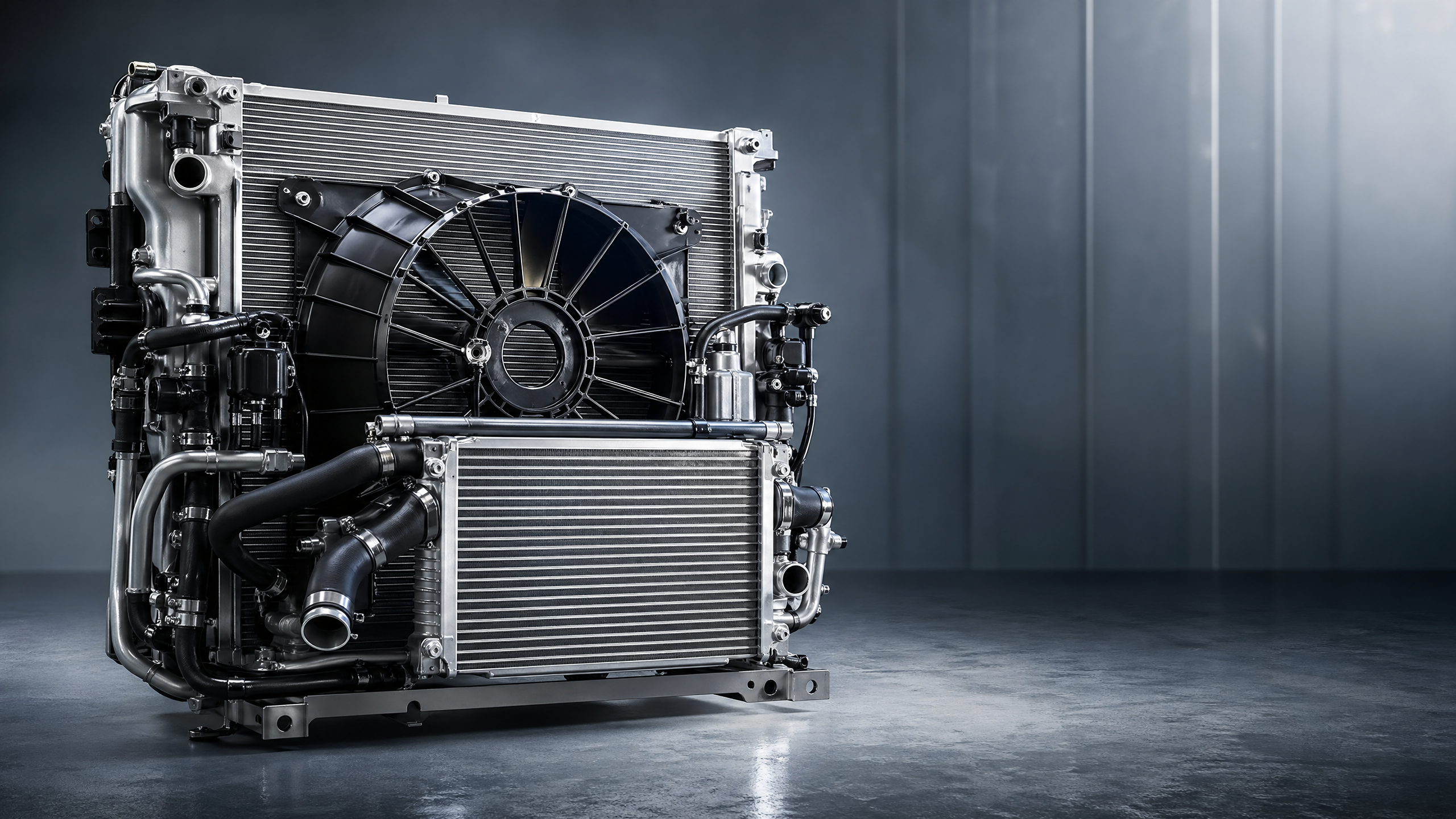
A well-engineered heavy truck cooling system does more than manage heat—it directly influences vehicle uptime, fuel efficiency, and long-term operating costs. For business decision-makers in the parts industry, understanding how radiator and intercooler design affects performance is essential when selecting reliable components. This article explores the key design factors that help heavy trucks run cooler, last longer, and perform more efficiently under demanding conditions.
Why Decision-Makers Should Evaluate the Heavy Truck Cooling System with a Checklist
For fleet operators, distributors, and procurement managers, cooling performance is rarely just an engineering topic. It is a business continuity issue. A heavy truck cooling system that is undersized, poorly matched, or inconsistent in manufacturing quality can increase downtime, raise fuel burn, and shorten service intervals. In long-haul, construction, and regional distribution operations, even a 2% to 5% drop in thermal efficiency can lead to visible cost pressure over a 12- to 24-month operating cycle.
Using a checklist-based approach helps decision-makers avoid buying on price alone. It creates a structured way to compare radiator core design, intercooler airflow resistance, material quality, fitment accuracy, and durability under vibration. In the parts industry, this matters because the cooling pack is connected not only to engine protection, but also to combustion efficiency, charge-air temperature control, lubricant stability, and aftertreatment reliability.
This is especially relevant when sourcing from manufacturers with broad development capability. Liaocheng Xinde Auto Parts Co., Ltd., established in 2018 with 5 million RMB registered capital and 50 million RMB total investment, focuses on the research, production, and global sales of water tank radiators, intercoolers, construction machinery radiators, and related thermal components for heavy trucks and new energy radiator modules. For buyers, that kind of manufacturing focus is useful only when it is translated into practical evaluation points.
Start with These Business Questions
- Does the heavy truck cooling system maintain stable temperatures during high-load operation, not only during bench testing but during 6 to 10 hours of real-world duty?
- Will the radiator and intercooler design support fuel economy targets by reducing thermal stress and preserving efficient combustion conditions?
- Can the supplier deliver consistent fitment, repeatable brazing quality, and practical lead times for replacement demand or OE-support projects?
- What hidden risks, such as clogging sensitivity, weak joints, or poor fin durability, could affect uptime in dusty or high-vibration environments?
When these questions are answered early, sourcing teams can reduce the risk of emergency replacements, warranty disputes, and avoidable fuel losses. That is why a structured review of the heavy truck cooling system should be part of any serious parts selection process.
Core Checklist: What to Inspect First in Heavy Truck Cooling System Design
If your goal is to protect uptime and fuel efficiency, begin with the design factors that directly affect heat rejection and airflow management. In most heavy truck applications, the main performance variables can be narrowed to core structure, airflow path, pressure drop, material durability, and vehicle-specific fitment. The checklist below is a practical starting point for technical and commercial review.
Primary Technical Checks
- Confirm radiator core thickness and fin density are matched to the truck’s thermal load. A thicker core is not always better if it increases airflow restriction beyond the fan system’s effective range.
- Check intercooler pressure drop. Lower intake temperature is valuable, but excessive restriction can reduce engine breathing and offset gains in combustion efficiency.
- Review tube and fin material consistency. Aluminum alloy selection, corrosion resistance, and brazing quality all affect service life, especially over 100,000 km to 300,000 km duty intervals.
- Inspect tank structure and mounting design. Weak mounting points often fail under vibration, shock loads, and uneven road conditions common in mining, construction, and heavy haul routes.
- Verify fitment tolerance. A heavy truck cooling system should align with the fan shroud, piping, brackets, and surrounding modules without forcing installation or causing airflow bypass.
Before comparing suppliers, it helps to translate design points into purchasing criteria. The following table can be used as a screening tool during quotation review, sample evaluation, or supplier development.
A good screening result is not about selecting the most aggressive thermal design on paper. It is about finding the heavy truck cooling system that balances heat exchange, airflow efficiency, durability, and repeatable production quality. In many cases, a well-matched medium-resistance design performs better over 18 months of field use than a high-density core that clogs faster in dusty service.
A Commonly Overlooked Point
Decision-makers often focus on radiator cooling capacity while underestimating intercooler influence. Charge-air cooling affects intake density, combustion stability, and engine response. In practical terms, a poorly designed intercooler can contribute to higher exhaust temperatures and incremental fuel penalties, especially during repeated hill climbs or stop-start duty cycles above 30°C ambient temperature.
How Cooling Design Changes Uptime and Fuel Efficiency in Real Operations
A heavy truck cooling system affects uptime through prevention. The better the thermal control, the lower the probability of roadside overheating, derate events, hose stress, coolant degradation, and unplanned workshop visits. For fleets running fixed routes, avoiding even one unscheduled stop per vehicle per quarter can improve utilization more than many low-cost parts savings achieved at the time of purchase.
Fuel efficiency is influenced in several indirect but measurable ways. Stable coolant and charge-air temperatures help the engine operate closer to its intended combustion range. At the same time, balanced airflow resistance reduces unnecessary fan load. In heavy-duty applications, small changes in fan engagement frequency, thermal recovery time, or intake cooling stability can compound over 50,000 km to 120,000 km annual usage.
This is why smart buyers compare system behavior, not just component dimensions. Two radiators may look similar externally, yet differ in fin geometry, internal flow path, and brazing consistency. Those differences determine whether the heavy truck cooling system remains efficient after months of vibration, mud exposure, and repeated thermal cycling.
Operational Impact Checklist
- Track how quickly operating temperature recovers after steep climbs, high payload segments, or urban stop-start traffic.
- Review whether fan operation becomes more frequent than expected, which may indicate airflow restriction or declining heat transfer.
- Monitor pressure integrity over time, especially around tanks, seams, and vibration-sensitive connection zones.
- Assess cleaning interval sensitivity in dusty service. A design that requires cleaning every 2 weeks instead of every 6 to 8 weeks may add hidden maintenance cost.
In thermal management discussions, new energy applications are increasingly relevant as well. For example, in battery electric or hybrid platforms, radiator modules support battery packs, drive motors, and power electronics rather than only internal combustion engines. For buyers exploring wider thermal component sourcing, Radiator for BYD is an example of a cooling product developed for new energy vehicles, with design priorities centered on efficient heat exchange and application-specific fitment.
The lesson is similar across powertrain types: cooling design is a system-level cost lever. Whether for diesel heavy trucks or electrified vehicle platforms, thermal management quality influences reliability, efficiency, and safety far beyond the component’s unit price.
Scenario-Based Selection Guide: What to Prioritize by Application
Not every heavy truck cooling system should be judged by the same priorities. Route profile, climate, load factor, and maintenance access all change what “best design” means. A procurement strategy that works for highway tractors may perform poorly in construction or mining service. The practical approach is to define selection priorities by operating scenario first.
For example, long-haul trucks often benefit most from stable airflow performance, fuel-conscious fan load, and long service intervals. Construction machinery and severe-duty trucks may place greater value on clogging resistance, stronger tanks, and reinforced mounting areas. Urban fleet vehicles can be more sensitive to repetitive thermal cycling and frequent stop-start airflow variation.
The table below helps compare cooling priorities across common use cases, giving purchasing teams a clearer way to align specifications with operating conditions.
This comparison shows why thermal component sourcing cannot rely on one universal specification sheet. A decision-maker should match the heavy truck cooling system to the real operating profile, including ambient temperature range, route dust level, payload frequency, and maintenance interval target. In practice, those four variables often determine 80% of field performance outcomes.
Selection Notes for Buyers
- Request application details early, including engine platform, horsepower band, operating region, and average daily runtime.
- If your portfolio includes both diesel and electrified vehicles, ask whether the supplier also supports integrated thermal modules for new energy programs.
- Prioritize sample validation where possible, particularly for aftermarket distribution and replacement projects with multiple chassis variants.
Common Oversights That Reduce Cooling Performance After Installation
Even a strong heavy truck cooling system can underperform if important details are missed during sourcing or installation. These issues are often responsible for complaints that are initially blamed on the radiator or intercooler alone. In reality, the root cause may be system mismatch, poor installation conditions, or an application environment that was not properly considered.
Risk Reminders for Procurement and Technical Teams
- Ignoring fan shroud and surrounding airflow management. Even a well-built core can lose efficiency if bypass airflow becomes significant.
- Treating all aluminum cores as equal. Alloy consistency, fin bonding quality, and tube design can produce very different durability outcomes.
- Overlooking operating contamination. In some construction or quarry applications, cleaning frequency may need to be planned weekly, not monthly.
- Failing to confirm exact application references and model alignment before order release, especially when multiple design revisions exist.
One more oversight is treating new energy cooling modules as interchangeable with conventional radiator logic. Products such as a BYD-focused thermal solution for battery packs, drive motors, and power electronics require exact fit and controlled heat exchange behavior. That is why many buyers look for products engineered to meet rigorous requirements and designed for application-specific installation rather than generic substitution.
A Practical Red-Flag Standard
If a supplier cannot clearly explain core configuration, material route, leak-testing practice, and fitment control, the risk level increases. For fleet and distribution businesses, unclear technical communication often leads to longer troubleshooting cycles, delayed claims handling, and higher replacement complexity during the first 3 to 6 months after installation.
Buyers should also remember that the lowest price component can become the highest total-cost choice when it triggers repeated labor charges, idle equipment, or fuel penalties. In heavy truck thermal parts, stability and consistency usually have greater financial value than marginal initial savings.
Execution Guide: What to Prepare Before Requesting Quotation or Technical Support
If your company is evaluating a heavy truck cooling system supplier, the most efficient next step is to prepare a short but complete technical brief. This improves quotation accuracy, speeds sample selection, and reduces the chance of mismatch. In most projects, better input data can shorten the comparison cycle by 1 to 2 weeks.
Information to Gather First
- Vehicle or equipment model, engine platform, and if available, OE reference number or current component drawing.
- Operating environment, including ambient temperature range, dust exposure level, and average load pattern.
- Expected order type, such as aftermarket distribution, replacement demand, or project-based development support.
- Commercial expectations covering sample timing, production lead time, packaging needs, and volume range.
For companies seeking a manufacturing partner, supplier capability should also be reviewed in context. Liaocheng Xinde Auto Parts Co., Ltd. focuses on radiators, intercoolers, construction machinery radiators, and related thermal components for heavy trucks and new energy applications. That specialization matters when buyers need support on both conventional heavy-duty cooling and newer thermal management requirements.
If your team is also assessing thermal solutions for electrified fleets or support vehicles, Radiator for BYD may be relevant for discussions around new energy vehicle applications, especially where efficient cooling for battery packs, drive motors, and power electronics is part of the sourcing scope.
Why Choose Us
For business decision-makers in the parts industry, the right supplier should help you reduce uncertainty, not add to it. We understand that choosing a heavy truck cooling system is about uptime, fuel efficiency, fitment confidence, and supply reliability. Our business is built around thermal components, including water tank radiators, intercoolers, construction machinery radiators, and new energy radiator modules, with attention to practical application needs across global markets.
If you are comparing options, contact us to discuss parameter confirmation, product selection, drawing review, sample support, estimated delivery cycle, custom development, packaging requirements, and quotation details. A focused technical discussion at the start can help you identify the right cooling solution faster and reduce avoidable risk in your procurement process.