



Heavy Truck Cooling System Failures That Start With Small Maintenance Gaps
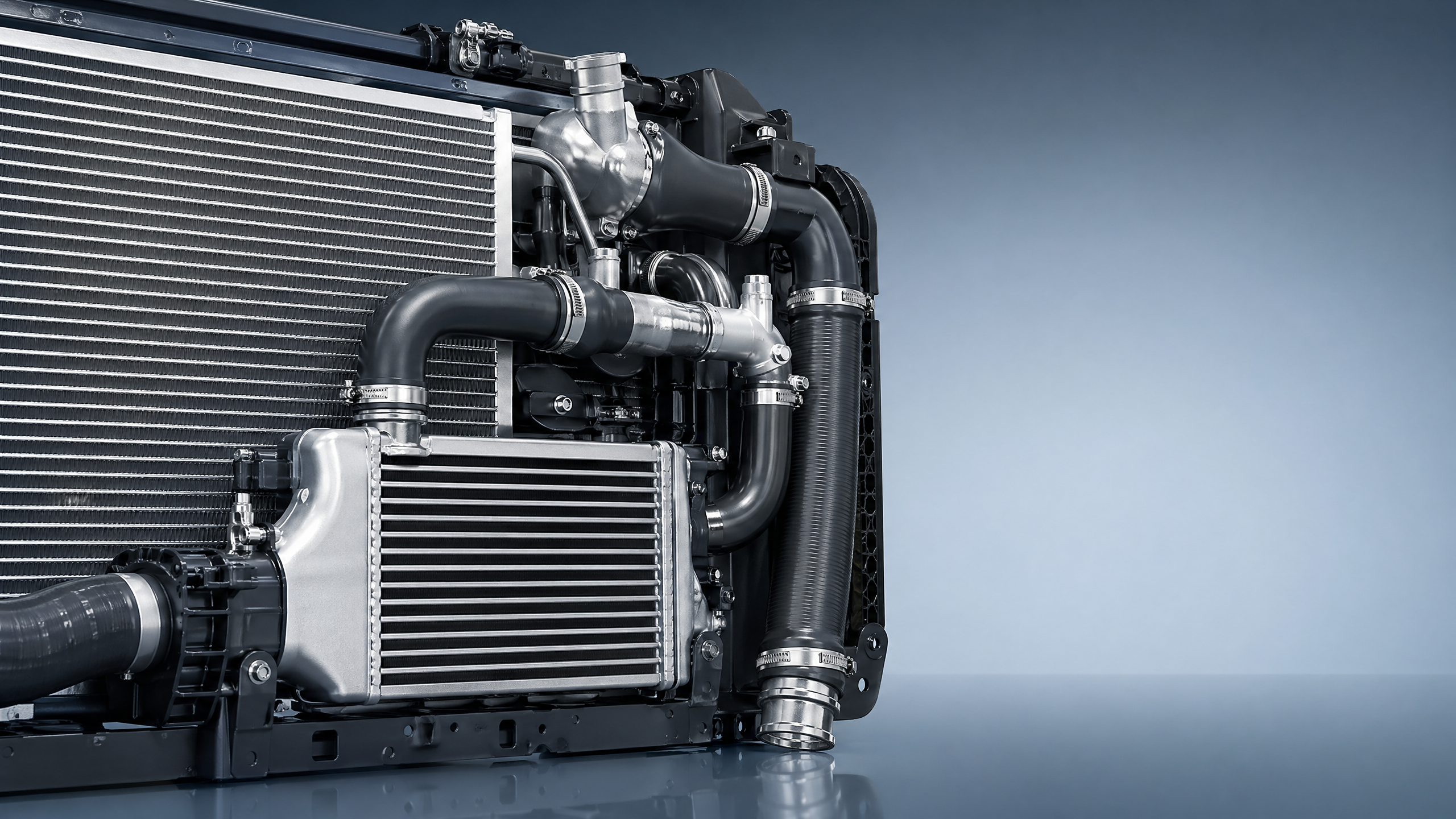
Many heavy truck cooling system failures do not begin with a major breakdown, but with small maintenance gaps that go unnoticed during routine service. For aftermarket maintenance teams, identifying early warning signs in radiators, intercoolers, and related components is critical to preventing overheating, downtime, and costly repairs. This article explores how minor neglect can trigger major cooling issues and what practical steps can help stop them early.
Why a checklist approach works better for heavy truck cooling system diagnosis
For aftermarket service personnel, the biggest challenge is not understanding what a heavy truck cooling system does. The real challenge is deciding what to inspect first when the truck still seems to be running normally. A checklist approach helps teams catch low-visibility issues such as coolant loss of 3% to 5%, soft hose walls, partial fin blockage, or clamp loosening before those small defects grow into overheating events.
Heavy truck cooling system faults often build in stages. A radiator with 15% external blockage may still pass basic visual inspection. An intercooler with minor vibration stress may not leak during a cold engine check. A thermostat that opens late by a small margin can remain unnoticed for weeks. These maintenance gaps matter because fleet vehicles commonly run long-distance, high-load cycles for 8 to 12 hours per shift, leaving very little tolerance for thermal instability.
A structured inspection routine also improves communication between workshop teams, parts buyers, and fleet operators. Instead of reporting “cooling issue,” technicians can specify whether the problem comes from airflow restriction, internal corrosion, coolant contamination, pressure loss, fan performance, or charge air heat rejection. This level of clarity shortens repair decisions and helps avoid replacing the wrong parts.
What should be confirmed before deeper disassembly
- Check whether overheating occurs at idle, under load, on gradients, or in stop-start delivery cycles.
- Verify coolant level changes over the last 7 to 30 days rather than relying on one-time observation.
- Inspect the radiator face, intercooler face, and fan shroud area for dust, mud, insects, oil film, or bent fins.
- Confirm whether the truck recently had hose replacement, coolant refill, engine repair, or front-end collision work.
When teams follow these first-step checks, they reduce wasted labor. In many workshop cases, the heavy truck cooling system problem is not a failed core component but a combination of small defects: poor flushing, mixed coolant chemistry, trapped air, or an underperforming cap that cannot hold pressure within the expected operating range.
Core inspection checklist: the small maintenance gaps that start big failures
The most effective way to protect a heavy truck cooling system is to prioritize inspection points by failure frequency and thermal impact. Not every issue has the same urgency. A dusty core may reduce cooling efficiency gradually, while pressure loss can escalate temperature spikes within a single route. The table below helps maintenance teams sort common small gaps by symptom, risk, and action priority.
The key lesson is that many cooling failures are layered. A truck may show only a 5°C to 8°C temperature rise at first, but once airflow restriction combines with pressure weakness and coolant degradation, the heavy truck cooling system can move quickly from manageable heat stress to repeated roadside downtime.
High-priority checks during routine service windows
- Inspect the radiator cap and system pressure behavior every major service interval, especially after coolant refill or overheating history.
- Clean radiator and intercooler surfaces at intervals matched to route conditions; dusty quarry or construction routes may need much shorter cycles than highway fleets.
- Check hose elasticity and clamp security every 10,000 to 20,000 km in demanding applications.
- Confirm fan clutch or electric fan response under actual operating temperature rather than only during cold inspection.
Parts-related clues that should not be ignored
Aftermarket teams should pay attention to part fit, material quality, and thermal consistency. A replacement radiator or intercooler that physically installs but does not match core density, tank strength, or flow path expectations can create hidden performance loss. In thermal management, dimensional fit alone is never enough. Even a correctly mounted unit may underperform if the airflow path or coolant circulation profile differs from the original requirement.
This is why experienced buyers often compare OE references, application range, mounting points, and warranty terms before ordering replacement components. For mixed fleets that include passenger and commercial platforms, some workshops also evaluate cross-application thermal parts such as Radiator for Benz, especially when confirming OE NO. 2025005203 / 202 500 52 03, CE-related compliance expectations, 1-year warranty coverage, and whether thermal management performance meets practical service needs.
How failures differ by operating scenario and component type
A heavy truck cooling system does not fail the same way in every operating environment. Long-haul highway vehicles, urban stop-start trucks, construction machinery, and mixed-load commercial vehicles all stress thermal components differently. Maintenance planning should reflect actual duty cycle, average ambient temperature, contamination exposure, and engine load patterns rather than using one generic service rule.
For example, highway trucks often reveal internal coolant flow weakness during extended climbs or summer cruising at high gross weight. Urban distribution vehicles may show fan control, idle heat soak, and repeated short-cycle stress. Construction environments are more likely to cause external fin blockage and vibration-related cracking. In each case, the heavy truck cooling system sends different early signals, so technicians need scenario-based judgment.
Component type matters as well. Radiators mainly control engine coolant heat rejection. Intercoolers support intake air temperature reduction and influence combustion efficiency under load. Overflow tanks, hoses, caps, thermostats, and fan assemblies may seem secondary, but each one can undermine the system if neglected for even one or two service cycles.
Scenario-based checklist for maintenance teams
Before assigning repair priority, use this practical comparison to decide where to focus labor time and parts verification.
This comparison shows why one maintenance pattern cannot fit every vehicle. A workshop handling 20 to 50 units across multiple applications will usually benefit more from route-based cooling inspections than from a fixed visual-only process. Better diagnosis starts with matching symptoms to operating conditions.
A practical note on replacement part selection
When selecting replacement thermal parts, buyers should confirm more than brand name and price. They should review application range, dimensions, material consistency, certification needs, and whether the component is intended for engine cooling or broader thermal management functions. In some cases, workshops that service both passenger and commercial platforms may also source products like the Radiator for Benz for models including W124 E-Class, W206 C-Class, or W242 Electric Drive series when matching universal specification needs such as 20X15X10 cm packaging reference and thermal performance under demanding driving conditions.
Commonly missed warning signs that lead to repeat overheating
Repeat overheating often happens not because technicians miss major defects, but because small signals are treated as isolated events. A single low coolant refill, one soft hose, or one dirty core might not trigger alarm. But in a heavy truck cooling system, small defects often interact. A truck can run acceptably for 2 to 6 weeks and then fail suddenly during high ambient temperature or steep-load operation.
Another missed warning sign is uneven temperature behavior. If the gauge remains normal most of the time but rises during long idle or loaded acceleration, that does not mean the problem is minor. It often indicates the system is near its thermal limit. Once ambient temperature increases by 5°C to 10°C, or cargo demand rises, the cooling reserve disappears.
Aftermarket teams should also be careful with “clean-looking” systems. A radiator can look acceptable from the front while internal passages are partially restricted by scale or old coolant deposits. Intercoolers can appear dry externally while losing pressure only under boost. A visual pass is useful, but it should not replace pressure testing, flow evaluation, and service history review.
Red flags that deserve immediate escalation
- Coolant smell after shutdown, even when no obvious leak is visible.
- Repeated need to top up coolant within 1 to 2 weeks.
- Temperature rise only when loaded, suggesting reduced heat rejection margin.
- Oil residue around intercooler joints combined with lower pulling performance.
- Radiator fin sections that are blocked, flattened, or corroded in uneven patterns.
Why service records matter more than memory
Cooling system reliability depends heavily on continuity. If coolant type was changed 9 months ago, a hose was replaced 3 months ago, and a minor front-end impact occurred last week, the failure pattern may only make sense when those records are viewed together. A simple workshop log covering refill dates, pressure test results, fan issues, and replaced parts can prevent repeated trial-and-error repairs.
For fleets and independent repair teams alike, the heavy truck cooling system should be treated as a tracked service network, not as separate parts. Recording trends over 30, 60, and 90 days often reveals whether the truck is suffering from slow deterioration or from a single sudden component failure.
Execution guide: how maintenance teams can reduce downtime with better routine practice
To improve heavy truck cooling system reliability, workshops need more than technical knowledge. They need repeatable execution. The goal is to build a routine where inspection, cleaning, testing, and parts confirmation happen before the system reaches failure temperature. This approach lowers emergency repair frequency and improves parts planning.
A useful service rhythm is to divide actions into daily walk-around checks, periodic workshop checks, and event-triggered checks. Daily checks may cover visible leaks and coolant level. Periodic service can include hose condition, cap integrity, external core cleaning, and fan function. Event-triggered checks should follow overheating, collision impact, unusual coolant loss, or reduced engine pulling performance.
For parts purchasers, execution also includes supplier review. Lead time, application matching, packaging protection, and technical communication can directly affect maintenance success. A lower-cost radiator that arrives with poor fin protection or unclear fitment guidance may create more downtime than it saves in purchase cost.
A simple workshop action plan
- Create a 5-point inspection sheet for every cooling-related service ticket: coolant, radiator face, hoses, fan function, and leak evidence.
- Set route-based cleaning intervals instead of one universal interval for all trucks.
- Require OE or application confirmation before ordering any radiator, intercooler, or hose assembly.
- Record repeat temperature complaints and compare them over at least 3 service visits.
- Treat minor coolant loss as a diagnostic trigger, not as a refill-only issue.
Why choose us
Liaocheng Xinde Auto Parts Co., Ltd., established in 2018, focuses on the research, production, and global sales of water tank radiators, intercoolers, construction machinery radiators, and related thermal components for heavy trucks and new energy radiator modules. With registered capital of 5 million RMB and total investment of 50 million RMB, the company has developed quickly in China’s parts industry while maintaining attention on product range, manufacturing growth, and practical market service.
For aftermarket maintenance teams, that means access to a supplier familiar with thermal management parts rather than a general trader with limited technical depth. If you need to confirm OE references, check model compatibility, compare radiator or intercooler specifications, review common application scenarios, or discuss delivery timing and sample support, direct communication at the quotation stage can reduce errors before parts reach the workshop.
If your business is dealing with recurring heavy truck cooling system issues, contact us to discuss parameter confirmation, product selection, delivery cycle, certification needs, custom solutions, sample arrangements, or price communication. A clear technical conversation before purchase is often the fastest way to prevent small maintenance gaps from turning into major cooling failures.