



How Corrosion Starts Inside a Nissan Radiator and How to Reduce It
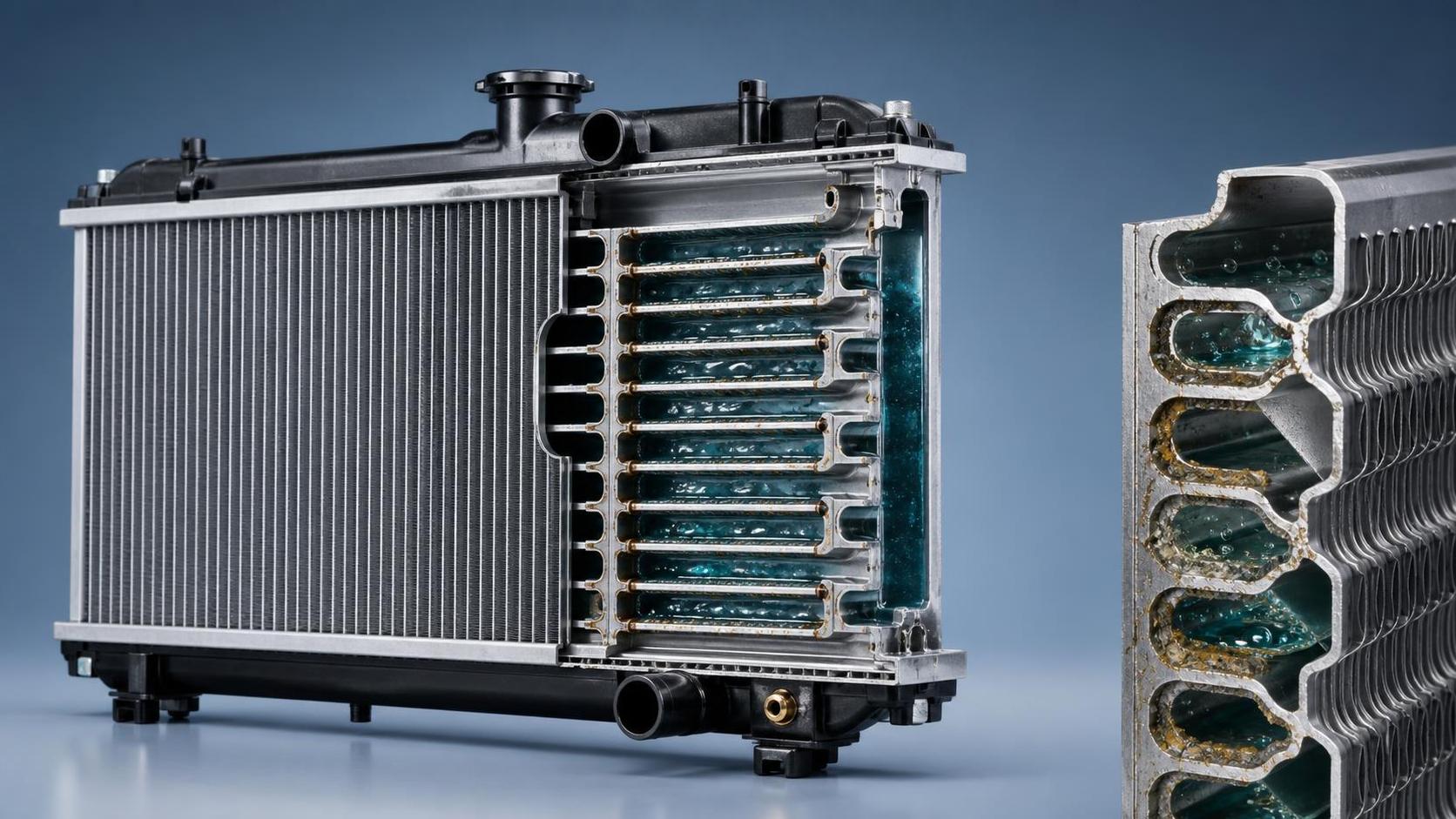
Why does corrosion start inside a Nissan radiator before anyone notices a problem?
Internal corrosion usually starts quietly. By the time a Nissan radiator shows an external leak, blocked core, or repeated overheating complaint, the damage inside may already be well advanced. For aftermarket maintenance teams, that matters because corrosion is rarely a single-event failure. It builds from coolant chemistry, metal exposure, air pockets, moisture contamination, and service habits that look harmless in the moment.
In practical shop work, the most common pattern is simple: the coolant loses its protective ability, bare metal gets exposed, and electrochemical attack begins on the inner tubes, header areas, or soldered and joined sections. Once scale, rust residue, or gel-like deposits start circulating, flow drops, heat transfer gets worse, and the radiator ages much faster than it should.
Where does internal radiator corrosion usually begin?
It often begins in the thinnest and most stressed internal surfaces rather than in the places a technician can easily see. On a Nissan radiator, early attack commonly appears in narrow coolant passages, tube walls, seam areas, and spots where coolant circulation is weak. Any place that traps old coolant or air is more vulnerable.
The reason is straightforward. Corrosion accelerates where protective additives are depleted first, where temperature cycles are frequent, or where dissimilar metals interact through the coolant. Even a small amount of localized corrosion can later turn into pinholes, internal restriction, or a weak point that fails under pressure.
Is bad coolant the main cause, or are there other triggers?
Bad coolant is a major trigger, but not the only one. In real maintenance conditions, corrosion is usually the result of several issues stacking up together.
- Old coolant with exhausted corrosion inhibitors
- Mixing incompatible coolant types
- Using hard water or untreated tap water for dilution
- Air entering the system after poor bleeding or small leaks
- Electrical grounding problems that contribute to stray current activity
- Long idle periods with contaminated coolant left in the system
A lot of technicians focus only on coolant level. Level matters, but condition matters more. A full system with degraded coolant can still corrode from the inside every day it runs.
What happens when different metals share the same cooling system?
That is where galvanic corrosion becomes a real concern. A cooling system may include aluminum, steel, brass, soldered joints, and other metal surfaces connected through the coolant. If the coolant chemistry is weak or contaminated, it can act as the electrolyte that allows one metal to corrode faster than another.
This does not mean mixed metals automatically cause failure. It means the coolant has to keep doing its chemical protection job. Once that protection drops off, the Nissan radiator can become one of the first components to show damage because it has thin internal passages and constant heat cycling.
Can topping up with water really shorten radiator life?
Yes, especially when the top-up is repeated and the water quality is poor. Hard water introduces minerals that can leave deposits inside the radiator. Those deposits reduce heat transfer and create small hot spots. Tap water can also shift the coolant balance, weaken additive protection, and support internal scaling.
A one-time emergency top-up is one thing. Running for weeks or months on diluted, contaminated coolant is another. In aftermarket service, this is one of the most common reasons a radiator looks acceptable from the outside but performs badly on the vehicle.
How do you spot early internal corrosion without waiting for a leak?
You usually catch it through signs around coolant condition and system behavior, not by seeing the metal directly. A few warning signs are worth taking seriously:
- Coolant that looks rusty, muddy, oily, or unusually dark
- Sediment in the drain pan during service
- Repeated overheating under load even after fan and thermostat checks
- Cold spots across the radiator surface, suggesting blocked flow paths
- Pressure loss with no obvious large external leak
- Frequent need to top up coolant
When several of these show up together, do not treat the radiator as the only possible problem. Check the full cooling circuit, because contamination often comes from the wider system and then keeps damaging the new or cleaned radiator afterward.
What service mistakes make corrosion worse after repair work?
A lot of internal corrosion problems are maintenance-created. Not intentionally, but through rushed service.
This is where many repeat failures come from. The radiator gets blamed, but the actual issue is that the system was not stabilized before the vehicle went back into service.
Should you flush a corroded Nissan radiator or replace it?
That depends on whether you are dealing with deposit buildup or actual metal loss. If the radiator still holds pressure and the restriction is mainly from residue, a controlled flush may recover some performance. If the inside has already suffered pitting, thinning, or pinhole leakage, flushing will not restore structural integrity.
A useful shop rule is this: if the unit has recurring pressure loss, visible contamination returning quickly after service, or clear signs of internal blockage combined with age-related weakness, replacement is usually the more reliable path. Flushing makes more sense when the radiator is still mechanically sound and the contamination was caught early.
What is the right way to reduce corrosion during routine maintenance?
Routine prevention is not complicated, but it has to be consistent. For a Nissan radiator in aftermarket service, these steps make the biggest difference:
- Drain and inspect coolant instead of judging by reservoir level alone.
- Use the correct coolant type for the vehicle and avoid mixing formulas unless compatibility is clearly established in the service information being followed.
- Use clean dilution water where required, and keep service containers free from oil, dust, and metal debris.
- Bleed the system fully after filling so trapped air does not remain in the radiator or cylinder head circuit.
- Check the radiator cap, hoses, clamps, and overflow path, because poor sealing often starts the next corrosion cycle.
- When replacing the radiator, inspect the old coolant for evidence of broader system contamination before installing the new part.
The key point is that corrosion control is a system task, not just a radiator task.
Does stray current matter in radiator corrosion?
It can. Electrical issues are less common than coolant-related corrosion, but when they exist, they can destroy a radiator faster than many technicians expect. Poor grounds, damaged wiring, or added electrical accessories can create unwanted current paths through the cooling system. That encourages metal loss from internal surfaces.
If a relatively new Nissan radiator shows unusual internal failure and the coolant service history looks acceptable, check the grounding condition and look for electrical modifications or damaged harness routing near the cooling package. Otherwise, the replacement unit may fail for the same reason.
When a new radiator fails early, what should be checked before blaming the part?
Start with the old system evidence. Look at the drained coolant, expansion tank residue, hoses, cap sealing surface, thermostat condition, and signs of oil contamination or combustion gas problems elsewhere in the engine cooling circuit. A new radiator installed into an unhealthy system is often being asked to survive the same conditions that killed the previous one.
Also check whether the radiator was matched correctly to the application and whether the fill and bleed procedure was completed properly. Early corrosion complaints are often tied to contamination carryover, trapped air, or incorrect coolant handling rather than a visible manufacturing defect.
What is the most practical rule for aftermarket teams?
Treat internal corrosion as a process, not an event. If coolant condition is poor, if air is entering the system, or if the previous radiator failed from contamination, the next Nissan radiator is already at risk unless those causes are removed first.
For day-to-day work, the best sequence is simple: inspect the old coolant, clean the system to a known condition, refill with the correct coolant mixture, bleed it correctly, and make sure the system stays sealed. That approach prevents far more radiator failures than replacing parts on symptom alone.