



How Condenser Size Affects AC Performance
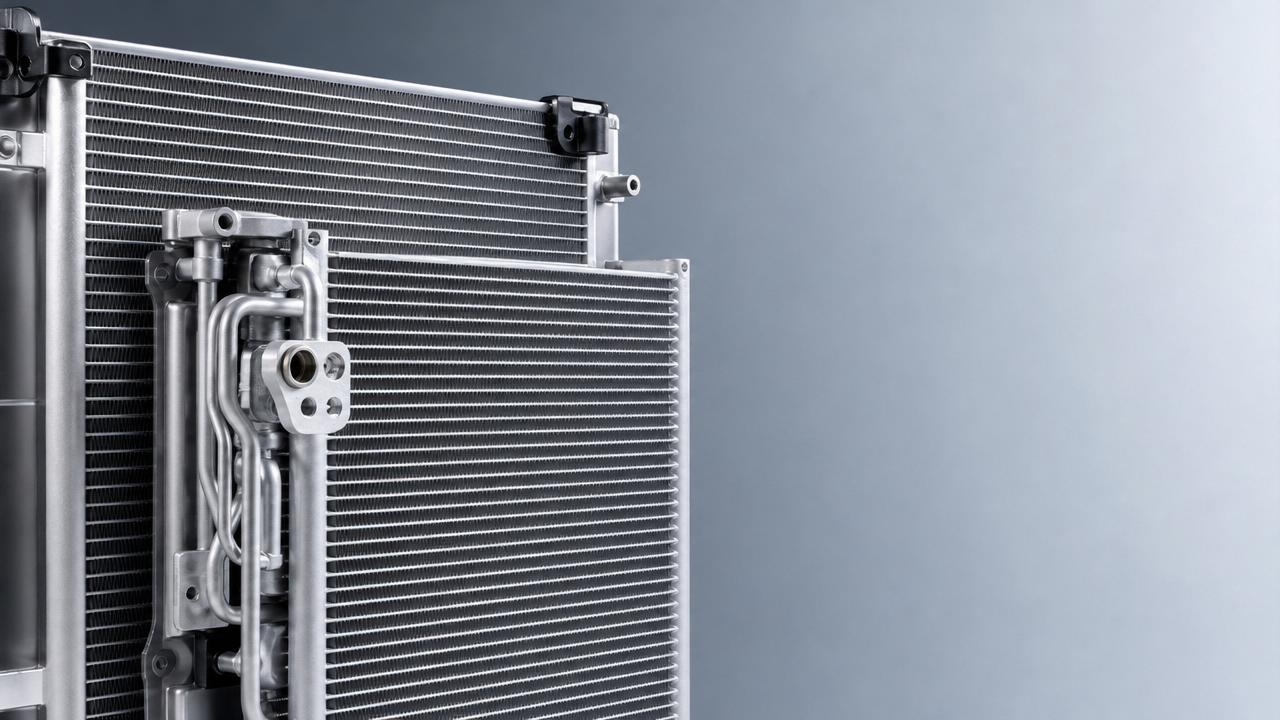
A properly sized Condenser is critical to how efficiently an AC system rejects heat, stabilizes refrigerant pressure, and maintains cooling performance under varying load conditions. For technical evaluators assessing heavy-duty vehicles, construction machinery, or new energy cooling modules, condenser sizing is not only a matter of fitment but also a key factor affecting durability, energy consumption, and system reliability. This article explains how condenser size influences AC performance and what evaluation points should be considered when selecting or validating a condenser for demanding applications.
In heavy-duty platforms, thermal margins are often narrower than passenger car applications. Long idling, dusty sites, high engine load, and compact packaging can expose a weak Condenser selection within 30–60 minutes of operation.
For a technical evaluator, the question is not simply whether the part fits. The more important question is whether the Condenser can maintain pressure, airflow, and heat rejection across the full duty cycle.
Why Condenser Size Matters in AC Heat Rejection
The Condenser receives high-pressure refrigerant vapor from the compressor and rejects heat to ambient air. Its frontal area, tube design, fin density, and internal volume determine how fast phase change can occur.
When Condenser size is too small, refrigerant may leave the core at an elevated temperature. That increases head pressure, raises compressor work, and reduces evaporator cooling capacity during peak demand.
Core area, airflow, and pressure stability
A larger Condenser usually provides more heat transfer surface, but size alone is not enough. A poorly placed large core can still underperform if airflow drops by 15%–25% behind grilles, guards, or hydraulic equipment.
Evaluators should compare real vehicle airflow, not only bench values. Fan diameter, shroud leakage, fin clogging risk, and installation angle all affect the usable capacity of the Condenser.
The following table summarizes common sizing-related effects that appear during technical validation of heavy trucks, loaders, excavators, and electric cooling modules.
The key conclusion is that Condenser size must be interpreted with airflow and refrigerant behavior. A correct evaluation combines dimensional fit, thermal balance, and operating pressure trends.
Effect on compressor efficiency
If the Condenser cannot reject heat fast enough, compressor discharge pressure rises. Even a 10%–15% increase in pressure load can accelerate clutch wear, belt stress, or electric compressor energy consumption.
For new energy modules, this effect is especially important because AC performance competes with battery thermal management. A stable Condenser helps reduce unnecessary fan speed and electrical demand.
Undersized vs. Oversized Condenser: Technical Risks
Both undersizing and oversizing can create problems. The best Condenser is not always the largest one; it is the unit that matches the refrigerant circuit, airflow package, and duty cycle.
Risks of an undersized Condenser
An undersized Condenser often passes a short idle test but fails under prolonged load. Field symptoms may include slow cabin pull-down, high-pressure switch activation, and reduced cooling after 20–40 minutes.
- Higher condensing temperature during high ambient operation, especially above 38℃.
- Reduced evaporator efficiency because refrigerant enters the expansion device with insufficient subcooling.
- Compressor overheating risk when head pressure remains elevated across repeated cycles.
- Shorter service intervals due to thermal stress on hoses, seals, and fittings.
These risks become more severe in construction machinery, where mud, dust, and debris can reduce effective fin area after only 1–2 shifts without cleaning.
Risks of an oversized Condenser
Oversizing is sometimes used as a quick fix, but it can introduce packaging and system-control issues. Extra core volume may require refrigerant charge adjustment within a controlled range.
A very large Condenser can also block airflow to the radiator, intercooler, or hydraulic oil cooler. In multi-layer cooling packs, a 5℃ increase in downstream air temperature may affect engine cooling reserve.
Interaction with adjacent heat exchangers
Heavy-duty vehicles rarely use the Condenser as an isolated component. It may sit before a water tank radiator, charge air cooler, oil cooler, or battery thermal module.
For this reason, evaluators should study the whole heat exchanger stack. Liaocheng Xinde Auto Parts Co., Ltd. focuses on radiators, intercoolers, construction machinery radiators, and new energy radiator modules, supporting integrated thermal matching for demanding platforms.
For Volvo-related service or replacement programs, evaluators may also review xd007 radiator for volvo , with models 1542735 and 96910 and size parameter 740*760*62, when assessing adjacent cooling-pack compatibility.
Key Parameters for Condenser Selection and Validation
A suitable Condenser selection should be based on measurable parameters rather than visual similarity. Technical evaluators usually need at least 6 inspection points before approving replacement or new development parts.
Dimensional and thermal evaluation points
Mounting dimension is only the first checkpoint. Core thickness, fin pitch, port orientation, refrigerant type, and allowable pressure all influence whether the Condenser performs reliably.
- Confirm core size, bracket location, and installation clearance within ±1–2 mm where required.
- Check refrigerant compatibility, including R134a or R1234yf system requirements.
- Measure airflow distribution at idle, rated fan speed, and road-simulated conditions.
- Record high-side pressure, low-side pressure, and outlet air temperature over 30 minutes.
- Verify leakage resistance through pressure decay, helium, or water immersion methods.
- Evaluate corrosion protection for coastal, mining, or high-humidity operating environments.
The Condenser should be tested in the same installation direction and airflow path used on the machine. Bench-only results may hide real packaging restrictions.
The next table provides practical decision factors for comparing Condenser options in technical sourcing or product validation projects.
A qualified Condenser decision balances these factors together. Focusing on one dimension while ignoring pressure rating or airflow resistance can lead to costly field corrections.
Material and manufacturing considerations
Aluminum brazed structures are common because they combine weight control with good heat transfer. However, fin protection, tube wall consistency, and header welding remain critical inspection areas.
For procurement teams, a stable supplier should provide sample confirmation, drawing communication, packaging review, and batch traceability. A typical development cycle may take 2–4 weeks depending on complexity.
Application Scenarios in Heavy-Duty and New Energy Systems
Condenser sizing strategy changes according to application. A long-haul truck, a wheel loader, and an electric bus may require different thermal priorities even if the rated cooling load looks similar.
Heavy trucks and commercial vehicles
In heavy trucks, the Condenser must handle long-distance airflow variation, engine bay heat, and frequent idle cooling. Durability and stable cabin cooling are usually weighted equally.
Technical evaluators should run idle, climbing, and stop-go simulations. A 3-mode validation can reveal whether high-side pressure recovers quickly after sudden load changes.
Construction machinery
Construction machinery often operates at low vehicle speed and high engine load. Therefore, Condenser performance depends heavily on fan capacity, shroud sealing, and cleanability.
A Condenser with very dense fins may perform well in clean tests but clog faster on dusty sites. Fin pitch and protective screen design should be reviewed together.
New energy cooling modules
In new energy vehicles, AC and battery cooling may share thermal management resources. Condenser sizing affects cabin comfort, battery temperature control, and electrical power consumption.
Because electric compressors respond differently from belt-driven units, evaluators should monitor current draw, refrigerant pressure, and control strategy over repeated 5–10 minute cycles.
Supplier capability in integrated cooling packs
Liaocheng Xinde Auto Parts Co., Ltd. was established in 2018 with registered capital of 5 million RMB and total investment of 50 million RMB.
The company manufactures water tank radiators, intercoolers, construction machinery radiators, and related components for heavy trucks and new energy radiator modules, helping evaluators coordinate multiple heat exchangers in one package.
Its provincial and municipal honors, including High-tech Enterprise and trustworthy consumer-related recognition, reflect a development path focused on manufacturing capability and market responsibility.
Practical Validation Workflow for Technical Evaluators
A disciplined validation workflow reduces the risk of approving a Condenser that works in drawings but fails in the field. The process should include both laboratory and installed-machine checks.
A 5-step validation approach
- Define duty cycle: ambient temperature range, operating hours, idle ratio, and load pattern.
- Confirm packaging: core size, bracket position, port angle, and hose routing clearance.
- Test thermal response: pressure, subcooling, outlet air temperature, and fan behavior.
- Check durability: vibration, leakage, corrosion exposure, and cleaning accessibility.
- Review supply readiness: sample timing, drawing agreement, packaging, and batch inspection plan.
For replacement parts, the workflow may be completed in 7–15 days if drawings and samples are available. New module development usually needs longer confirmation.
Common mistakes to avoid
One common mistake is selecting a Condenser only by external size. Two cores with similar dimensions may differ significantly in tube count, internal passage design, and heat rejection capacity.
Another mistake is ignoring service environment. Mining, agriculture, and construction fleets need easier cleaning access and stronger protection against fin deformation than typical road vehicles.
A third mistake is validating AC performance without checking radiator impact. If the Condenser increases upstream resistance, the engine cooling system may lose reserve during high-load operation.
Procurement questions worth asking
- Can the supplier support drawing review and sample matching before bulk order?
- What inspection method is used for leakage and brazing consistency?
- Can packaging protect fins and ports during long-distance transport?
- Is the Condenser compatible with the target refrigerant and operating pressure range?
- Can related radiator or intercooler components be coordinated for a full cooling-pack solution?
These questions help separate visual replacement from engineering-grade selection. They also support clearer communication between technical, purchasing, and maintenance teams.
Choosing the Right Condenser Partner
The right Condenser improves AC cooling, protects compressor life, and helps the full thermal system remain stable under demanding conditions. Size is important, but it must be matched with airflow, pressure, durability, and adjacent heat exchangers.
For technical evaluators, the best approach is to define operating conditions first, verify measurable parameters second, and confirm supplier capability before moving to volume procurement.
Liaocheng Xinde Auto Parts Co., Ltd. provides manufacturing experience across radiators, intercoolers, construction machinery cooling components, and new energy radiator modules for global B2B customers.
If you are assessing Condenser performance, validating a cooling-pack design, or sourcing related heavy-duty thermal components, contact us to discuss product details, samples, and customized solutions.