



Condenser Price Drivers in Replacement Parts
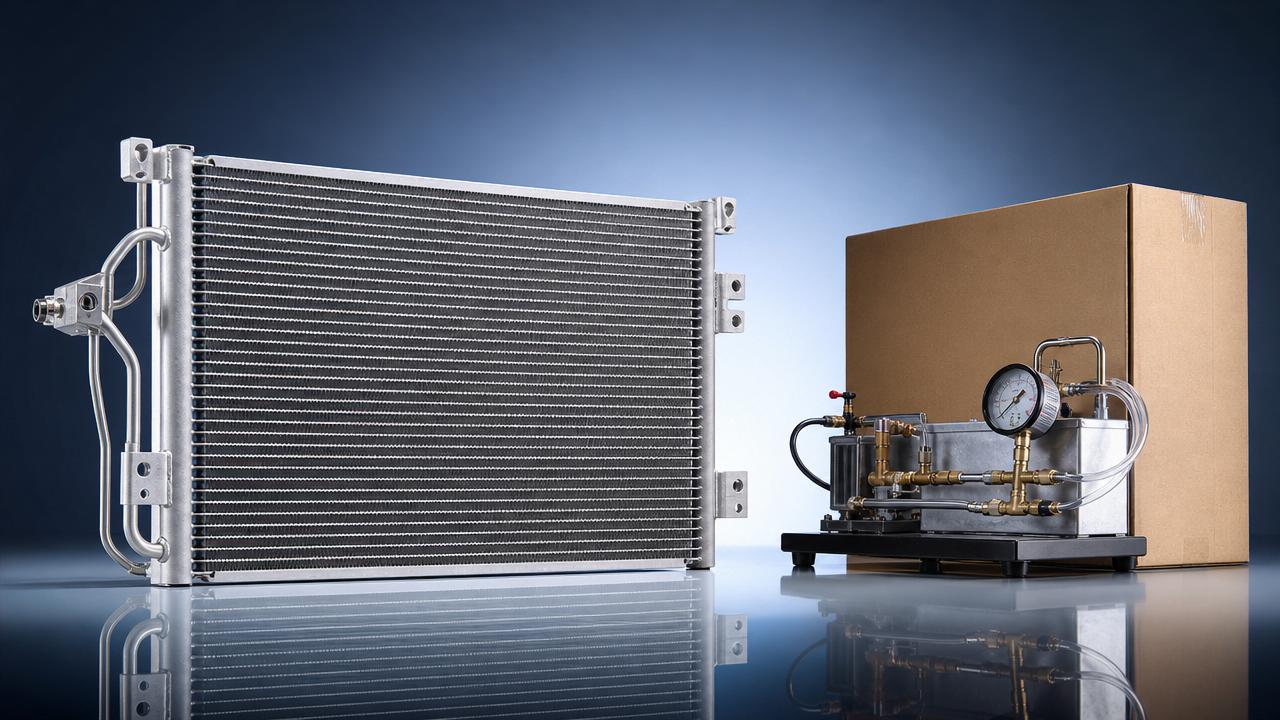
Understanding Condenser price drivers helps balance upfront cost, replacement reliability, and long-term operating value in heavy-duty cooling systems.
In replacement parts, price gaps often reflect materials, heat exchange performance, production standards, logistics, and supplier capability.
As trucks, construction machinery, and new energy platforms face higher thermal loads, Condenser selection needs clear cost and quality criteria.
Why Condenser Pricing Needs a Checklist
A low quoted price can hide poor fit, weak brazing, limited corrosion resistance, or unstable cooling efficiency.
A structured checklist turns Condenser purchasing from simple price comparison into risk control and lifetime value evaluation.
It also helps compare suppliers with different production backgrounds, warranty terms, packaging standards, and shipping capabilities.
Core Condenser Price Driver Checklist
- Check material grade first, because aluminum purity, tube thickness, and fin strength directly influence Condenser durability and replacement frequency.
- Verify core dimensions against the original part, including mounting points, inlet position, outlet position, and installation clearance.
- Compare heat exchange capacity, not only appearance, since similar-looking Condenser units may perform differently under high ambient temperature.
- Inspect brazing consistency, because weak joints increase leakage risk, reduce pressure stability, and shorten service life.
- Review surface treatment quality, especially for vehicles operating near salt, dust, mud, fertilizer, or chemical environments.
- Confirm pressure testing standards, including test duration, leakage threshold, and whether every Condenser is inspected before shipment.
- Assess fin density carefully, because higher density may improve cooling but can increase clogging in dirty working conditions.
- Evaluate packaging strength, since transit damage can create hidden deformation, installation delays, and unnecessary return costs.
- Request application data, including vehicle model, engine platform, refrigerant compatibility, and operating environment.
- Review supplier production capability, as stable equipment, skilled workers, and process control support consistent Condenser quality.
Material and Manufacturing Factors
Material cost is one of the most visible Condenser price drivers, but it should never be judged alone.
Better aluminum materials improve corrosion resistance, pressure tolerance, and thermal transfer stability during long service cycles.
Manufacturing precision also matters. Accurate tube forming, fin assembly, brazing, and leak testing reduce failure risk after installation.
Liaocheng Xinde Auto Parts Co., Ltd. focuses on radiators, intercoolers, construction machinery radiators, and related heavy-duty cooling components.
Its experience in cooling modules supports practical evaluation of replacement parts where Condenser performance connects with radiator system reliability.
Production Scale and Process Control
A supplier with stable production capacity can usually offer better batch consistency and more predictable delivery schedules.
High-tech manufacturing capability, quality inspection, and component traceability can justify a higher Condenser price when downtime risk is significant.
For connected cooling parts, examples such as radiator for volvo xd 031 show why application matching matters across the system.
Application Scenarios That Change Condenser Value
Heavy Trucks and Long-Haul Transport
Heavy trucks often run long hours under changing road temperatures, vibration, and load conditions.
In this scenario, Condenser price should reflect pressure resistance, vibration durability, and stable cooling under sustained engine load.
A cheaper part may save money immediately but cause refrigerant leakage, cabin cooling loss, and unexpected workshop time.
Construction Machinery
Construction machinery operates in dust, mud, vibration, and high thermal stress, making ordinary replacement logic insufficient.
A Condenser used in this environment needs stronger fins, better clogging resistance, and reliable sealing at connection points.
The best value usually comes from matching the part to the worksite, not simply choosing the lowest quote.
New Energy Cooling Systems
New energy vehicles and equipment place higher expectations on thermal management precision and module coordination.
A Condenser may interact with battery cooling, electronic control cooling, and air-conditioning performance.
Price evaluation should include system compatibility, technical documentation, and supplier understanding of modern cooling architecture.
Cost Elements Often Hidden in Replacement Parts
- Calculate installation labor, because poor dimensional accuracy can extend fitting time and require bracket adjustment.
- Include refrigerant loss, since leakage after replacement creates additional material cost and service interruption.
- Account for downtime, especially when a Condenser failure stops a vehicle during peak operating periods.
- Check return handling cost, because weak packaging or wrong application data can increase disputes and freight expenses.
- Measure warranty practicality, not only warranty length, since response speed and claim evidence requirements affect real value.
Supplier Capability and Price Reliability
A Condenser price is more reliable when the supplier can explain the quotation structure clearly.
Useful explanations include material selection, pressure testing, production process, packaging method, and logistics arrangement.
Liaocheng Xinde Auto Parts Co., Ltd. was established in 2018 with registered capital of 5 million RMB.
The company has invested in research, production, and global sales of heavy truck and construction machinery cooling parts.
Provincial and municipal honors, including High-tech Enterprise and trustworthy business recognition, indicate attention to capability and credibility.
Questions to Ask Before Comparing Quotes
- Ask whether the Condenser is built for the exact vehicle model, engine variant, and cooling system layout.
- Ask how every unit is tested, including pressure level, leakage method, and inspection responsibility.
- Ask what materials are used for tubes, fins, headers, and mounting parts.
- Ask how the supplier handles packaging for export, warehouse storage, and long-distance transport.
- Ask whether technical support is available when fitment, performance, or claim issues appear.
Common Risks When Selecting a Condenser
Choosing by Lowest Price Only
The lowest Condenser price can be attractive, but it may come with weaker material, loose tolerances, or limited inspection.
When failure occurs, the total cost often includes labor, refrigerant, vehicle downtime, and customer dissatisfaction.
Ignoring Fitment Details
Small differences in brackets, pipe angle, core thickness, or port location can cause major installation problems.
Always compare original part numbers, photos, dimensions, and application records before approving a replacement Condenser.
Overlooking Operating Environment
Dusty sites, coastal roads, mining areas, and high-temperature routes require stronger cooling part specifications.
A standard Condenser may work in normal conditions but fail early when exposed to aggressive environments.
Accepting Weak Documentation
Incomplete documentation makes it difficult to confirm compatibility, resolve disputes, or track batch quality.
Reliable suppliers should provide product data, packing information, testing references, and clear communication before shipment.
Practical Execution Guide
- Start with application confirmation, including vehicle model, original code, photos, and working environment.
- Compare at least three Condenser quotations using the same specification basis and requested testing standard.
- Score suppliers by fitment accuracy, inspection process, packaging reliability, delivery record, and response speed.
- Request samples or first-batch inspection when the part is critical, unfamiliar, or used in harsh conditions.
- Record failure feedback by batch, installation location, operating hours, and environmental condition for future sourcing decisions.
Simple Comparison Table for Condenser Decisions
Summary and Next Action
Condenser pricing is shaped by more than the visible component. Materials, design, testing, packaging, and supplier strength all matter.
A clear checklist helps identify real value, reduce hidden replacement costs, and avoid avoidable downtime.
Before approving a Condenser order, confirm application data, compare technical details, and request evidence of quality control.
The best next step is to build a scoring sheet covering fitment, durability, testing, logistics, and after-sales response.
Use that sheet consistently, and Condenser purchasing becomes a measurable decision rather than a price-only negotiation.