



Common Nissan Radiator Fitment Mistakes That Delay Installation
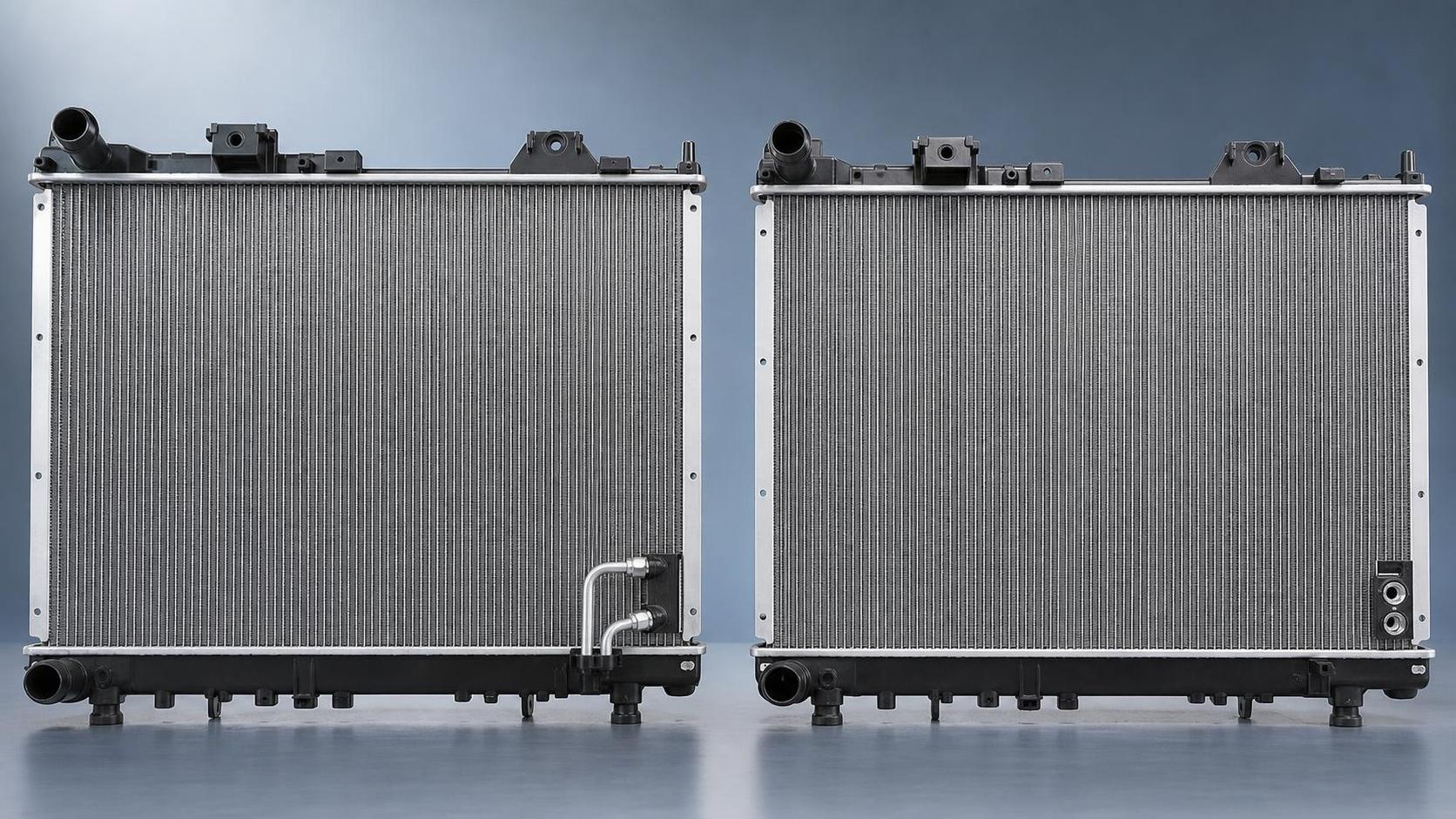
Start with the vehicle details, not the old radiator on the floor
Choosing a Nissan radiator sounds straightforward until installation stops halfway because the new unit is close, but not actually right. That is where time gets lost. A mounting tab sits a few millimeters off. The lower hose points in the wrong direction. The fan shroud will not line up. What looked like a routine replacement turns into another parts search.
Most of these delays come from fitment mistakes that happen before the box is opened. If you are the one ordering, receiving, or installing the part, the fastest way to avoid trouble is to check the vehicle against the radiator drawing or listing in the same order you would install it. Not every Nissan radiator problem is about quality. A lot of them are simply mismatch problems.
Check the exact model year range, not just the model name
One of the most common mistakes is ordering by a broad description like “for Nissan pickup” or “for Nissan sedan” and assuming the rest will sort itself out. Nissan changed radiator layouts across model years, engine variants, and market versions. Two vehicles with the same badge can use different core sizes, hose positions, transmission cooler setups, or mounting points.
What to check first:
- Vehicle model
- Production year
- Engine code or displacement
- Transmission type
- Market version if the vehicle was imported
If the listing only says “fits Nissan” without those details, that is a weak listing. At that point, compare part numbers or dimensional drawings before you commit.
Do not use the old radiator as your only reference
This catches more people than it should. The radiator already in the vehicle may not be the original type. It might have been changed during an earlier repair, especially on older vehicles or fleet units. If you match the replacement only to the removed part, you may repeat a previous workaround instead of getting the correct fit.
Use the old unit as one reference, not the final authority. Cross-check it with the vehicle registration data, OE part number if available, and the mounting layout on the vehicle itself. If the old radiator shows signs of modified brackets, extra foam packing, cut shrouds, or adapted hoses, stop and verify the original application before ordering again.
Hose neck position matters as much as hose diameter
Installers often confirm upper and lower hose diameters, then miss the angle or outlet position. That is enough to delay the job. A hose neck that sits too high, too low, or points slightly off can create interference with the fan shroud, engine cover, or adjacent piping. Even when the hose can be forced into place, that is not a proper fit. It puts tension on the hose and usually shows up later as seepage, rubbing, or early hose failure.
Before installation, compare:
- Upper hose inlet location
- Lower hose outlet direction
- Overflow neck placement
- Clearance to nearby components
If the hose has to twist unnaturally to meet the radiator, the problem is usually fitment, not the hose.
Mounting points are where many “almost fits” jobs fail
A Nissan radiator can look correct in photos and still fail at the support frame. Upper brackets, lower pegs, side mounts, and rubber isolator locations need to match the vehicle. Installers sometimes discover this only after coolant has been drained and the front end is partly apart.
This is worth checking in a dry fit before transferring fans or finishing assembly. Look at the bracket spacing, peg diameter, peg position, and the height of the top tank relative to the support panel. A radiator that sits under tension may bolt in, but vibration will work against it.
Confirm whether the vehicle uses an integrated transmission cooler
This mistake can stop installation completely. Some Nissan radiator assemblies include an internal transmission oil cooler for automatic transmission vehicles. Others do not. Ordering the wrong version means the line connections will not match, or the ports will be missing altogether.
The practical check is simple: confirm the transmission type and inspect whether the original radiator has built-in cooler ports. Then check the replacement listing for the same feature. Do not assume that all automatic versions share the same cooler arrangement. Port thread, position, and supplied fittings can differ.
Fan shroud and sensor compatibility should be checked before coolant goes in
A radiator may fit the support frame and still create trouble when you try to transfer surrounding parts. Fan shroud mounting holes, clip locations, drain plug access, and sensor ports all need to line up with the original setup. This is especially important on vehicles where the radiator assembly is packed tightly with condenser, fan, and shroud components.
A quick bench comparison saves time here. Set the old and new units side by side and check every attachment point before moving hardware over. If the shroud hole pattern is off, do not count on making it work after installation. That usually turns a clean replacement into a fabrication job.
Core size and thickness are not just cooling questions
People often think core dimensions only affect engine temperature. In reality, they also affect fit. A thicker core can reduce clearance to the fan or shroud. A shorter or narrower core may leave mounting cushions unsupported. Even when the radiator can be installed, the wrong core size may change airflow behavior and make the vehicle run poorly under load.
For an operator, the important point is this: match the application, then check the physical dimensions. Do not buy a unit simply because the tanks look similar. Length, width, and thickness all matter, and they matter together.
Imported, regional, and engine-swap vehicles need extra caution
Fitment problems rise fast when the vehicle is not in standard local configuration. Imported units may use a different radiator than the same Nissan model sold in another market. Engine-swapped vehicles are another trap. The chassis may say one thing while the cooling package follows another engine family entirely.
In these cases, a registration lookup alone is not enough. You need to inspect the installed layout: hose routing, bracket positions, fan type, and transmission cooler arrangement. If available, use the stamped part number on the old radiator and compare it with the vehicle-side dimensions before ordering.
Do not ignore the condenser and front-end stack
A radiator does not live by itself. On many Nissan vehicles, the condenser, fan shroud, intercooler on some applications, and upper support structure all compete for the same space. Installers sometimes focus only on the radiator shell and forget to check tab locations and side clearances against the rest of the cooling stack.
This is where small production differences become real workshop delays. A flange that sticks out slightly farther than the original may press against the condenser. A drain cock in the wrong place may become inaccessible once the stack is assembled. These are not dramatic errors, but they waste hours.
Packaging damage and bent mounts can be mistaken for fitment errors
Not every bad fit comes from ordering the wrong Nissan radiator. Sometimes the application is correct, but the unit arrives with bent brackets, crushed fins near the mounting area, or a shifted locating peg from rough handling. If you only discover that after partial installation, it looks like the wrong part when the actual issue is shipping damage.
Open the carton early and inspect the frame side, tank corners, mounts, and threaded points before teardown begins. That way you separate true fitment mismatch from transport damage while there is still time to act without immobilizing the vehicle.
A short pre-install checklist saves the most time
Before draining coolant, run through the checks in this order:
- Match the vehicle by model, year, engine, and transmission.
- Compare OE or interchange number when available.
- Measure overall core length, width, and thickness.
- Check upper and lower hose neck position, not just size.
- Confirm mounting peg and bracket locations.
- Verify transmission cooler ports if fitted.
- Dry-fit the fan shroud and related hardware points.
- Inspect the unit for bent mounts or shipping damage.
If one item is off, pause there. It is cheaper to resolve the mismatch before the vehicle is disabled in the bay.
What actually reduces downtime
The fastest installation is not the one with the quickest wrench work. It is the one where fitment is settled before disassembly starts. For operators and workshop staff, that usually means collecting the full vehicle details, comparing physical features against the replacement, and treating “almost the same” as a warning sign. Most delays tied to a Nissan radiator are preventable, but only if the decision is made from the vehicle data and the mounting layout together, not from guesswork or a broad listing title.
When time matters, verify in this sequence: application first, connections second, mounts third, surrounding hardware last. That order catches the mistakes that stop installation before they become a cooling system problem.