



Heavy Truck Cooling System Problems Behind Engine Overheating
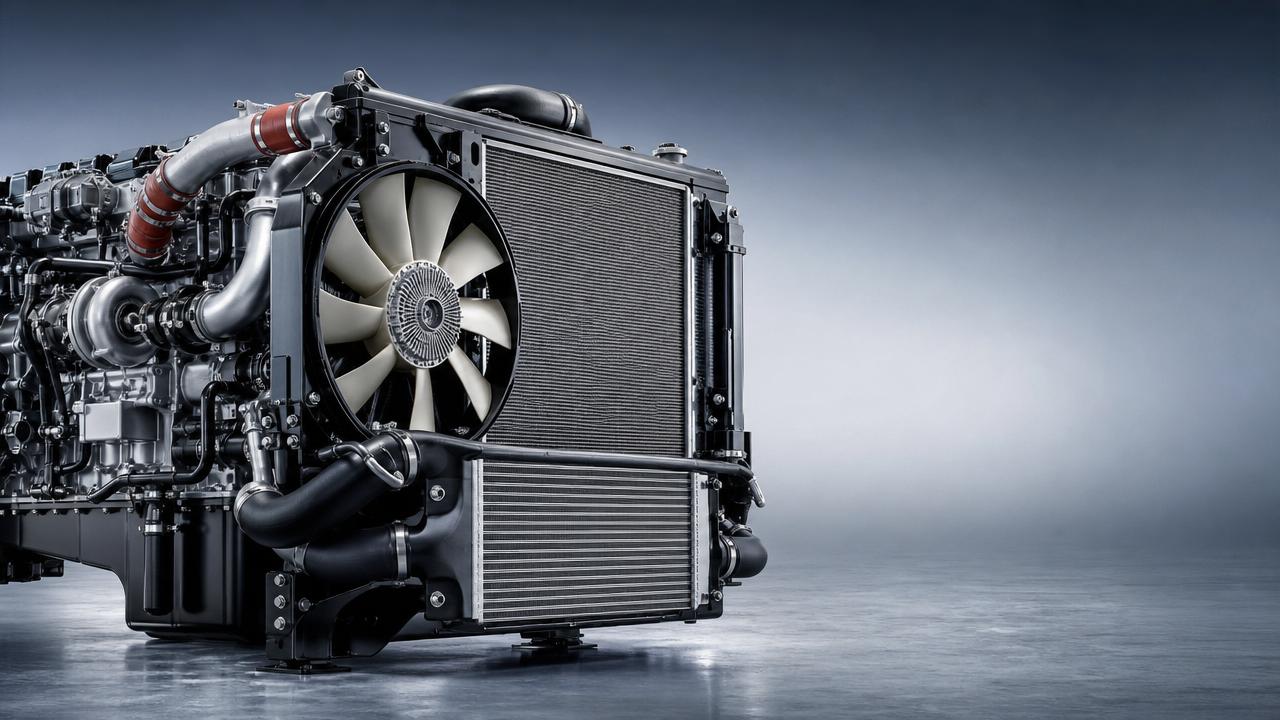
Engine overheating in commercial vehicles often begins with small faults inside the heavy truck cooling system. A blocked radiator core, weak coolant flow, fan malfunction, or poor charge-air cooling can quickly raise engine temperature.
In heavy-duty operations, overheating is not only a temperature issue. It affects fuel economy, power stability, turbo efficiency, lubricant life, and engine durability. Early diagnosis of the heavy truck cooling system helps reduce downtime and avoid major repair costs.
This topic is especially important in the parts industry, where radiator modules, intercoolers, hoses, tanks, and fan assemblies directly influence vehicle reliability. Sound maintenance decisions depend on understanding how each cooling component fails in real service.
Basic Overview of the Heavy Truck Cooling System
The heavy truck cooling system removes excess heat from the engine and charge-air path. Its main purpose is to keep combustion, lubrication, and air intake temperatures within a controlled operating range.
Core components usually include the radiator, water pump, thermostat, cooling fan, expansion tank, hoses, coolant, and intercooler. In many trucks, these parts work together as an integrated thermal management package.
When one part loses efficiency, the entire heavy truck cooling system can become unstable. Temperature spikes may appear first during hill climbing, idling with load, hot-weather driving, or stop-and-go operation.
How Heat Rejection Works
Coolant absorbs heat from the engine block and cylinder head. The water pump circulates heated coolant to the radiator, where airflow carries heat away through the fin and tube structure.
The intercooler lowers compressed intake air temperature. This supports combustion efficiency and helps control thermal stress. If intercooling performance drops, engine heat load can rise further.
Current Industry Concerns Behind Overheating Events
Overheating cases are increasing because trucks now operate under heavier loads, stricter emissions conditions, and tighter engine compartments. Higher thermal density leaves less room for neglected maintenance.
Dust, road debris, poor coolant quality, mixed fluid types, and aging plastic tanks also create hidden risks. In fleets with inconsistent service records, the heavy truck cooling system often degrades without obvious warning.
These trends explain why heavy truck cooling system inspection is now a critical maintenance priority rather than a seasonal check item.
Most Common Cooling System Problems Behind Engine Overheating
Radiator Blockage and Reduced Heat Exchange
External blockage is one of the most common failures. Dust, grease, insects, leaves, and road grime can cover fins and restrict airflow through the radiator face.
Internal blockage is equally serious. Scale, rust, and coolant contamination narrow passages, reducing heat transfer area and slowing coolant movement inside the core.
Symptoms include high temperature under load, poor cooling in hot weather, and uneven radiator surface temperature. Infrared scanning often reveals cold sections caused by blocked tubes.
Coolant Circulation Problems
A weak water pump, slipping impeller, collapsed hose, or trapped air pocket can reduce coolant flow. When circulation drops, heat remains concentrated in the engine instead of reaching the radiator efficiently.
A stuck thermostat also causes overheating. If it fails closed or opens late, coolant cannot enter the radiator at the required rate during warm operating conditions.
Cooling Fan and Drive Failure
The fan is essential when vehicle speed is low. Viscous fan clutch wear, electrical control faults, damaged blades, or weak motor response can sharply reduce airflow across the cooling pack.
This failure often appears during idle, traffic congestion, yard movement, or low-speed climbing. The temperature gauge rises even though coolant level and radiator condition seem acceptable.
Intercooler Inefficiency
The intercooler is often overlooked in heavy truck cooling system diagnosis. Bent fins, internal leakage, or restricted airflow can increase intake temperature and worsen engine thermal load.
Reduced intercooler performance may also affect combustion stability and turbocharger efficiency. That can make overheating appear to be an engine issue when thermal management is the true cause.
Pressure Loss and Coolant Leakage
Leaks in tanks, seams, hoses, clamps, or caps reduce system pressure. Lower pressure decreases coolant boiling point, making the heavy truck cooling system more vulnerable under high load.
Minor seepage can be difficult to spot. Dried residue around joints, sweet odor, or recurring low coolant level often signals early pressure loss.
Practical Value for Parts Selection and Service Reliability
Understanding overheating causes improves replacement accuracy. It helps distinguish between a clogged radiator, a flow restriction, and an airflow fault before changing parts unnecessarily.
This matters in the parts sector, where thermal components must match original dimensions, mounting points, pressure demands, and heat dissipation requirements. Poor matching can create repeat failures.
Liaocheng Xinde Auto Parts Co., Ltd. focuses on radiator and intercooler development for heavy trucks, construction machinery, and new energy radiator modules. Its experience reflects growing demand for reliable thermal components in global aftermarket service.
For example, replacement choices for platform-specific applications may include RADIATOR FOR SCANIA , model 1776026, sized 860*928*40, when dimensional fit and cooling capacity must align with service requirements.
Typical Overheating Scenarios and Fault Classification
This classification shortens troubleshooting time and supports better decisions across the heavy truck cooling system repair process.
Recommended Inspection and Maintenance Practices
- Clean radiator and intercooler fins with methods that do not deform the core.
- Test coolant concentration, pH condition, and contamination level at regular intervals.
- Check thermostat opening behavior rather than assuming replacement solved the issue.
- Inspect hose softness, internal collapse risk, clamp tension, and cap sealing pressure.
- Verify fan clutch engagement, blade condition, shroud integrity, and electrical controls.
- Use temperature comparison tools to identify partial radiator blockage or poor circulation.
- Confirm replacement parts meet thermal load and dimensional fit requirements.
Preventive maintenance is always less expensive than an overheated engine rebuild. A disciplined inspection routine protects both cooling performance and the service life of adjacent engine components.
Action Steps for Better Cooling Performance
Start with a full-system approach. Do not isolate the radiator without checking airflow, coolant flow, pressure retention, and intercooler condition. Overheating usually results from combined weaknesses.
Create inspection records for recurring routes, seasonal temperature changes, and repeated heat complaints. Pattern tracking helps reveal whether the heavy truck cooling system suffers from contamination, poor fitment, or load-related stress.
When replacement is necessary, select parts with verified dimensions, stable material quality, and application-specific compatibility. In demanding platforms, well-matched solutions such as RADIATOR FOR SCANIA can support dependable thermal control.
A reliable heavy truck cooling system is essential for uptime, engine protection, and long-term operating efficiency. Accurate diagnosis and proper parts choice turn overheating from a costly disruption into a manageable maintenance task.