



What Causes Early Failure in a Heavy Duty Truck Radiator?
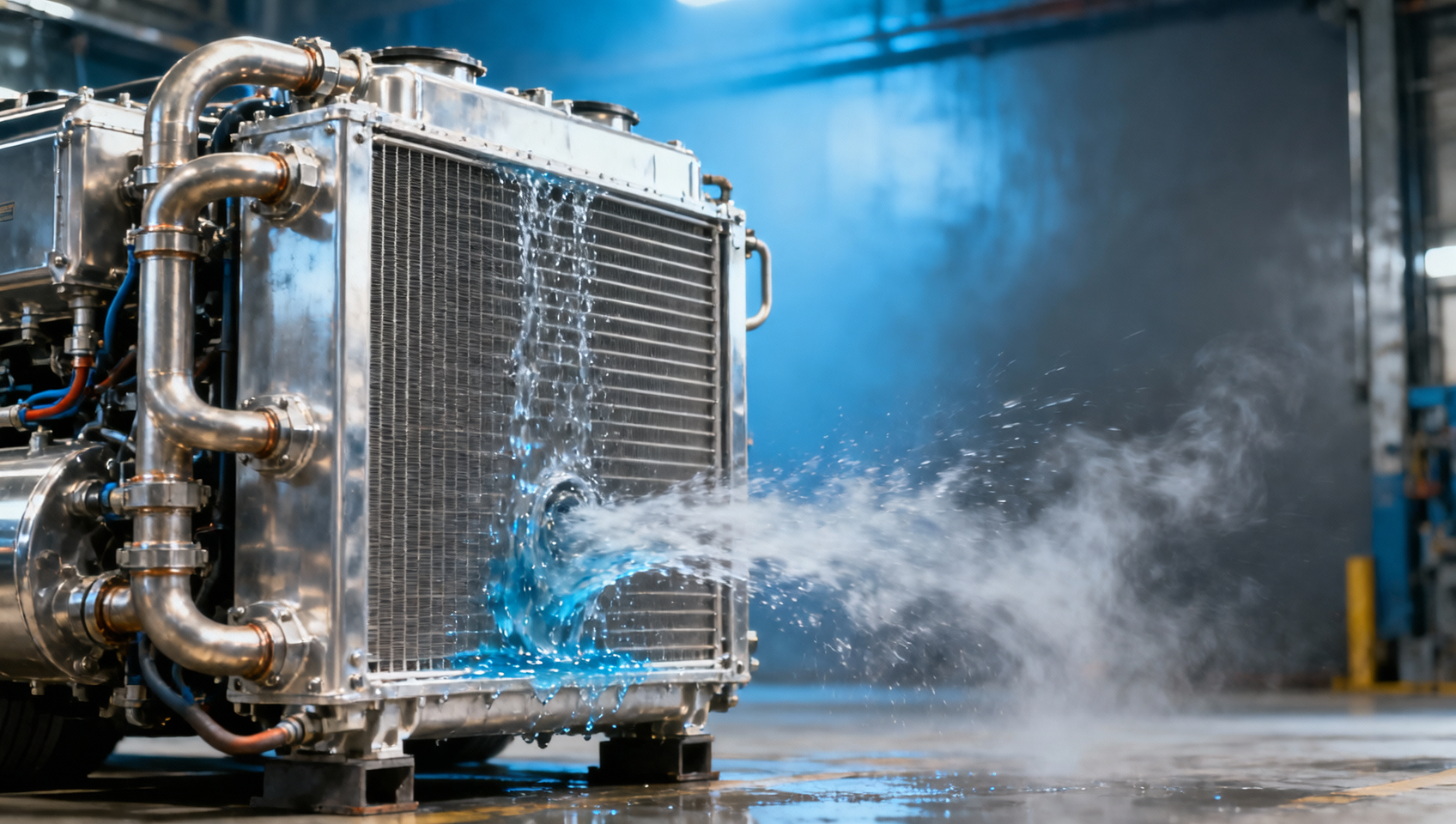
Early failure in a heavy duty truck radiator is usually a system problem, not a single-part problem. For technical reviewers, buyers, and decision-makers, the most important takeaway is this: radiator lifespan is strongly influenced by material quality, coolant condition, vibration control, airflow efficiency, and whether the cooling package is properly matched to the vehicle’s real operating load. If any of these factors are overlooked, even a well-made radiator can fail earlier than expected.
For fleets, OEM sourcing teams, and commercial evaluators, understanding these failure causes is not just a maintenance issue. It directly affects downtime, warranty exposure, replacement frequency, and total operating cost. The right evaluation approach should focus less on price alone and more on durability under actual duty cycles.
What is the real reason a heavy duty truck radiator fails early?
In most cases, early radiator failure happens because multiple stresses act at the same time. A radiator may appear to fail because of a leak, overheating, or internal blockage, but the root cause is often deeper. Common triggers include weak raw materials, poor brazing or welding quality, contaminated coolant, pressure fluctuations, excessive vibration, and inadequate heat rejection in demanding environments.
This matters especially in heavy-duty applications because trucks often operate under high load, long working hours, unstable road conditions, and variable climates. Under these conditions, a cooling system has very little tolerance for design weakness or maintenance neglect.
For purchasing and technical assessment teams, the key question should be: is the radiator designed and manufactured for real operating stress, or only for basic specification compliance?
How do material quality and manufacturing defects shorten radiator life?
Material quality is one of the first points to review. Thin tube walls, poor-grade aluminum, inconsistent fin density, and weak header or tank connections can all reduce durability. A radiator may meet dimensional requirements but still perform poorly over time if the core structure cannot withstand thermal cycling and vibration.
Typical manufacturing-related failure points include:
- Weak brazed joints that crack after repeated expansion and contraction
- Poor sealing between core and tank assemblies
- Inadequate corrosion resistance of internal passages
- Unstable fin bonding that reduces heat transfer efficiency
- Inconsistent production tolerances that create stress concentration
For business evaluators, this is where supplier capability becomes critical. A radiator supplier with stable process control, testing standards, and application-specific development is generally a safer choice than a low-cost source without verification data. Early savings from cheaper procurement can be quickly offset by replacement, claims, and vehicle downtime.
Why does coolant contamination cause internal radiator damage?
Coolant contamination is one of the most underestimated causes of early failure. When the coolant contains rust, mineral deposits, oil residue, or incompatible chemical additives, internal radiator passages can become blocked or corroded. This reduces flow rate, weakens heat exchange, and eventually causes overheating or leakage.
Several coolant-related issues are especially common:
- Using the wrong coolant formulation for the system material
- Mixing different coolant chemistries without compatibility checks
- Ignoring coolant replacement intervals
- Using poor-quality water that introduces scale-forming minerals
- Allowing debris from engine or system wear to circulate continuously
For technical personnel, this means radiator evaluation should not stop at external appearance or pressure testing. Internal cleanliness, corrosion traces, and deposit patterns often reveal whether the radiator itself failed, or whether the cooling system environment caused the failure.
How do vibration and installation stress damage a radiator?
Heavy duty trucks operate in conditions where vibration is constant. Rough roads, engine movement, mounting misalignment, and repeated shock loading all put mechanical stress on the radiator. Over time, this can crack tubes, weaken joints, or damage mounting points.
Installation-related problems often include rigid mounting, poor bracket design, insufficient damping, or hose connections that pull the radiator core under load. In these cases, the radiator may fail even when the core quality is acceptable.
This is especially relevant for commercial vehicle platforms, construction machinery, and agricultural equipment, where operating vibration can be significantly higher than in standard road vehicles. The same risk logic applies to a Vehicle radiator, Condenser, Agriculturaal radiator, Excavator radiator, or New Energy Vehicle Radiator: if the surrounding system transfers excessive stress into the heat exchanger, service life drops sharply.
Procurement teams should therefore ask suppliers not only about radiator material and cooling capacity, but also about vibration validation, mounting interface consistency, and real-use durability testing.
Can poor airflow and heat dissipation lead to premature radiator failure?
Yes. A radiator may be structurally sound and still fail early if it operates too often under excessive thermal load. When airflow is restricted or the radiator size is not properly matched to the engine or working environment, internal temperatures and pressures rise. This accelerates fatigue, weakens seals, and increases the chance of overheating-related damage.
Common heat dissipation problems include:
- Blocked fins caused by dust, mud, insects, or road debris
- Fan performance that does not match actual cooling demand
- Poor shroud design that reduces airflow efficiency
- Cooling package stacking that limits air passage
- Undersized radiator selection for severe-duty operation
For decision-makers, this is a major cost-control point. Replacing failed radiators repeatedly will not solve the problem if the system has chronic airflow limitations. In many cases, the better investment is a better-matched cooling module rather than another low-cost replacement unit.
How does system mismatch create hidden failure risk?
Radiators do not work in isolation. A mismatch between the radiator and the engine, transmission cooler, intercooler, fan system, or new energy thermal management architecture can create hidden stress. A radiator chosen only by dimensions, without considering pressure, flow, heat load, and packaging constraints, may pass initial installation but fail prematurely in service.
This is particularly important in modern applications, including new energy vehicles. For example, battery packs, drive motors, and power electronics require stable thermal control under changing loads. In these scenarios, component matching and heat exchange efficiency are essential. Products such as Radiator for BYD are designed for new energy vehicle applications where efficient cooling and fit accuracy both affect safety and peak performance.
For enterprise buyers, this highlights an important sourcing principle: application suitability is often more valuable than simply selecting a universal radiator with a lower unit price.
What should buyers and technical evaluators check before selecting a radiator supplier?
To reduce early failure risk, evaluation should combine product quality review with supplier capability review. A practical assessment checklist includes:
- Material specifications and corrosion-resistance standards
- Brazing, welding, and leak-testing consistency
- Pressure resistance and thermal cycling validation
- Vibration durability testing data
- Cooling performance under real operating loads
- Fit accuracy for the intended vehicle platform
- After-sales support and quality traceability
Liaocheng Xinde Auto Parts Co., Ltd. focuses on the research, production, and global sales of water tank radiators, intercoolers, construction machinery radiators, and new energy radiator modules. For sourcing teams, a manufacturer with specialized development experience across heavy trucks and new energy systems is usually better positioned to support both standard replacement needs and customized thermal management requirements.
How can companies reduce long-term radiator failure costs?
The most effective strategy is to manage radiator reliability as a lifecycle issue. That means combining better product selection, correct coolant management, proper installation, regular cleaning, and early inspection of vibration or airflow problems.
From a business perspective, the main goal is not simply to buy a radiator that works today, but to choose one that lowers total cost over time. A more reliable radiator can reduce:
- Unexpected vehicle downtime
- Maintenance labor and replacement frequency
- Engine overheating risk
- Warranty and service disputes
- Operational losses from delayed transport or equipment stoppage
In sectors where uptime matters, durability and system compatibility should be treated as measurable financial value.
Conclusion
Early failure in a heavy duty truck radiator is usually caused by a combination of poor materials, coolant contamination, vibration stress, inadequate airflow, and cooling system mismatch. For technical assessment personnel, procurement teams, and business decision-makers, the best response is to evaluate radiator performance in the context of the full operating environment rather than focusing only on initial purchase price.
A reliable radiator should deliver stable heat exchange, structural durability, and proper fit for the intended application. When buyers use these criteria to assess suppliers and products, they can make better sourcing decisions, reduce failure risk, and improve long-term operating efficiency.