



Heavy Truck Cooling System Costs Compared by Configuration
Why heavy truck cooling system configuration changes the real cost picture
For finance approvers, comparing heavy truck cooling system costs by configuration is not just a technical exercise—it is a budget and lifecycle decision.
From radiator and intercooler combinations to application-specific modules for heavy trucks and construction machinery, each setup affects purchase price, durability, maintenance frequency, and total operating cost.
This guide helps you evaluate which configuration delivers the best long-term value.
A heavy truck cooling system is never a one-price item. Cost depends on load profile, climate, engine output, packaging space, and expected service life.
In parts sourcing, the cheapest module often carries the highest hidden expense. Poor heat rejection can increase downtime, fuel use, and component stress.
Liaocheng Xinde Auto Parts Co., Ltd. focuses on radiators, intercoolers, construction machinery radiators, and new energy radiator modules, serving global replacement and OEM-related demand.
When cost comparison should start with operating scene, not unit price
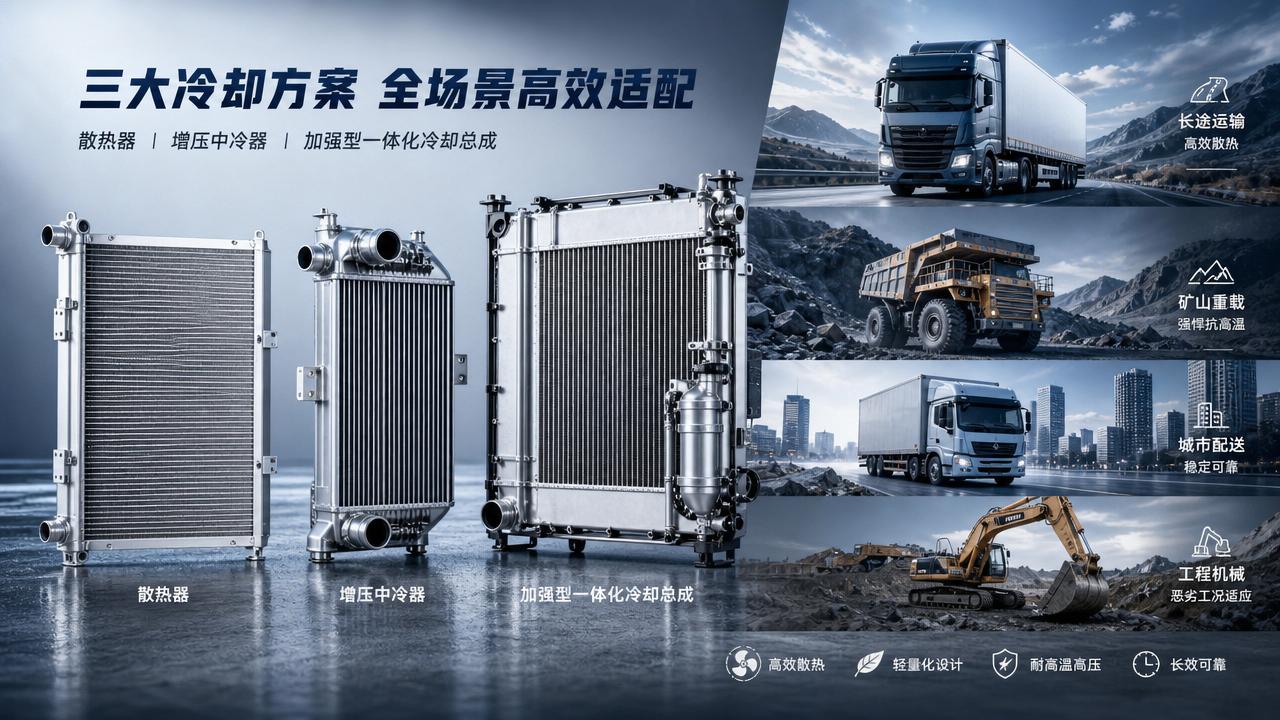
The same heavy truck cooling system performs very differently across long-haul logistics, mining transport, city distribution, and construction machinery support.
That is why configuration-based cost comparison should begin with operating scene. Thermal load patterns decide the suitable radiator core, tank material, and airflow design.
A highway tractor may prioritize stable cooling at speed. A dump truck on gradients may need stronger reserve capacity and vibration resistance.
Without scene-based evaluation, buyers may overpay for unnecessary capacity or underinvest in durability. Both errors raise total heavy truck cooling system cost.
Key factors that change configuration cost
- Core size and row count
- Aluminum or copper-brass construction
- Integrated radiator and intercooler layout
- Fan compatibility and airflow path
- Anti-vibration and anti-corrosion design
- Serviceability and replacement cycle
Typical heavy truck cooling system configurations by application
Long-haul transport: balanced cooling with lower lifecycle volatility
For highway operations, the heavy truck cooling system usually benefits from continuous airflow and predictable engine loading.
In this scene, a standard radiator plus intercooler package may control upfront investment while keeping fuel efficiency and reliability in balance.
The best value often comes from efficient fin design, good brazing quality, and stable sealing rather than extreme oversizing.
Mining and steep-grade hauling: higher upfront cost, lower risk cost
Harsh gradients, dust, and overload cycles create intense thermal stress. Here, heavy truck cooling system undercapacity quickly becomes expensive.
A larger core, reinforced tanks, thicker tubes, and stronger anti-clogging design may increase purchase cost. However, they can reduce overheating events and unplanned stops.
This is a classic case where higher configuration protects uptime and engine life.
Urban delivery and stop-start service: maintenance access matters more
Frequent idling and stop-start cycles reduce natural airflow. The heavy truck cooling system must perform well at low speed.
Compact modules with strong heat exchange and easy cleaning access can create better value than simply choosing a larger radiator.
Maintenance labor becomes a visible cost driver in city fleets, especially where vehicles have tight service windows.
Construction machinery support: vibration and contamination dominate selection
Heavy truck cooling system choices for machinery-support vehicles often resemble off-road requirements more than highway transport.
Dust loading, shock, and uneven roads require durable welds, stable brackets, and fins that resist deformation during cleaning.
A lower-cost unit may look competitive on paper, but poor durability raises replacement frequency and service interruption cost.
How different configurations compare on total cost
This comparison shows that heavy truck cooling system cost should be measured across purchasing, operation, and maintenance windows.
One useful benchmark is cost per operating hour or cost per 100,000 kilometers, not just invoice price.
What to check before approving a heavy truck cooling system specification
Before selecting a heavy truck cooling system, compare technical fit with actual service demands. A short checklist can reduce misjudgment.
- Review average and peak thermal load
- Check ambient temperature and altitude range
- Estimate dust exposure and cleaning frequency
- Confirm mounting structure and vibration level
- Measure service access time for replacement and cleaning
- Compare warranty support and quality consistency
These checks help convert a heavy truck cooling system decision into a measurable asset decision rather than a generic spare parts purchase.
Where related cooling module experience adds value
Cooling expertise from adjacent vehicle categories can improve heavy truck cooling system development, especially in heat exchange efficiency and module packaging.
For example, new energy cooling demands precise thermal management for batteries, motors, and power electronics under changing load conditions.
A relevant example is Radiator for BYD, model BYD476ZQB-1301010-025, developed for new energy vehicles.
Its design focus on efficient cooling, fit accuracy, and maximum heat exchange reflects principles that also matter in advanced heavy-duty module engineering.
Common cost mistakes when comparing heavy truck cooling system options
Mistake 1: using one route profile for every vehicle
A heavy truck cooling system that works on flat intercity transport may fail under steep climbs, congestion, or heavy dust.
Mistake 2: focusing only on material thickness
Thickness alone does not guarantee value. Tube layout, fin density, brazing quality, and airflow management shape actual cooling efficiency.
Mistake 3: ignoring cleaning and replacement time
Maintenance access directly affects service labor. Over time, this hidden factor can outweigh small differences in heavy truck cooling system purchase cost.
Mistake 4: underestimating failure ripple effects
Cooling failure may damage nearby systems, delay deliveries, and increase engine wear. The true cost reaches far beyond the radiator itself.
Practical selection advice for better long-term value
Choose the heavy truck cooling system by matching thermal demand, route severity, and maintenance conditions first. Price comparison should come after that match.
For stable long-haul work, balanced configurations usually deliver the best return. For dust, overload, and steep grades, reinforced modules justify their premium.
For urban fleets, prioritize easy serviceability and low-speed cooling efficiency. For machinery-related use, prioritize anti-vibration strength and anti-fouling design.
Request data on heat exchange performance, durability testing, and consistency across production batches. These details make heavy truck cooling system comparison much more accurate.
If the goal is better budget control, compare two or three configurations against actual operating scenes, then estimate maintenance intervals and downtime exposure.
That approach leads to a more defensible cooling system decision and a lower total cost over the equipment lifecycle.