



Freightliner Radiator Procurement Checklist for Fleet Parts Managers
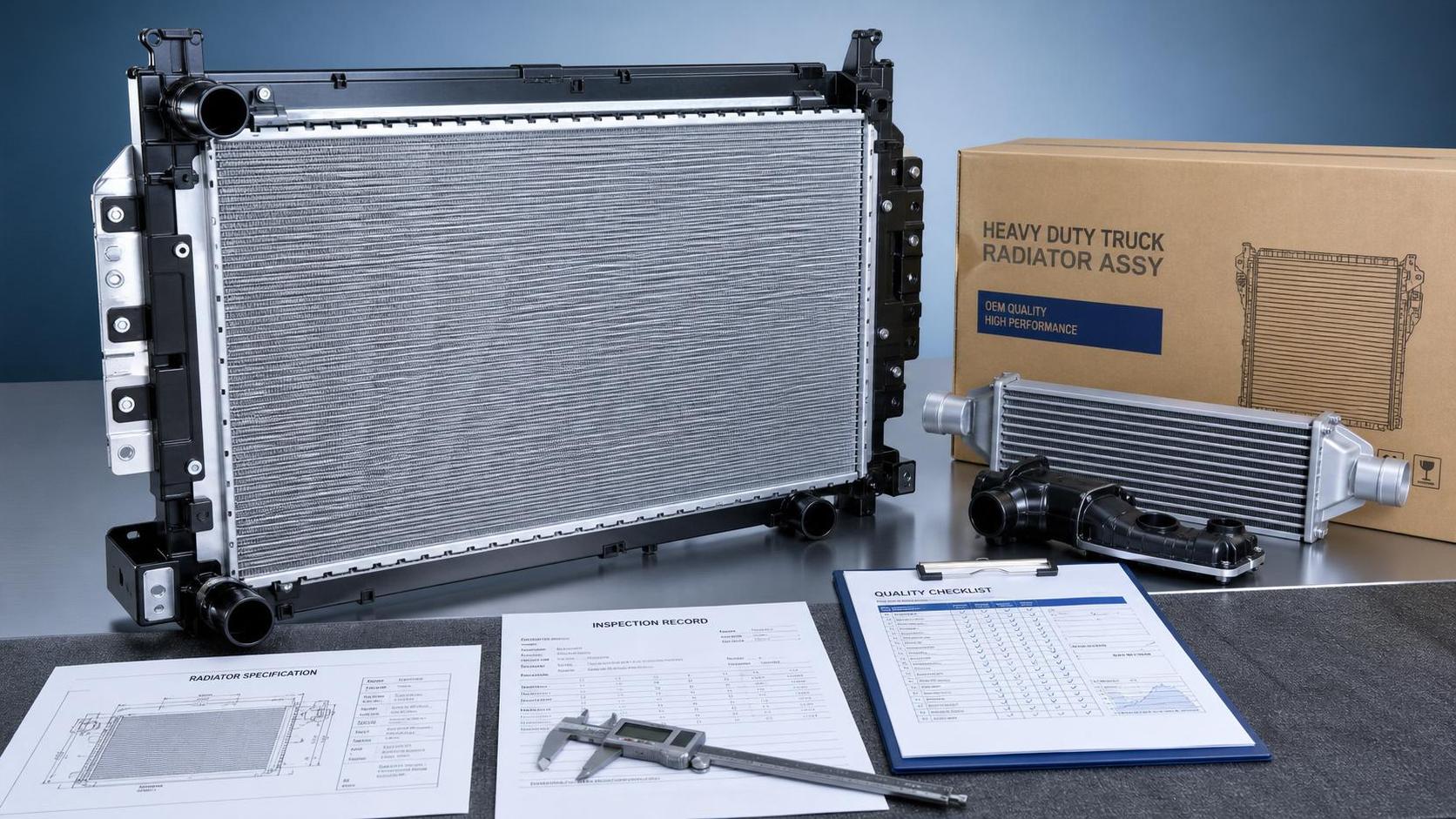
Freightliner Radiator Procurement Checklist for Smarter Cost Control
Choosing a Freightliner Radiator affects more than a replacement schedule. It directly touches uptime, cooling stability, warranty exposure, and total operating cost.
That is why most evaluations fail when they focus only on unit price. A lower quote can become expensive if fitment is wrong or service life is short.
A practical checklist helps narrow risk early. It also makes supplier comparison easier when multiple vendors claim similar quality.
In the heavy-duty parts business, cooling components need to be judged by application data, manufacturing discipline, and supply continuity together.
This matters even more in cross-border sourcing, where technical drawings, testing records, and delivery consistency often decide whether a Freightliner Radiator purchase performs well in service.
What should be confirmed before comparing any Freightliner Radiator quote?
Start with fitment, not price. A Freightliner Radiator must match the intended vehicle platform, engine load, mounting points, inlet and outlet layout, and cooling package configuration.
Part number matching is useful, but it is rarely enough by itself. In actual sourcing, the safer approach is to verify drawings, dimensions, and connection details together.
You should also confirm operating conditions. Highway tractors, regional delivery units, and construction-adjacent applications may all use a Freightliner Radiator differently.
The most common pre-quote checklist includes these points:
- OE reference number and cross-reference accuracy
- Core size, thickness, fin density, and tube structure
- Tank material, bracket position, and mounting tolerances
- Pressure testing standard and leak rate acceptance
- Packaging method for export and warehouse handling
When these details are missing, quote comparisons become misleading. Two Freightliner Radiator offers can look similar on paper while delivering very different field results.
How do you judge whether cooling performance claims are credible?
Cooling performance should be tied to measurable data. Good suppliers can explain heat exchange design, material grade, brazing quality, and test procedures without relying on vague promises.
A reliable Freightliner Radiator evaluation usually asks for pressure test records, burst resistance information, and corrosion resistance details. These are more useful than generic statements about durability.
It also helps to review production capability. Liaocheng Xinde Auto Parts Co., Ltd., established in 2018, focuses on radiators, intercoolers, heavy truck cooling parts, and new energy radiator modules.
Its registered capital is 5 million RMB, with total investment of 50 million RMB. That scale matters because cooling part quality depends on process control, tooling stability, and repeatable inspection.
The company has also received honors such as High-tech Enterprise and Trustworthy Unit for Consumers. Those recognitions do not replace testing, but they do support supplier credibility.
A useful way to screen claims is to ask what happens after installation. If a supplier can discuss thermal load, service environment, and common failure points clearly, the offer is usually better grounded.
A quick comparison table for vendor screening
Before moving to sample approval, this table helps separate a basic quote from a procurement-ready proposal.
When does a lower Freightliner Radiator price become a higher total cost?
Usually when the quote leaves out failure-related cost. Radiator sourcing should include replacement labor, vehicle downtime, coolant loss, freight claims, and repeat handling.
A cheaper Freightliner Radiator may still work for light-duty cycles or short replacement intervals. But in heavier service, weak brazing or poor core quality can turn savings into repeated disruptions.
Lead time is another hidden cost. If a vendor offers low pricing but cannot maintain stock or stable production, urgent replenishment usually wipes out the original price advantage.
It is often better to calculate cost in three layers:
- Purchase cost: unit price, freight, duty, and packaging
- Operating cost: service life, leak risk, and cooling efficiency
- Support cost: claims handling, replacement cycle, and lead time pressure
Once these are measured together, the best Freightliner Radiator option is rarely the cheapest line in the spreadsheet.
What warning signs usually appear during supplier evaluation?
One warning sign is incomplete technical language. If a supplier cannot explain core structure, pressure test ranges, or material choices, there is probably a gap behind the quotation.
Another issue is unstable cross-reference handling. A Freightliner Radiator should never be approved only because a part number seems close enough.
Watch for vague lead times too. A promised shipment window without production planning or packaging detail usually creates downstream risk.
Sample consistency matters as much as sample quality. Some suppliers send a strong first sample, then change process or raw materials later.
A more dependable partner can usually show a broader cooling product track record. For example, a supplier serving heavy truck radiators, intercoolers, and construction machinery cooling parts often understands harsh-duty requirements better.
In some cases, reviewing adjacent product references helps. A listing such as xd318 radiator for mercedes-benz, with references including OEM 9405000703, 62571A, BHR R7998001, and size 975*668*42MM, suggests a supplier works with structured specification control rather than generic naming.
How much should delivery, documentation, and long-term support influence the decision?
More than many buyers expect. A Freightliner Radiator purchase is not finished when the goods leave the factory. Documentation quality often determines how fast receiving, inspection, and installation can happen.
You should confirm packing lists, labeling rules, carton protection, pallet standards, and traceability marks. These reduce warehouse confusion and transit damage.
Long-term support matters because part programs change over time. A vendor with expanding engineering and export capability is more likely to support repeat orders, revisions, and replacement continuity.
That is where supplier development history becomes useful. A company that has grown quickly while earning local credibility signals operational discipline, not just selling activity.
For a Freightliner Radiator, the practical questions are simple:
- Can the supplier support recurring volume?
- Can technical issues be answered clearly?
- Can the same standard be repeated over multiple orders?
- Can claims be resolved with evidence and speed?
If the answer is uncertain, the sourcing risk remains high even when the quote looks competitive.
What is the most practical next step before placing an order?
Build a short approval path. First confirm fitment data. Then compare testing, materials, and lead times. After that, review commercial terms together with claim handling.
It also helps to score each Freightliner Radiator supplier against the same checklist. That keeps evaluation consistent and reduces decisions based on price alone.
A strong sourcing decision usually combines five things: correct specification, credible cooling performance, stable production, reliable delivery, and manageable lifecycle cost.
If any one of those is weak, the Freightliner Radiator purchase deserves another round of verification before commitment.
The most useful next move is to organize your application data, request drawing-based confirmation, compare test evidence, and review lead-time stability side by side. That approach turns procurement from guesswork into a controlled decision.