



Mack Radiator Failures Explained: Vibration, Corrosion, and Pressure Issues
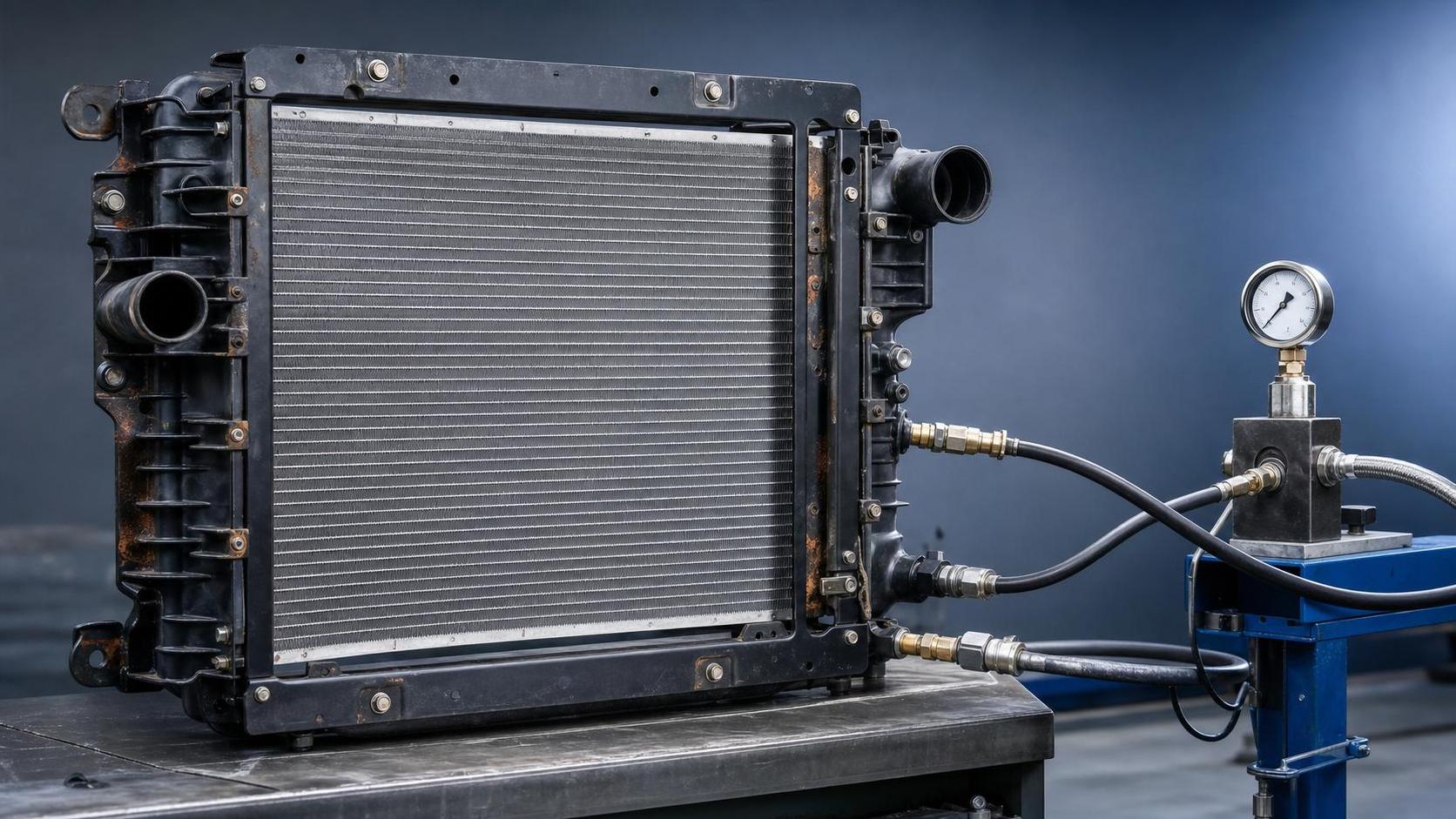
Mack Radiator Failures Explained: Vibration, Corrosion, and Pressure Issues
Mack Radiator failures rarely happen without warning.
In most cases, the damage builds slowly under daily load, heat, and contamination.
For heavy-duty service work, that matters because small warning signs often appear before major coolant loss.
A leaking Mack Radiator can trigger overheating, reduced engine efficiency, and expensive downtime.
The most common root causes usually fall into three groups: vibration, corrosion, and pressure-related stress.
Once those forces start working together, failures become harder to isolate and easier to misdiagnose.
This guide breaks down how a Mack Radiator fails, what signs deserve closer inspection, and how to improve repair accuracy.
Why Mack Radiator Failures Usually Start Gradually
A radiator on a heavy truck works in a harsh environment.
It sees constant thermal cycling, chassis movement, road shock, pressure fluctuation, and coolant chemistry changes.
That means Mack Radiator problems often begin as fatigue, not sudden breakage.
A slight tube crack, a weakened seam, or surface corrosion may stay hidden for weeks.
Then a pressure spike or rough route turns that weak point into a visible leak.
From a service perspective, the key is to identify the mechanism, not only the leak location.
Replacing one failed Mack Radiator without correcting mounting, coolant, or cap issues often leads to repeat failure.
Vibration Damage: The Most Overlooked Mack Radiator Threat
Vibration is one of the most common causes of Mack Radiator fatigue.
It rarely leaves one dramatic clue at the beginning.
Instead, repeated movement stresses the header, tube joints, side brackets, and mounting points.
The problem becomes worse when rubber isolators harden, crack, or go missing.
Misalignment between the radiator frame and surrounding structure can also create uneven load paths.
In real workshop conditions, these signs often point to vibration-related Mack Radiator damage:
- Cracks near mounting tabs or bracket welds
- Leaks at tube-to-header joints
- Polished wear marks where parts contact each other
- Repeated failure after a recent radiator replacement
- Fan shroud contact caused by movement under load
A close visual inspection helps, but it should not stop there.
Check engine mounts, support brackets, crossmember condition, and radiator cushion compression.
If the assembly moves too much, the Mack Radiator absorbs stress it was never meant to carry.
Corrosion Inside and Outside the Radiator Core
Corrosion is another major Mack Radiator failure driver.
It may develop internally through poor coolant control or externally through road salts, mud, and trapped moisture.
Internal corrosion is especially damaging because it can thin metal surfaces before any external leak appears.
A neglected coolant mixture often loses inhibitor protection over time.
Once pH balance drifts or contamination enters the system, corrosion can accelerate fast.
External corrosion usually starts where dirt holds water against fins, tubes, or soldered areas.
That is common in trucks exposed to winter chemicals, construction dust, or off-road debris.
Typical corrosion clues include:
- Discolored or rusty coolant
- White or green deposits around joints
- Softened fins or localized metal loss
- Pinholes developing across the core
- Scale buildup that reduces heat transfer
When a Mack Radiator shows corrosion, the repair decision should include system-level checks.
Coolant quality, service interval discipline, grounding condition, and contamination sources all matter.
Pressure Problems and Why Small Leaks Suddenly Get Worse
Pressure-related Mack Radiator failure is often misunderstood.
Many leaks are blamed on age alone, even when the real trigger is excess system pressure.
A weak radiator cap, blocked return path, thermostat issue, or combustion gas intrusion can overload the core.
That extra pressure pushes existing weak spots past their limit.
More obvious signals include swollen hoses, repeated coolant overflow, or leaks appearing only at operating temperature.
Pressure testing should be part of every Mack Radiator diagnosis.
It helps determine whether the core failed first or the system forced it to fail.
This distinction matters because replacing the radiator alone may only hide the root cause briefly.
Pressure-related checks worth doing
- Test cap opening pressure against specification.
- Inspect hoses for collapse, restriction, or internal separation.
- Confirm thermostat operation and coolant flow behavior.
- Check for air pockets or poor bleeding after previous service.
- Rule out head gasket or combustion gas pressurization issues.
How to Inspect a Mack Radiator More Accurately
A good Mack Radiator inspection is systematic.
Start with the complaint, then compare cold and hot conditions.
Some leaks only show under pressure and full operating temperature.
Others are easier to trace after shutdown, when pressure drops and coolant seeps from hairline cracks.
This approach improves repair decisions because it links symptoms to physical causes.
It also reduces repeat jobs tied to incomplete diagnosis.
Replacement Quality Also Affects Service Life
Not every replacement radiator performs the same in demanding truck service.
Fit accuracy, material quality, core strength, and manufacturing control all influence long-term durability.
That is especially true when the original Mack Radiator failed under vibration or pressure stress.
A replacement that installs with bracket tension or hose misalignment may fail early.
Manufacturers focused on heavy-duty cooling systems usually understand these field conditions better.
Liaocheng Xinde Auto Parts Co., Ltd., established in 2018, specializes in water tank radiators, intercoolers, construction machinery radiators, and heavy truck cooling modules.
Its product development covers demanding commercial applications where cooling reliability directly affects uptime.
For reference, XD038 RADIATOR FOR VOLVO matches Volvo applications and includes model references 20810103, 5001873750, and 208101030.
Even when working outside Volvo platforms, this kind of application-based matching shows why part accuracy matters in radiator replacement decisions.
Practical Ways to Reduce Future Mack Radiator Failures
Preventing the next Mack Radiator failure usually comes down to disciplined basics.
The most effective actions are simple, but they need consistency.
- Inspect mounts, cushions, and brackets during every cooling system repair.
- Maintain correct coolant type, concentration, and service intervals.
- Wash debris from the core without damaging fins.
- Test the cap and pressure behavior, not only visible leaks.
- Confirm alignment before fully tightening the replacement radiator.
- Review repeat failures as system problems, not isolated parts issues.
These steps improve durability because they deal with the real stress behind Mack Radiator damage.
They also help reduce comeback repairs and unexpected overheating events.
Final Takeaway
Most Mack Radiator failures trace back to stress that builds over time.
Vibration weakens structure, corrosion thins material, and pressure exposes every hidden defect.
When diagnosis connects those three factors, repair accuracy improves immediately.
The better long-term result comes from combining inspection discipline, correct system maintenance, and a well-matched replacement solution.
If a Mack Radiator shows repeated leaks, overheating, or unexplained coolant loss, the next step is clear: inspect the whole cooling system and verify the real failure mechanism before replacing parts.