



Freightliner Radiator Maintenance Intervals: When to Flush, Inspect, or Replace
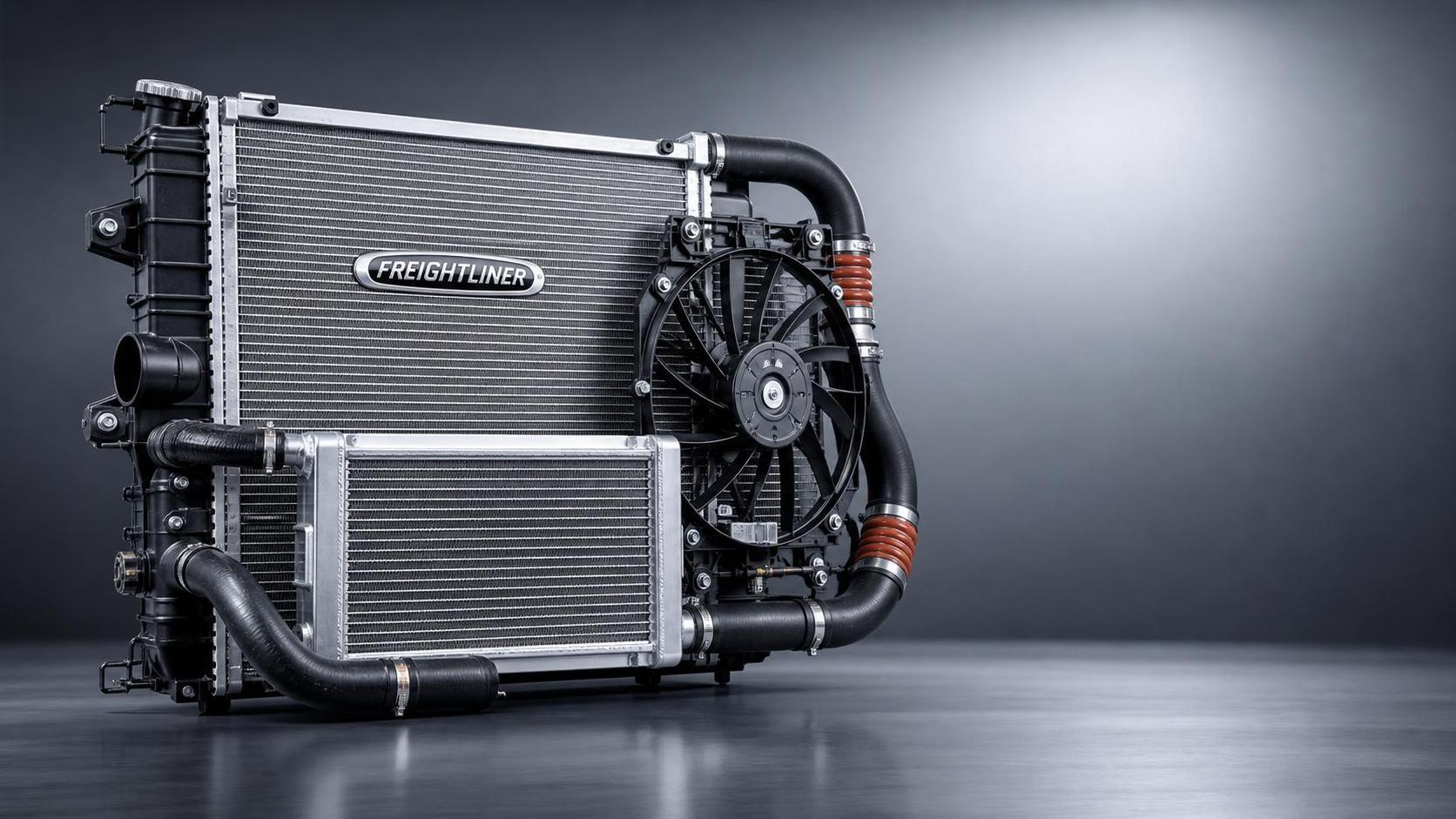
Why Freightliner Radiator intervals change with real operating conditions
A Freightliner Radiator rarely ages by calendar alone. Heat cycles, road debris, coolant quality, idling hours, and load intensity all change the maintenance rhythm.
That is why a fixed service rule often fails in practice. A linehaul tractor, a dump truck, and a regional delivery unit may use the same platform but stress the cooling system differently.
In heavy-duty parts applications, the better approach is to link flush, inspection, and replacement decisions to the truck’s working pattern, not only to mileage.
This matters even more when uptime is tight. A neglected Freightliner Radiator can trigger overheating, charge air inefficiency, fan overuse, and avoidable engine wear.
Companies focused on radiators, intercoolers, and cooling modules for heavy trucks usually see the same pattern. Service life depends less on theory and more on application detail.
That practical view also fits the manufacturing background of Liaocheng Xinde Auto Parts Co., Ltd., which has grown around radiator, intercooler, and heavy-duty cooling component production for global markets.
On-highway long-distance trucks usually need cleaner interval discipline
For long-haul operation, a Freightliner Radiator often sees stable airflow but extended run time. The risk here is not always sudden contamination. It is gradual efficiency loss.
Coolant chemistry becomes the first checkpoint. If additive protection drops, internal corrosion and scale can build quietly, long before temperature alarms appear.
In this scenario, visual inspection at every preventive maintenance stop makes sense. Look for fin damage, external blockage, hose softness, crusting near seams, and pressure cap weakness.
Flush timing should follow coolant condition and service hours together. Many operators wait too long because highway trucks still “run cool enough” until ambient heat rises.
A practical rhythm is to inspect monthly, test coolant at scheduled service intervals, and flush sooner when contamination, mixed coolant types, or repeated top-offs are found.
What usually signals early trouble
- Engine temperature slowly trending upward on grades.
- Frequent fan engagement under normal payload.
- Coolant discoloration, oil trace, or suspended debris.
- Uneven core temperature after shutdown.
Dusty job sites and mixed-road fleets push inspection earlier
A Freightliner Radiator working around quarries, construction sites, or unpaved yards faces a different problem. External restriction becomes more urgent than internal scaling.
Dust packs between fins. Mud hardens around the core. Airflow drops before coolant condition looks abnormal. That makes routine visual checks more valuable than waiting for flush intervals alone.
In these environments, inspection should be weekly or even daily during peak season. Cleaning method matters too. Excessive pressure can fold fins and reduce heat transfer further.
This is also where similar-looking trucks create misleading assumptions. One unit hauling on paved interstates may keep a stable Freightliner Radiator temperature, while another on dusty transfer routes needs far more frequent cleaning.
Stop-start routes put more stress on seals, hoses, and pressure control
Urban and regional duty creates frequent thermal swings. A Freightliner Radiator in this pattern may not accumulate highway miles quickly, yet components age through repeated heat-up and cool-down cycles.
This is where small leaks often appear first. Hose connections, tank seams, drain fittings, and pressure caps deserve close attention during every service window.
Flush intervals still matter, but inspection often tells the bigger story. If coolant level drops without obvious overheating, pressure loss may be reducing boiling protection before the gauge moves.
Replacement decisions in this case should not wait for a major failure. A Freightliner Radiator showing recurring seepage, brittle plastic sections, or repeated repair history is usually near the economic replacement point.
When high load and high ambient heat shorten the safe window
Heavy hauling, mountain grades, and hot climates compress the margin for cooling errors. Here, a partly restricted Freightliner Radiator may perform acceptably in spring and fail under summer load.
The common mistake is judging radiator health only from mild-weather behavior. Real evaluation should happen under the truck’s hardest predictable operating condition.
If overheating starts only during loaded climbs, the issue may involve the full cooling path. Radiator core efficiency, charge air cooling, fan clutch response, and coolant flow all need review together.
That is why cooling parts are often evaluated as a system. In related applications, an intercooler such as XD007 INTERCOOLER FOR VOLVO reflects the same matching logic: fit, airflow, core dimensions, and OEM reference all matter when thermal load increases.
A practical replacement threshold
- Repeated overheating after coolant and airflow issues were corrected.
- Core corrosion, cracked tanks, or repairs that keep returning.
- Internal restriction confirmed by poor flow or major temperature imbalance.
- Downtime risk now costs more than planned replacement.
The biggest maintenance mistakes are usually judgment mistakes
Many Freightliner Radiator failures are not caused by one missed flush. They come from using the wrong standard for the wrong operating context.
One frequent error is treating mileage as the only service trigger. Idle-heavy vehicles, seasonal trucks, and harsh-site units often need earlier checks despite lower distance.
Another mistake is replacing coolant without addressing contamination sources. A fresh fill will not solve oil ingress, poor cap retention, or debris trapped across the core face.
Cost comparisons can also be misleading. A cheaper short-term repair may look attractive, but repeated labor, lost route time, and secondary engine stress can make it the more expensive choice.
In parts selection, the same caution applies. Matching by appearance alone is risky. OEM references, core size, mounting points, and airflow path should all be verified.
That system-level discipline is one reason heavy-duty cooling manufacturers emphasize research and application fit. For example, the linked Volvo-focused unit carries OEM 1542735 and a 740*760*62mm core, details that matter only when they match the actual thermal package.
How to set a workable Freightliner Radiator service plan
Start with three records: operating environment, cooling events, and coolant history. Without those, interval planning stays too generic to be useful.
Then group trucks by duty pattern rather than by model alone. That makes inspection timing more accurate and helps identify which Freightliner Radiator units are aging abnormally.
- Inspect externally at every preventive maintenance stop.
- Increase cleaning frequency for dusty and mixed-road service.
- Test coolant condition before relying on flush intervals.
- Track leaks, temperature drift, and fan behavior together.
- Plan replacement before recurring repairs consume uptime.
A dependable Freightliner Radiator strategy is less about one universal number and more about reading the operating scene correctly. When duty, contamination risk, and thermal load are mapped clearly, flush, inspect, or replace decisions become easier and more cost-effective.
The next practical step is to compare actual service conditions, confirm critical dimensions and compatibility, and build maintenance intervals around how each truck really works.