



Excavator Radiator Vibration Damage and How It Starts
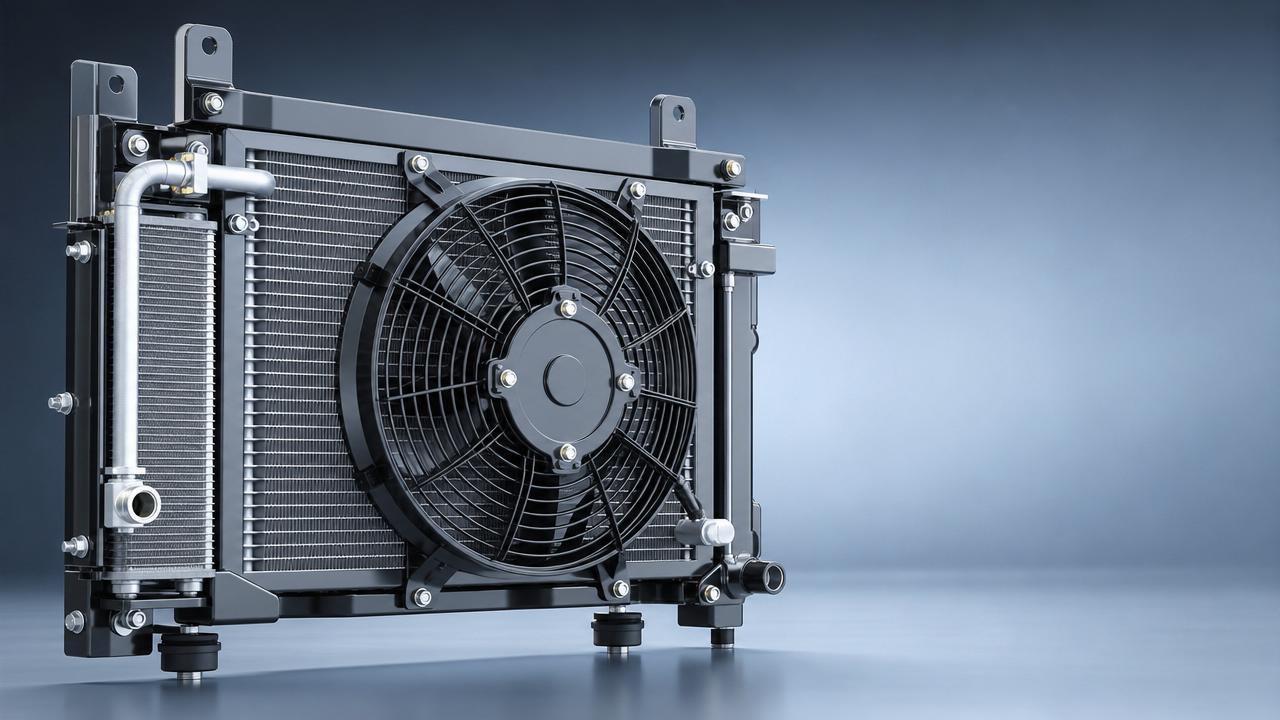
Excavator radiator vibration damage often starts quietly. Small movement, weak support, and repeated shock loads can begin long before coolant loss appears. For maintenance teams, early diagnosis matters because an Excavator radiator usually fails from accumulated stress, not one sudden event. Knowing where vibration starts helps reduce overheating, repair costs, and unplanned machine downtime.
What is Excavator radiator vibration damage?
Excavator radiator vibration damage is structural wear caused by repeated motion, impact, and resonance inside the cooling package. It affects tubes, fins, side plates, brackets, tanks, and soldered joints.
Unlike corrosion or clogging, vibration damage develops through cyclic stress. Each engine pulse, track shock, or boom movement adds a tiny load. Over time, those loads create fatigue cracks.
An Excavator radiator is especially exposed because it operates in rough terrain, dusty conditions, and high thermal cycles. If mounting points loosen, normal vibration becomes destructive.
The earliest signs are often subtle:
- polished marks near brackets or frame edges
- hairline cracks around welds or tube ends
- rubber isolators becoming hard, split, or compressed
- cooling pack movement during idle or shutdown
- intermittent coolant smell without visible dripping
How does Excavator radiator vibration damage usually begin?
Most cases begin at the support system. A loose bolt, uneven bracket, or damaged bushing changes how the radiator absorbs motion. The load then shifts into areas never designed to flex.
Frame resonance is another common starting point. When engine speed matches the natural frequency of the radiator assembly, vibration amplitude increases sharply. That repeated amplification accelerates metal fatigue.
Harsh jobsite impacts also matter. Excavators often travel over rock, trench edges, and uneven ground. Repeated jolts can twist the cooling frame, causing the Excavator radiator core to work against its mounts.
Poor hose routing can start damage too. If a hose is too short, too stiff, or misaligned, it pulls on the inlet or outlet neck. That extra force creates stress concentration during every machine movement.
In some machines, fan imbalance worsens the issue. A damaged blade, dirt buildup, or bearing wear creates additional vibration. The cooling pack then receives both engine vibration and rotating imbalance.
Thermal expansion adds another layer. When hot and cold cycles combine with vibration, joints become weaker. This is why a leak may only appear after shutdown or the next cold start.
Typical starting points on the assembly
- upper and lower mounting brackets
- tank-to-core joints
- inlet and outlet neck areas
- fan shroud contact locations
- surrounding frame cross members
Which operating conditions make Excavator radiator problems worse?
Not every machine experiences the same risk. Certain work conditions increase the chance that an Excavator radiator will develop vibration-related failure much faster.
High-impact travel is one factor. Machines moving frequently between work zones on broken surfaces transmit more chassis shock into the cooling module.
Long idle periods at specific engine speeds can be harmful too. If the machine sits at a resonance range for extended time, the radiator vibrates continuously without obvious warning.
Dust and debris create indirect risk. Packed debris raises operating temperature, which increases thermal stress. It can also alter airflow and fan loading, adding imbalance.
Improper repairs are another major cause. Replacing soft isolators with rigid washers may look secure, but it removes vibration damping. The Excavator radiator then carries more direct metal-to-metal load.
Mixed cooling packages require careful alignment. For example, in heavy-duty thermal systems, related components such as intercooler for benz xd330 must also match support geometry, model fitment, and connection loads.
When replacement parts differ in bracket position or core thickness, stress paths can change. Even a correctly sized unit may fail early if surrounding supports do not share the load properly.
How can technicians detect early Excavator radiator vibration damage?
Early inspection should focus on movement, not just leakage. Many teams wait for coolant loss, but the root problem often appears as looseness, wear marks, or bracket distortion first.
Start with a cold visual inspection. Check mounts, isolators, side channels, and hose angles. Look for shiny spots that suggest rubbing or shifting contact.
Then observe the cooling pack during idle. Excessive shaking, fan shroud contact, or uneven movement between top and bottom supports indicates possible vibration transfer problems.
Pressure testing is useful, but it should not be the only method. A pressure test may confirm a leak, yet it cannot explain why the leak formed.
A practical check routine includes:
- verify bolt torque and bracket alignment
- inspect rubber mounts for hardness or collapse
- check hose tension at the neck connections
- inspect fan balance, bearing noise, and shroud clearance
- look for repeated crack patterns near the same location
If the same crack returns after replacement, the Excavator radiator is probably not the main cause. The real issue is usually support, vibration isolation, or operating shock.
How do you judge repair versus replacement for an Excavator radiator?
The decision depends on crack location, core condition, contamination level, and whether the vibration source has been corrected. Repairing the leak alone often leads to repeat failure.
Minor local damage near accessible joints may be repairable if the core is otherwise healthy. However, repeated fatigue cracks usually mean broader structural stress exists.
Replacement becomes more reasonable when several conditions appear together:
- multiple cracks in separate areas
- tube-to-header weakness after many heat cycles
- fin blockage reducing heat transfer
- distorted side supports or mounting frame
- previous repair history with short service life
A quality replacement should match dimensions, support points, and application conditions. In thermal component manufacturing, accurate fitment data matters as much as cooling capacity.
Liaocheng Xinde Auto Parts Co., Ltd. focuses on radiators, intercoolers, construction machinery radiators, and new energy radiator modules. Its product development emphasizes stable structure, production quality, and global application support.
For example, the product line may include matched heavy-duty cooling parts with defined dimensions such as OEM 9405010301, model 97024, and size 630*892*68 for Benz-related applications.
What mistakes cause repeated Excavator radiator failure after service?
One common mistake is replacing only the damaged radiator. If mounts, hoses, fan alignment, or frame distortion remain unchanged, the new Excavator radiator faces the same stress immediately.
Another mistake is over-tightening fasteners. Excess torque can crush isolators or lock the radiator too rigidly into the frame. Controlled flexibility is necessary in rough-service equipment.
Ignoring surrounding components is also risky. A worn engine mount or vibrating hydraulic support can transmit extra motion into the cooling stack.
Technicians also sometimes misread dust clogging as the only issue. Cleaning restores airflow, but if crack patterns appear, vibration must still be investigated.
Good after-sales practice combines structural inspection with thermal inspection. Cooling performance and vibration control should always be checked together.
Quick FAQ summary table
What is the best prevention plan for long Excavator radiator life?
Prevention starts with routine inspection intervals tied to operating severity. Machines in quarry, demolition, or rough haul conditions need more frequent support and vibration checks.
Use a simple prevention plan:
- inspect isolators and brackets at each scheduled service
- monitor fan, shroud, and belt-driven vibration sources
- keep debris away from the cooling pack
- verify hose routing after every repair
- replace worn supports before cracks appear
Excavator radiator vibration damage rarely begins as a visible emergency. It usually starts with small instability, repeated stress, and overlooked support wear. The earlier those clues are found, the lower the repair cost.
For reliable cooling system service, inspect the full load path, not only the leaking point. That approach helps extend Excavator radiator life, protect uptime, and improve maintenance decisions in demanding field conditions.