



Excavator Radiator Overheating Signs That Are Easy to Miss
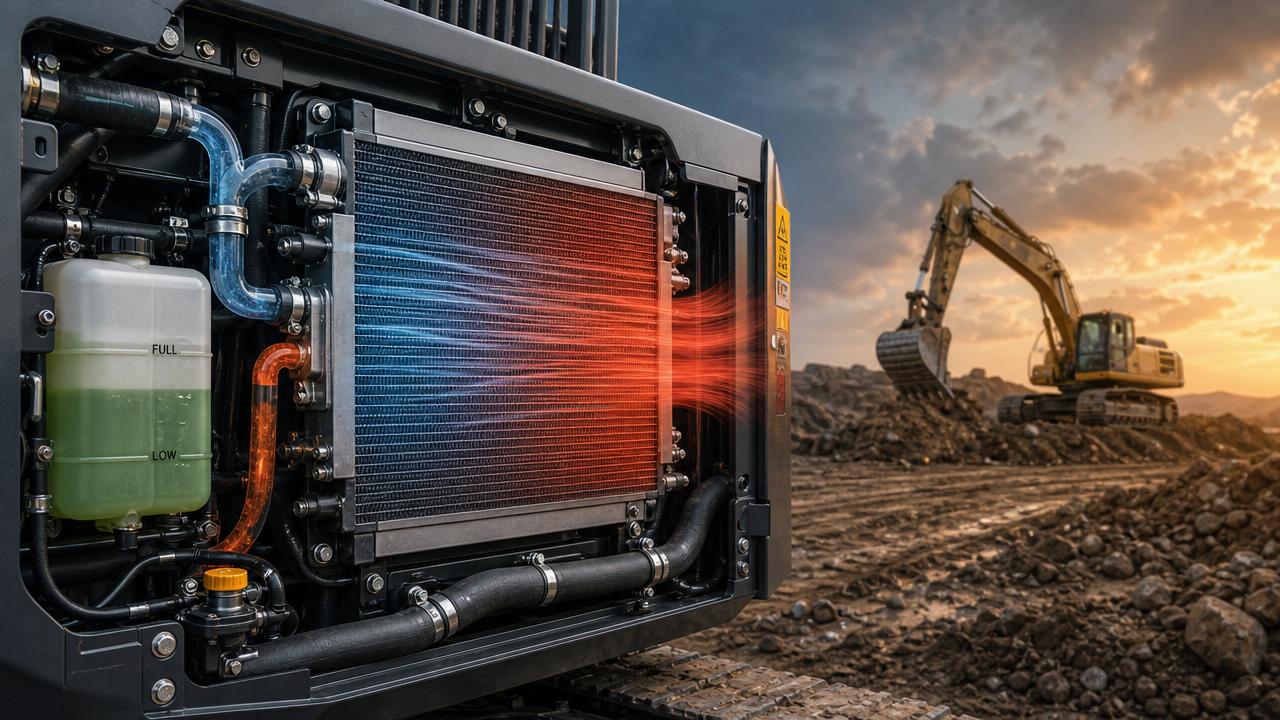
Excavator Radiator Problems Often Start Before the Gauge Turns Red
Small temperature shifts, coolant odor, or weak cabin heat often appear before a major Excavator radiator failure becomes obvious.
These signs are easy to dismiss during heavy work, especially when production pressure is high and the machine still feels usable.
However, hidden overheating can reduce cooling efficiency, stress seals, damage hoses, and shorten engine life long before a shutdown happens.
In construction machinery parts, early diagnosis matters because downtime usually costs more than the radiator repair itself.
Knowing how an Excavator radiator behaves under different jobsite conditions helps prevent lost hours, expensive breakdowns, and secondary component damage.
Why Warning Signs Change Across Working Scenarios
An Excavator radiator does not overheat the same way in every application.
Dusty earthmoving, long idle periods, steep climbs, and hot weather all create different cooling demands.
A machine in quarry work may show airflow restriction first.
A machine in urban utility digging may show fluctuating temperature during stop-and-go operation.
That is why early signs should be judged within the real working scene, not only by one dashboard reading.
Cooling modules in heavy equipment and new energy vehicles follow the same principle.
For example, Radiator for BYD is designed for efficient heat exchange in demanding thermal systems.
That same focus on fit, flow, and heat transfer also defines a reliable Excavator radiator solution.
Scenario 1: Dusty and High-Debris Jobsites Hide Early Excavator Radiator Trouble
On demolition, mining, and dry soil sites, debris often blocks fins before operators notice rising temperature.
The first sign may not be a hot alarm.
Instead, the Excavator radiator may lose cooling consistency during long working cycles.
Easy-to-miss clues in dusty conditions
- Temperature climbs slowly near the end of a shift
- Fan runs harder than usual
- Engine bay feels hotter after routine work
- Fine dust sticks to damp radiator areas
- Fuel consumption increases without a clear reason
When fins clog, airflow drops and heat cannot leave the core efficiently.
If ignored, the Excavator radiator may force the whole cooling system to work under constant thermal strain.
Scenario 2: Stop-and-Go Operation Causes Fluctuating Temperatures
Utility work, roadside repair, and short-cycle trenching create repeated idle-to-load transitions.
In this scene, overheating often appears as unstable temperature rather than a steady increase.
What to watch for during short-cycle work
The gauge may rise under load, then drop at idle, then rise again faster than before.
This pattern can point to restricted coolant flow, trapped air, or an aging Excavator radiator core.
Another missed sign is weak cabin heat in cold conditions.
That can suggest poor coolant circulation, low coolant level, or internal blockage.
A sweet coolant smell after parking also deserves attention, even without visible drips.
Scenario 3: Heavy Load and Hot Weather Expose Hidden Cooling Weakness
Summer excavation, slope work, and long travel under load push the cooling system hardest.
In these conditions, a borderline Excavator radiator quickly shows its limits.
Subtle signs before severe overheating
- Coolant level drops slightly between inspections
- Overflow tank shows unusual bubbling after shutdown
- Upper and lower hoses show abnormal temperature difference
- The machine recovers slowly after rest breaks
- The radiator cap area shows residue or moisture
These symptoms may indicate pressure loss, scale buildup, partial blockage, or weakened cooling capacity.
A healthy Excavator radiator should manage peak heat without repeated near-overheat events.
How Different Jobsite Conditions Change Excavator Radiator Needs
Practical Matching Advice for Excavator Radiator Inspection and Replacement
Choosing the right response depends on the symptom, job intensity, and component condition.
A cleaning-only decision may save money today but create overheating tomorrow if the core is already degraded.
Use this field-based checklist
- Check fins for bent areas, packed dirt, and oil film
- Inspect tanks, seams, and hose joints for dried coolant traces
- Compare hose temperatures after warm-up
- Monitor whether overheating appears under one specific workload
- Confirm fan, thermostat, and water pump condition before blaming only the core
- Replace an Excavator radiator when blockage, leakage, or heat rejection loss becomes repeatable
Quality matters in replacement parts.
Liaocheng Xinde Auto Parts Co., Ltd. specializes in radiators, intercoolers, and construction machinery cooling components for global applications.
Its development in heavy truck, machinery, and new energy cooling products reflects the value of precise fit and reliable heat exchange.
Common Misjudgments That Let Excavator Radiator Overheating Get Worse
Several warning signs are often misread as minor issues.
- Assuming a normal gauge means the Excavator radiator is healthy
- Ignoring coolant smell because no puddle is visible
- Cleaning only the outer surface while internal scale remains
- Treating repeated top-offs as normal seasonal loss
- Overlooking weak heater output during cold starts
Another mistake is replacing one part without reviewing the entire thermal circuit.
A radiator can suffer because of fan failure, wrong coolant mixture, air intrusion, or poor maintenance intervals.
Thermal management quality is important across equipment categories.
For example, BYD476ZQB-1301010-025 shows how engineered cooling parts support safety and stable performance in new energy vehicles.
Take the Next Step Before a Minor Excavator Radiator Issue Becomes Major
If temperature behavior has changed, do not wait for a full overheating alarm.
Record the operating scene, inspect the cooling path, and verify whether the Excavator radiator is losing airflow, pressure, or coolant flow.
Early action reduces unplanned downtime and protects the engine, hoses, seals, and related parts.
When replacement is necessary, select a radiator built for the actual workload, ambient temperature, and fitment requirements.
A dependable Excavator radiator is not just a spare part.
It is a key safeguard for continuous machine performance, lower repair costs, and stable operation on demanding jobsites.