



Excavator Radiator Upgrades Seen at 2026 Industry Exhibitions
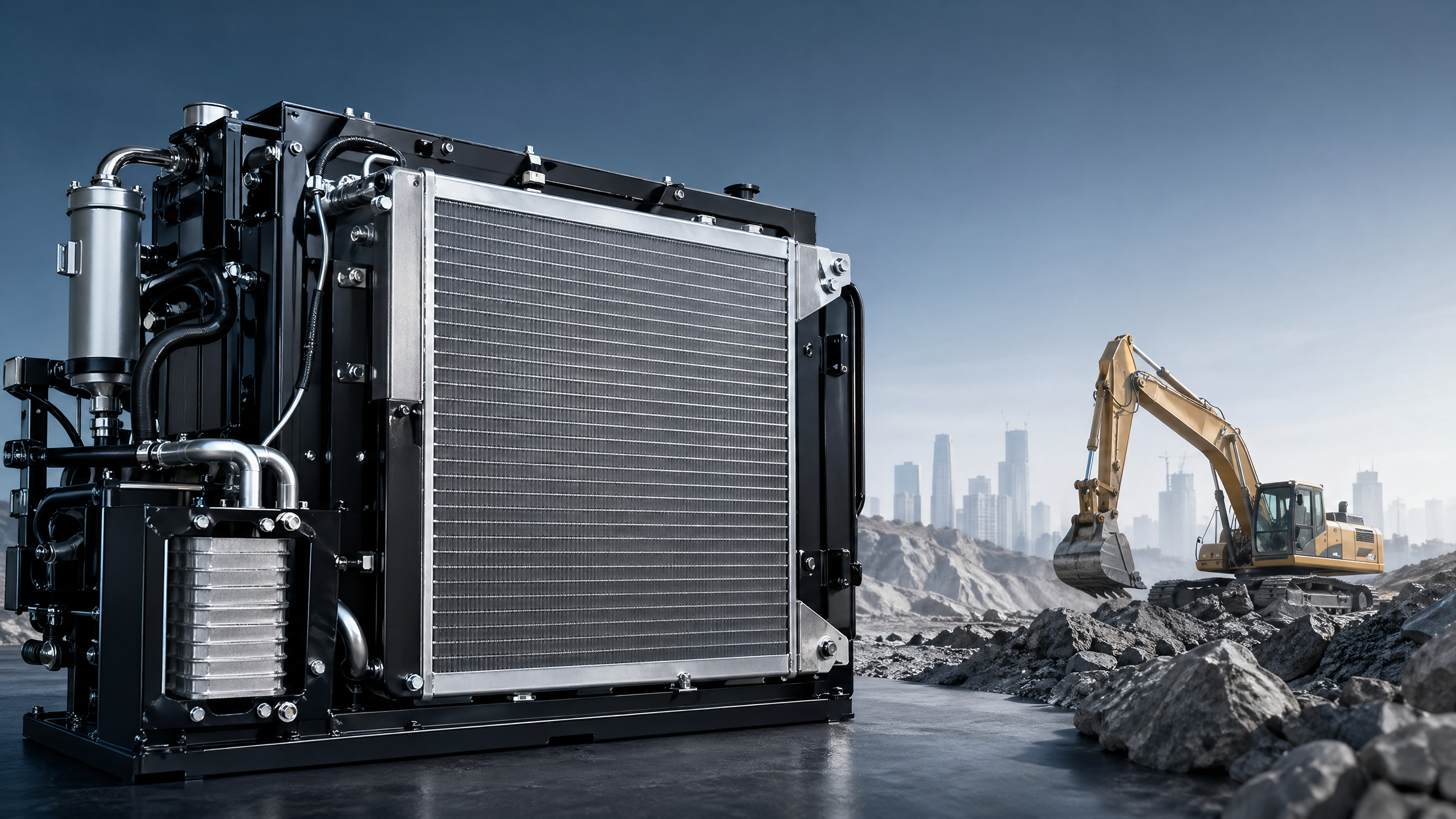
At 2026 industry exhibitions, Excavator radiator upgrades are drawing strong attention from project managers focused on uptime, heat control, and equipment reliability. From higher-efficiency cooling cores to more durable materials for harsh jobsite conditions, these innovations signal practical value for construction fleets. For decision-makers evaluating parts performance and long-term operating costs, the latest radiator developments are becoming an important factor in equipment planning.
Why Scenario Differences Matter When Evaluating Excavator Radiator Upgrades
For project managers, an Excavator radiator is not simply a replacement part. It influences machine availability, maintenance scheduling, fuel efficiency stability, and the risk of heat-related shutdowns during peak production windows. At 2026 exhibitions, one clear message has emerged: radiator upgrades should be judged by jobsite conditions, machine duty cycle, and service expectations rather than by price alone.
This matters because excavators operate across very different environments. A 20-ton machine moving soil in a temperate urban jobsite may face moderate thermal loads for 6 to 8 hours per day, while a quarry excavator can run under near-continuous heavy load for 10 to 14 hours. In both cases, the cooling system must manage heat transfer, vibration, dust loading, and coolant flow consistency, but the acceptable performance margin is not the same.
An upgraded Excavator radiator typically reflects improvements in core design, fin structure, brazing stability, corrosion resistance, and mounting durability. For procurement teams in the parts industry, these changes are important because they can reduce maintenance frequency over 12-month to 24-month operating cycles. For project leaders responsible for deadlines, radiator choice can directly affect whether equipment remains productive during summer peaks, remote deployments, or high-dust work phases.
What exhibitions are signaling to buyers
The exhibition trend is not only about higher cooling capacity. Buyers are increasingly reviewing total operating fit: resistance to clogging, stability under repeated vibration, compatibility with mixed fleets, and support for faster replacement. In practice, a moderate improvement in thermal efficiency may be less valuable than a design that keeps airflow stable when external fins accumulate dust or debris after 150 to 300 operating hours.
Liaocheng Xinde Auto Parts Co., Ltd., established in 2018 with a registered capital of 5 million RMB and a total investment of 50 million RMB, has focused its growth on radiator, intercooler, construction machinery radiator, heavy truck cooling, and new energy radiator module manufacturing. For buyers comparing exhibitors, this kind of production focus matters because parts suppliers with dedicated thermal-management capability are generally better positioned to discuss application fit, material options, and production consistency.
In short, the right Excavator radiator upgrade depends on where the machine works, how long it runs, and what downtime costs the project can tolerate. That is why scenario-based evaluation is becoming a more practical buying method than broad trend-following.
Three Typical Jobsite Scenarios and What Each One Demands
Most project managers can group cooling-system decisions into three common operating scenarios: urban infrastructure construction, quarry or mining support, and remote civil works such as road expansion or water-control projects. Each scenario places different stress on an Excavator radiator, and exhibition upgrades should be interpreted through that lens.
The comparison below helps decision-makers identify which radiator features deserve priority. Instead of asking which design is “best” in general, it is more useful to ask which configuration reduces risk in a specific duty pattern, ambient range, and maintenance setting.
The table shows why one radiator specification cannot serve every fleet equally well. For example, in quarry environments, a slight increase in core efficiency may offer less benefit than a design that stays functional after repeated dust buildup and vibration exposure. In remote civil works, long-term reliability and replacement planning may outweigh performance gains measured under ideal workshop conditions.
Urban projects: uptime in compressed schedules
In municipal excavation, roadworks, drainage installation, and utility trenching, machine schedules are often compressed into narrow access windows. Here, the right Excavator radiator should support consistent temperature control even when the machine idles, repositions, and resumes work repeatedly. Temperature spikes can occur under uneven airflow conditions, so stable coolant circulation and leak-resistant assembly become practical priorities.
Project managers in this scenario often value ease of installation and interchangeability because every extra 4 to 6 hours of service delay can affect labor coordination, traffic management, or subcontractor sequencing. Exhibition upgrades that emphasize precise fitment, reinforced headers, and balanced airflow paths are worth attention in these fleets.
The most suitable upgrade is usually not the heaviest-duty model on display. It is the one that delivers dependable cooling under mixed speed operation while keeping maintenance straightforward for local service teams.
Quarry and mining support: thermal margin under harsh loading
This is the scenario where many 2026 exhibition upgrades become highly relevant. Quarry excavators run in high-dust zones, face prolonged engine stress, and experience stronger structural vibration than machines on lighter urban work. Under these conditions, an Excavator radiator needs high thermal transfer efficiency, but also a design that resists fin damage, joint fatigue, and airflow loss due to particulate buildup.
For project owners managing production targets, even one heat-related stoppage during a 12-hour shift can create downstream loading delays. The real decision point is whether the upgraded radiator can maintain stable cooling after weeks of severe use rather than only when new. This is where material quality, brazing consistency, and fin geometry deserve close review.
In this type of environment, periodic cleaning intervals may shorten to every 100 to 200 hours depending on dust density. Choosing a radiator that remains maintainable under such routines can have as much value as selecting one with a nominally higher cooling rating.
Remote civil works: reliability when service access is limited
In remote bridge, dam, irrigation, or hillside road projects, replacement lead time becomes a critical concern. A damaged Excavator radiator may not be resolved with same-day service, especially when spare parts are 2 to 7 days away. As a result, buyers in this scenario should focus on service life, sealing stability, and support for pre-deployment stocking plans.
This is also where supplier communication matters. Teams need clear confirmation on dimensions, mounting points, coolant compatibility, and expected lead times before field deployment. If a supplier can provide application guidance for construction machinery radiators across different operating conditions, it reduces avoidable mismatch risk.
For these projects, the most effective radiator upgrade is the one that lowers emergency intervention frequency. Reliability in transport-constrained locations often produces greater project value than purely chasing peak performance metrics.
How to Judge Upgrade Value Beyond the Exhibition Display
Exhibition displays are useful for identifying market direction, but project managers still need a field-oriented decision framework. An Excavator radiator should be evaluated through measurable jobsite questions: What is the machine’s daily operating time? What is the local ambient temperature range? How often does the fleet work under dust, mud, or vibration? What is the acceptable downtime threshold per month?
A practical review often starts with 4 dimensions: thermal performance, structural durability, maintenance convenience, and supply responsiveness. If one of these is weak, the apparent upgrade may not produce operational gains. For instance, a highly efficient cooling core can still become a poor choice if replacement lead time extends beyond the project’s maintenance tolerance.
Some buyers also compare cross-sector radiator technologies for material and production insight. For example, suppliers working with bus, truck, and construction machinery cooling systems often bring broader thermal-management experience. In that context, products such as Radiator for Ankai show how premium-grade aluminum and advanced brazing technology are applied in public transportation to support optimal thermal management for both traditional diesel and new energy electric buses, while minimizing downtime and helping maximize equipment life. Although the application differs from excavators, the manufacturing logic behind material stability and thermal reliability is relevant.
A structured review checklist for project teams
- Confirm machine model, radiator dimensions, inlet and outlet positions, and mounting interface before comparing upgrade options.
- Define the operating profile: 6–8 hours, 8–12 hours, or above 12 hours per day, since thermal reserve requirements differ.
- Review the contamination environment, including dust concentration, mud exposure, and cleaning frequency.
- Ask about material type, core structure, and joining process, especially if the machine works under sustained vibration.
- Check supplier response on samples, standard lead time, and support for repeat orders in multi-machine fleets.
This checklist helps prevent a common mistake: selecting based on a single specification, such as cooling area, without considering operating reality. For a fleet of 5 to 20 machines, even a small mismatch can multiply maintenance burden and stocking complexity.
Key comparison points that affect ownership cost
The next table summarizes buying factors that usually matter most after the exhibition conversation moves into procurement review. It is especially useful when comparing two or three shortlisted Excavator radiator options for different sites.
A useful pattern is to score each dimension from 1 to 5 based on site requirements. In many cases, the winning option is not the lowest-cost unit, but the one with the most balanced profile across thermal stability, maintenance practicality, and delivery confidence.
Common Misjudgments in Excavator Radiator Selection
Even experienced buyers can misread which upgrade is appropriate. One frequent issue is assuming that a larger or denser core is automatically better. In reality, the ideal Excavator radiator must match the machine’s airflow system, installation envelope, and service routine. Overemphasis on one parameter can create fitment issues or maintenance difficulty later.
Another misjudgment is evaluating only initial purchase cost. For machines running 1,500 to 2,500 hours per year, one additional unplanned failure can offset the saving from a cheaper part. Project managers usually need a broader view that includes replacement intervals, labor cost, service disruption, and spare stock pressure.
There is also a tendency to overlook supplier specialization. A supplier involved in construction machinery radiators, heavy truck cooling parts, and related thermal systems may offer more practical insight into operating stress, material behavior, and production repeatability. This becomes increasingly important when a project uses multiple excavator sizes or several jobsites with different environmental demands.
Warning signs during selection
- The supplier cannot clearly confirm dimensions, port layout, or application match for your exact machine range.
- Cooling performance is described in general language without discussing dust, vibration, or service intervals.
- No clear lead-time range is provided for samples, batch orders, or urgent repeat purchases.
- The proposal ignores whether the machine works in urban, quarry, or remote conditions.
- Maintenance access and cleaning practicality are treated as secondary issues.
These warning signs do not always mean the product is unsuitable, but they indicate the evaluation process is incomplete. In field operations, incomplete evaluation often becomes expensive evaluation.
How Project Managers Can Turn Exhibition Trends Into Better Procurement Decisions
The most useful takeaway from 2026 industry exhibitions is not that every fleet should upgrade immediately. It is that Excavator radiator selection should now be more closely tied to operating scenario, downtime economics, and supplier capability. Project managers who convert exhibition information into site-based criteria will usually make stronger procurement decisions than those who rely on display impressions alone.
A practical path is to classify your machines into 3 groups: standard urban duty, heavy-duty high-dust operation, and remote-support equipment. Then compare each group’s average daily hours, maintenance access, and acceptable downtime threshold. This approach makes it easier to decide whether you need higher thermal efficiency, stronger structural durability, or better supply assurance.
For companies seeking long-term parts cooperation, it is also useful to work with manufacturers that understand multiple thermal applications. The same production disciplines seen in products like Radiator for Ankai—including premium-grade aluminum use and advanced brazing technology—reflect the broader importance of stable heat exchange and durable assembly across demanding transport and machinery environments.
Why choose us
Liaocheng Xinde Auto Parts Co., Ltd. specializes in the research, production, and global sales of water tank radiators, intercoolers, construction machinery radiators, heavy truck cooling components, and new energy radiator modules. Since its establishment in 2018, the company has expanded rapidly and has received provincial and municipal honors such as High-tech Enterprise, Civilized and Honest Enterprise, and Trustworthy Unit for Consumers. For buyers in the parts industry, this means access to a manufacturer focused on thermal-management products rather than a general trader with limited technical depth.
If you are reviewing an Excavator radiator for urban projects, quarry operations, or remote construction deployments, you can contact us to discuss application parameters, product selection, lead time, sample support, customized solutions, packaging needs, and quotation details. Sharing your machine model, operating environment, and expected service conditions can help shorten the selection cycle and reduce mismatch risk.
For project managers responsible for uptime and long-term operating cost, the best next step is a scenario-based review rather than a generic inquiry. Contact us with your radiator dimensions, usage hours, cooling concerns, and procurement plan, and we can support a more targeted matching process for your construction machinery parts needs.