



Radiator Core Selection Mistakes That Can Raise Replacement Costs
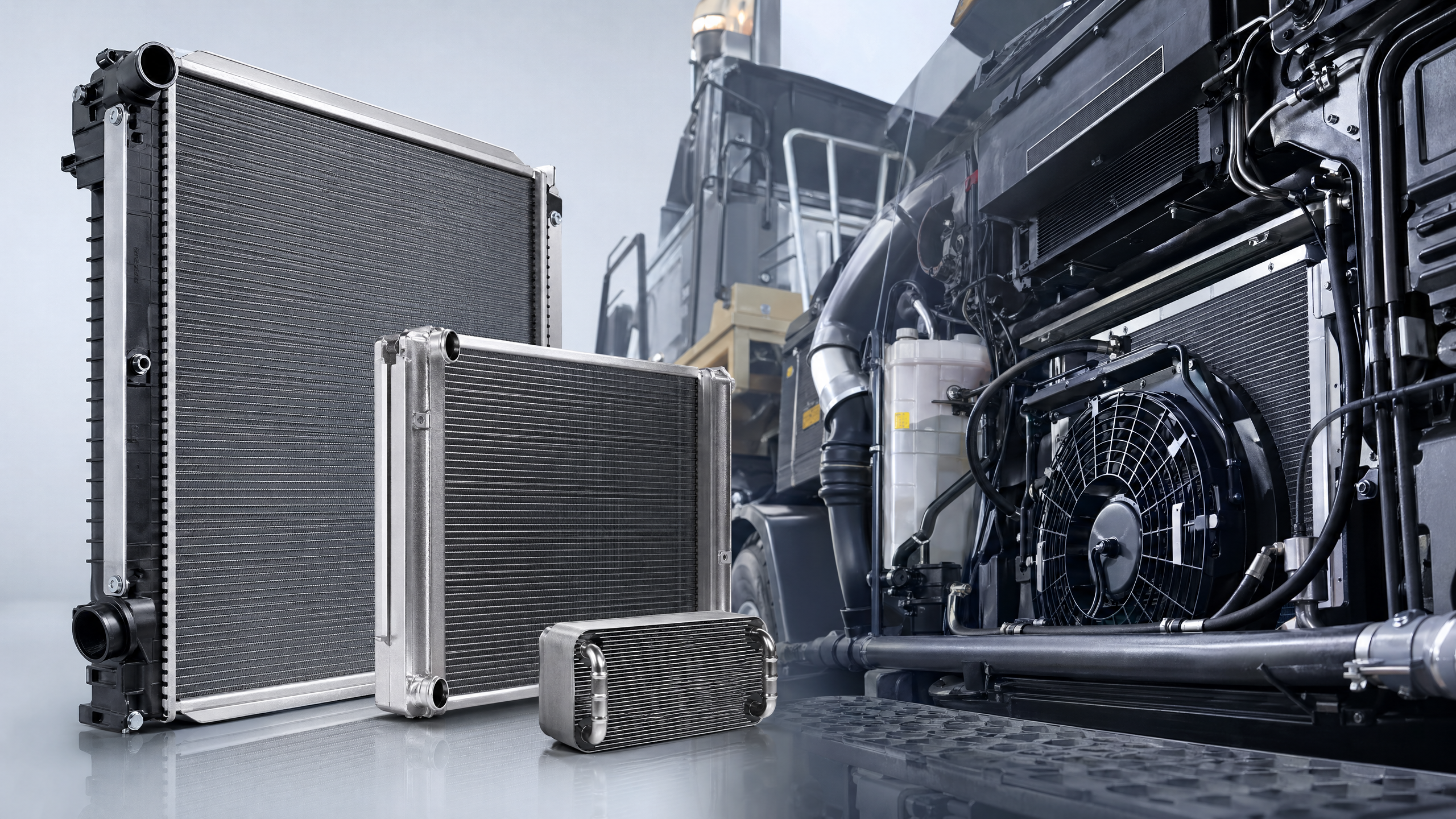
Choosing the wrong radiator core can quietly drive up replacement costs through shorter service life, poor cooling efficiency, and repeated maintenance. For financial decision-makers, understanding these selection mistakes is essential to controlling total ownership costs and avoiding unnecessary budget waste. This article explains how smarter radiator core choices can improve performance, reduce downtime, and support more cost-effective parts procurement.
Why a Checklist Approach Matters Before Approving Any Radiator Core Purchase
For finance teams in the auto parts and heavy-duty cooling sector, the biggest risk is not usually the initial unit price. The larger risk is approving a radiator core that appears economical at purchase but creates a 12- to 24-month cycle of repeat replacement, rising service labor, equipment downtime, and emergency logistics. A checklist-based review helps prevent budget leakage by forcing procurement and technical teams to validate the few variables that most strongly affect total cost.
A radiator core is a cost-sensitive component because it sits at the intersection of thermal performance, material quality, operating environment, and fitment accuracy. If one of these areas is misjudged, the result may be overheating under load, early tube or fin degradation, or pressure imbalance that shortens service life. In commercial vehicles, construction machinery, and new energy cooling systems, a replacement event can involve not only parts cost but also 4 to 10 labor hours, transport delay, and idle asset time.
That is why financial approvers should not review radiator core sourcing as a simple commodity line item. A more reliable method is to ask: what service interval is expected, what thermal reserve is required, what operating load range is normal, and what failure cost follows if the part underperforms? In many cases, a 8% to 15% difference in purchase price can produce a much larger 20% to 40% difference in lifecycle cost.
The first four questions finance teams should ask
- Is the radiator core selected for actual thermal load, or only for dimensional compatibility?
- What is the expected replacement interval under normal field conditions: 1 year, 2 years, or longer?
- Does the supplier provide clear material and production consistency information for tubes, fins, and brazed joints?
- What is the financial impact if the wrong radiator core causes unplanned downtime during peak operating periods?
These questions quickly shift the discussion from price-only buying to replacement cost control. For a company managing multiple fleets, machines, or service channels, this approach is especially useful because even a small increase in failure frequency can multiply across dozens or hundreds of units in one budget cycle.
Core Selection Mistakes That Most Often Raise Replacement Costs
The most expensive radiator core mistakes are usually predictable. They happen when teams skip thermal analysis, rely on incomplete product descriptions, or approve parts based on sample appearance rather than operating performance. For financial review, it helps to classify mistakes by the type of cost they create: direct replacement cost, service cost, downtime cost, and hidden inventory cost.
The table below highlights common radiator core selection errors and the cost mechanisms behind them. This kind of review is useful during supplier comparison, annual vendor evaluation, and pre-approval for large-volume spare parts orders.
The key insight is that radiator core failures are rarely isolated technical incidents. They create a chain of costs that often do not appear on the original purchase order. A failed core can consume warehouse stock unexpectedly, trigger urgent freight premiums, and disrupt service schedules. For finance teams, this means part approval should include lifecycle questions, not only bid comparison.
Priority checklist for catching costly mistakes early
- Confirm the radiator core is rated for actual cooling demand, including high ambient temperature periods and heavy-load operation.
- Review tube and fin material quality, not just visual finish or external packaging.
- Check whether pressure, vibration, and corrosion resistance are suitable for the target application.
- Ask for production consistency controls to reduce batch-to-batch variation.
- Estimate service labor and downtime cost before choosing a lower-price alternative.
This five-step check can prevent many avoidable approval errors. In practice, it is often more useful than reviewing dozens of minor data points with no clear connection to field cost.
What to Check in the Radiator Core Itself Before Comparing Quotes
Once a sourcing team has filtered out obvious mismatch risks, the next step is to evaluate the radiator core at component level. This is where total cost is shaped. Finance approvers do not need to inspect every engineering detail, but they should understand which technical variables are most closely tied to replacement frequency and operating stability.
Material, structure, and cooling efficiency checks
Start with thermal material quality. Premium thermal materials generally support better heat transfer and can improve durability under cyclic temperature changes. By contrast, lower-grade material may reduce upfront cost but often weakens long-term resistance to corrosion and fatigue. In cooling systems that face frequent start-stop cycles or prolonged high-load operation, this difference becomes financially meaningful within one maintenance cycle.
Three technical points that deserve budget attention
- Fin density should support heat dissipation without creating excessive airflow restriction, especially in dusty or high-debris environments.
- Tube design should match flow demand so coolant distribution remains stable across the radiator core during peak load periods.
- Joint quality and manufacturing control should reduce the chance of leaks after repeated thermal expansion and vibration exposure.
It is also worth reviewing whether the supplier has a clear performance position for the product. For example, in passenger and new energy applications, a model such as Radiator for AION may be relevant when procurement requires replace/repair support, stable cooling efficiency, and dependable fitment in car applications. For financial teams, product-level clarity reduces the risk of buying a visually similar but operationally unsuitable radiator core.
Another useful check is whether the core design is intended for standard duty or more demanding workloads. A high-performance structure with advanced fluid dynamics and uncompromising stability may not always be the cheapest line item, but it can be the better financial choice when system uptime matters more than purchase price alone. This is especially true when one failure can interrupt a vehicle, machine, or service order worth far more than the part itself.
The following table can be used as a practical review sheet when comparing radiator core options from multiple suppliers.
For budget control, this review table is valuable because it ties technical checks directly to cost outcomes. It also makes supplier conversations more efficient by replacing vague quality language with concrete approval criteria.
How Application Differences Change the Right Radiator Core Decision
A radiator core that performs well in one use case may become a high-cost mistake in another. Financial approvers should therefore ask for application-specific validation. Heavy trucks, construction machinery, and new energy platforms all create different thermal loads, vibration conditions, and service expectations. Treating them as one category often leads to under-spec or over-spec buying.
For example, construction machinery often operates in high-dust environments with sustained load and frequent vibration. In that setting, a radiator core selected only for nominal cooling performance may clog faster or fatigue earlier. By comparison, a passenger vehicle or new energy application may place more emphasis on compact fitment, steady flow behavior, and system-level temperature control over varied urban driving cycles.
Liaocheng Xinde Auto Parts Co., Ltd., established in 2018 with a registered capital of 5 million RMB and total investment of 50 million RMB, focuses on research, production, and global sales of water tank radiators, intercoolers, construction machinery radiators, heavy truck products, and new energy radiator modules. For buyers, this type of business scope matters because suppliers with broader cooling application experience are usually better positioned to discuss radiator core fitment across multiple duty conditions instead of offering one generic solution.
Application-specific review checklist
- For heavy trucks, confirm thermal reserve under prolonged highway load, mountain routes, and hot-weather operation.
- For construction machinery, prioritize anti-vibration stability, contamination tolerance, and cleaning practicality.
- For new energy systems, review compact packaging, stable flow distribution, and compatibility with system-level thermal management requirements.
- For car fitment programs, verify OE-aligned dimensions, installation accuracy, and replacement efficiency.
This application filter is financially useful because it prevents two common mistakes: paying for unnecessary overdesign in low-demand use cases, and approving low-cost radiator core options that fail under demanding workloads. Both errors distort replacement budgets and make annual cost forecasting less reliable.
Hidden Cost Signals Finance Teams Commonly Miss
Many radiator core procurement reviews focus on visible costs: unit price, freight, and stock quantity. Hidden costs often receive less attention because they sit in maintenance budgets, service records, or downtime logs rather than purchasing reports. Yet these hidden costs are usually where poor radiator core decisions become expensive.
Warning signs that a “cheap” radiator core may cost more later
One warning sign is unstable replacement frequency across the same fleet or equipment category. If similar units need core replacement at 8 months, 14 months, and 20 months with no obvious operating difference, product consistency may be the issue. Another signal is increased coolant-related service visits after a supplier change. These patterns suggest the approved radiator core is not delivering stable lifecycle value.
A second warning sign is when emergency orders start increasing. Rush procurement usually means normal inventory assumptions are being broken by early failures. Even if the part price remains low, premium freight, technician rescheduling, and delayed vehicle availability can lift total replacement cost far beyond the original savings.
A third sign is excessive cleaning or maintenance intervention to keep cooling performance within acceptable range. If the radiator core requires unusual service frequency to avoid temperature issues, the cost problem may be design mismatch rather than maintenance discipline. That distinction is critical for finance teams trying to identify whether budget pressure comes from operations or from parts selection.
Quick audit points for cost leakage
- Compare replacement intervals by supplier batch over the last 12 months.
- Track how many labor hours each radiator core replacement typically consumes.
- Separate planned replacements from emergency failures in cost reports.
- Review whether downtime cost exceeds the original price savings from lower-cost sourcing.
Even a simple quarterly review using these four points can improve purchasing discipline. It also gives finance teams stronger evidence when discussing supplier performance with procurement and engineering colleagues.
A Practical Approval Framework for Lower-Risk Radiator Core Procurement
If your goal is to reduce replacement cost without slowing procurement, the best solution is a short approval framework. Instead of requiring complex engineering review on every order, create a standard process that flags high-risk radiator core decisions before purchase approval. This is especially useful for repeat buying, supplier consolidation, and budget planning across multiple product lines.
A practical framework usually works in 3 stages. First, verify application fit and thermal demand. Second, compare material and production consistency. Third, estimate lifecycle cost, including service labor, replacement frequency, and potential downtime. With this method, finance teams can approve faster while still controlling hidden exposure.
When evaluating solutions for passenger-car fitment, it may also be useful to review options such as Radiator for AION, model AIONV-1301010-0030, where the intended function is replace/repair support and cooling efficiency under demanding workloads. The point is not to focus on one part alone, but to ensure each radiator core choice is tied to a clear application and cost rationale.
Recommended internal approval checklist
- Confirm operating environment, service interval target, and required cooling margin before quote approval.
- Request core material and manufacturing consistency details for any new supplier or lower-cost alternative.
- Estimate total replacement cost over 12 to 24 months, not just initial order value.
- Ask whether the supplier can support samples, parameter confirmation, and application-specific recommendations.
- Document post-installation performance by batch so future approvals use real cost outcomes.
This framework supports stronger budget discipline because it turns radiator core buying into a measurable decision process. It also helps procurement and finance speak the same language: fitment, service life, replacement cycle, and cost per operating period.
Why Choose Us for Better-Controlled Cooling Parts Procurement
When replacement cost matters, buyers need more than a catalog and a low quote. They need a supplier that understands how radiator core selection affects lifecycle cost across heavy trucks, construction machinery, water tank radiators, intercoolers, and new energy radiator modules. That is where practical industry focus becomes valuable for financial decision-makers.
Liaocheng Xinde Auto Parts Co., Ltd. has developed around specialized cooling component research, production, and global sales, with business coverage that aligns with demanding replacement and fitment scenarios. This matters when your team needs help comparing application requirements, screening supplier risk, and avoiding avoidable replacement spending caused by poor radiator core matching.
If you are reviewing a radiator core purchase or planning a broader replacement parts program, contact us to discuss parameter confirmation, product selection, delivery cycle expectations, sample support, fitment questions, budget-sensitive alternatives, and quotation details. A more accurate discussion at the approval stage can help reduce repeat replacement, improve uptime, and make cooling parts procurement more predictable over the next 12 to 24 months.