



Agricultural Radiator Corrosion Risks in Fertilizer Environments
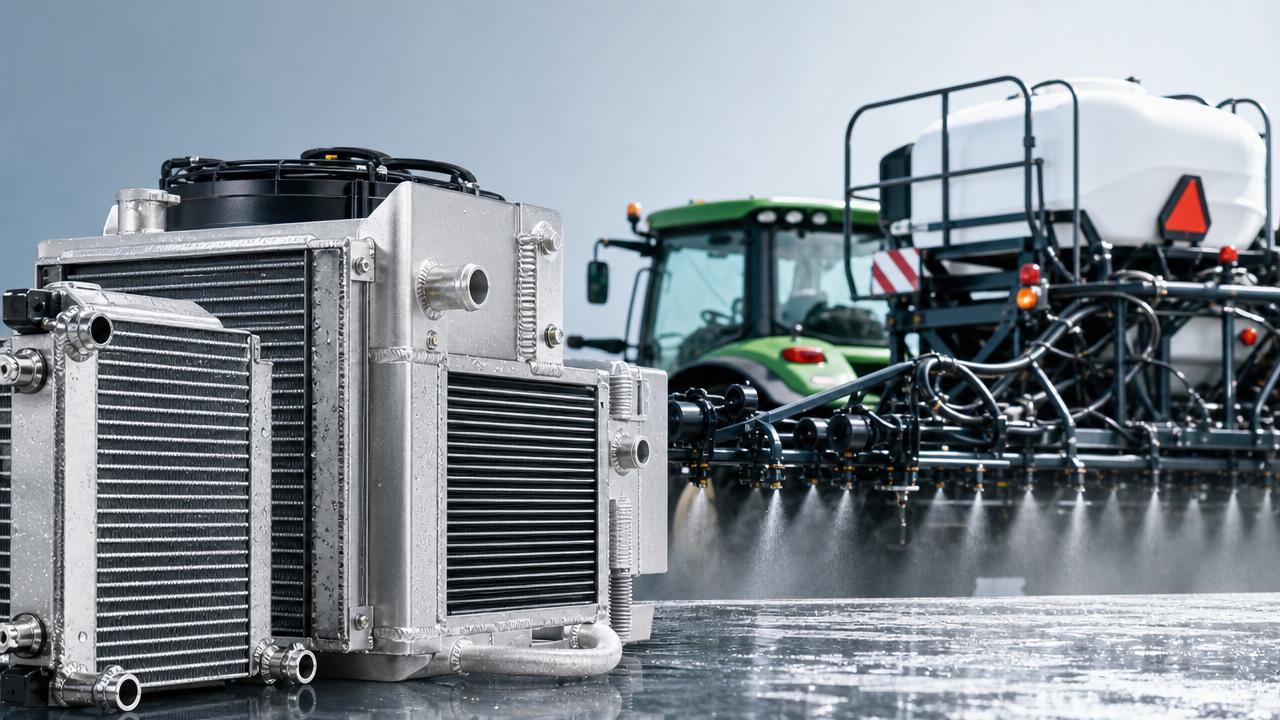
In fertilizer-intensive operating environments, an Agriculturaal radiator faces accelerated corrosion risks that can compromise cooling efficiency, equipment uptime, and field safety. For quality control and safety management teams, understanding how chemical exposure affects radiator materials is essential to preventing premature failure, reducing maintenance costs, and ensuring reliable performance in demanding agricultural and heavy-duty applications.
For parts manufacturers, fleet operators, and equipment supervisors, corrosion is not a cosmetic issue. In agricultural service cycles that run 8 to 14 hours per day during peak seasons, radiator degradation can quickly turn into overheating events, unplanned shutdowns, or even operator safety concerns in the field.
Liaocheng Xinde Auto Parts Co., Ltd., established in 2018 with a registered capital of 5 million RMB and total investment of 50 million RMB, focuses on the research, production, and global sales of water tank radiators, intercoolers, construction machinery radiators, and related cooling components for heavy trucks and new energy radiator modules. For quality control personnel and safety managers, this industry background matters because corrosion resistance is no longer a secondary feature; it is a core performance requirement.
Why Fertilizer Environments Create High Corrosion Risk for an Agriculturaal Radiator
An Agriculturaal radiator often works near fertilizer dust, liquid spray, and washdown residues. These exposures may include nitrates, phosphates, ammonium compounds, chlorides, and moisture cycling. When surface contamination remains for 24 to 72 hours, corrosion rates can rise sharply, especially at joints, fins, tube edges, and mounting interfaces.
The risk becomes higher when equipment operates across changing temperatures, such as morning starts at 5°C to 15°C and daytime engine bay conditions above 80°C. That thermal cycling expands and contracts metal repeatedly, opening pathways for deposits and corrosive liquids to remain trapped in narrow passages.
Chemical exposure pathways
Fertilizer corrosion rarely comes from one source alone. Most failures involve 3 combined factors: chemical residue, retained moisture, and oxygen exposure. In field sprayers, tractors, harvesters, and loading equipment, these factors collect around the cooling pack, especially when airflow carries fine particles directly into the fin structure.
Common contact points
- Front-facing fins exposed to airborne fertilizer dust
- Lower tank areas where runoff and splash accumulate
- Brazed joints and seams with repeated wet-dry cycles
- Mounting brackets where dissimilar metals may trigger galvanic activity
- Tube-to-header connections under pressure and vibration
For QC teams, identifying these points early reduces the chance of hidden failure. A corroded fin pack can lose heat-transfer efficiency before visible coolant leakage appears, meaning temperature control may already be compromised while the unit still appears serviceable from a distance.
The following table outlines how common fertilizer-related exposures affect radiator materials and operating performance.
The main takeaway is that corrosion in agriculture is both chemical and mechanical. Deposits do not only damage material surfaces; they also block airflow, increase thermal stress, and make an Agriculturaal radiator work harder during already demanding seasonal operations.
Failure Modes Quality Control and Safety Teams Should Monitor
A field radiator may not fail in a single dramatic event. More often, the decline happens in 4 stages: contamination, surface attack, thermal inefficiency, and structural failure. Recognizing each stage allows quality teams to intervene before safety or uptime is affected.
Early-stage warning signs
- White oxidation or dull patches on aluminum surfaces
- Persistent debris accumulation after standard cleaning
- Localized hot spots during thermal inspection
- Coolant temperature creep of 3°C to 8°C under normal load
- Fan systems cycling more frequently than baseline
Late-stage failure patterns
If these signs are missed, later failure may include pinhole leakage, fin separation, cracked joints, and pressure loss under vibration. In heavy-duty farm equipment, recurring vibration between 10 Hz and 50 Hz can accelerate fatigue at already corroded seams.
Safety managers should also consider secondary effects. Overheating can affect nearby hoses, connectors, and electronic controls. In enclosed equipment compartments, elevated temperatures may increase the failure risk of adjacent components within a short 1 to 3 week high-load window.
Inspection frequency guidance
A practical schedule depends on operating intensity. Machines working daily in fertilizer handling or spraying should be checked every 100 to 150 operating hours, while lower-exposure units may follow a 250-hour interval. Seasonal pre-use and post-use inspections are essential for both categories.
Material Selection and Design Features That Improve Corrosion Resistance
Not every radiator is built for aggressive agricultural duty. For an Agriculturaal radiator, material thickness, alloy consistency, brazing quality, fin geometry, and joint integrity all influence service life. Choosing the wrong specification can increase replacement frequency within 12 to 24 months instead of meeting a longer planned maintenance cycle.
Why aluminum remains widely used
Premium-grade aluminum is widely selected because it combines low weight, strong heat transfer, and good manufacturability. However, aluminum performance depends heavily on production quality. Poor brazing control or inconsistent surface treatment can leave vulnerable points that fail early in corrosive service.
Advanced brazing technology helps create more stable joints and better thermal pathways, which is critical where both corrosion and vibration are present. This same logic is visible in transport cooling systems such as Radiator for Ankai, designed for public transportation and optimized for thermal management in both diesel and new energy electric buses. While application conditions differ, the emphasis on premium-grade aluminum and strong brazed construction is equally relevant to agricultural durability planning.
The table below summarizes key design factors procurement and QC teams should review before approving a radiator for fertilizer-exposed service.
The procurement lesson is straightforward: corrosion resistance is not a single specification line. It comes from the interaction of material grade, manufacturing control, and design suitability for cleaning, airflow, and long-term thermal cycling.
Supplier evaluation points
- Confirm whether the manufacturer has stable production capability for radiator and intercooler systems.
- Review process consistency in brazing, leak testing, and dimensional inspection.
- Ask for corrosion-focused validation under realistic contamination and vibration conditions.
- Check whether the supplier supports heavy truck, construction machinery, or new energy cooling modules, indicating broader engineering experience.
This is one area where Liaocheng Xinde Auto Parts Co., Ltd. aligns with industrial buyer expectations. Its focus on water tank radiators, intercoolers, construction machinery radiators, and heavy-duty cooling parts reflects a manufacturing scope relevant to demanding operating conditions rather than light-duty use only.
Practical Prevention Measures for Field Safety and Longer Service Life
Even a well-built Agriculturaal radiator requires a preventive maintenance program. Quality and safety results improve when operators combine product selection with a repeatable 5-step corrosion control routine.
5-step maintenance framework
- Inspect for residue buildup at the end of each high-exposure shift or at least every 24 hours during spraying season.
- Use low-pressure cleaning methods that remove deposits without folding fins or driving debris deeper into the core.
- Dry the cooling pack after washdown to reduce long-duration moisture retention.
- Check coolant condition and pressure-holding performance every 250 operating hours.
- Record temperature trends and visual findings so recurrent risk can be traced by machine, location, or task type.
Cleaning mistakes to avoid
- Using overly aggressive chemicals with unknown compatibility
- Applying high-pressure spray directly at close range
- Leaving fertilizer residue on lower radiator sections after washdown
- Ignoring bracket corrosion and fastener condition
A frequent mistake is focusing only on coolant chemistry while overlooking external contamination. In fertilizer service, outside-in corrosion can be just as dangerous as internal coolant-side problems. Safety teams should treat both as part of the same risk map.
Procurement and Quality Approval Checklist for Corrosion-Exposed Cooling Parts
Before approving a new radiator supplier or batch, decision-makers should use a structured checklist. This is especially important when expected service intervals exceed 1 season or when downtime costs are high during planting, spraying, or harvest windows.
Core approval criteria
- Material consistency across multiple production lots
- Leak-test stability under standard pressure conditions
- Joint quality after vibration and thermal cycling review
- Fin design suitable for cleaning in dusty and wet exposure
- Traceability records for QC inspection and shipment release
- Supplier responsiveness for technical clarification within 24 to 48 hours
Application crossover and design learning
Cooling solutions used in buses, heavy trucks, construction machinery, and agricultural equipment differ in duty cycle, but they share one core requirement: reliable heat rejection with minimal downtime. Products such as Radiator for Ankai illustrate how optimized thermal management, durable aluminum construction, and manufacturing discipline contribute to longer component life. For buyers, this reinforces the value of selecting suppliers with broad cooling-system expertise rather than narrow assembly capability.
Fertilizer exposure places unique stress on every Agriculturaal radiator, but the highest losses usually come from preventable weaknesses: poor cleaning access, inconsistent material control, inadequate inspections, and delayed response to early corrosion signs. When quality control and safety management teams work from measurable criteria, they can reduce overheating risk, extend service intervals, and improve operational continuity.
If you are evaluating cooling parts for heavy-duty agricultural, transport, or machinery applications, choose a supplier that understands thermal performance, joint reliability, and corrosion-focused production control. Liaocheng Xinde Auto Parts Co., Ltd. provides manufacturing capability across radiator and related cooling components for demanding operating environments. Contact us now to discuss product details, request a tailored solution, or learn more about practical radiator options for your application.