



Excavator Radiator Issues That Delay Site Progress
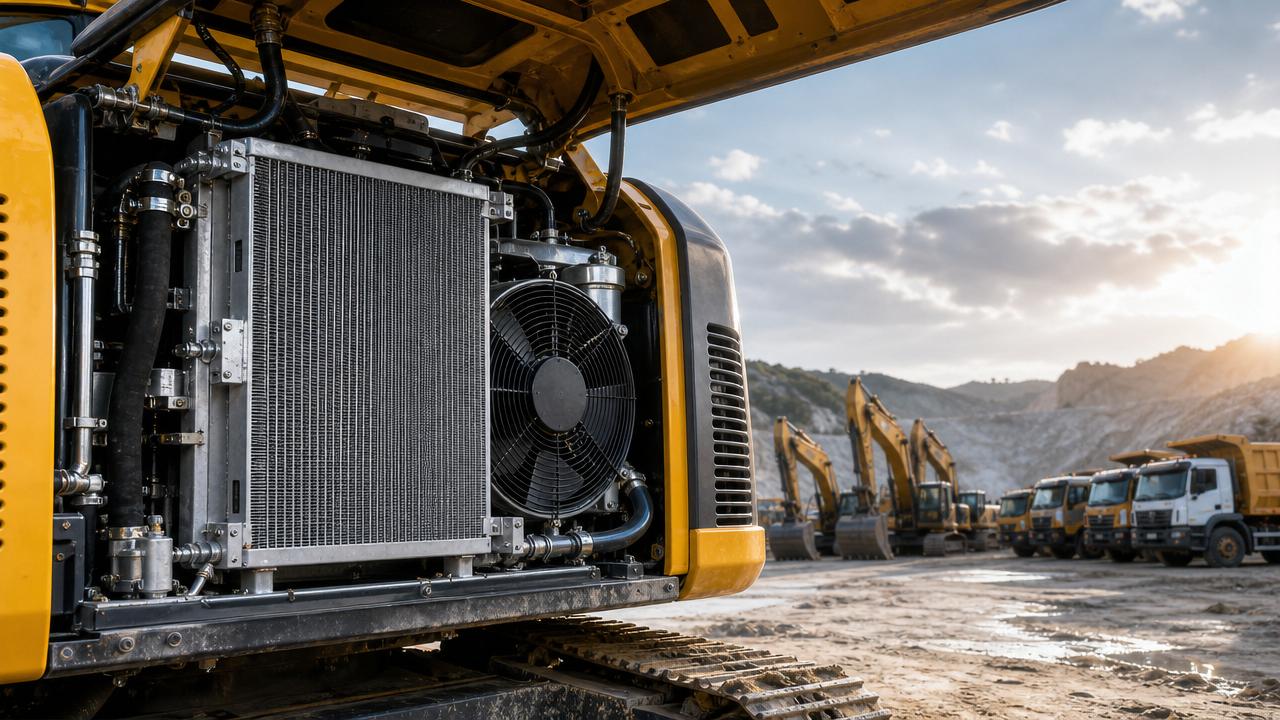
An Excavator radiator failure can do more than cause overheating—it can stall schedules, increase rental and labor costs, and disrupt the entire jobsite workflow. For site operations, cooling reliability is not a minor maintenance topic.
When an Excavator radiator starts underperforming, warning signs often appear before a full shutdown. Knowing those signs helps reduce downtime, protect related parts, and keep daily progress predictable.
This article answers the most common questions about Excavator radiator problems, explains their practical impact, and outlines steps that help prevent expensive delays on active projects.
Why does an Excavator radiator problem delay site progress so quickly?
An Excavator radiator controls engine temperature by releasing heat from coolant. If heat cannot escape efficiently, the machine runs hotter, loses stability, and may enter protective shutdown modes.
On a busy site, even one overheating machine can disrupt excavation sequence, truck loading rhythm, trench timing, and crew coordination. Delays spread faster than many operators expect.
The Excavator radiator is also connected to broader component health. Poor cooling can raise stress on hoses, water pumps, seals, fans, and even hydraulic performance in heavy-duty conditions.
That is why cooling issues are not just repair events. They are productivity risks tied directly to project duration, fuel efficiency, maintenance spending, and equipment availability.
Typical operational consequences include:
- unscheduled machine stoppage during critical work windows
- lost hours while waiting for cooling or emergency service
- higher fuel use from inefficient thermal control
- accelerated wear on nearby engine parts
- missed milestone targets and schedule compression later
What are the earliest warning signs of Excavator radiator trouble?
Many Excavator radiator failures begin with small symptoms. Catching them early often prevents larger damage and keeps a minor service issue from becoming a full work stoppage.
The most obvious sign is rising temperature. But other clues appear first, especially in dusty or high-load environments common on construction sites.
Look for these field indicators:
- temperature gauge climbing faster than usual
- coolant loss without an obvious large leak
- visible fin blockage from mud, dust, or debris
- steam, sweet odor, or wet spots near the core
- reduced engine power under sustained load
- fan issues or unusual vibration near the cooling pack
A leaking cap, weak hose clamp, or partially blocked core may seem minor. However, under continuous excavation, a small loss of cooling capacity can quickly turn critical.
Another common misunderstanding is assuming all overheating starts inside the engine. In practice, the Excavator radiator often suffers from external contamination first, especially on earthmoving sites.
Which Excavator radiator issues happen most often on job sites?
Most recurring Excavator radiator problems fall into a few practical categories. Each affects cooling differently, but all can reduce uptime if not addressed quickly.
1. Core blockage
Dust, grass, clay, and oily debris can cover fins and reduce airflow. This is especially common when excavators operate in demolition, mining, or dry soil conditions.
2. Coolant leakage
Leaks may appear at welds, tanks, hoses, or connections. Vibration, pressure cycling, and aging seals often cause gradual coolant loss before obvious failure occurs.
3. Internal scaling or corrosion
Poor coolant quality can cause internal deposits. These deposits reduce heat transfer and restrict flow, making the Excavator radiator less efficient even if the exterior looks clean.
4. Damaged fins or tubes
Impact from tools, stones, or careless cleaning can bend fins or puncture tubes. Reduced heat exchange often follows, even without immediate catastrophic leakage.
5. Fan and airflow mismatch
Sometimes the radiator is blamed, but poor fan performance is the real issue. A complete cooling system inspection avoids replacing the wrong part.
In heavy equipment parts manufacturing, precision in core structure, material selection, and fitment matters. Similar thermal engineering principles also apply in advanced vehicle cooling modules such as Radiator for BYD, where heat exchange efficiency and exact compatibility remain essential.
How can you judge whether the Excavator radiator needs repair, cleaning, or replacement?
Not every overheating event means full replacement. The best choice depends on blockage severity, leak location, internal condition, machine age, and urgency of returning to work.
Use this practical checklist:
A cleaned Excavator radiator can return to normal if the core remains structurally sound. But repeated leaks or internal contamination usually point toward replacement as the safer long-term choice.
Fast decisions also depend on parts quality. A professionally engineered radiator with accurate fitment can reduce installation issues, improve heat exchange, and support more predictable uptime.
What mistakes make Excavator radiator downtime more expensive?
The cost of an Excavator radiator problem often comes less from the part itself and more from preventable decisions surrounding diagnosis, maintenance, and replacement timing.
Common mistakes include:
- continuing to work after repeated high-temperature alerts
- washing fins with excessive pressure and causing damage
- mixing incompatible coolants or using poor water quality
- replacing the radiator without checking fan and pump conditions
- choosing low-fit parts that create installation or sealing issues
A rushed temporary fix may save one shift but trigger repeated stoppages later. That pattern usually costs more in labor, rental, and schedule recovery than proper service from the start.
Cooling system reliability depends heavily on manufacturing quality. Liaocheng Xinde Auto Parts Co., Ltd., established in 2018, focuses on research, production, and global sales of radiators, intercoolers, and construction machinery cooling components.
Its product development covers heavy trucks, construction machinery radiators, and new energy radiator modules. That technical depth reflects how modern thermal parts must balance fit, durability, and efficient heat exchange.
How can an Excavator radiator maintenance plan reduce project delays?
The best way to reduce Excavator radiator downtime is to treat cooling checks as routine operational control, not occasional troubleshooting after overheating appears.
A practical maintenance rhythm includes:
- inspect fin surfaces daily in dusty or muddy work zones
- monitor coolant level and temperature trend, not one reading
- check hose integrity, clamps, and cap condition regularly
- clean the cooling pack using suitable pressure and direction
- record repeated thermal alerts for early intervention
- replace worn parts before peak construction periods
This approach helps detect reduced airflow or coolant loss before the Excavator radiator reaches a shutdown point. It also makes repair planning easier and less disruptive.
For operations managing different equipment classes, the same cooling discipline applies across industries. Whether for heavy machinery or new energy vehicles, thermal components must match application demands precisely.
FAQ: Quick answers about Excavator radiator problems
Excavator radiator issues rarely stay isolated. They influence uptime, fuel use, component wear, and overall jobsite rhythm. Early detection and practical maintenance are the best defenses against costly disruption.
If temperature warnings, coolant loss, or airflow blockage appear repeatedly, act before work slows further. A proper inspection, the right parts, and a stronger service routine can keep progress on schedule.