



Common Condenser Damage Risks in Harsh Operating Conditions
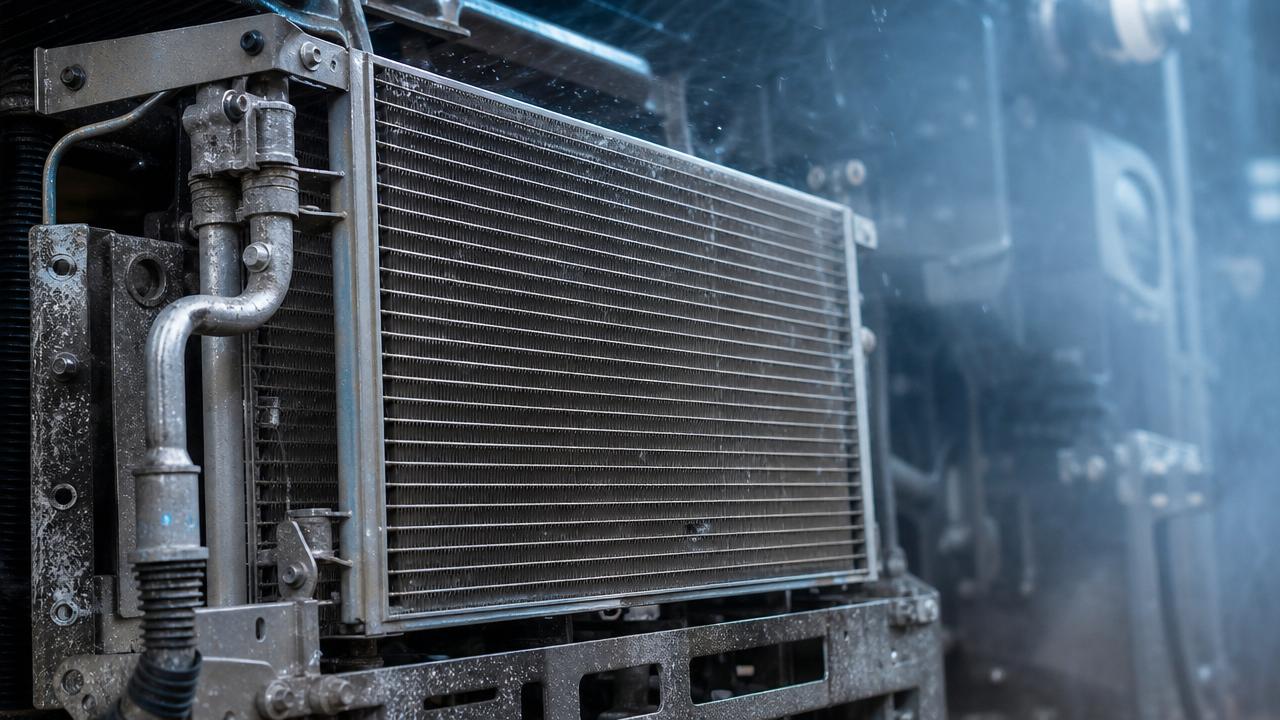
In harsh operating environments, a Condenser can face hidden damage risks that directly affect cooling efficiency, equipment safety, and maintenance costs.
Dust, vibration, salt, moisture, thermal shock, and chemical exposure often work together rather than alone.
That combination accelerates wear in heavy trucks, construction equipment, and demanding cooling systems.
Understanding common Condenser failure modes helps reduce downtime and supports stable field performance.
For auto parts applications, early detection and targeted protection matter as much as component selection.
Condenser Function and Why Damage Develops Quickly
A Condenser releases heat from refrigerant and supports efficient thermal exchange within the cooling circuit.
Its performance depends on clean surfaces, stable pressure, sound joints, and uninterrupted airflow.
Harsh conditions reduce all four factors at once.
When fins clog or tubes corrode, heat transfer drops and system pressure may rise beyond safe limits.
If mounting points loosen under shock loads, fatigue cracks can form near headers or welded areas.
In severe service, damage often begins as a small efficiency loss before becoming a leak or structural failure.
Main stress sources in the field
- High ambient temperature and repeated thermal cycling
- Mud, dust, insects, fibers, and oil contamination
- Road salt, coastal air, and chemical splash
- Mechanical vibration, impact, and frame movement
- Improper cleaning, overpressure, or poor installation
Current Industry Concerns Around Condenser Reliability
Thermal management reliability has become a major focus across commercial vehicles and industrial equipment.
Compact system layouts increase heat load while leaving less tolerance for blockage or leakage.
At the same time, operating cycles are longer and maintenance windows are tighter.
These trends make Condenser durability a practical quality issue rather than only a design topic.
Liaocheng Xinde Auto Parts Co., Ltd. focuses on radiators, intercoolers, heavy truck cooling parts, and new energy radiator modules.
Its production experience supports practical understanding of thermal component risks in demanding service conditions.
Common Condenser Damage Risks in Harsh Operating Conditions
Corrosion from salt, moisture, and chemical contact
Corrosion is one of the most common Condenser threats in coastal zones, winter roads, and chemical work sites.
Salt deposits trap moisture and attack aluminum surfaces, especially near fin edges and brazed connections.
Cleaning agents with the wrong pH may also remove protective layers and speed up material loss.
Blockage caused by dust and debris
Dust accumulation reduces airflow across the Condenser face and weakens overall heat rejection.
In construction and mining environments, mud and fibers often bond to oily surfaces and become difficult to remove.
As pressure rises, surrounding components may also experience more thermal stress.
Vibration fatigue and mechanical cracking
Vehicles and machinery running on rough terrain transmit continuous vibration into cooling modules.
Over time, unsupported sections develop fatigue at welds, tube ends, and bracket interfaces.
A small crack may first appear as oil staining, pressure instability, or intermittent cooling loss.
Thermal shock and pressure stress
Rapid shifts between high load and cold washdown can shock metal surfaces and joints.
If internal pressure spikes occur at the same time, the Condenser becomes more vulnerable to deformation.
This risk increases when airflow is already restricted or the refrigerant charge is not well controlled.
Fin damage from impact or aggressive maintenance
Stone impact, tool contact, or high-pressure washing can bend fins and narrow air passages.
The result is lower effective surface area and uneven temperature distribution across the Condenser core.
Business Value of Early Condenser Risk Control
A damaged Condenser affects more than cooling output.
It can trigger unplanned shutdowns, secondary component stress, extra refrigerant loss, and higher service frequency.
Early control improves reliability, extends service life, and supports predictable operating costs.
It also strengthens inspection records and helps identify whether failures come from design, environment, or maintenance practice.
In related thermal systems, robust component selection is equally important.
For example, INTERCOOLER FOR MAN XD163 uses MAN OEM 8161300216 and size 665*892*62 for matching heavy-duty cooling applications.
Typical Operating Scenarios and Risk Profiles
Practical Inspection and Protection Measures
Build a short inspection cycle
Use short visual checks for fin blockage, residue, bent areas, loose mounts, and wet spots.
Simple routine checks often reveal Condenser problems before performance drops become severe.
Clean with controlled methods
Avoid excessive water pressure and harsh chemicals.
Use approved cleaning direction and pressure limits to protect fins and coatings.
Watch pressure and temperature trends
Trend data can show hidden Condenser deterioration earlier than a single inspection point.
Rising discharge pressure or reduced cooling consistency should trigger a root-cause review.
Confirm mounting integrity
Check brackets, isolators, clearances, and surrounding support parts.
A strong Condenser can still fail early if installation loads are poorly managed.
Select compatible thermal components
System reliability depends on correct matching among radiators, intercoolers, fans, and related heat exchangers.
A well-matched module reduces uneven heat stress and supports durable operation in harsh conditions.
Action Path for More Reliable Condenser Performance
Start by identifying the main environmental stress factors for each operating route or job site.
Then align inspection frequency, cleaning method, and replacement criteria with those specific risks.
Review recurring failure points around corrosion, blockage, vibration, and pressure events.
Where needed, upgrade surrounding thermal parts and compare fitment data carefully.
For heavy-duty cooling systems, dependable supporting components such as INTERCOOLER FOR MAN XD163 can contribute to a more stable heat-management package.
With disciplined monitoring and proper component control, Condenser service life can improve significantly even in demanding environments.