



Excavator Radiator Features Drawing Attention at Recent Trade Shows
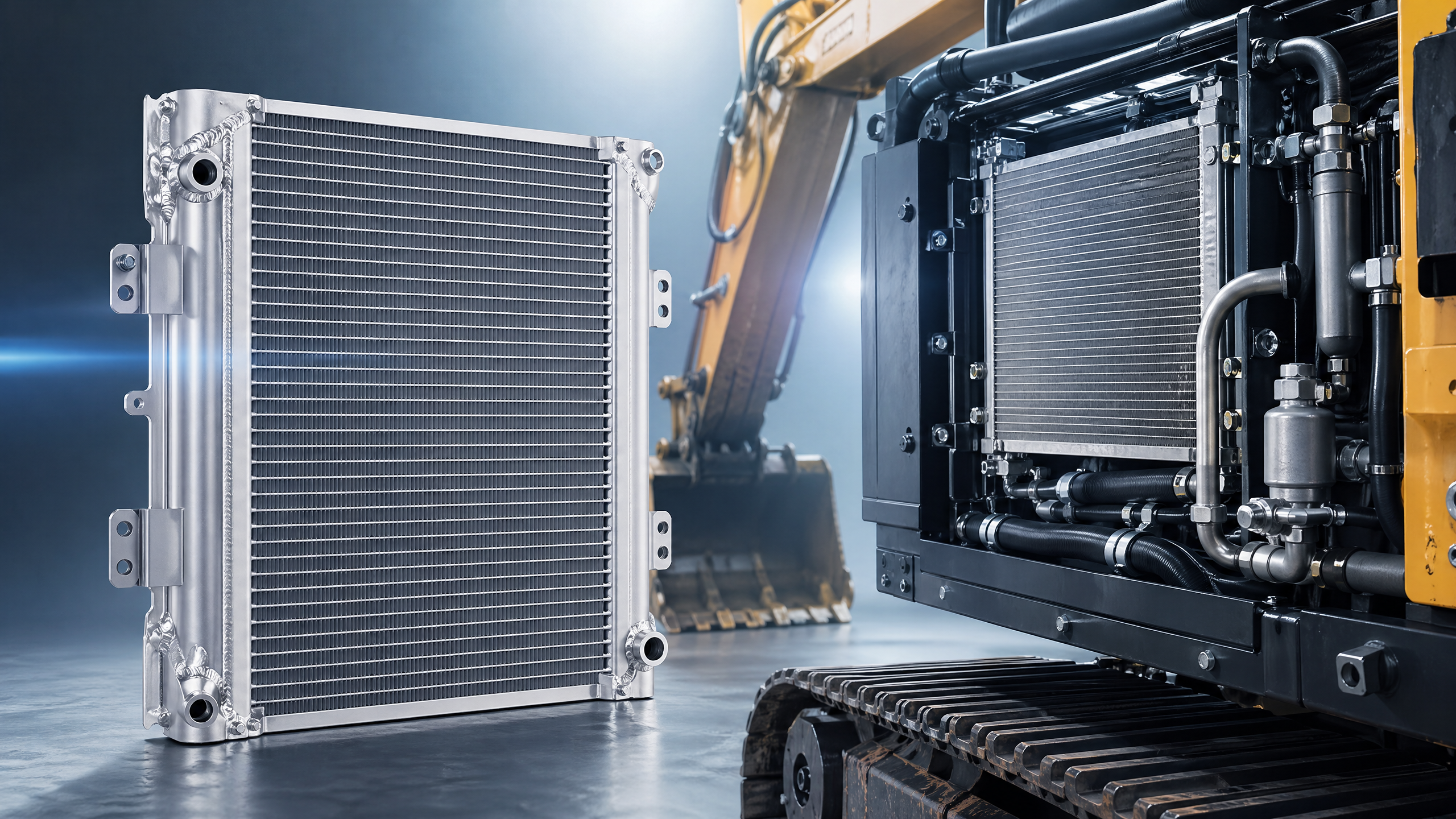
At recent industry trade shows, the Excavator radiator has become a key point of interest for buyers and market researchers seeking better cooling performance, durability, and application fit. As demand grows in construction machinery and heavy-duty parts, manufacturers like Liaocheng Xinde Auto Parts Co., Ltd. are drawing attention with advanced radiator solutions that reflect both technical strength and fast industry development.
Why a Checklist Approach Matters When Reviewing an Excavator Radiator
For information researchers, trade show interest alone is not enough. An Excavator radiator may look similar across booths, yet performance differences often come from details that are easy to miss during a 10-minute discussion or a quick product walk-through. A checklist-based review helps separate appearance from actual thermal design, material quality, and field suitability.
This approach is especially useful in the parts industry, where cooling components affect uptime, service intervals, and total operating cost. In heavy-duty construction machinery, even a temperature deviation of 5°C to 10°C under peak load can influence hydraulic stability, engine efficiency, and maintenance frequency. That is why buyers and market analysts increasingly ask more focused questions instead of relying on general product claims.
Liaocheng Xinde Auto Parts Co., Ltd., established in 2018 with registered capital of 5 million RMB and total investment of 50 million RMB, has developed within a highly competitive manufacturing environment. Its focus on water tank radiators, intercoolers, construction machinery radiators, and related heavy truck and new energy radiator modules reflects the direction researchers now watch closely: practical durability, fast product development, and broad application coverage.
What should be checked first
- Confirm the operating environment, such as dust load, vibration level, ambient temperature range, and average duty cycle.
- Review the radiator structure, including core design, fin density, tube layout, and connection points.
- Ask about material selection, corrosion resistance, and manufacturing process consistency.
- Check application fit by machine class, engine heat load, and installation space limitations.
A trade show can provide a useful first filter, but a reliable Excavator radiator evaluation usually requires at least 4 core checkpoints before moving to sample review or quotation comparison. This reduces the risk of selecting a part that performs well in a brochure yet struggles in a high-vibration jobsite.
Core Inspection Checklist: What Draws Attention at Trade Shows
The most attractive Excavator radiator products are not always the ones with the largest display panels or the broadest claims. Experienced researchers usually focus on visible and discussable details that reveal manufacturing control. At recent exhibitions, attention has shifted toward radiators that clearly address heat transfer efficiency, service life, and compatibility with diverse construction conditions.
The checklist below summarizes the most practical inspection points. It is useful when comparing multiple suppliers in a short time window, especially if the goal is to identify which companies are prepared for engineering discussion rather than only price-based selling.
These checkpoints show why one Excavator radiator may be better suited for quarry use, while another performs more reliably in municipal earthmoving or continuous trenching work. A product that handles 8 to 12 hours of operation with less temperature fluctuation may offer stronger value than one that only appears robust in static display form.
Fast booth-side questions for initial screening
- What application range is this radiator built for: mini excavators, mid-size equipment, or larger heavy-duty machines?
- What production process is used for the core and tank assembly?
- How is vibration resistance considered in the design?
- What is the typical lead time for standard items and for custom modifications?
- Can the supplier support drawings, fitment confirmation, or sample review within 7 to 15 working days?
Even when a supplier serves multiple sectors, its engineering discipline can often be seen through these answers. For example, some manufacturers that build cooling systems beyond construction equipment also demonstrate broader thermal management experience. In public transportation, products such as Radiator for Ankai show how advanced brazing technology and premium-grade aluminum are applied to support optimal thermal management for both traditional diesel and new energy electric buses, while helping minimize downtime and maximize engine life.
How to Judge Fit by Application Scenario
Not every Excavator radiator should be judged by the same standard. A radiator intended for compact excavation in urban spaces does not face the same dust, shock, and thermal load as one used in mining support or road foundation work. Researchers should classify target applications before comparing supplier claims.
A practical way to do this is to divide use conditions into three broad groups: light-duty intermittent work, medium-duty continuous work, and high-load harsh-environment work. Each group raises different priorities, from compact sizing and weight control to anti-clogging performance and stronger structural reliability.
This matters because the wrong fit can create hidden costs. A radiator that is acceptable in a cleaner environment may require cleaning every 1 to 2 weeks in dusty conditions, while a better-matched design may sustain a longer stable service interval under the same workload.
Scenario-based review guide
This table helps explain why a single Excavator radiator line should not be treated as universally suitable. The more precisely a manufacturer discusses these use cases, the more likely it is that its product development is connected to real operating conditions rather than generic catalog planning.
Useful signs during supplier communication
- The supplier asks for machine model, installation drawing, hose position, and operating temperature range before quoting.
- The supplier distinguishes between replacement-grade, upgraded-performance, and custom-fit solutions.
- The supplier can explain how fin geometry, airflow resistance, or mounting configuration changes by application.
For researchers, these signs are often more meaningful than promotional language. They indicate whether the company can support decision-making beyond a basic part number match.
Commonly Overlooked Risks When Comparing an Excavator Radiator
A recurring issue at trade shows is that many buyers compare visible dimensions and price first, while delaying questions about long-term use. This can be risky. An Excavator radiator is exposed to constant vibration, dust intrusion, coolant pressure variation, and weather changes, so hidden weaknesses often appear after installation rather than before purchase.
Another overlooked area is the difference between nominal compatibility and practical compatibility. Two radiators may fit into a similar mounting envelope, but hose direction, bracket tolerance, and fan shroud spacing can still affect airflow efficiency and installation time. A 2 to 4 millimeter tolerance mismatch may sound small, yet it can create service inconvenience or stress points in real assembly.
Researchers should also pay attention to product support capability. In the parts sector, delivery coordination, drawing confirmation, and feedback speed often matter as much as the physical component itself. If a supplier cannot clarify revision handling, sample process, or packaging standards, the risk remains even when the radiator structure looks acceptable.
Risk reminder checklist
- Do not evaluate only by frontal size; confirm thermal performance logic and internal structure.
- Do not ignore service access; clogged surfaces can quickly reduce cooling performance in dusty jobs.
- Do not assume all aluminum constructions perform the same; manufacturing quality and brazing consistency matter.
- Do not skip packaging and transport questions, especially for export shipments and long transit routes.
- Do not compare quotations without checking whether tooling adjustment, sample timing, or technical review is included.
A broader cooling-system perspective
Many serious manufacturers do not treat radiators as isolated products. Their work in related segments such as intercoolers, heavy truck cooling parts, and new energy radiator modules often strengthens engineering understanding. That broader perspective can be valuable when discussing airflow balance, module integration, or thermal adaptation across operating platforms.
This is also why some trade show visitors explore products beyond excavator applications. A company capable of producing solutions for public transportation, such as Radiator for Ankai, may demonstrate useful process depth in premium-grade aluminum selection and advanced brazing technology, even though the final application differs from construction machinery.
The key is not to mix applications blindly, but to understand what manufacturing and thermal management capabilities carry over. For researchers, this can reveal whether a supplier’s development base is narrow or well structured.
Practical Next Steps Before Moving from Interest to Inquiry
Once a promising Excavator radiator supplier has been identified, the next step should be structured information gathering. This stage is where many sourcing and research projects either gain momentum or lose clarity. A supplier that receives complete input can usually respond faster and with fewer revision rounds.
As a practical benchmark, preparing 6 to 8 technical and commercial data points before inquiry can significantly improve communication quality. These should include machine model, original part reference if available, radiator dimensions, connection layout, expected order quantity range, and target market requirements.
For companies studying long-term supply options, it is also useful to ask about standard lead times, sample arrangements, and whether design optimization support is possible. In many cases, a difference of 2 to 3 communication rounds can affect project timing more than a small unit price gap.
Information to prepare before contacting a supplier
- Machine brand, model, and year if known.
- Application environment, such as dusty site, high ambient temperature, or long daily operation hours.
- Existing radiator photos, dimensions, and inlet or outlet orientation.
- Expected requirement type: direct replacement, performance upgrade, or custom development.
- Required delivery window, sample need, and destination market.
- Any packaging, labeling, or compliance preferences relevant to the target channel.
Why choose us for radiator research and sourcing support
Liaocheng Xinde Auto Parts Co., Ltd. focuses on the research, production, and global sales of water tank radiators, intercoolers, construction machinery radiators, heavy truck components, and new energy radiator modules. Since 2018, the company has expanded rapidly and built its presence around practical manufacturing development rather than short-term visibility alone.
For buyers and information researchers evaluating an Excavator radiator, this means access to a supplier with product scope across multiple cooling applications and an understanding of how different duty conditions affect radiator design. The value is not just in supplying a part, but in helping confirm fit, discuss technical priorities, and reduce uncertainty before order placement.
If you are comparing radiator options, you are welcome to contact us for parameter confirmation, product selection advice, delivery cycle discussion, custom solution review, sample support, and quotation communication. Sharing your machine model, dimensions, drawings, or photos first can help speed up evaluation and make the response more accurate from the start.