



Does a Low Maintenance Radiator Core Really Cut Service Time
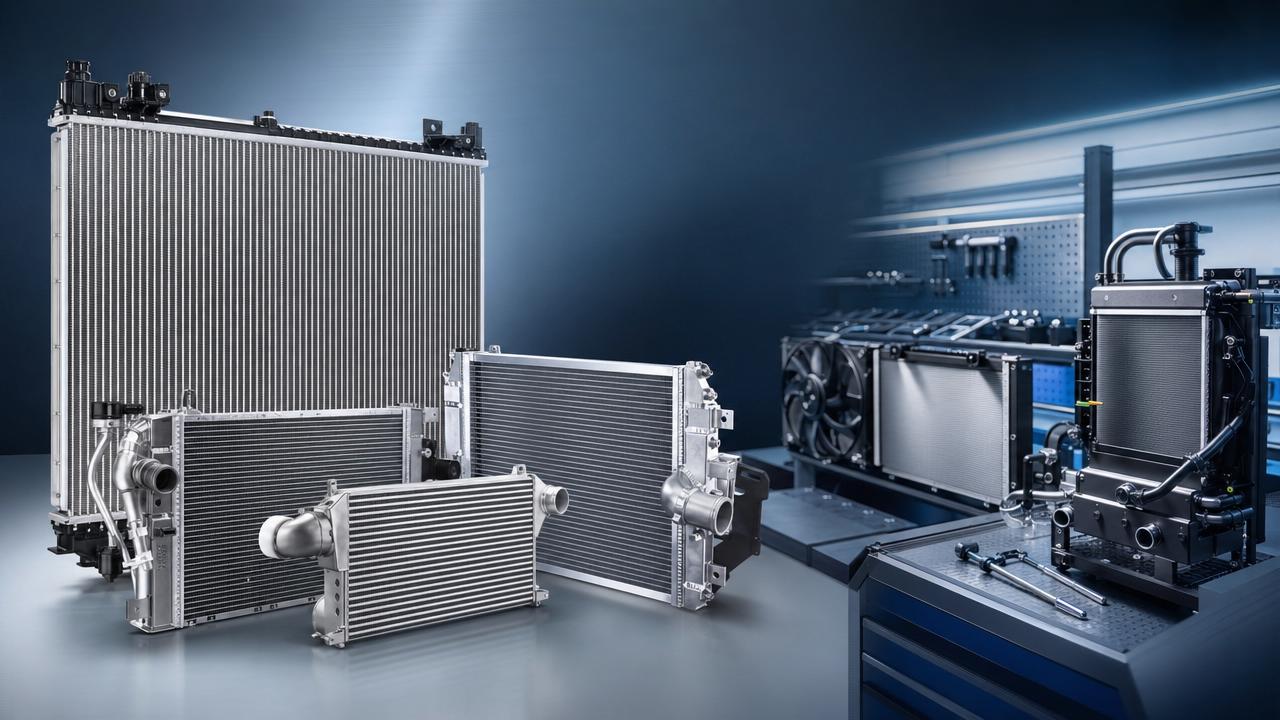
For aftermarket maintenance teams, every minute in the workshop affects cost, uptime, and customer satisfaction. But does a low maintenance radiator core really reduce service time, or is it just a selling point? This article explores how radiator core design influences cleaning, replacement, and long-term performance, while drawing on the manufacturing expertise behind modern heavy-duty cooling components.
Why service-time pressure is changing the way teams judge radiator cores
A clear shift is happening across the parts and maintenance market: aftermarket teams are no longer evaluating a radiator only by initial purchase price or basic cooling capacity. They are increasingly judging it by how fast it can be inspected, cleaned, repaired, and returned to service. In that environment, the idea of a low maintenance radiator core has moved from a marketing phrase to a practical decision point.
This change is especially visible in fleets, heavy trucks, construction machinery, and mixed-use service centers where equipment uptime is directly tied to revenue. When engines run hotter, cooling modules get more compact, and service windows become shorter, even small design differences in the radiator core can create a measurable difference in labor time. A core that traps less debris, tolerates repeated cleaning, and offers more stable thermal performance often cuts diagnosis and intervention time across the equipment life cycle.
For maintenance personnel, the question is not simply whether a low maintenance radiator core exists. The more useful question is what design features actually reduce workshop hours, and under what operating conditions those features matter most. That is where trend analysis becomes more valuable than generic product claims.
Key signals behind the shift
- Higher demand for vehicle uptime in logistics, construction, and municipal fleets
- More compact engine bays and denser cooling module packaging
- Rising labor costs for repetitive inspection and cleaning work
- Stronger focus on predictable service intervals rather than reactive repair
What this means in practical terms
A low maintenance radiator core is being judged less as a standalone part and more as a time-saving element within the total cooling system. If it reduces clogging, supports easier access, and stays structurally stable after repeated cleaning cycles, it helps shorten service time. If it only sounds good in sales language but still requires frequent flushing, fin straightening, or premature replacement, the promised value disappears quickly.
The biggest trend is not lower maintenance alone, but smarter maintainability
One important industry change is that “low maintenance” is no longer interpreted as “needs no service.” Experienced technicians know every radiator eventually requires inspection and cleaning. The real trend is toward smarter maintainability: designs that make routine service faster, safer, and more consistent, while reducing the risk of heat-related failure between service intervals.
That distinction matters because service time is influenced by several linked variables. Core fin density, tube layout, airflow path, material quality, braze consistency, and resistance to vibration all affect how quickly contamination builds up and how difficult the core is to restore. A well-designed low maintenance radiator core usually performs better because it delays performance drop-off, not because it eliminates maintenance forever.
Manufacturers that invest in research, production control, and application-specific design are increasingly shaping this market direction. Liaocheng Xinde Auto Parts Co., Ltd., established in 2018 with registered capital of 5 million RMB and total investment of 50 million RMB, has built its business around professional research, production, and global sales of water tank radiators, intercoolers, construction machinery radiators, and related cooling components for heavy trucks and new energy radiator modules. Its rapid expansion and recognition as a High-tech Enterprise and Trustworthy Unit for Consumers reflect the broader market move toward better engineered thermal products rather than commodity-only competition.
Trend comparison: old buying logic vs new maintenance logic
This trend explains why a low maintenance radiator core can reduce service time in many cases, but only when the design aligns with real contamination patterns, thermal load, and service access conditions.
Which design factors actually reduce workshop time
For aftermarket maintenance teams, service time is won or lost in the details. A radiator core may look similar from a distance, yet behave very differently once it enters a dusty work site, a high-vibration truck route, or an urban stop-and-go fleet. That is why the discussion around a low maintenance radiator core should be tied to design behavior rather than labels.
The most useful time-saving improvements usually appear in three service moments: routine cleaning, fault diagnosis, and replacement or repair. If the core remains cleaner for longer, technicians spend less time restoring airflow. If the thermal response remains stable, diagnosis becomes faster because overheating symptoms are less likely to come from inconsistent internal flow. If the unit is robust and application-matched, replacement intervals are extended and emergency downtime decreases.
These are not minor gains. Over a fleet or a busy service season, shaving even thirty minutes from repeated maintenance events can create meaningful labor savings and increase bay availability.
Core features that influence service time
- Fin geometry that balances heat transfer with reduced debris retention
- Tube and header design that supports stable coolant distribution
- Thermal materials that resist fatigue during repeated heat cycles
- Structural stability under vibration, pressure fluctuation, and cleaning
- Application-specific sizing that prevents chronic overload conditions
Why cleaning efficiency matters first
In many real workshop scenarios, the first complaint is not catastrophic leakage but restricted airflow caused by mud, dust, insects, oil mist, or mixed site contamination. A low maintenance radiator core that is easier to clean can save time immediately because technicians need fewer passes, less disassembly, and less corrective straightening of delicate fins. That practical cleaning advantage is often more valuable than a slight theoretical gain in peak cooling performance.
Why stable performance reduces diagnosis time
Intermittent overheating is expensive to troubleshoot. If a core design holds thermal consistency under load, technicians can isolate root causes more quickly when problems occur elsewhere in the cooling circuit. In other words, a better low maintenance radiator core does not only reduce physical service work; it also reduces diagnostic uncertainty.
Who feels the impact most across the aftermarket chain
The effect of radiator core maintainability is not uniform. Some workshops see dramatic time savings, while others see only moderate improvement. The difference depends on operating environment, duty cycle, and service process maturity. Understanding where the impact is strongest helps teams make better stocking and specification decisions.
Maintenance personnel working on heavy trucks, construction equipment, and high-usage commercial vehicles are generally the first to notice the benefit. These applications face more contamination, harsher vibration, and tighter uptime requirements than light-duty occasional-use platforms. In such settings, a low maintenance radiator core can influence not only maintenance time but scheduling accuracy and spare-part planning.
Parts distributors and workshop managers also benefit when service outcomes become more predictable. Fewer repeat visits for unresolved cooling complaints improve customer confidence and reduce indirect cost.
Impact by stakeholder
A note on passenger and new energy applications
The same maintainability logic is increasingly relevant in newer vehicle segments as cooling systems become more integrated and efficiency expectations rise. For example, in car fitment applications, products such as Radiator for AION show how the market is combining replace/repair needs with high-performance cooling efficiency, advanced fluid dynamics, premium thermal materials, and stable operation under demanding workloads. Even when service patterns differ from heavy-duty equipment, the direction is similar: easier long-term maintenance is becoming part of product value.
What maintenance teams should check before believing the claim
Not every product promoted as a low maintenance radiator core will deliver meaningful service-time reduction. Maintenance teams should test the claim against field conditions and service reality. This is particularly important in the replacement market, where visual similarity can hide important differences in material quality, internal flow design, and structural consistency.
A disciplined evaluation process helps prevent false economy. A cheaper unit that clogs faster, deforms during cleaning, or loses thermal performance early may create more labor cost than it saves in purchase price. The market trend is therefore moving toward evidence-based selection: technicians and buyers want proof of durability, fitment accuracy, and maintainability under actual workloads.
This is also where supplier capability matters. Manufacturers with strong process control, application knowledge, and a track record in radiators for heavy trucks, construction machinery, and new energy modules are better positioned to support the shift toward practical maintainability.
A field-oriented review checklist
- How quickly does the core lose airflow efficiency in your actual dust and debris environment?
- Can the fins tolerate repeated cleaning without rapid deformation?
- Does the radiator maintain stable temperature behavior under peak load?
- Is fitment accurate enough to avoid installation delay or rework?
- Does the supplier understand your application rather than only offering a catalog match?
Decision signal to watch
If the product shortens preventive maintenance time while also reducing repeat overheating complaints, the low maintenance radiator core claim is likely real. If service frequency stays the same and troubleshooting remains inconsistent, the claim may be more promotional than operational.
The next direction: maintainability as a standard, not a premium extra
Looking ahead, the strongest market signal is that maintainability will increasingly become a baseline requirement. As equipment owners demand more uptime and workshops face tighter labor availability, the cooling parts market will reward products that combine thermal efficiency with practical service advantages. In that context, the low maintenance radiator core is less a passing trend and more a marker of how cooling components are evolving.
For aftermarket maintenance teams, the answer to the opening question is nuanced but clear: yes, a low maintenance radiator core can really cut service time, but only when the claim is backed by thoughtful engineering, suitable materials, stable production quality, and fit-for-use design. The time savings come from reduced contamination buildup, easier cleaning, fewer diagnostic detours, and more reliable long-term performance.
If your business wants to judge the impact of this trend on its own operations, focus on five questions: where downtime is most expensive, which applications suffer the most contamination, how much labor is lost to repeated cooling complaints, whether current replacement parts are truly service-friendly, and which suppliers can support long-term thermal reliability. Those answers will tell you whether a low maintenance radiator core is just another product label or a real operational advantage.